
This hearty one-pot meal combines tender shredded chicken with a velvety, thickened broth. It is a practical choice for a filling dinner that provides a rich texture and deep savory flavor.
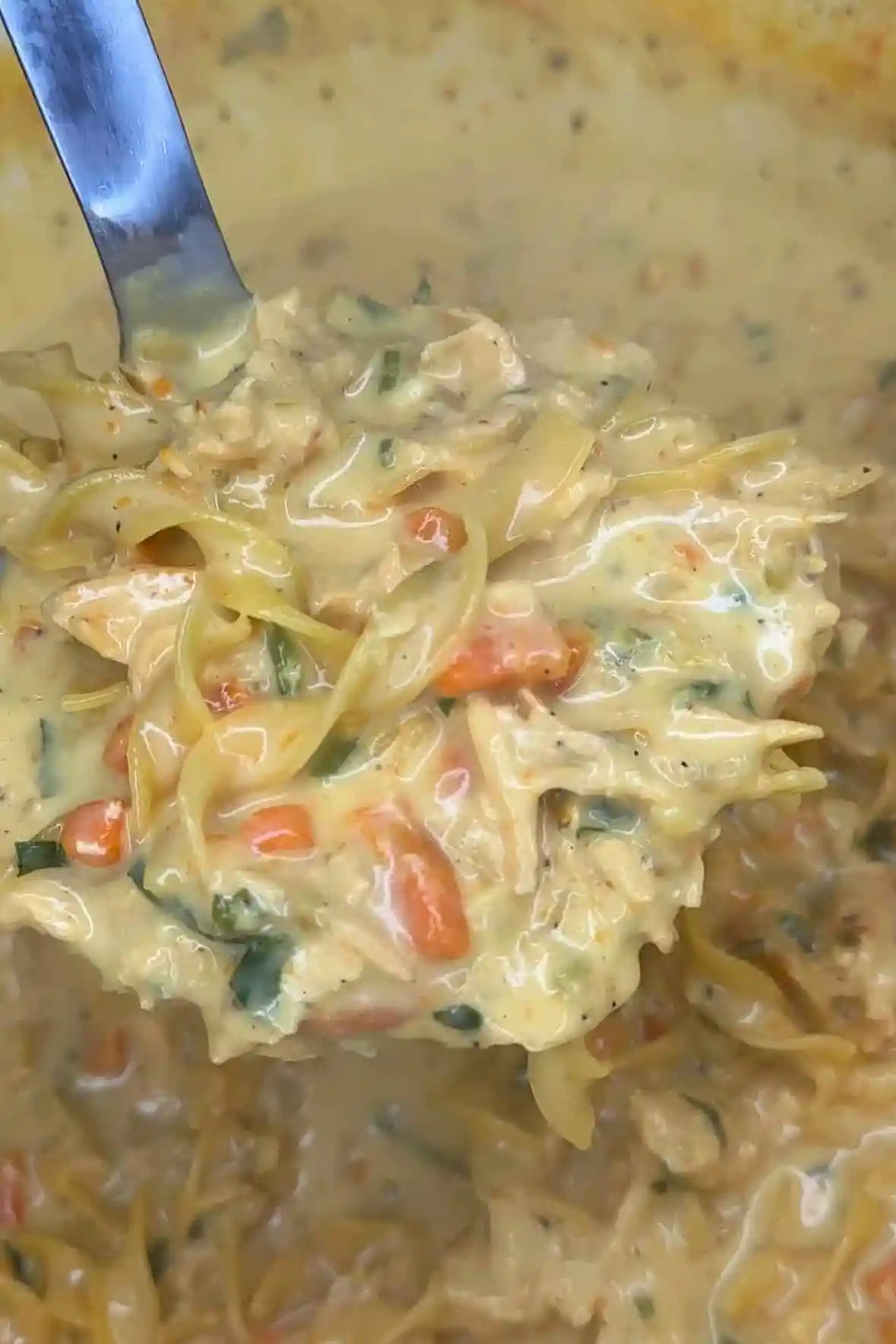
List of ingredients
- 2 carrots (peeled & chopped) – adds natural sweetness.
- 2 celery stalks (chopped) – provides a classic aromatic base.
- 8-10 garlic cloves (chopped) – ensures a bold, savory depth.
- 1 onion (chopped) – used for foundational flavor.
- 4 tbsp butter – used for sautéing and the roux.
- 1/4 cup flour – acts as the thickening agent.
- 4 cups chicken broth – the main liquid base.
- 2 cups heavy cream – creates the creamy, Alfredo-like consistency.
- 2 cups egg noodles – provide the heartiness of the soup.
- 2 packets Sazon con azafran – adds color and distinct seasoning.
- 1.5 – 2 lbs chicken breasts – the primary protein source.
- 2 bay leaves – adds a subtle herbal note.
- 1/4 cup chopped fresh parsley – used for a fresh finish.
- 1 tbsp olive oil – prevents garlic from burning.
- 1-2 tsp crushed red pepper flakes – adds a hint of warmth.
- Salt & pepper (to taste) – for final seasoning adjustments.
step-by-step instructions
- Sauté Aromatics: In a large pot, combine butter, carrots, onions, celery, salt, pepper, and crushed red pepper flakes. Sauté these ingredients for a few minutes until they begin to soften.
- Add Garlic: Stir in the chopped garlic and olive oil. Continue to sauté until the garlic becomes fragrant, taking care not to burn it.
- Create the Roux: Sprinkle in the flour and stir continuously for a few minutes. This cooks out the raw flour taste and prepares the base for thickening.
- Incorporate Broth: Pour in the chicken broth while whisking continuously for 3-5 minutes. This prevents lumps from forming in the base.
- Poach Chicken: Bring the mixture to a boil. Add the Sazon packets, bay leaves, and whole chicken breasts. Cover the pot halfway with a lid and boil for 10-15 minutes, or until the chicken reaches an internal temperature of 165°F.
- Shred Chicken: Reduce the heat to a simmer. Remove the cooked chicken breasts from the pot, shred them using two forks, and then return the shredded meat to the soup.
- Thicken with Cream: Pour in the heavy cream and bring the pot back to a boil. Immediately lower the heat to a simmer and let it cook for 5-10 minutes to allow the broth to thicken.
- Final Seasoning: Stir in salt and pepper to taste, along with the chopped fresh parsley.
- Cook Noodles: Bring the pot to a boil once more and add the egg noodles. Cook them according to the package directions until tender.
Cooking Tips for Maximum Quality
Use a Heavy-Bottomed Pot
A heavy-bottomed pot, such as a Dutch oven, distributes heat more evenly. This prevents the butter and flour from scorching at the bottom during the roux stage. It also helps maintain a consistent simmer when adding the cream.
Preventing Flour Lumps
When adding the chicken broth to the flour mixture, whisk rapidly and constantly. If lumps appear, you can use a handheld immersion blender for a few seconds to smooth out the liquid. This ensures the final texture is velvety and uniform.
Precise Chicken Temperature
Use a meat thermometer to ensure the chicken breasts reach exactly 165°F. Overcooking the breasts during the boiling phase can lead to dry, tough meat. Shredding the chicken while it is still warm makes the process easier and keeps the meat moist.
Fresh Parsley Integration
Add the chopped parsley at the very end of the cooking process. Heat destroys the volatile oils in fresh herbs, causing them to lose their brightness. Stirring them in just before serving preserves the color and fresh taste.
Ingredient Substitutions and Alternatives
Replacing Heavy Cream for Lighter Texture
If you prefer a lighter soup, replace the heavy cream with half-and-half or whole milk mixed with a teaspoon of cornstarch. For a dairy-free alternative, full-fat coconut milk or cashew cream can be used. Note that coconut milk may add a slight coconut flavor to the dish.
Using Different Noodle Varieties
While egg noodles are traditional, you can use rotini, ditalini, or bow-tie pasta. If using gluten-free noodles, be mindful of the cooking time, as they often soften faster or become mushy if boiled too long. Cook gluten-free pasta separately and add it to the bowl.
Sazon Seasoning Alternatives
If Sazon is unavailable, use a combination of 1/2 teaspoon of turmeric for color and 1/2 teaspoon of garlic powder and cumin for flavor. Since Sazon contains salt, adjust your additional salt measurements accordingly to avoid over-salting the soup.
Substituting Chicken Breasts
Boneless, skinless chicken thighs can be used instead of breasts for a richer flavor and more tender texture. Thighs are less likely to dry out during the boiling process. Follow the same cooking times, but ensure they also reach 165°F.
Flavor Variations for Customization
Adding Hearty Root Vegetables
You can increase the nutritional value by adding diced parsnips or turnips along with the carrots. These vegetables should be added during the initial sauté phase. They add a subtle earthy sweetness that complements the cream base.
Increasing the Heat Level
For those who prefer a spicier soup, increase the crushed red pepper flakes to one tablespoon. Alternatively, add a pinch of cayenne pepper during the roux stage. This integrates the heat more deeply into the broth rather than having isolated spicy flakes.
Adding Green Vegetables
Fresh baby spinach or chopped kale can be stirred in during the last two minutes of cooking. The residual heat will wilt the greens without overcooking them. This adds a pop of color and additional vitamins to the meal.
Introducing Citrus Notes
A squeeze of fresh lemon juice added just before serving can cut through the richness of the heavy cream. This acidity brightens the overall flavor profile. Start with one teaspoon and adjust based on your preference.
Storage and Reheating Guidelines
Proper Refrigeration Methods
Store leftover soup in airtight glass or plastic containers. Allow the soup to cool slightly before sealing the lid to prevent excessive condensation. The soup will remain fresh in the refrigerator for 3 to 5 days.
Avoiding Noodle Mushiness
Pasta continues to absorb liquid as it sits in the refrigerator, which can make the soup very thick and the noodles mushy. To prevent this, store the cooked noodles in a separate container from the broth. Add the noodles back to the soup only during the reheating process.
Stovetop Reheating Process
Reheat the soup slowly over medium-low heat on the stove. Avoid using high heat, as this can cause the cream to separate or the bottom to burn. Stir frequently and add a splash of chicken broth or water if the soup has thickened too much during storage.
Freezing Considerations
Cream-based soups do not always freeze well, as the dairy can separate upon thawing. If you intend to freeze the soup, omit the cream and noodles during the initial cook. Freeze the chicken and vegetable base, then add the cream and fresh noodles when reheating.
Make-Ahead Advice
Prepping the Mirepoix
You can chop the carrots, celery, and onions in advance. Store them together in a sealed container in the fridge for up to three days. This is known as a mirepoix and significantly reduces the active prep time on the day of cooking.
Pre-Cooking the Chicken
If you have a busy schedule, poach the chicken breasts in broth the day before. Shred the meat and store it in the refrigerator. When you are ready to make the soup, simply add the pre-cooked shredded chicken during the cream thickening stage.
Organizing the Mise en Place
Arrange all measured ingredients on your counter before turning on the heat. Since the roux and garlic sauté happen quickly, having everything ready prevents the ingredients from overcooking while you search for the next item.
Troubleshooting Common Issues
Fixing a Soup That is Too Thick
If the flour and cream create a consistency that is too thick, whisk in additional chicken broth. Add the broth one quarter-cup at a time and stir until the desired fluidity is achieved. This allows you to control the thickness without diluting the flavor too much.
Adjusting Over-Salted Broth
If the soup becomes too salty, add a peeled, halved potato and simmer it in the broth for 15 minutes before removing it. The potato helps absorb some of the excess salt. Alternatively, adding a small amount of unsalted water or more cream can balance the saltiness.
Preventing Cream Curdling
Curdling happens when dairy is exposed to extreme heat or high acidity too quickly. Always lower the heat to a simmer before adding the heavy cream. Avoid boiling the soup vigorously once the cream has been integrated into the pot.
Managing Undercooked Vegetables
If the carrots or celery are still too firm when the chicken is done, simmer them for an additional 5-10 minutes before adding the cream. Ensure the vegetables are tender enough to be easily pierced with a fork for the best eating experience.
Frequently Asked Questions
Can I use frozen chicken breasts?
Yes, but they must be fully thawed before cooking. Cooking frozen chicken breasts directly in the soup can lead to uneven cooking and may result in a bland broth because the chicken releases excess water as it thaws.
How long does this soup last in the fridge?
The soup is best consumed within 3 to 5 days. Because of the heavy cream content, it is important to keep it at a constant temperature of 40°F or below to maintain safety and quality.
Can I use a slow cooker for this recipe?
This recipe is designed for a one-pot stovetop method to properly develop the roux. To adapt it for a slow cooker, sauté the vegetables and flour in a pan first, then transfer everything except the cream and noodles to the slow cooker. Stir in the cream and cook the noodles separately before combining.
What is the best way to shred the chicken?
The most efficient way to shred chicken is using two forks, pulling the meat apart along the natural grain. For larger batches, a hand mixer on low speed can shred the warm chicken breasts quickly and evenly.
Print
Rich and Creamy Chicken Noodle Soup
- Total Time: 70 minutes
- Yield: 6 servings 1x
- Diet: General
Description
A delicious and fulfilling creamy chicken noodle soup made in one pot, featuring carrots, celery, garlic, onions, egg noodles, and a rich creamy stock.
Ingredients
- 2 carrots, peeled & chopped
- 2 celery stalks, chopped
- 8–10 garlic cloves, chopped
- 1 onion, chopped
- 4 tbsp butter
- 1/4 cup flour
- 4 cups chicken broth
- 2 cups heavy cream
- 2 cups egg noodles
- 2 packets Sazon con azafran
- 1.5 – 2 lbs chicken breasts
- 2 bay leaves
- 1/4 cup chopped fresh parsley
- 1 tbsp olive oil
- 1–2 tsp crushed red pepper flakes
- Salt to taste
- Pepper to taste
Instructions
- Step 1: In a pot, add butter, carrots, onions, celery, salt, pepper, and crushed red pepper flakes. Sauté for a few minutes.
- Step 2: Add in the garlic, olive oil, and sauté until fragrant.
- Step 3: Shake in the flour and continuously move that around for a few minutes.
- Step 4: Pour in the chicken broth and whisk continuously for 3-5 minutes.
- Step 5: Bring the pot to a boil, and add in the packets of sazon, the bay leaves, and the chicken breasts.
- Step 6: Cover the pot halfway with the lid and let it continue to boil for about 10-15 minutes or until the chicken reaches the internal temperature of 165°F.
- Step 7: Once the chicken is cooked through, lower the pot to a simmer, remove the chicken, and shred it up. Once shredded, add it back to the pot.
- Step 8: Add in the heavy cream, bring the pot back to a boil, then lower it to a simmer, and let that simmer for 5-10 minutes to thicken up.
- Step 9: Add in salt & pepper (to taste), the chopped parsley, and stir.
- Step 10: Bring the pot to a boil and add in the egg noodles, boiling according to the package directions.
Notes
Store in an air-tight safe container for 3-5 days in the fridge.
- Prep Time: 10 minutes
- Cook Time: 60 minutes
- Category: Main Course
- Method: One-pot
- Cuisine: American
Nutrition
- Serving Size: 1 serving
- Calories: 585 kcal
- Sugar: 5 g
- Sodium: 814 mg
- Fat: 43 g
- Saturated Fat: 24 g
- Unsaturated Fat: 14 g
- Trans Fat: 0.3 g
- Carbohydrates: 21 g
- Fiber: 2 g
- Protein: 30 g
- Cholesterol: 196 mg