
This fusion dish combines the bold, fermented heat of Korean gochujang with the velvety richness of an Italian-style cream sauce. It is a quick, comforting meal that comes together in one pan in just 20 minutes.

List of ingredients
- 8.8 oz (Gluten-free) paccheri or rigatoni – ridged shapes are best for holding sauce.
- 1 oz. garlic clove, thinly sliced (about 6 large) – provides a sharp, aromatic base.
- 1 oz. shallot, finely chopped – adds a subtle sweetness.
- 10 oz. white button mushrooms or cremini, sliced – adds earthy depth and texture.
- 3 tbsp olive oil – divided for sautéing vegetables and paste.
- 2 pinches coarse sea salt – or more to taste for seasoning.
- 2-3 tbsp gochujang paste – the primary source of spice and umami.
- 1 cup half-and-half, heavy cream, or dairy-free creamer – creates the smooth, creamy body.
- 1 tbsp butter – used at the end for a glossy finish.
- Sprinkle grated parmesan cheese or cashew parmesan – for a salty, nutty topper.
- Sprinkle chopped chive – adds a fresh, mild onion garnish.
step-by-step instructions
- Boil the pasta: Bring a large pot of salted water to a boil. Cook the pasta until just al dente according to package instructions. Reserve 1/4 cup of the pasta water before draining the noodles.
- Prepare vegetables: While the pasta is boiling, thinly slice the garlic, finely chop the shallot, and slice the mushrooms.
- Sauté aromatics: Heat a 12-inch skillet over medium heat. Add 2 tbsp of olive oil, the sliced garlic, chopped shallot, and a pinch of salt. Sauté for 15-20 seconds until fragrant.
- Cook mushrooms: Add the sliced mushrooms, the remaining 1 tbsp of olive oil, and another pinch of salt. Sauté for about 3 minutes until the mushrooms soften and release their liquid.
- Toast the paste: Push the mushrooms to the edges of the pan. Add the gochujang paste to the center and sauté for 10 seconds to release the aroma.
- Create the cream sauce: Pour in the cream and stir with a wooden spoon for about 1 minute until the paste is fully incorporated. Turn off the heat if the pasta is not yet ready to avoid over-reducing the sauce.
- Combine pasta and sauce: Add the drained pasta to the skillet. Toss over medium heat for 30 seconds to ensure every noodle is coated.
- Finish with butter: Stir in the butter and let it melt for 2-3 minutes until the sauce becomes glossy and thick. Stir in a splash of reserved pasta water if the sauce feels too dry.
- Garnish and serve: Transfer the pasta to plates and sprinkle with grated parmesan and chopped chives. Serve immediately while hot.
Optimal Ingredient Selections
Ridged Pasta Shapes
Choose pasta with ridges or hollow centers, such as rigatoni or paccheri. These shapes capture the thick sauce inside the tubes and within the external grooves. This ensures a more satisfying distribution of flavor in every bite.
Gluten-Free Pasta Options
If using gluten-free pasta, be careful not to overcook it during the initial boil. Gluten-free varieties can become mushy quickly. Aim for a slightly firmer al dente texture since the pasta continues to cook in the sauce.
Selecting High-Quality Gochujang
Use a reputable brand of fermented Korean chili paste to ensure consistent heat and sweetness. Some brands contain cornstarch, which can slightly thicken the sauce. For a gluten-free option, look for brands specifically labeled as such.
Mild Gochujang Alternatives
If you prefer less heat, look for a mild version of gochujang or start with only 2 tablespoons. You can also substitute a small portion of the paste with white miso to maintain the umami while reducing the spice.
White Button vs Cremini Mushrooms
White button mushrooms provide a mild flavor, while cremini mushrooms offer a deeper, earthier taste. Both work well in this recipe, but cremini can make the sauce feel more savory and robust.
Shallots for Subtle Flavor
Shallots are preferred over regular onions because they provide a more delicate, sweet flavor. They blend into the cream sauce more seamlessly, providing a refined aromatic base without overpowering the gochujang.
Choosing the Right Cream
Half-and-half creates a rich but balanced sauce. For a more decadent and thicker consistency, use heavy cream. If you prefer a dairy-free option, an unflavored plant-based creamer works well to maintain the creamy texture.
Dairy-Free Creamer Tips
When using dairy-free creamers, avoid those with strong coconut flavors. Coconut milk can clash with the savory profile of the gochujang and mushrooms. Stick to neutral, unsweetened soy or cashew-based creamers.
Technical Cooking Advice
Salting the Pasta Water
Generously salt the pasta water to season the noodles from the inside out. This provides a necessary foundation of flavor that complements the salty parmesan and spicy gochujang in the final sauce.
Achieving Al Dente Texture
Remove the pasta from the water one minute before the package instructions suggest. The noodles will finish cooking as they toss in the cream sauce, preventing them from becoming overcooked or limp.
Reserving Starchy Pasta Water
Always reserve a small amount of pasta water before draining. The starch in this water acts as a natural binder, helping the cream and butter emulsify into a smooth, glossy coating that clings to the pasta.
Managing Pan Temperature
Keep the skillet at medium heat throughout the process. If the heat is too high, the garlic and shallots can burn quickly, which introduces a bitter taste to the overall dish.
Browning Mushrooms Effectively
Allow the mushrooms to sauté until they release their moisture and begin to brown. This process concentrates their flavor and ensures they add a meaty texture to the creamy pasta.
The Importance of Toasting Paste
Sautéing the gochujang paste briefly in oil before adding the cream is essential. Toasting the paste removes the raw edge and develops a deeper, more complex flavor profile.
Incorporating the Cream
Stir the cream slowly into the toasted paste until the mixture is completely smooth. Ensure there are no clumps of paste remaining before adding the pasta to the pan.
Controlling Sauce Reduction
If the sauce looks too thick before the pasta is added, turn off the heat. Over-reducing the cream can make the sauce heavy and greasy rather than silky and light.
Emulsifying with Cold Butter
Add the butter at the very end of the cooking process. Stirring in butter over low-medium heat creates an emulsion that gives the sauce a professional, glossy sheen.
Flavor Customization and Variations
Reducing the Overall Spice
To tone down the heat, increase the amount of cream or add a small dollop of mascarpone cheese. The extra fat helps neutralize the capsaicin in the gochujang, making the dish more family-friendly.
Increasing the Heat Level
For those who enjoy more spice, add a teaspoon of gochugaru (Korean chili flakes) when sautéing the garlic. This adds a bright, sharp heat that cuts through the richness of the cream.
Enhancing Umami Depth
Stir in a teaspoon of soy sauce or a small amount of white miso paste along with the gochujang. This layering of fermented ingredients increases the savory depth of the sauce.
Adding Fresh Spinach
Stir in two handfuls of fresh baby spinach just before adding the butter. The residual heat will wilt the spinach quickly, adding color and nutritional value to the meal.
Incorporating Sliced Carrots
Thinly sliced carrots can be sautéed along with the shallots and garlic. They provide a slight crunch and a natural sweetness that balances the spicy notes of the chili paste.
Using Different Cheeses
While parmesan is traditional, you can use Pecorino Romano for a saltier punch or a mild provolone for extra meltiness. Always stir in the cheese at the end to avoid clumping.
Balancing with a Touch of Sugar
If the gochujang brand you are using is particularly salty, add a pinch of brown sugar. A small amount of sweetness enhances the fermented flavors and rounds out the sauce.
Serving and Pairing Suggestions
Pairing with Savory Proteins
Serve this pasta alongside ground beef bulgogi or grilled short ribs. The savory, charred flavor of Korean beef complements the creamy and spicy nature of the noodles.
Adding Plant-Based Proteins
For a vegetarian version, add pan-seared tofu or roasted chickpeas on top of the pasta. These proteins soak up the sauce and provide a satisfying heartiness to the dish.
Fresh Herb Garnishes
Beyond chives, try garnishing with thinly sliced scallions or fresh cilantro. The brightness of fresh herbs cuts through the heavy cream and refreshes the palate.
Balancing with Kimchi
Serve a side of cold cucumber kimchi or spicy cabbage kimchi. The acidity and crunch of the fermented vegetables provide a sharp contrast to the rich, velvety pasta.
Light Side Salad Pairings
A simple Korean-style carrot salad or a dressed cabbage slaw works well. The vinegar-based dressings in these salads help cleanse the palate between bites of the rich sauce.
Storage and Maintenance
Refrigeration Guidelines
Store leftover pasta in an airtight container in the refrigerator for up to 3 to 4 days. Keep the container tightly sealed to prevent the pasta from absorbing fridge odors.
Optimal Storage Containers
Use glass containers for storing creamy pastas. Glass is non-reactive and makes it easier to reheat the dish evenly without leaching plastic chemicals into the sauce.
Reheating with Liquids
Creamy sauces tend to thicken and separate during cooling. When reheating, add a splash of water, milk, or cream to loosen the sauce and restore its original consistency.
Avoiding Sauce Separation
Reheat the pasta slowly over medium-low heat on the stove. High heat can cause the fat in the cream and butter to separate, leaving the sauce looking oily.
Microwave Reheating Tips
If using a microwave, heat the pasta in short 30-second intervals. Stir the noodles between each interval and add a teaspoon of water to keep the sauce creamy.
Troubleshooting Common Issues
Fixing a Clumpy Sauce
Clumping usually occurs if the cream was overheated or reduced too much. Stir in a tablespoon of reserved pasta water or warm cream and whisk gently over low heat to smooth it out.
Correcting Over-Salted Pasta
If the sauce tastes too salty, add a squeeze of fresh lemon juice or a small amount of unsalted butter. The acidity and extra fat help mask the excess salt.
Fixing a Sauce That Is Too Thick
If the sauce clings too heavily to the noodles and feels dry, gradually add reserved pasta water. Stir constantly until the sauce reaches a silky, pourable consistency.
Preventing Cream Curdling
Avoid boiling the sauce once the cream has been added. Keep the temperature at a steady simmer to ensure the emulsion stays stable and the sauce remains smooth.
Frequently Asked Questions
What does gochujang taste like?
Gochujang is a savory, fermented condiment that is simultaneously spicy, slightly sweet, and deeply umami. It has a thicker consistency than hot sauce and a more complex flavor profile due to the fermentation process.
Can I use coconut milk instead of cream?
While possible, coconut milk has a very strong flavor that can overpower the gochujang and mushrooms. If you choose coconut milk, use the full-fat canned version and be mindful of the flavor balance.
Is this recipe very spicy?
The spice level is moderate because the cream and butter mellow the heat of the gochujang. However, since different brands of paste vary in intensity, you can adjust the amount to suit your preference.
How do I store the leftovers?
Place the pasta in an airtight container and refrigerate. Because it contains dairy, it should be consumed within four days and reheated gently with a splash of liquid to restore the creaminess.
Print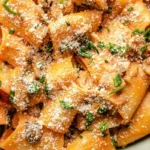
Extra Creamy Gochujang Pasta
- Total Time: 20 minutes
- Yield: 6 servings 1x
- Diet: General
Description
Extra creamy Gochujang Pasta is the Korean take on Italian vodka sauce pasta. Garlicky, cheesy, ultra-creamy smooth, and ready in 20 minutes!
Ingredients
- 8.8 oz (Gluten-free) paccheri (or rigatoni)
- 1 oz. garlic clove (thinly sliced, 6 large)
- 1 oz. shallot (finely chopped)
- 10 oz. white button mushrooms (or cremini, sliced)
- 3 tbsp olive oil
- 2 pinches coarse sea salt (or more to taste)
- 2–3 tbsp gochujang paste
- 1 cup half-and-half (heavy cream, or dairy-free creamer)
- 1 tbsp butter
- Sprinkle grated parmesan cheese (or cashew parmesan cheese)
- Sprinkle chopped chive
Instructions
- Step: Bring a large pot of water to a boil. Salt the water and cook the pasta until just al dente, following package directions. Reserve ¼ cup of the pasta water before draining.
- Step: While the pasta cooks, prepare the garlic, shallot, and mushrooms.
- Step: Heat a large (12-inch) skillet over medium heat until warm. Add 2 tbsp olive oil, garlic, shallot, and a pinch of salt. Sauté until fragrant, about 15 -20 seconds.
- Step: Add mushrooms, the remaining 1 tbsp olive oil, and another pinch of salt. Sauté until the mushrooms release some liquid and soften slightly, about 3 minutes.
- Step: Push the mushrooms to the side and add the gochujang paste to the center of the pan. Sauté the paste for 10 seconds to release its aroma.
- Step: Pour in the cream and stir with a wooden spoon until the paste is fully incorporated, about 1 minute. If the pasta isn’t ready yet, turn off the heat so the sauce doesn’t over-reduce.
- Step: Add the drained pasta to the pan. Toss over medium heat for 30 seconds to coat.
- Step: Stir in the butter and let it melt. The sauce will thicken and turn glossy, about 2–3 minutes. If it feels dry, splash in some reserved pasta water.
- Step: Transfer to a serving plate and sprinkle with parmesan and chives. Serve hot or warm.
Notes
Pasta options: Any short ridged pasta like paccheri or rigatoni is recommended. Cream: Use half-and-half, heavy cream, or unflavored dairy-free creamer (avoid coconut milk). Gochujang: For gluten-free options, use Sempio or Chung Jung One. Start with 2 tablespoons if you prefer less heat.
- Prep Time: 5 minutes
- Cook Time: 15 minutes
- Category: Side Dish
- Method: Sautéing
- Cuisine: Korean
Nutrition
- Serving Size: 1 serving
- Calories: 312 kcal
- Sugar: 5 g
- Sodium: 176 mg
- Fat: 14 g
- Saturated Fat: 5 g
- Unsaturated Fat: 8 g
- Trans Fat: 0.1 g
- Carbohydrates: 38 g
- Fiber: 2 g
- Protein: 9 g
- Cholesterol: 19 mg