
This luxurious seafood dish combines tender chunks of lobster with a velvety Parmesan cream sauce for a restaurant-quality meal. It is designed for efficiency, allowing you to prepare an exquisite dinner in under 30 minutes. This recipe focuses on highlighting the natural sweetness of the lobster through a simple garlic and herb infusion.
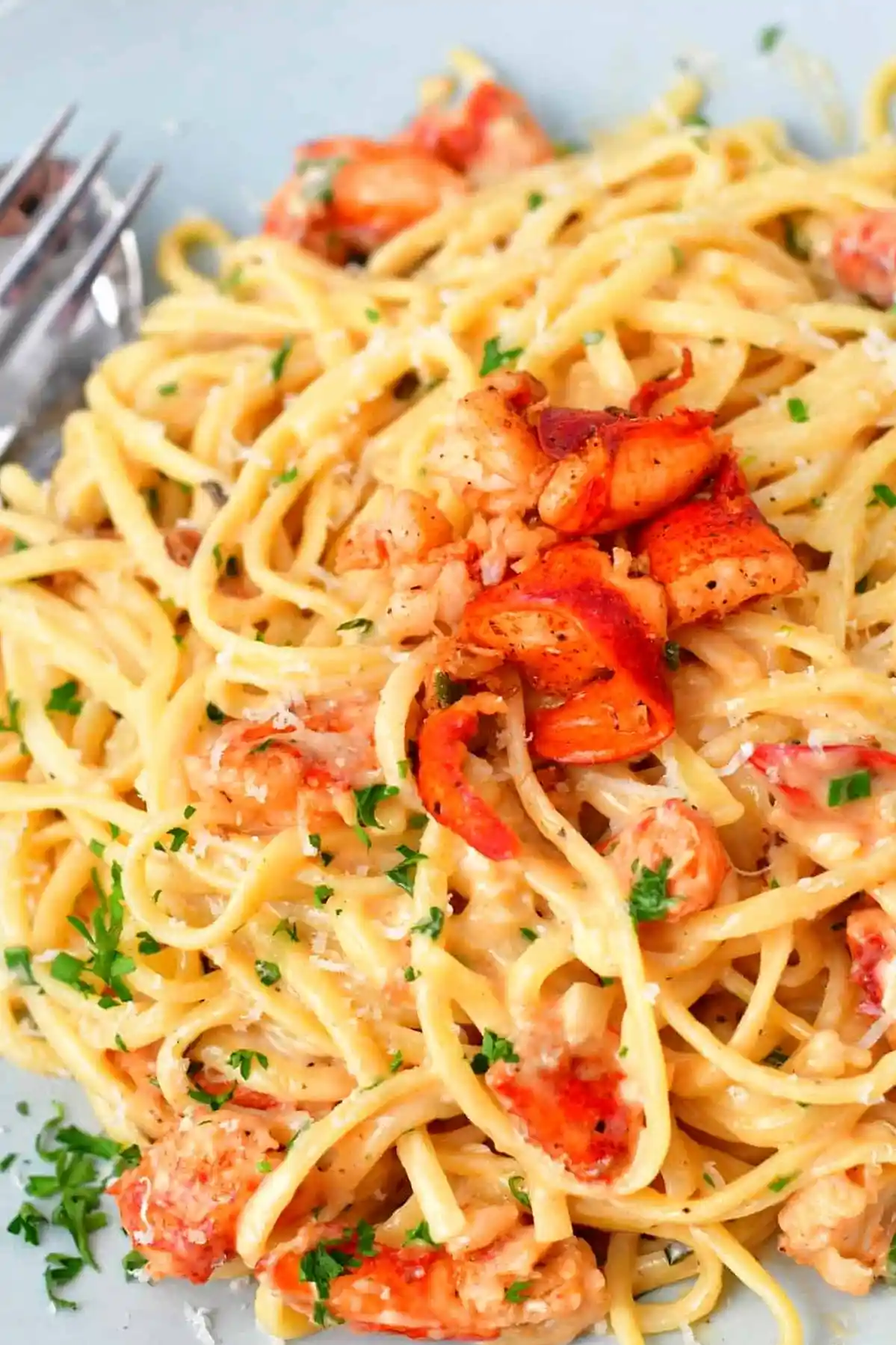
List of ingredients
- 1/2 lb pasta (spaghetti, linguini, or bucatini) – use a long noodle for best results.
- 2 tbsp unsalted butter – used for sautéing the lobster.
- 12-14 oz lobster meat (claw, tail, or a mix) – pre-cooked or fresh.
- pinch salt – for seasoning the lobster.
- pinch fresh cracked black pepper – for initial lobster seasoning.
- 1/2 tsp fresh minced tarragon – adds a subtle anise flavor to the meat.
- 1-2 tsp fresh minced parsley – provides a fresh, herbal note.
- 1 tbsp minced chives – adds a mild onion flavor.
- 4-5 garlic cloves – finely minced for the sauce base.
- 1/3 cup reserved pasta water – essential for emulsifying the sauce.
- 1/2 cup heavy whipping cream – creates the rich, creamy texture.
- 1 cup fresh grated Parmesan cheese – provides saltiness and thickness.
- 1/2 tsp fresh minced tarragon – for the sauce seasoning.
- 1 tsp fresh minced parsley – for the sauce seasoning.
- 1 tbsp minced chives – for the sauce seasoning.
- salt – adjust to taste for the final sauce.
- 1/4 tsp fresh cracked black pepper – for the final sauce seasoning.
step-by-step instructions
- Preparation: Measure and chop all ingredients before starting. Since the cooking process is fast, having everything ready prevents the garlic or lobster from overcooking.
- Cook Pasta: Boil a large pot of well-salted water and cook pasta according to package directions. Just before straining, reserve at least 1/3 cup of the starchy pasta water.
- Heat Pan: Place a large cooking pan over medium heat. Once the pan is hot, add the unsalted butter and let it melt.
- Sauté Lobster: Add the lobster meat to the pan with salt, pepper, 1/2 tsp tarragon, 1 tsp parsley, and 1 tbsp chives. Toss the meat in the butter and herbs for one to two minutes until heated through.
- Rest Lobster: Remove the lobster meat from the pan immediately and set it aside. This prevents the seafood from becoming rubbery while you prepare the sauce.
- Sauté Garlic: Add the minced garlic to the remaining butter in the pan. Cook and stir until the garlic becomes fragrant and slightly golden.
- Simmer Water: Pour in the reserved pasta cooking water. Let the liquid come to a gentle simmer over medium-low heat.
- Build the Sauce: Stir in the heavy whipping cream, Parmesan cheese, remaining herbs, pepper, and a pinch of salt. Stir gently until the cheese is fully melted and the sauce is smooth.
- Combine Pasta: Add the cooked pasta to the pan. Toss thoroughly to ensure every noodle is coated in the cream sauce.
- Final Mix: Gently fold the cooked lobster meat back into the pasta. Serve immediately while hot.
Selecting the Best Lobster Meat
Using Pre-Cooked Lobster Meat
Many grocery stores sell cooked lobster meat in the seafood department, either fresh or frozen. This is the most convenient option for quick meals as it eliminates the need for steaming or boiling. Ensure you pat the meat dry before sautéing to avoid excess moisture in the pan.
Preparing Fresh Lobster Tails
If you prefer starting with raw lobster tails, you can roast them in the oven or poach them in vegetable stock first. Once cooked, carefully remove the meat from the shell and cut it into bite-sized chunks. This method allows you to control the exact level of doneness before adding it to the pasta.
Buying Whole Live Lobster
When purchasing whole lobsters, ensure they are alive and active before buying. Store them in the refrigerator immediately and cook them the same day to maintain freshness. After steaming the whole lobster, extract the claw and tail meat for a mix of textures in your dish.
Thawing Frozen Shellfish Safely
Frozen lobster meat or tails should always be thawed slowly in the refrigerator overnight. Avoid thawing raw shellfish in a sink of warm water, as this can compromise food safety. Once thawed, discard any accumulated liquid before adding the meat to the pan.
Customizing Your Pasta Dish
Gluten-Free Pasta Options
This recipe works well with a variety of gluten-free pasta alternatives, such as brown rice or corn-based noodles. Follow the package instructions for boiling, but be mindful that gluten-free pasta can overcook more quickly. Still remember to save the starchy water, as it is vital for the sauce consistency.
Low-Dairy Cream Alternatives
If heavy cream is too rich, you can substitute it with half-and-half. While the sauce will be slightly less thick, it still provides a creamy mouthfeel. For those with sensitivities, a lactose-free half-and-half works effectively without altering the flavor profile.
Plant-Based Substitutions
To make this dish plant-based, replace the butter with a high-quality plant-based butter and the cream with a cooking-grade plant-based heavy cream. Use a vegan Parmesan alternative or nutritional yeast for the cheesy element. Ensure the plant-based cream is specifically designed for heating, as whipping creams may separate.
Swapping Fresh Herbs
If fresh tarragon, parsley, or chives are unavailable, you can use dried versions. Use approximately one-third of the amount of dried herbs compared to the fresh measurements. Add dried herbs slightly earlier in the process to allow the flavors to bloom in the heat.
Storage and Reheating Guidance
Refrigerating Leftovers
Store any remaining lobster pasta in an airtight food storage container. Keep it refrigerated and consume within three to four days for the best quality. The lobster meat will remain tender, although the pasta will absorb some of the sauce over time.
Best Way to Reheat Cream Sauce
To reheat the pasta, use a pan on the stove over medium-low heat. Add a splash of milk, half-and-half, or heavy cream to loosen the thickened sauce. Stir frequently to avoid scorching the cream and to ensure the lobster is heated through without overcooking.
Why You Should Avoid Freezing
Freezing is not recommended for this specific recipe. Cream-based sauces often separate or become grainy upon thawing, losing their smooth texture. Additionally, the lobster meat can become mushy or rubbery after the freezing and reheating process.
Professional Cooking Techniques
Timing the Pasta Water
Reserve the pasta water immediately before straining the noodles. If you reserve it too early, some of the starch may settle at the bottom of the pot. This starchy liquid is the key to emulsifying the fat from the butter and cream into a cohesive sauce.
Preventing Lobster from Overcooking
Lobster becomes tough and rubbery if exposed to heat for too long. By removing the meat from the pan while the sauce simmers, you ensure the lobster stays tender. Only add the lobster back in at the very end to warm it through.
Achieving a Smooth Parmesan Sauce
Use a low to medium-low heat when stirring in the Parmesan cheese. High heat can cause the cheese to clump or the sauce to break. Stirring constantly ensures the cheese melts evenly into the cream for a velvety finish.
Enhancing the Garlic Flavor
Sauté the garlic just until it becomes fragrant, which usually takes about one minute. Avoid letting the garlic turn dark brown or black, as this creates a bitter taste. The goal is a soft, golden hue that complements the sweetness of the lobster.
Pairing and Serving Suggestions
Ideal Side Dishes
A crisp green salad with a light lemon vinaigrette provides a refreshing contrast to the rich cream sauce. The acidity of the dressing helps cleanse the palate between bites of the buttery pasta. Mixed baby greens or arugula are excellent choices for this pairing.
Light Appetizer Pairings
Start the meal with something light and refreshing like a Caprese salad or a fresh tomato bruschetta. These appetizers avoid competing with the richness of the main course. The fresh basil and balsamic glaze complement the herbal notes in the lobster pasta.
Bread Choices for Dipping
Warm artisan bread or toasted sourdough is perfect for mopping up the extra Parmesan sauce. If you prefer something heartier, soft buttermilk biscuits provide a comforting accompaniment. Toasted garlic bread is another popular option, though it adds more intensity to the garlic profile.
Common Lobster Pasta Questions
Can I use frozen lobster meat?
Yes, frozen lobster meat is a great option. Just make sure to thaw it completely in the refrigerator and pat it dry with paper towels before sautéing it in butter.
How do I stop the sauce from separating?
Keep the heat at a medium-low setting and incorporate the reserved pasta water. The starches in the water help bind the fats and liquids together, preventing the cream from breaking.
What pasta shape works best?
Long, thin noodles like linguini, spaghetti, or bucatini are traditional because they hold the cream sauce well. However, short shapes like penne or fusilli can also work if you prefer easier eating.
Can this recipe be doubled for more guests?
Yes, the ingredients can be easily doubled to serve four people. Ensure you use a significantly larger skillet or a wide pot to allow enough room for tossing the pasta and lobster without crowding.
Print
Creamy Garlic Lobster Pasta
- Total Time: 30 minutes
- Yield: 2 servings 1x
- Diet: General
Description
Lobster pasta is a rich, creamy, and delicious seafood pasta dish with chunks of flavorful lobster meat and creamy Parmesan sauce.
Ingredients
- 1/2 lb pasta like spaghetti, linguini, or bucatini
- 2 tbsp unsalted butter
- 12–14 oz lobster meat (claw, tail, or mix)
- pinch salt
- pinch fresh cracked black pepper
- 1/2 tsp fresh minced tarragon
- 1–2 tsp fresh minced parsley
- 1 tbsp minced chives
- 4–5 garlic cloves
- 1/3 cup reserved pasta cooking water
- 1/2 cup heavy whipping cream
- 1 cup fresh grated Parmesan cheese (microbial-rennet)
- 1/2 tsp fresh minced tarragon
- 1 tsp fresh minced parsley
- 1 tbsp minced chives
- salt
- 1/4 tsp fresh cracked black pepper
Instructions
- Prep: Prepare and measure out all of the ingredients before starting to cook.
- Cook Pasta: Bring a large pot of water to boil and salt it well. Cook pasta according to package instructions, reserving at least 1/3 cup of pasta water before straining.
- Heat Pan: Preheat a large cooking pan over medium heat and add butter.
- Sauté Lobster: Add lobster meat, salt, pepper, 1/2 tsp tarragon, 1 tsp parsley, and 1 tbsp chives. Toss and cook for 1-2 minutes until hot.
- Remove Lobster: Take the lobster meat out of the pan and set aside.
- Sauté Garlic: Add minced garlic to the pan and sauté until fragrant.
- Simmer Water: Pour in reserved pasta cooking water and let it come to a gentle simmer over medium-low heat.
- Make Sauce: Stir in heavy whipping cream, parmesan cheese, herbs, pepper, and a little salt. Stir until heated through.
- Combine: Add cooked pasta and toss to combine.
- Finish: Mix in lobster meat and serve.
Notes
For a lactose-free version, use lactose-free half and half or plant-based butter and plant-based heavy whipping cream. For gluten-free, substitute with your favorite gluten-free pasta. Store leftovers in an air-tight container in the refrigerator for 3 to 4 days. Reheat in a pan over medium-low heat with a splash of milk or cream.
- Prep Time: 5 minutes
- Cook Time: 25 minutes
- Category: Main Course
- Method: Sautéing
- Cuisine: American
Nutrition
- Serving Size: 1 serving
- Calories: 1263 kcal
- Sugar: 4 g
- Sodium: 2633 mg
- Fat: 51 g
- Saturated Fat: 30 g
- Unsaturated Fat: 20 g
- Trans Fat: 1 g
- Carbohydrates: 91 g
- Fiber: 4 g
- Protein: 105 g
- Cholesterol: 686 mg