
This one-pan meal combines tender chicken breasts with a rich tomato and basil cream sauce. It is a practical dinner option that delivers sophisticated flavors with minimal cleanup.
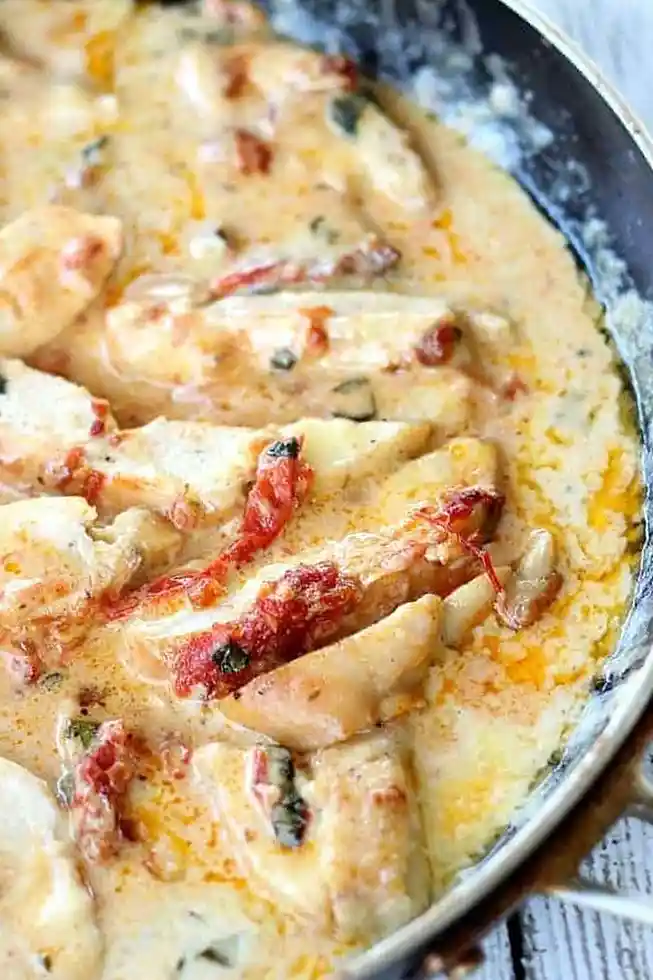
List of ingredients
- 1 cup chicken broth – provides a savory liquid base.
- 1/4 cup alcohol-free white wine substitute or extra chicken broth – adds a subtle acidity.
- 2 Tbsp butter – adds richness to the sauce.
- Juice from one lemon – brightens the heavy cream.
- 2 cups heavy cream – creates a silky, thick texture.
- 2 Tbsp olive oil (divided) – used for searing and sautéing.
- 1/4 cup all-purpose flour – used for dredging the chicken.
- 3/4 tsp sea salt – enhances all flavors.
- 1/4 tsp black pepper – adds a mild spice.
- 3-4 chicken breasts – pounded thin for uniform cooking.
- 4 medium tomatoes – sliced into 1/4-inch rounds.
- 3 garlic cloves – minced for aromatic depth.
- Salt and pepper – for additional seasoning of tomatoes and chicken.
- 1/2 cup grated Parmesan cheese – thickens and salts the sauce.
- 3 Tbsp fresh basil – chopped for a fresh herbal finish.
- 2 Tbsp toasted pine nuts – adds a nutty crunch.
- Extra Parmesan cheese – for garnishing to taste.
step-by-step instructions
- Prepare the cream sauce: Simmer the chicken broth and alcohol-free white wine substitute in a pan until the liquid reduces by about one-third. Lower the heat and stir in the butter, lemon juice, and heavy cream, keeping the mixture warm on low heat.
- Sear the chicken: Season the pounded chicken breasts with salt and pepper, then lightly dredge them in all-purpose flour. Heat 1 tablespoon of olive oil in a skillet over medium-high heat and cook the chicken for about 3 minutes per side until almost cooked through, then move them to an oven-safe plate.
- Caramelize the tomatoes: Use the same skillet and add the remaining 1 tablespoon of olive oil along with the sliced tomatoes in a single layer. Season with salt and pepper and cook for about 5 minutes until they soften and caramelize, then add the minced garlic and cook for another 1-2 minutes.
- Combine the components: Preheat your oven to 250°F. Slice the seared chicken and return the pieces to the skillet on top of the tomatoes. Stir the Parmesan cheese into the warm cream sauce and pour it over the chicken, tossing gently to combine.
- Bake to finish: Cover the skillet and place it in the oven for 20 minutes to allow the sauce to reduce and the flavors to meld. Give the sauce a quick stir before serving if it has separated slightly.
- Garnish and serve: Top the dish with fresh basil, toasted pine nuts, and additional Parmesan cheese. Serve immediately with crusty bread, pasta, or rice.
Essential Preparation Techniques
Pounding Chicken for Consistent Thickness
Place chicken breasts between two sheets of plastic wrap or inside a zip-top bag. Use a meat mallet or a heavy rolling pin to pound the thickest part of the breast until the entire piece is of uniform thickness. This ensures the chicken cooks evenly and prevents the edges from drying out while the center reaches a safe temperature.
Selecting and Slicing Fresh Tomatoes
Choose medium-sized tomatoes that are firm but ripe to ensure they hold their shape during the caramelization process. Slice them into consistent 1/4-inch thick rounds to ensure they all soften at the same rate. If the tomatoes are too watery, pat the slices dry with a paper towel before adding them to the pan.
Dredging Chicken Correctly
Combine the flour, sea salt, and black pepper in a shallow dish. Press the chicken into the flour mixture and shake off any excess before placing it in the pan. A thin coating of flour helps the chicken brown more effectively and helps thicken the sauce later in the process.
Sauce Texture and Flavor Management
Reducing Liquids for Concentration
Simmering the broth and wine substitute before adding the dairy concentrates the savory notes. By reducing the liquid by one-third, you remove excess water and intensify the base flavor. This prevents the final sauce from becoming too watery or thin.
Integrating Butter and Cream
Add the butter and cream only after the heat has been lowered to avoid boiling the dairy. Stirring the butter in first helps create a smooth emulsion. The heavy cream provides the necessary fat content to keep the sauce stable and velvety.
Preventing Sauce Separation
Cream-based sauces can separate if they are overheated or sit for too long. If you notice a thin layer of oil on top, simply stir the sauce gently with a whisk or spoon. The 250°F oven temperature is low enough to meld flavors without breaking the emulsion.
Ingredient Substitutions and Modifications
Using Mushrooms for a Vegetarian Version
Replace the chicken breasts with thick slices of portobello or cremini mushrooms. Sauté the mushrooms in the same manner as the chicken, ensuring they brown well to provide a meaty texture. All other sauce ingredients remain the same to maintain the creamy tomato profile.
Replacing Heavy Cream for Lighter Options
If you prefer a lighter sauce, you can use half-and-half, though it may be slightly thinner. For a dairy-free alternative, full-fat coconut cream works well, though it will add a slight coconut flavor. Avoid using skim milk as it is likely to curdle when combined with the lemon juice.
Alternative Nut Options for Garnish
If pine nuts are unavailable, toasted slivered almonds or chopped walnuts provide a similar crunch. Ensure the nuts are lightly toasted in a dry pan for 2-3 minutes until fragrant. This process removes the raw taste and enhances the earthy contrast to the creamy sauce.
Using Canned Tomatoes in a Pinch
While fresh tomatoes are preferred for caramelization, canned diced tomatoes can be used if drained thoroughly. Sauté them longer than fresh slices to evaporate excess moisture. Be mindful that canned tomatoes are often more acidic, so you may need to adjust the lemon juice amount.
Flavor Enhancements and Variations
Incorporating Fresh Baby Spinach
Stir in two cups of fresh baby spinach just before placing the skillet in the oven. The residual heat will wilt the spinach perfectly during the 20-minute baking period. This adds a nutritional boost and a vibrant green color to the dish.
Adding a Spicy Element
Add a pinch of crushed red pepper flakes when sautéing the garlic. This introduces a subtle heat that cuts through the richness of the heavy cream and Parmesan. Adjust the amount based on your preference for spice levels.
Enhancing with Different Fresh Herbs
While basil is traditional, adding a teaspoon of fresh chopped oregano or thyme can provide a more complex herbal profile. Add these herbs along with the garlic to allow their oils to release in the hot olive oil. Fresh parsley added at the end also provides a bright finish.
Serving and Pairing Suggestions
Serving with Long Pasta Noodles
Linguine or fettuccine are ideal choices as their wide surface area captures the cream sauce efficiently. Toss the cooked pasta directly into the skillet or ladle the chicken and sauce over a bed of noodles. Ensure the pasta is cooked al dente to provide a textural contrast.
Using Grains as a Base
Basmati or Jasmine rice serves as an excellent neutral base that absorbs the extra sauce. For a creamier option, use a Parmesan risotto. This pairing makes the meal feel more substantial and filling.
Pairing with Roasted Root Vegetables
Roasted carrots, parsnips, or asparagus provide a healthy and colorful accompaniment. Roast them in the oven at a higher temperature before starting the chicken, then keep them warm. The sweetness of roasted carrots complements the acidity of the tomatoes.
The Importance of Crusty Bread
A toasted baguette or a slice of sourdough is highly recommended for this recipe. The bread is essential for soaking up the remaining cream sauce from the plate. Garlic bread is another excellent choice to enhance the savory notes of the dish.
Storage and Reheating Guidelines
Refrigeration Process
Allow the chicken and sauce to cool slightly before transferring them to an airtight container. Ensure the lid is sealed tightly to prevent the sauce from absorbing odors from other foods in the fridge. Store the dish in the coldest part of the refrigerator.
Recommended Storage Duration
This dish is best consumed within 3 to 4 days of preparation. Because it contains heavy cream and chicken, it should not be kept longer than this timeframe. If the sauce appears too thick after refrigeration, it will loosen during reheating.
Limitations on Freezing
It is not recommended to freeze this dish because cream-based sauces often break and separate upon thawing. The texture of the chicken may also become grainy. For the best experience, prepare only what you can eat within a few days.
Stovetop Reheating Method
Place the leftovers in a skillet over low to medium heat. Add a tablespoon of water or chicken broth to help emulsify the sauce as it warms. Stir gently and cover the pan to keep the chicken moist until heated through.
Microwave Reheating Precautions
Heat the dish in short 30-second bursts, stirring between each interval. This prevents the cream from overheating in one spot and curdling. Use a microwave-safe cover to retain moisture and prevent the chicken from drying out.
Troubleshooting Common Cooking Issues
Fixing a Sauce That Is Too Thick
If the sauce reduces too much in the oven and becomes overly thick, stir in a small amount of chicken broth or water. Do this one tablespoon at a time until the desired consistency is reached. Stir gently to avoid breaking the sauce.
Preventing Overcooked Chicken
Avoid cooking the chicken fully during the initial searing phase. The 20 minutes in the oven at 250°F is designed to finish the cooking process gently. Use a meat thermometer to ensure the internal temperature reaches 165°F without exceeding it.
Managing Excessive Tomato Moisture
If the tomatoes release too much water in the pan, increase the heat slightly to evaporate the liquid before adding the garlic. This ensures the tomatoes caramelize rather than boil. You can also drain excess liquid from the pan before pouring in the cream sauce.
Frequently Asked Questions
Can I use canned tomatoes?
Yes, you can use canned diced tomatoes, but make sure to drain them well first. Fresh tomatoes are preferred because they caramelize better, which provides a deeper flavor base for the sauce.
How do I prevent the sauce from curdling?
Avoid boiling the sauce once the cream and lemon juice have been added. Keep the heat low and use heavy cream, as lower-fat alternatives like milk or half-and-half are more prone to separation.
Can I make this in a slow cooker?
This specific recipe relies on searing and caramelization, which cannot be replicated in a slow cooker. However, you can slow-cook the chicken and tomatoes and stir in the cream and Parmesan during the last 30 minutes of cooking.
Why do I need to pound the chicken?
Pounding the chicken ensures that the thick breast and thin edges cook at the same rate. This prevents the edges from becoming tough and rubbery while you wait for the center to be fully cooked.
Can I substitute the pine nuts?
Yes, you can use toasted slivered almonds, walnuts, or even omit them entirely. The nuts provide a textural contrast, but the dish remains flavorful without them.
Print
Creamy Tomato Basil Chicken with Parmesan Sauce
- Total Time: 1 hour 45 minutes
- Yield: 6 servings 1x
- Diet: General
Description
This dish is ALMOST a one skillet meal. The sauce is started in a sauté pan and then poured over everything in the skillet. Serve with vegetables, over noodles or rice.
Ingredients
- 1 cup chicken broth
- 1/4 cup alcohol-free white wine
- 2 Tbsp butter
- Juice from one lemon
- 2 cups heavy cream
- 2 Tbsp olive oil (divided)
- 1/4 cup all-purpose flour
- 3/4 tsp sea salt
- 1/4 tsp black pepper
- 3–4 chicken breasts (pounded thin for even cooking)
- 4 medium tomatoes (sliced to 1/4″ thickness)
- 3 garlic cloves (minced)
- salt and pepper
- 1/2 cup grated Parmesan cheese
- 3 Tbsp fresh basil
- 2 Tbsp toasted pine nuts
- Parmesan cheese (to taste)
Instructions
- Start the cream sauce: Simmer chicken broth and alcohol-free white wine until reduced by about one-third. Lower heat and add butter, lemon juice and cream. Keep warm on low heat.
- Cook the chicken: Season and lightly dredge chicken in flour, salt, and pepper. Cook in a skillet with 1 tablespoon olive oil over medium-high heat until almost cooked through, about 3 minutes per side. Transfer to an oven-safe plate and keep warm.
- Caramelize the tomatoes: In the same pan, add remaining 1 tablespoon olive oil and tomatoes in a single layer. Season with salt and pepper, cook until softened and slightly caramelized, about 5 minutes. Add garlic and cook another minute or two.
- Combine: Heat oven to 250℉. Slice chicken and return it to the skillet with the tomatoes. Stir Parmesan into the cream sauce, then pour over chicken. Gently toss to combine.
- Bake: Cover the skillet and place it in oven for 20 minutes.
- Finish and serve: Finish with fresh basil and toasted pine nuts. Top with more basil and extra Parmesan.
Notes
Pound chicken evenly for the best texture. Don’t rush the tomatoes—they develop flavor as they caramelize. Use freshly grated Parmesan for the smoothest sauce. Use heavy cream for the best texture to prevent curdling.
- Prep Time: 15 minutes
- Cook Time: 30 minutes
- Category: Main Dish
- Method: Stovetop and Oven
- Cuisine: Italian
Nutrition
- Serving Size: 1 serving
- Calories: 428 kcal
- Sugar: 2 g
- Sodium: 629 mg
- Fat: 41 g
- Saturated Fat: 23 g
- Unsaturated Fat: 18 g
- Trans Fat: 0 g
- Carbohydrates: 10 g
- Fiber: 1 g
- Protein: 30 g
- Cholesterol: 126 mg