
This traditional Korean stir fry combines chewy sweet potato noodles with a variety of crisp vegetables and tender beef. It is a versatile dish that can be served as a main course or a side for special occasions.
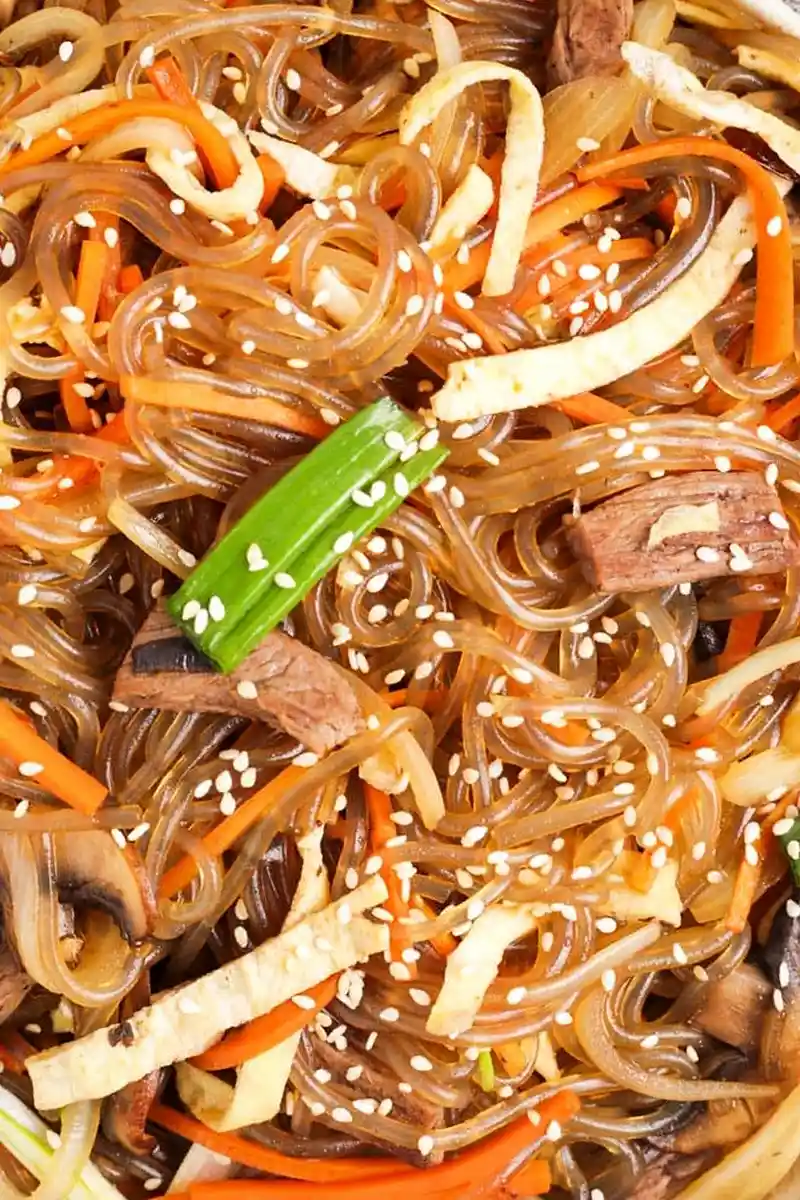
List of ingredients
- 12 ounces sweet potato glass noodles – ensures a bouncy texture.
- 16 ounces beef – cut into thin strips (flank, skirt, or ribeye work best).
- 2 large eggs – beaten for the egg crepe.
- 1 large carrot – peeled and julienned into thin matchsticks.
- 1 medium yellow onion – thinly sliced.
- 3 mushrooms – thinly sliced, using any variety such as shiitake or button.
- 2 cups baby spinach – packed tightly.
- 2 stalks green onion – cut into 1 inch pieces.
- Oil – for sautéing and frying.
- Toasted sesame seeds – optional for final garnish.
- Salt and black pepper – for seasoning proteins and vegetables.
- 7 tablespoons soy sauce – light sodium preferred.
- 3 tablespoons honey – or substitute with additional brown sugar.
- 2 tablespoons brown sugar – light or dark.
- 2 tablespoons toasted sesame oil – provides the signature nutty flavor.
step-by-step instructions
- Prepare the sauce: Mix the soy sauce, honey, brown sugar, and toasted sesame oil in a small bowl. Set the mixture aside for later use.
- Cook the noodles: Boil a large pot of water and add the sweet potato glass noodles. Cook for 10-15 minutes, stirring occasionally, until they are tender. Drain immediately and rinse with cold water until cooled. Drain again and optionally cut the noodles into shorter lengths with kitchen shears.
- Make the egg crepe: Heat a small amount of oil in a large nonstick pan over medium heat. Pour in the beaten eggs and tilt the pan to create a thin layer. Cook until set, flip briefly, then remove. Once cool, fold and cut into thin strips.
- Sear the beef: Increase heat to medium-high and add oil. Season the beef strips with salt and pepper, then sear until golden brown and cooked through, about 4 to 5 minutes. Remove from the pan.
- Sauté the vegetables: Over medium heat with fresh oil, sauté vegetables based on their density. Start with carrots for 15-30 seconds, then add onions and green onion bottoms, followed by mushrooms, spinach, and finally green onion tops. Season each addition with salt and pepper, then remove all vegetables from the pan.
- Assemble the dish: Pour the prepared sauce into the large pan over medium heat. Stir until the sugar dissolves and the sauce bubbles, then reduce heat to low. Add the cooked noodles and toss until coated. Stir in the beef, vegetables, and egg strips until evenly combined.
- Final serve: Divide into portions or serve family style. Garnish with toasted sesame seeds and serve hot, warm, or at room temperature.
Protein Selection and Preparation
Using Flank Steak for Tenderness
Flank steak is a highly recommended cut for this recipe because it remains firm during the searing process. To ensure the beef is not chewy, slice the strips very thinly across the grain of the meat. This technique breaks down tough muscle fibers, resulting in a more tender bite.
Substituting with Chicken Breast
If you prefer a lighter protein, chicken breast can be used as an alternative to beef. Slice the breast into thin, uniform strips to ensure they cook quickly and evenly. Sauté the chicken using the same method as the beef, ensuring it does not overcook and become dry.
Adapting for Firm Tofu
To make a vegetarian version, replace the meat with extra-firm tofu. Press the tofu to remove excess water, slice into strips, and sear until golden brown. Since tofu is more porous than meat, you may want to increase the sauce quantity slightly to keep the dish moist.
Slicing Meat Against the Grain
Identifying the grain of the meat is crucial for the best texture. Look for the direction the muscle fibers run and cut perpendicular to those lines. This creates shorter fibers that are much easier to chew, which complements the chewiness of the glass noodles.
Seasoning Meat for Depth
Lightly seasoning the beef with salt and black pepper before searing helps create a savory crust. Avoid over-salting the meat since the soy sauce in the final assembly adds significant sodium. A pinch of pepper enhances the natural flavor of the beef without overpowering the sauce.
Vegetable Customization and Prep
Selecting the Best Mushrooms
Shiitake mushrooms are traditional for japchae as they provide a deep, earthy flavor. However, oyster mushrooms or button mushrooms are practical substitutes that offer a similar texture. Ensure they are sliced thinly so they cook at the same rate as the onions.
Precision Cutting for Carrots
Julienning carrots into thin matchsticks ensures they cook quickly while maintaining a slight crunch. Uniform size is important so that no single piece remains raw while others become overcooked. Use a mandoline or a sharp chef’s knife for consistent thickness.
Managing Spinach Wilt
Spinach cooks very quickly and should be added toward the end of the vegetable sauté process. Stir-fry the spinach just until it begins to wilt to prevent it from becoming mushy. Overcooking the spinach can release too much water, which may dilute the final sauce.
Preparing Green Onion Sections
Separate the white bottoms from the green tops of the green onions. Sauté the white parts earlier with the onions for a deeper flavor, while adding the green tops at the very end. This preserves the bright color and fresh taste of the green portions.
Adding Red Bell Peppers
For added visual contrast and a sweet flavor, you can add thinly sliced red bell peppers. Sauté them along with the carrots and onions. They provide a bright red hue that complements the golden noodles and green spinach.
Mastering Glass Noodle Texture
Precise Boiling Times
The cooking time for sweet potato noodles varies by brand, so check them frequently. The noodles are done when they are translucent and break easily when pinched. Overboiling leads to a mushy consistency that lacks the characteristic bounce of japchae.
The Cold Water Rinse Method
Rinsing the noodles under cold running water immediately after boiling is a critical step. This process stops the cooking process and washes away excess surface starch. Without rinsing, the noodles will stick together and become gummy as they cool.
Proper Draining Techniques
Ensure the noodles are very well drained before adding them to the sauce. Excess water on the noodles will dilute the flavors and prevent the sauce from adhering properly. Using a colander and letting them sit for a few minutes is recommended.
Using Kitchen Shears for Length
Sweet potato noodles can be very long, making them difficult to stir and eat. Using kitchen shears to cut the noodles into 6-to-8 inch segments after boiling is a practical solution. This makes the dish easier to toss and more convenient for serving.
Sauce Composition and Adjustments
Balancing Sweetness with Brown Sugar
The combination of honey and brown sugar creates a complex sweetness with deep caramel notes. If you prefer a cleaner sweetness, you can use more honey or switch to granulated white sugar. The sugar is essential for balancing the saltiness of the soy sauce.
Using Low-Sodium Soy Sauce
Low-sodium soy sauce allows you to control the salt level more effectively. If you use regular soy sauce, reduce the amount by one tablespoon to prevent the dish from becoming too salty. The soy sauce also provides the characteristic golden-brown color to the noodles.
Integrating Toasted Sesame Oil
Toasted sesame oil should be added to the sauce or at the end of cooking for maximum aroma. Because its flavor is volatile, heating it too long on high heat can diminish its nuttiness. It provides the essential aromatic finish that defines Korean stir fries.
Substituting Honey for Vegan Options
To make the sauce vegan, replace the honey with maple syrup or additional brown sugar. Maple syrup provides a similar viscosity and sweetness level without using animal products. Ensure the substitute is thoroughly mixed into the soy sauce before heating.
Advanced Cooking Techniques
Sautéing by Heartiness
Cooking vegetables in order of their density ensures every ingredient reaches the perfect tenderness. Harder vegetables like carrots need more time, while leafy greens like spinach cook in seconds. This staggered approach prevents the vegetables from becoming an uneven mix of raw and overcooked pieces.
Creating a Thin Egg Crepe
To achieve a professional egg strip, pour the beaten eggs into a hot pan and tilt it immediately. This spreads the egg into a very thin, crepe-like sheet. Once cooled, folding the crepe allows you to cut very precise, thin ribbons that look elegant in the final dish.
Preventing Sauce Evaporation
Keep the heat on low when adding the noodles to the sauce to prevent the liquids from evaporating too quickly. The goal is to coat the noodles, not to reduce the sauce into a thick glaze. If the sauce becomes too thick, add a tablespoon of water to loosen it.
Tossing for Even Coating
Using a large mixing bowl instead of a pan for the final assembly can make tossing easier. This ensures that every strand of noodle and every piece of vegetable is evenly coated in the sauce. Gentle tossing prevents the noodles from breaking.
Storage and Food Safety
Air-Tight Container Selection
Store leftover japchae in a high-quality airtight container to prevent it from absorbing other refrigerator odors. Since the noodles contain oil and sugar, they can pick up smells easily. Pressing a piece of parchment paper on top of the noodles can help prevent sticking.
Refrigeration Duration
Japchae can be stored in the refrigerator for 2 to 3 days. Over time, the noodles will naturally absorb more of the sauce and may lose some of their bounce. For the best quality, consume the dish within 48 hours of preparation.
Avoiding Noodle Clumping
When storing the dish, ensure it has cooled completely to room temperature before sealing the lid. Trapping steam inside the container can create excess moisture, which makes the noodles clump together and lose their chewy texture.
Effective Reheating Methods
Microwave Heating with Steam
When reheating in the microwave, cover the dish loosely with a lid or damp paper towel. This creates a steaming effect that rehydrates the noodles. Stir the noodles halfway through the heating process to ensure an even temperature throughout.
Stovetop Reheating with Water
For the best texture, reheat japchae in a pan over medium heat. Add a small splash of water or a teaspoon of sesame oil to the pan. Gently stir until the noodles are warmed through and the water has evaporated, which restores the glossy finish.
Serving at Room Temperature
Japchae is one of the few noodle dishes that tastes excellent at room temperature. If you are serving it at a party, you can prepare it in advance and leave it out for a short period. The flavors often meld together and become more rounded as the dish cools.
Common Troubleshooting
Correcting Mushy Noodles
If your noodles turn out mushy, it is likely due to overboiling or skipping the cold rinse. To fix this in future batches, set a timer and test a noodle every minute after the 10-minute mark. Always rinse until the water runs clear and the noodles feel cool.
Fixing Over-Salted Sauce
If the final dish tastes too salty, add a small amount of honey or a splash of water. A squeeze of fresh lime juice or a teaspoon of rice vinegar can also help balance the salinity. These additions cut through the salt and brighten the overall flavor profile.
Managing Oil Accumulation
If you notice too much oil pooling at the bottom of the pan, you can carefully blot the excess with a paper towel before serving. Use a nonstick pan to reduce the amount of oil needed for sautéing the vegetables and searing the beef.
Frequently Asked Questions
What does japchae taste like?
Japchae has a balanced flavor profile that is simultaneously sweet and savory. The toasted sesame oil provides a nutty aroma, while the soy sauce and sugar create a rich glaze. The texture is a mix of bouncy noodles and tender-crisp vegetables.
Is japchae served hot or cold?
It can be served hot, warm, room temperature, or slightly chilled. Most people prefer it hot or at room temperature because the sesame oil flavor is more pronounced. Chilled japchae is a refreshing option during the summer months.
How long does it take to cook japchae noodles?
Typically, sweet potato glass noodles take between 10 to 15 minutes to boil. The exact time depends on the thickness of the noodles and the brand used. You can tell they are done when the centers are clear and they break easily when pulled.
Print
Authentic Korean Glass Noodle Stir Fry (Japchae)
- Total Time: 30 minutes
- Yield: 6 servings 1x
- Diet: General
Description
Japchae (잡채), or Korean glass noodle stir fry, is a popular Korean noodle dish made with bouncy sweet potato noodles and loaded with vegetables, eggs, and beef, making it perfect as a standalone meal or a side dish.
Ingredients
- 12 ounces sweet potato glass noodles
- 16 ounces beef cut into strips
- 2 large egg (beaten)
- 1 large carrot (peeled and julienned)
- 1 medium yellow onion (thinly sliced)
- 3 mushrooms (thinly sliced)
- 2 cups baby spinach (packed)
- 2 stalks green onion (cut into 1 inch pieces)
- oil (for cooking)
- Toasted sesame seed
- Salt and black pepper (as needed)
- 7 tablespoons soy sauce (light sodium)
- 3 tablespoons honey
- 2 tablespoons brown sugar
- 2 tablespoons toasted sesame oil
Instructions
- Make the japchae sauce: Mix together all the ingredients for the sauce and set aside.
- Cook the japchae noodles: In a large pot of boiling water, add the japchae noodles and boil until the noodles are cooked through, about 10-15 minutes depending on the brand. Stir occasionally to prevent sticking.
- Rinse and prep: Once cooked, drain immediately and rinse thoroughly with cold water until completely cooled. Drain well and optionally cut into shorter pieces with kitchen shears.
- Make the egg crepe: In a large nonstick pan over medium heat, add a small amount of oil. Pour in beaten eggs, tilt pan to spread thin, and cook until set. Flip and cook briefly. Once cooled, fold and cut into thin strips.
- Cook the beef: In the same pan over medium high heat, add oil. Add beef and season with salt and pepper. Sear until golden brown and cooked through, about 4 to 5 minutes. Remove and set aside.
- Sauté the vegetables: In the same pan over medium heat, add oil. Sauté vegetables (carrots, onions, green onion bottoms, mushrooms, spinach, and green onion tops) according to their heartiness, seasoning each with salt and pepper. Remove and set aside.
- Assemble: In the same pan over medium heat, add sauce and stir until sugar dissolves and it bubbles. Turn heat to low. Add noodles and mix until coated, then toss in vegetables, beef, and egg strips until combined.
- Serve: Portion the japchae and serve with a sprinkle of sesame seeds.
Notes
Japchae can be enjoyed hot, warm, room temperature, or slightly chilled. To store, let cool completely and keep in an airtight container in the fridge for 2 to 3 days.
- Prep Time: 10 minutes
- Cook Time: 20 minutes
- Category: Dinner
- Method: Stir-fry
- Cuisine: Korean
Nutrition
- Serving Size: 1 serving
- Calories: 436.4 kcal
- Sugar: 15.3 g
- Sodium: 1259.4 mg
- Fat: 10.4 g
- Saturated Fat: 2.8 g
- Unsaturated Fat: 6.5 g
- Trans Fat: 0.01 g
- Carbohydrates: 64.7 g
- Fiber: 2 g
- Protein: 21.7 g
- Cholesterol: 107.4 mg