
This Spanish Paella is a hearty one-pot meal combining chicken and seafood. It is designed for home kitchens using standard equipment while maintaining traditional flavors.

List of ingredients
- 1/4 cup Extra virgin olive Oil – use Spanish EVOO for best results.
- 1 Onion – diced.
- 1 bell pepper – diced (mix of red and green is recommended).
- 4 cloves Garlic – minced.
- 3 roma tomatoes – very finely diced (or 8 oz. tomato sauce).
- 1 Bay leaf – whole.
- 1 teaspoon paprika – sweet or smoked.
- 1 pinch saffron threads – high quality.
- Salt and pepper – to taste.
- 1/4 cup alcohol-free white wine or vegetable broth – for acidity.
- 4 boneless, skinless chicken thighs – cut into pieces.
- 1/4 cup fresh chopped parsley – divided.
- 2 cups Spanish Rice – such as Bomba or Calaspara.
- 5 cups Chicken Broth – warm.
- 1/2 cup frozen peas – thawed.
- 1/2 lb Jumbo Shrimp or prawns – about 12, peeled, tail on.
- 1/2 lb Mussels – about 10-12, cleaned and beards removed.
- 8 oz calamari rings – cleaned.
- Lemons – sliced for garnish.
step-by-step instructions
- Sauté the aromatics: Add olive oil to a skillet over medium heat. Add the onion, bell peppers, and garlic and cook until the onion is translucent.
- Build the flavor base: Add chopped tomato, bay leaf, paprika, saffron, salt, and pepper. Stir and cook for 5 minutes.
- Deglaze the pan: Add the alcohol-free white wine or vegetable broth and cook for 10 minutes. Taste and add salt if needed.
- Incorporate proteins and rice: Add chicken pieces, 2 tablespoons of chopped parsley, and the rice to the pot. Cook for 1 minute.
- Add liquid: Pour the broth slowly all around the pan and jiggle the pan to get the rice into an even layer. Do not stir the mixture after this point.
- Simmer the rice: Bring the mixture to a boil, then reduce heat to medium low. Give the pan a gentle shake back and forth once or twice during cooking to settle the grains.
- Create the crust: Cook uncovered for 15-18 minutes. Do not stir the rice so that a crispy crust, called the socarrat, forms at the bottom.
- Add seafood and peas: Nestle the shrimp, mussels, and calamari into the rice mixture. Sprinkle the peas on top and continue to cook without stirring for about 5 more minutes.
- Final check: Ensure most of the liquid is absorbed and the rice at the top is nearly tender. If the rice is still uncooked, add 1/4 cup more water or broth and continue cooking.
- Rest the dish: Remove the pan from heat and cover with a lid or tinfoil. Place a kitchen towel over the lid and let it rest for 10 minutes.
- Finish and serve: Garnish with fresh parsley and lemon slices before serving.
Rice Selection and Preparation
Choosing Bomba Rice for Maximum Absorption
Bomba rice is the traditional choice for paella because it is a short-grain variety that can absorb three times its volume in liquid. Unlike other rices, it maintains its shape and does not release as much starch, preventing the dish from becoming creamy. This allows each grain to remain distinct while absorbing the broth.
Using Medium Grain Calrose Rice
If Spanish rice is unavailable, medium grain Calrose rice is a suitable alternative found in most grocery stores. Because it does not absorb as much liquid as Bomba, you must reduce the chicken broth to 3 3/4 cups. Avoid using long-grain or Arborio rice, as they will change the texture significantly.
Maintaining Starch by Skipping the Rinse
Do not wash the rice before adding it to the pan. Keeping the outer layer of starch helps the rice adhere slightly and contributes to the formation of the bottom crust. Rinsing the rice can result in a dish that lacks the characteristic structure of authentic paella.
Seafood Handling Guide
Removing Mussels’ Beards and Debris
Mussels must be cleaned thoroughly before they are added to the pan. Use your fingers or a small knife to pull away the ‘beard,’ which is the fibrous clump of threads sticking out of the shell. If any shells are open and do not close when tapped, discard them immediately.
Thawing Frozen Seafood Safely
If using frozen shrimp, mussels, or calamari, thaw them in the refrigerator overnight. Thawing seafood slowly prevents the proteins from breaking down and maintains a better texture. Avoid thawing seafood in warm water, as this can encourage bacterial growth.
Evaluating Shrimp and Calamari Freshness
Fresh seafood should have a mild, salty scent similar to the ocean rather than a strong fishy odor. The flesh of the shrimp should be translucent and firm to the touch. Calamari rings should be white and free of any slimy residue.
Mastering the Socarrat
The Role of No-Stirring in Crust Formation
The socarrat is the caramelized layer of rice at the bottom of the pan. Stirring the rice releases starch and prevents this crust from forming, which instead leads to a mushy consistency. Once the broth is added, the rice must remain undisturbed to achieve this texture.
Listening for the Socarrat Sizzle
As the liquid evaporates, the sound of the pan will change from a bubbling simmer to a faint crackling or sizzling sound. This sound indicates that the rice is frying in the remaining oil at the bottom. This is the signal that the crust is forming successfully.
Managing Heat to Prevent Burning
Keep the heat at medium-low to ensure the crust caramelizes without burning. If you smell scorched rice, immediately remove the pan from the heat. The goal is a golden-brown toasted layer, not a black charred residue.
Cooking Equipment Options
Utilizing a Wide Skillet
A standard 12-inch or 14-inch wide skillet is a practical substitute for a professional paella pan. The width is important because it allows the rice to spread in a thin layer, which promotes even cooking and moisture evaporation. Ensure the skillet has a flat bottom for consistent heat distribution.
The Advantage of a Traditional Paella Pan
A traditional paella pan is made of carbon steel and has a very wide, shallow shape. This design maximizes the surface area in contact with the heat and allows liquid to evaporate more quickly. This is the most efficient tool for creating a perfect socarrat across the entire base.
Ensuring Even Heat Distribution
If using a gas burner, ensure the flame reaches the edges of the pan. If you have a small burner and a large pan, you may need to rotate the pan occasionally during the initial sautéing phase. However, once the rice is simmering, avoid moving the pan too much.
Flavor Variations and Substitutions
Creating a Meat-Free Vegetable Paella
To make a vegetarian version, omit the chicken and seafood entirely. Increase the quantity of vegetables by adding artichoke hearts, green beans, mushrooms, olives, and asparagus. Sauté these vegetables in the first step along with the bell peppers and onions.
Swapping Chicken for Turkey or Rabbit
Turkey loin or rabbit are excellent alternatives to chicken thighs. Brown the meat in hot oil as the first step, then remove it from the pan while sautéing the vegetables. Return the browned meat to the pan in the step before boiling the broth.
Using Turkey Sausage as a Flavor Substitute
For a spicy kick similar to traditional sausages, use a spicy turkey sausage sliced into half-inch discs. Brown the sausage slices first, set them aside, and add them back in with the rice and chicken. This adds a depth of smokiness to the broth.
Serving and Presentation
Using Lemon to Balance Richness
Fresh lemon slices are more than a garnish; the acidity cuts through the richness of the olive oil and seafood. Squeeze a fresh lemon wedge over the rice just before eating to brighten the overall flavor profile. This is a standard practice in Spanish dining.
Adding Parsley for Freshness
Freshly chopped parsley provides a clean, herbal contrast to the heavy saffron and paprika notes. Sprinkle a generous amount of parsley over the top of the dish after it has rested. This adds a pop of color and a fresh aromatic element.
Serving Directly from the Pan
Paella is traditionally served directly from the pan it was cooked in. This keeps the dish warm for longer and showcases the arrangement of the seafood and peas. Place the pan in the center of the table for a communal dining experience.
Storage and Reheating
Refrigerating Seafood and Rice
Store leftover paella in an airtight container in the refrigerator for up to two days. Keep the seafood and rice together, but be aware that the crispy socarrat will soften as it absorbs moisture in the fridge. Ensure the dish is cooled slightly before sealing the container.
Reheating with Added Moisture
To reheat paella, use a skillet over medium-low heat instead of a microwave. Add a tablespoon of water or chicken broth to the pan and cover it with a lid to steam the rice. This prevents the grains from drying out and helps restore some tenderness.
Limitations of Freezing Paella
Freezing is not recommended for paella, especially versions containing seafood and mussels. The freezing and thawing process destroys the texture of the rice, making it mushy. Additionally, the seafood can become rubbery and lose its flavor.
Troubleshooting Common Issues
Fixing Undercooked Rice Grains
If the liquid has evaporated but the rice is still too firm, do not panic. Add 1/4 cup of warm chicken broth or water around the edges of the pan. Cover the pan and cook on low for another 5 minutes to allow the steam to finish the grains.
Preventing a Mushy Texture
Mushiness is usually caused by stirring the rice or using too much liquid. If the dish looks too wet toward the end of the cooking time, increase the heat slightly for the last few minutes. This will evaporate the excess moisture and help set the rice.
Avoiding Overcooked Seafood
Seafood cooks much faster than rice, which is why it is added at the very end. If you add shrimp or calamari too early, they will become rubbery. Nestling them on top ensures they steam perfectly while the rice finishes.
Frequently Asked Questions
Can I Use Long Grain Rice?
Long grain rice is not recommended because it does not absorb flavors and liquids in the same way as short-grain Spanish rice. It often results in a texture that is too fluffy and separate, failing to create the necessary bind for a proper paella.
How Do I Know if Mussels are Ready?
Mussels are cooked when their shells pop open completely. If any mussels remain closed after the final cooking and resting period, they should be discarded as they may not have been fresh or didn’t cook through.
Is Saffron Necessary for the Flavor?
Saffron provides the distinct yellow color and an earthy, floral aroma that defines paella. If you cannot find saffron, a pinch of turmeric can be used for the color, though it will not replicate the specific taste of saffron.
Print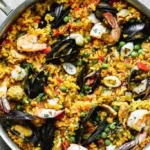
Authentic Spanish Paella
- Total Time: 60 minutes
- Yield: 6 servings 1x
- Diet: General
Description
You can make a delicious, authentic Paella–the most popular dish of Spain–in your own kitchen with simple ingredients like rice, saffron, vegetables, chicken, and seafood.
Ingredients
- 1/4 cup Extra virgin olive Oil
- 1 Onion, diced
- 1 bell pepper, diced
- 4 cloves Garlic
- 3 roma tomatoes, very finely diced (or 8 oz. tomato sauce)
- 1 Bay leaf
- 1 teaspoon paprika, sweet or smoked
- 1 pinch saffron threads
- Salt and pepper
- 1/4 cup alcohol-free white wine substitute
- 4 boneless, skinless chicken thighs, cut into pieces
- 1/4 cup fresh chopped parsley, divided
- 2 cups Spanish Rice
- 5 cups Chicken Broth
- 1/2 cup frozen peas
- 1/2 lb Jumbo Shrimp or prawns, peeled, tail on
- 1/2 lb Mussels, cleaned properly
- 8 oz calamari rings
- Lemons, for garnish
Instructions
- Sauté: Add olive oil to a skillet over medium heat. Add the onion, bell peppers and garlic and cook until onion is translucent. Add chopped tomato, bay leaf, paprika, saffron salt and pepper. Stir and cook for 5 minutes.
- Deglaze: Add alcohol-free white wine substitute and cook for 10 minutes. Taste and add salt if needed.
- Combine: Add chicken pieces, 2 tablespoons chopped parsley and rice to the pot. Cook for 1 minute.
- Liquid: Pour the broth slowly all around the pan and jiggle the pan to get the rice into an even layer. (Do not stir the mixture going forward!).
- Simmer: Bring mixture to a boil. Reduce heat to medium low. Give the pan a gentle shake back and forth just once or twice during cooking.
- Seafood: Cook for about 15-18 minutes (uncovered), then nestle the shrimp, mussels and calamari into the mixture, sprinkle peas on top and continue to cook (without stirring) for about 5 more minutes.
- Rest: Remove pan from heat and cover pan with a lid or tinfoil. Place a kitchen towel over the lid and allow to rest for 10 minutes.
- Finish: Garnish with fresh parsley and lemon slices. Serve.
Notes
Use Spanish rice (bomba, calaspara, or arroz redonda) for best results; if substituting with medium grain rice, reduce broth to 3 3/4 cups. Do not stir the rice during cooking to allow the ‘socarrat’ (crispy crust) to form at the bottom.
- Prep Time: 20 minutes
- Cook Time: 40 minutes
- Category: Main Course
- Method: Stovetop
- Cuisine: Spanish
Nutrition
- Serving Size: 1 serving
- Calories: 535 kcal
- Sugar: 3 g
- Sodium: 1159 mg
- Fat: 15 g
- Saturated Fat: 3 g
- Unsaturated Fat: 12 g
- Trans Fat: 0 g
- Carbohydrates: 59 g
- Fiber: 3 g
- Protein: 37 g
- Cholesterol: 260 mg