
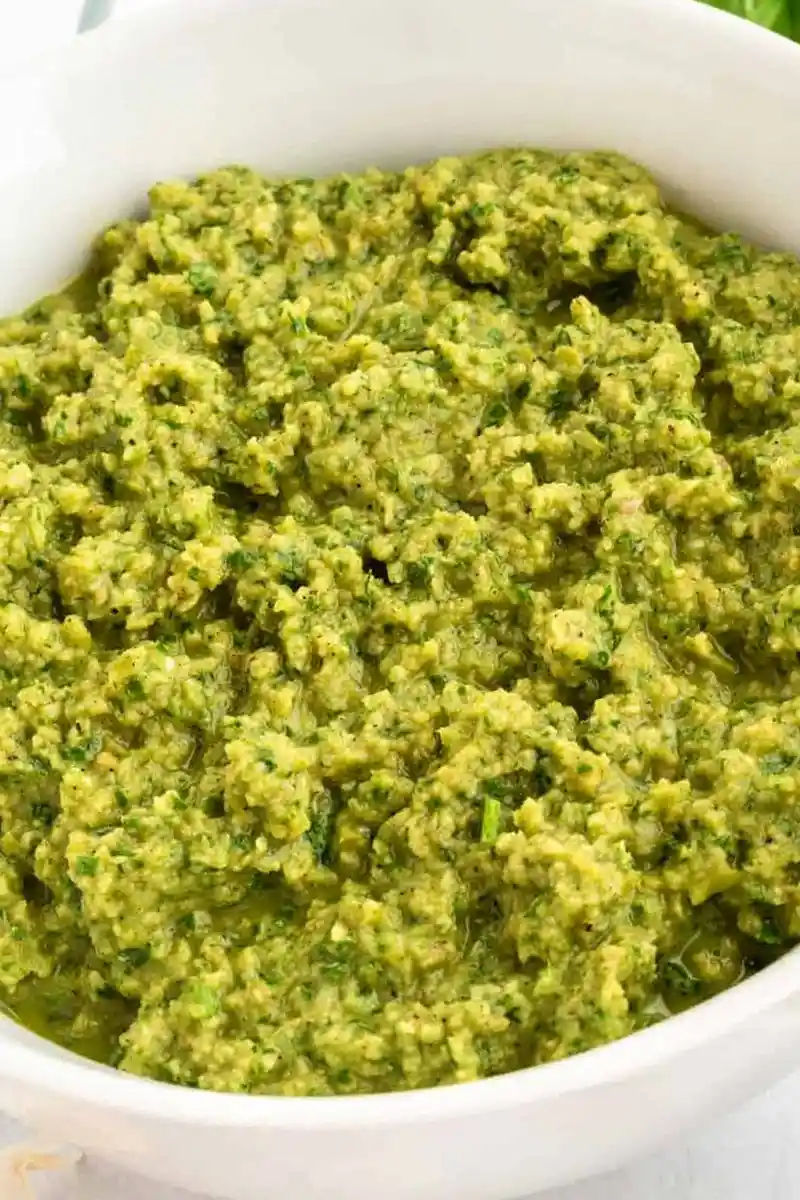
This quick green olive sauce is a savory and herby alternative to traditional pasta toppings. It comes together in minutes using a food processor to create a smooth, pesto-like consistency that works perfectly as a main sauce or a condiment.
List of ingredients
- 2 cups pitted castelvetrano olives with brine – provide a buttery base and salty depth.
- 1/2 cup packed fresh parsley – adds a clean, bright herbal note.
- 2 Tablespoons fresh chopped dill leaves – contributes a distinct tangy flavor.
- 1/2 cup packed fresh basil leaves – adds classic aromatic sweetness.
- 2-3 medium garlic cloves – provides sharp, pungent depth.
- 6 Tablespoons extra virgin olive oil – emulsifies the sauce and adds richness.
- Salt and pepper – used to taste for final seasoning.
step-by-step instructions
- Combine base: Place the pitted olives in a food processor along with 6 Tablespoons of the olive brine.
- Add aromatics: Add the fresh parsley, chopped dill, basil, garlic, and olive oil to the processor. Stir in a pinch of salt and pepper.
- Blend: Process the mixture until it reaches a smooth consistency, similar to a traditional pesto.
- Season: Taste the sauce and add additional salt or pepper according to your preference.
- Serve: Incorporate the sauce into cooked pasta, use it as a savory spread, or serve it as a dip.
Selecting the Right Olives
The Benefits of Castelvetrano Olives
Castelvetrano olives are prized for their bright green color and mild, buttery flavor. Unlike some green olives that are overly acidic or sharp, these provide a creamy texture that blends well into a sauce. They originate from Sicily and offer a balanced saltiness that does not overpower the fresh herbs.
Using Alternative Green Olive Varieties
If Castelvetrano olives are unavailable, you can use Manzanilla olives. Manzanillas tend to be saltier and have a more traditional ‘olive’ punch, so you may want to reduce the added salt in the recipe. Ensure that any substitute you use is pitted and unstuffed to maintain the correct texture.
Substituting with Black Olives
Black olives, such as Kalamata, will drastically change the color and flavor profile of the sauce. Kalamatas provide a deeper, fruitier, and more pungent taste than green olives. While the method remains the same, the resulting sauce will be darker and have a bolder, more Mediterranean character.
Customizing Your Herb Blend
Replacing Dill with Tarragon
For those who find dill too strong, tarragon is an excellent alternative. Tarragon offers a subtle anise or licorice-like flavor that complements the brininess of the olives. This substitution works particularly well if you plan to serve the sauce with seafood-based pasta.
Adjusting Garlic Intensity
The amount of garlic can be scaled based on your preference for pungency. For a milder flavor, you can lightly sauté the garlic cloves in a teaspoon of olive oil before adding them to the processor. If you prefer a sharp bite, leave the garlic raw as specified in the recipe.
Adding Complementary Fresh Herbs
While the current blend is balanced, you can add a handful of fresh mint for a refreshing twist. A small amount of chive or scallion can also add a mild onion-like depth. Keep the total volume of herbs consistent to ensure the sauce does not become too watery.
Texture and Consistency Adjustments
Thinning the Sauce with Oil or Water
If the resulting pesto is too thick for your liking, gradually add extra extra-virgin olive oil while pulsing the processor. Alternatively, a tablespoon of warm water can thin the sauce without adding more fat. Always add liquids one tablespoon at a time to avoid over-thinning.
Thickening the Sauce with More Olives
To achieve a thicker, chunkier consistency, increase the quantity of pitted olives or add more packed basil. Pulse the processor briefly instead of blending on high to keep some small pieces of olives intact. This creates a more rustic texture that clings better to ridged pasta.
Using Pasta Water for Emulsification
When using this as a pasta sauce, reserve about one cup of the starchy pasta cooking water before draining. Gradually stir this water into the sauce as you toss it with the noodles. The starch helps the olive oil emulsify, creating a glossy coating that adheres to the pasta perfectly.
Versatile Serving Ideas
Choosing the Best Pasta Shapes
Pasta with ridges or holes, such as Fusilli, Penne, or Rigatoni, is ideal for this sauce. These shapes capture the small bits of herbs and olive fragments, ensuring every bite is flavorful. For a lighter meal, this sauce also pairs well with spaghetti or linguine when thinned with pasta water.
Applying as a Savory Spread
This olive sauce functions excellently as a spread for toasted sourdough or ciabatta. It pairs particularly well with sliced avocado or fresh tomato slices on toast. You can also use it as a condiment in veggie wraps or gourmet sandwiches to replace mayonnaise.
Serving as a Dip for Appetizers
The sauce can be served in a bowl as a dip for toasted baguette slices or raw vegetable crudités. It pairs well with carrots, cucumber slices, and bell peppers. For a more elaborate platter, serve it alongside marinated artichokes and cherry tomatoes.
Using as a Pizza Base
Instead of traditional tomato sauce, spread a thin layer of the green olive sauce over pizza dough. Top with sliced mozzarella, sun-dried tomatoes, and fresh arugula after baking. The briny flavor of the olives provides a sophisticated base for a white pizza.
Storage and Preservation
Refrigeration Guidelines
Store any leftover sauce in an airtight glass container in the refrigerator for up to four days. Because the sauce contains olive oil, it may thicken slightly as it chills. Simply stir in a small amount of olive oil or warm water to return it to its original consistency before serving.
Freezing for Long-Term Use
This sauce freezes exceptionally well for up to six months. To make portioning easier, pour the sauce into an ice cube tray and freeze until solid. Once frozen, transfer the cubes to a freezer-safe bag to prevent freezer burn and save space.
Proper Thawing and Reheating
Thaw the frozen sauce cubes in the refrigerator overnight for the best quality. If you are in a hurry, place the frozen cube directly into a pan over low heat. Stir constantly to prevent the oil from separating or the herbs from scorching.
Troubleshooting Common Issues
Reducing Excessive Saltiness
Since olives and brine are naturally salty, the sauce can sometimes become over-seasoned. To balance this, add a squeeze of fresh lemon juice or a teaspoon of apple cider vinegar. The acidity cuts through the salt and brightens the overall flavor profile.
Preventing Herb Oxidation
Fresh herbs can lose their vibrant green color over time due to oxidation. To keep the sauce bright, ensure you use a high-quality extra virgin olive oil, which helps coat and protect the herbs. Adding a small pinch of citric acid or lemon juice can also help preserve the color.
Handling Bitter Garlic Tastes
If the garlic tastes too bitter or harsh, it may be due to the cloves being overly mature or bruised. To fix this in a finished sauce, stir in a tiny pinch of sugar or a teaspoon of cashew butter. These ingredients neutralize the bitterness without altering the savory taste.
Frequently Asked Questions
Can I use dried herbs?
It is not recommended to use dried herbs for this specific recipe. Dried herbs lack the moisture and fresh aromatic oils needed to blend into a smooth pesto, resulting in a grainy texture and a muted flavor.
Is this sauce gluten-free?
The sauce itself is naturally gluten-free as it consists only of olives, herbs, garlic, and oil. To keep the entire meal gluten-free, simply serve it with your favorite certified gluten-free pasta or vegetable noodles.
Can I make this without a food processor?
You can make a rustic version of this sauce by finely chopping the olives and herbs by hand. Mix the minced ingredients in a bowl and whisk in the olive oil and brine. While it will not be a smooth puree, it provides a chunky, textured alternative.
Print
Briny Green Olive Pasta Sauce
- Total Time: 5 minutes
- Yield: 8 servings 1x
- Diet: Vegan
Description
5-minute green olive pasta sauce recipe! Amazing herby, briny, green olive sauce for pasta or as a spread. Easy and delicious!
Ingredients
- 2 cups pitted castelvetrano olives with brine
- 1/2 cup packed fresh parsley
- 2 Tablespoons fresh chopped dill leaves
- 1/2 cup packed fresh basil leaves
- 2–3 medium garlic cloves
- 6 Tablespoons extra virgin olive oil
- Salt and pepper
Instructions
- Step: Place the olives in a food processor along with 6 Tablespoons of the olive brine.
- Step: Add the parsley, dill, basil, garlic, and oil to the food processor. Add a pinch each of salt and pepper.
- Step: Process until smooth like a pesto.
- Step: Taste and add more salt and/or pepper to your desired seasoning.
- Step: Add to pasta, use as a spread, or use as a dip.
Notes
To use as a pasta sauce, toss with cooked noodles and reserved pasta water. Great as a spread on avocado toast or a dip for baguette slices. Store in the refrigerator for up to 4 days or freeze in an ice cube tray for up to 6 months.
- Prep Time: 5 minutes
- Cook Time: 0 minutes
- Category: sauce
- Method: Food Processor
- Cuisine: American, Italian
Nutrition
- Serving Size: 0.25 cups
- Calories: 145 kcal
- Sugar: 0.2 g
- Sodium: 529 mg
- Fat: 16 g
- Saturated Fat: 2 g
- Unsaturated Fat: 13 g
- Trans Fat: 0 g
- Carbohydrates: 2 g
- Fiber: 1 g
- Protein: 1 g
- Cholesterol: 0 mg