
This one-pan chicken chow mein is a fast and satisfying alternative to traditional takeout. It features tender chicken, crisp vegetables, and a perfectly balanced homemade savory sauce.
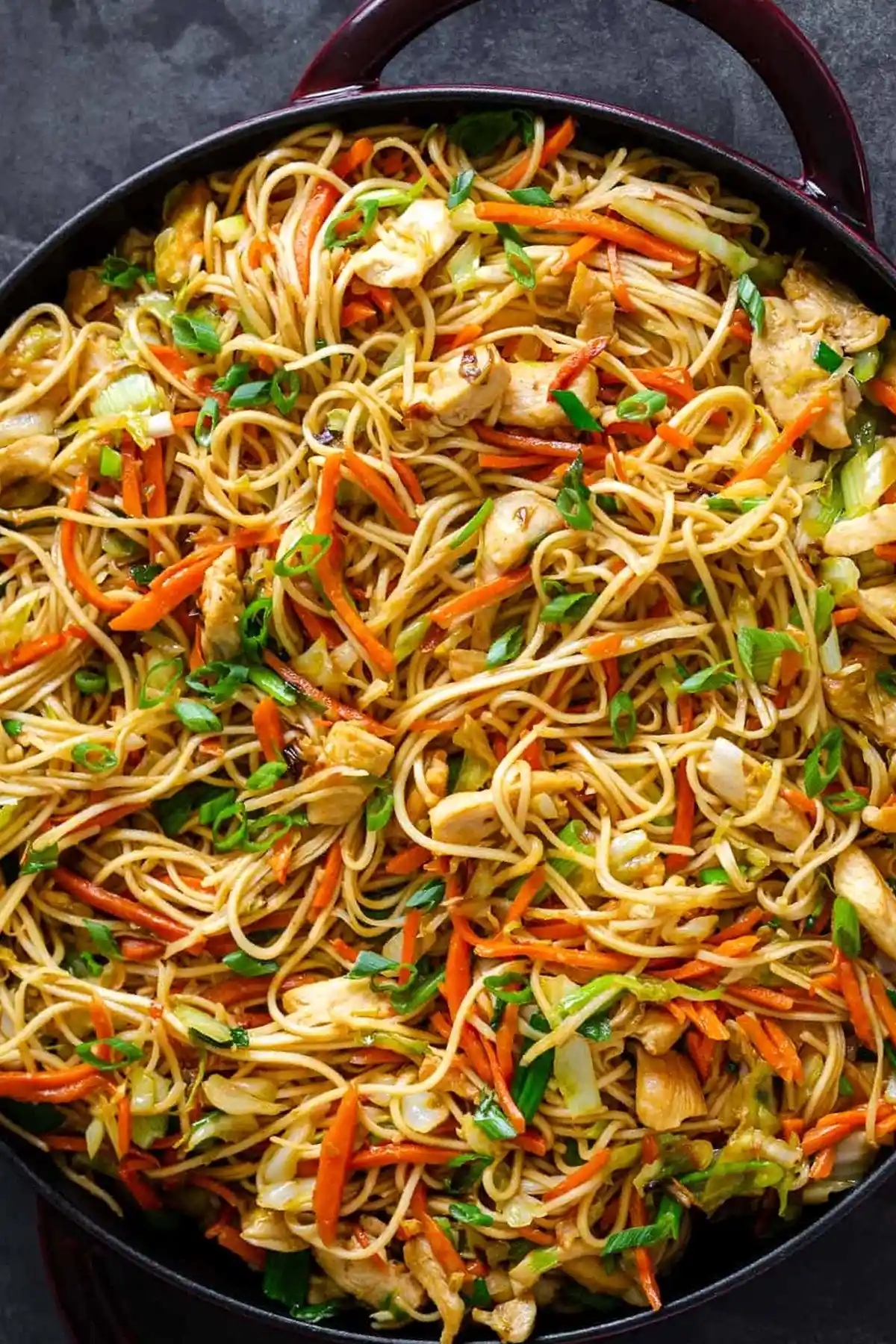
List of ingredients
- 1 lb chicken breast (boneless, skinless) – sliced into thin strips.
- 3 Tbsp oil – used for sautéing.
- 12 oz chow mein noodles (uncooked) – follow package directions.
- 2 cups cabbage – shredded or thinly sliced.
- 1 large carrot – julienned into thin matchsticks.
- 1/2 batch green onions – chopped for garnish and flavor.
- 2 garlic cloves – pressed or finely minced.
- 4 Tbsp oyster sauce – adjust based on salt preference.
- 3 Tbsp low sodium soy sauce – for a deep savory flavor.
- 3 Tbsp light sesame oil (not toasted) – adds a traditional nutty aroma.
- 1/2 cup chicken broth – provides the liquid base for the sauce.
- 1 Tbsp corn starch – used to thicken the sauce.
- 1 Tbsp granulated sugar – balances the saltiness.
step-by-step instructions
- Prepare the Sauce: In a small mixing bowl, use a whisk to combine the oyster sauce, granulated sugar, sesame oil, soy sauce, chicken broth, and cornstarch until smooth. Set this mixture aside for later use.
- Cook the Noodles: Prepare your chow mein noodles according to the package instructions. Once cooked, drain them and rinse with cold water to stop the cooking process and prevent sticking.
- Brown the Chicken: Heat a large wok or pan with olive oil over medium-heat. Cut the chicken breasts into bite-sized strips and cook them in the oil until they are golden brown on all sides. Remove the cooked strips from the pan and set them aside.
- Sauté the Vegetables: Add the julienned carrots, cabbage, and pressed garlic to the same pan. Saute for a few minutes until the vegetables are slightly softened and the cabbage becomes translucent.
- Combine and Finish: Return the cooked chicken and noodles back into the pan. Pour the prepared sauce over the top and continue cooking all the ingredients together for another 2 minutes to ensure everything is evenly coated.
- Garnish and Serve: Garnish your chow mein with freshly chopped green onions. Serve the noodles straight from the pan while they are piping hot.
Expert Noodle Selection
Using Dry Chow Mein Noodles
Dry noodles are widely available in the Asian aisle of most grocery stores. They provide a consistent chew and are easy to store for long periods. Ensure you do not overcook them, as they will soften further when tossed in the sauce.
Utilizing Fresh Refrigerated Noodles
Fresh chow mein noodles found in the refrigerated section often have a softer, more authentic texture. If using these, you may only need to blanch them briefly or toss them directly into the pan. Adjust the cooking time to avoid making the noodles mushy.
Substituting with Egg Noodles
If chow mein noodles are unavailable, standard Chinese egg noodles are an excellent substitute. They have a similar wheat and egg composition that holds up well to stir-frying. Be sure to rinse them thoroughly after boiling to remove excess surface starch.
Vegetable Customization and Variations
Adding Bok Choy for Crunch
Bok choy adds a refreshing crispness and a slight peppery flavor to the dish. Slice the stems thinly and keep the leaves whole or roughly chopped. Add the stems during the carrot sauté and the leaves at the very end.
Incorporating Sliced Bell Peppers
Red, green, or yellow bell peppers provide vibrant color and a sweet flavor profile. Slice them into thin strips to match the size of the chicken and carrots. Sauté them for 2-3 minutes before adding the cabbage to maintain their snap.
Using Sliced Mushrooms for Earthiness
Shiitake or button mushrooms add a savory, umami depth to the meal. Slice them thinly and brown them in the pan before adding the other vegetables. This ensures the mushrooms release their moisture and develop a golden exterior.
Adding Snap Peas or Snow Peas
Snap peas provide a distinct crunch and a bright green appearance. Slice them lengthwise if they are particularly thick. Add them toward the end of the vegetable sauté process so they remain vibrant and crisp.
Protein Alternatives
Swapping Chicken for Flank Steak
Flank steak or sirloin strips work perfectly in this recipe for a heartier meal. Slice the beef across the grain into thin strips for maximum tenderness. Sear the beef quickly over high heat to avoid overcooking and toughening the meat.
Using Shrimp for a Lighter Option
Peeled and deveined shrimp cook very quickly and pair well with the savory sauce. Sauté the shrimp for 1-2 minutes per side until pink and opaque. Remove them from the pan immediately to prevent them from becoming rubbery.
Substituting with Extra-Firm Tofu
For a plant-based version, use pressed extra-firm tofu cut into small cubes. Pan-fry the tofu until the edges are golden and crispy before removing it from the pan. Replace the chicken broth with vegetable broth to keep the dish vegan-friendly.
Perfecting the Stir-Fry Technique
Maintaining High Pan Temperature
A hot pan is essential for achieving the ‘wok hei’ or breath of the wok effect. Ensure the oil is shimmering before adding the chicken to prevent sticking and promote browning. If the pan cools down too much, the vegetables will steam instead of sauté.
Avoiding Pan Overcrowding
Cooking too many ingredients at once lowers the temperature of the pan. If you are doubling the recipe, cook the chicken and vegetables in batches. This ensures every piece of protein is browned and vegetables remain crisp.
Slicing Ingredients Uniformly
Cut the chicken, carrots, and cabbage into similar sizes to ensure they cook at the same rate. Uniform strips allow the sauce to coat every piece evenly. This prevents some pieces from being raw while others are overdone.
Sauce Adjustments and Tips
Controlling Sodium Levels
To reduce salt, use a low-sodium soy sauce and reduce the amount of oyster sauce. You can supplement the lost saltiness with a small amount of mushroom powder for umami. Always taste the sauce before the final toss to adjust the seasoning.
Managing Sauce Thickness
The cornstarch is responsible for creating a glossy, thick coating on the noodles. If the sauce is too thin, whisk in an additional teaspoon of cornstarch slurry. If it is too thick, add a tablespoon of water or chicken broth to loosen it.
Enhancing the Aromatic Profile
Adding a teaspoon of freshly grated ginger to the garlic sauté increases the depth of flavor. Ginger provides a zesty contrast to the sweet and salty notes of the soy sauce. Ensure the ginger is added late in the sauté process to avoid burning.
Storage and Reheating Guidance
Refrigerating Leftovers Safely
Store leftover chow mein in an airtight container in the refrigerator for up to three days. Allow the dish to cool slightly before sealing the lid to prevent excess condensation. Keep the noodles separated if you plan to reheat them in batches.
The Best Reheating Method
Reheating on a stovetop over medium heat is the best way to maintain the noodle texture. Add a splash of water or chicken broth to the pan to loosen the sauce. Toss frequently until the dish is heated through and the sauce is glossy.
Microwaving Leftovers
If using a microwave, place the chow mein in a microwave-safe dish and cover it with a damp paper towel. Heat in 30-second intervals, stirring in between to distribute the heat. This prevents the noodles from drying out or becoming hard.
Make-Ahead Advice
Pre-Cutting Vegetables
You can julienne the carrots and slice the cabbage up to 24 hours in advance. Store them in separate airtight containers or bags in the refrigerator. This significantly reduces the active prep time on the day of cooking.
Preparing the Sauce in Advance
The sauce mixture can be whisked together and stored in a jar for several days. Because cornstarch settles at the bottom, shake the jar vigorously before pouring it into the pan. This ensures the thickening agent is evenly distributed.
Par-boiling Noodles
If you are preparing the meal for a party, cook and rinse the noodles ahead of time. Toss them with a teaspoon of sesame oil to prevent them from clumping. Store them in the fridge and add them to the pan during the final assembly.
Troubleshooting Common Issues
Preventing Soggy Noodles
Soggy noodles often result from overboiling or failing to rinse them with cold water. Always cook noodles one minute less than the package instructions. The final 2 minutes in the pan with the sauce will finish the cooking process.
Stopping the Sauce from Clumping
Cornstarch can clump if it is not fully dissolved in the liquid. Ensure you whisk the sauce thoroughly before adding it to the hot pan. If clumps appear, use a whisk or tongs to break them up quickly while the sauce is simmering.
Avoiding Dry Chicken
Chicken breast can dry out if cooked for too long over high heat. Remove the chicken from the pan as soon as it reaches a golden brown color. It will finish cooking slightly when it is returned to the pan at the end.
Frequently Asked Questions
Can I use spaghetti instead of chow mein noodles?
Yes, spaghetti can be used in a pinch, though it lacks the egg flavor and specific texture of chow mein noodles. Boil the spaghetti until al dente, then rinse it well with cold water before adding it to the stir-fry.
How do I prevent the noodles from sticking together?
Rinsing the noodles under cold water immediately after draining removes excess surface starch. Tossing them with a small amount of oil before adding them to the pan also creates a barrier that prevents sticking.
Can this recipe be made vegan?
Yes, replace the chicken with tofu, the chicken broth with vegetable broth, and the oyster sauce with a vegetarian mushroom-based stir-fry sauce. Ensure the noodles used are egg-free wheat noodles.
Why is my sauce too thin?
Thin sauce is usually caused by not using enough cornstarch or not cooking the sauce long enough to activate the starch. Simmer the sauce for at least 2 minutes while tossing the noodles to allow it to thicken and glaze.
What is the best oil for stir-frying?
Vegetable, canola, or grapeseed oil are best because they have high smoke points. Avoid using extra-virgin olive oil for high-heat sautéing as it can burn and alter the flavor of the dish.
Print
Chicken Chow Mein with the Best Chow Mein Sauce
- Total Time: 35 minutes
- Yield: 8 servings 1x
- Diet: General
Description
Chicken chow mein is so much better than takeout! It is filled with chicken, veggies, classic chow mein noodles and the best homemade chow mein sauce. You will love this one pan dinner!
Ingredients
- 1 lb chicken breast (boneless, skinless)
- 3 Tbsp oil
- 12 oz chow mein noodles (uncooked noodles)
- 2 cups cabbage
- 1 large carrot (julienned)
- 1/2 batch green onions
- 2 garlic cloves
- 4 Tbsp oyster sauce
- 3 Tbsp low sodium soy sauce
- 3 Tbsp light sesame oil (not toasted)
- 1/2 cup chicken broth
- 1 Tbsp corn starch
- 1 Tbsp granulated sugar
Instructions
- Step: In a small mixing bowl, use a whisk to combine oyster sauce, granulated sugar, sesame oil, soy sauce, chicken broth and cornstarch. Set aside.
- Step: Cook your noodles according to package instructions then drain, rinse with cold water and set aside.
- Step: Heat a large wok or pan with olive oil over medium-heat. Cut your chicken breasts into bite-sized strips and cook them in the oil until golden brown. Remove strips and set aside.
- Step: Add carrots, cabbage and pressed garlic and saute for a few minutes until veggies are slightly softened and the cabbage is a bit translucent.
- Step: Add chicken and noodles back into the pan. Pour sauce over the top and continue cooking all the ingredients together for another 2 minutes.
- Step: Garnish your chow mein with chopped green onions and serve the noodles straight from the pan and piping hot!
Notes
When using cooked Chow Mein Noodles, it should measure to about 1lb. Oyster sauce can vary in salt content and if you use regular soy sauce rather than reduced, you will want to adjust the oyster sauce to taste.
- Prep Time: 15 minutes
- Cook Time: 20 minutes
- Category: Main Course
- Method: Stir-fry
- Cuisine: Asian, Chinese
Nutrition
- Serving Size: 1 serving
- Calories: 340 kcal
- Sugar: 3 g
- Sodium: 500 mg
- Fat: 13 g
- Saturated Fat: 1 g
- Unsaturated Fat: 12 g
- Trans Fat: 0 g
- Carbohydrates: 36 g
- Fiber: 3 g
- Protein: 19 g
- Cholesterol: 36 mg