
This creamy arugula pasta is a rapid meal solution for busy evenings. It combines peppery greens with savory nuts and cheese for a rich, satisfying result.
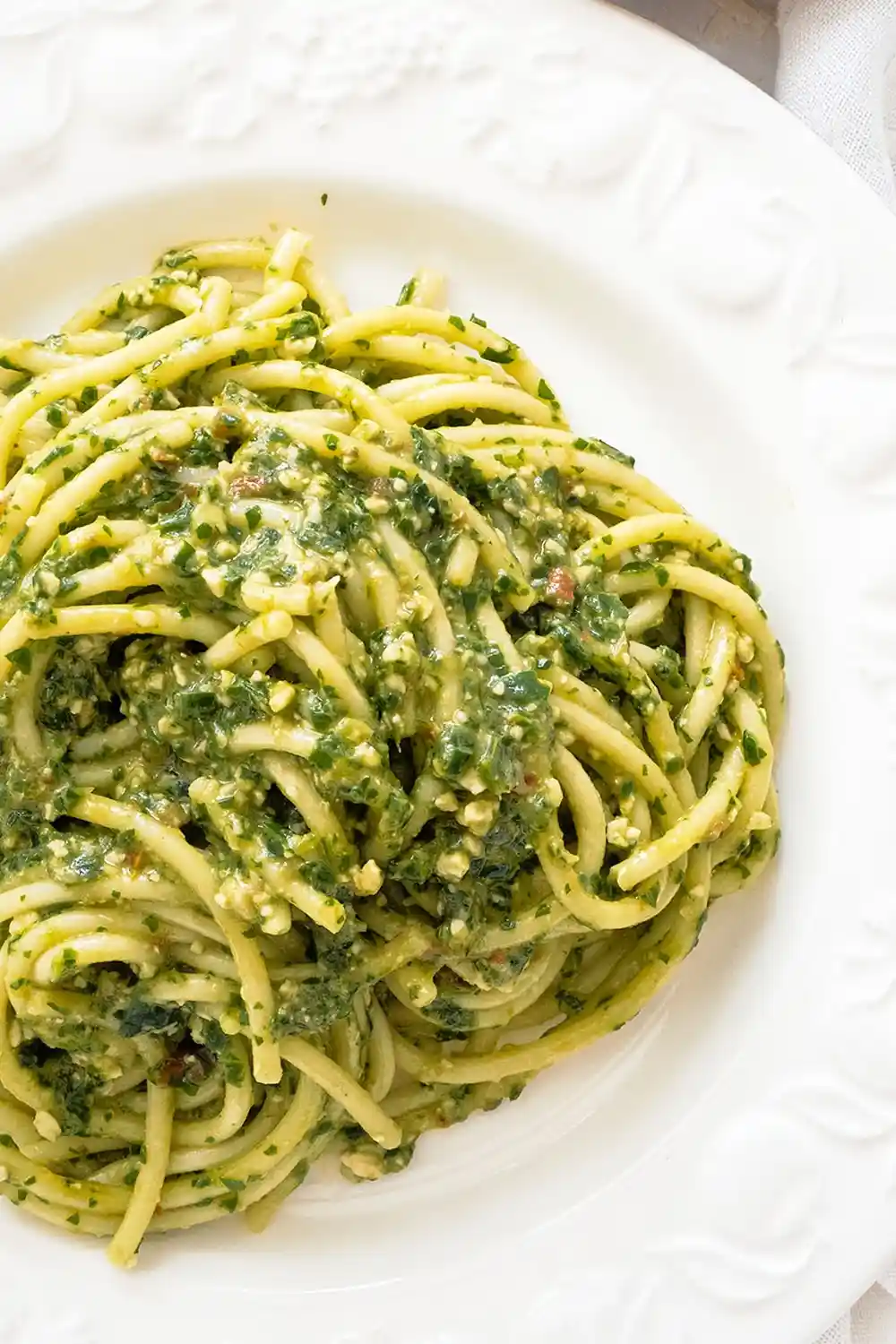
List of ingredients
- 1/2 lb (8oz/220 grams) pasta – any shape such as spaghetti, penne, or rigatoni works well.
- 4 cups (80 grams) baby arugula, washed – provides the peppery base for the sauce.
- 1/3 cup (40 grams) sun dried tomatoes, drained – adds a concentrated umami sweetness.
- 1/4 cup (30 grams) cashews – creates a creamy texture and adds a subtle nuttiness.
- 1 garlic clove, sliced – provides a sharp, aromatic flavor profile.
- 1/3 cup (30-40 grams) grated microbial-rennet parmesan cheese – adds a salty, savory depth.
- 1/4 tsp fine salt – enhances all the existing flavors.
- 1/8 tsp black pepper – adds a slight spicy warmth.
- 1/4 cup (60 ml) extra virgin olive oil – emulsifies the sauce for smoothness.
- 1/4 cup (60 ml) pasta cooking water – binds the pesto to the noodles using starch.
step-by-step instructions
- Boil the pasta: Cook pasta in plenty of boiling salty water until al dente. Scoop out 1 cup of pasta water before draining the noodles and return them to the pot.
- Prepare the base: Place arugula, microbial-rennet parmesan, garlic, cashews, tomatoes, salt, and pepper in a food processor. Blitz for a few seconds until the mixture reaches a coarse pesto-like consistency.
- Finish the sauce: Scrape down the sides as needed, then add the extra virgin olive oil and 1/4 cup of the reserved pasta water. Blend again briefly and adjust the seasoning to your preference.
- Combine and serve: Add the arugula pesto sauce to the drained pasta and toss well to combine. Stir in additional pasta water as needed to achieve a moist and juicy consistency, then divide into bowls.
Essential Equipment for Success
High-Power Food Processor
A food processor is essential for achieving the coarse yet integrated texture of the pesto. It allows you to break down the cashews and arugula quickly without over-processing them into a smooth puree.
Large Pasta Pot
Use a pot that is larger than you think you need to prevent the pasta from sticking together. Plenty of water allows the noodles to move freely, ensuring a consistent al dente texture.
Fine Mesh Strainer
A high-quality strainer makes it easier to drain the pasta while keeping the noodles intact. It also helps when draining the sun-dried tomatoes to remove excess oil before measuring.
Ingredient Selection Guide
Choosing the Right Arugula
Baby arugula is recommended for its milder, more tender leaves which blend easily. If you use wild arugula, be aware that the flavor is more intensely peppery and may dominate the other ingredients.
Selecting Extra Virgin Olive Oil
Use a high-quality extra virgin olive oil for the best nutritional value and flavor. Since the oil is used raw in the pesto, its fruity and peppery notes will be more prominent in the final dish.
The Role of Sun-Dried Tomatoes
Sun-dried tomatoes provide a necessary acidic and sweet balance to the bitter arugula. Ensure they are well-drained so that the excess packing oil does not make the pesto too greasy.
Microbial-Rennet Parmesan
Using a microbial-rennet parmesan ensures the cheese is suitable for a wider range of dietary needs while maintaining the classic salty profile. Grating the cheese finely helps it incorporate more smoothly into the sauce.
Pasta Pairing Recommendations
Short Pasta Shapes
Penne, rigatoni, and fusilli are excellent choices because their ridges and hollow centers trap the pesto. This ensures that every bite is coated in the creamy arugula sauce.
Long Pasta Shapes
Spaghetti and linguine provide a classic Italian feel and work well if you prefer a lighter coating of sauce. Tossing long noodles thoroughly is key to avoiding clumps of pesto.
Unique Pasta Varieties
Cavatelli or orecchiette are great alternatives that offer a chewy texture. These small, cup-like shapes hold onto the cashews and sun-dried tomato bits perfectly.
Gluten-Free Alternatives
Brown rice or chickpea pasta works well with this recipe. Be mindful that gluten-free pasta often releases more starch, so you may need less reserved pasta water to thicken the sauce.
Technique Tips for Texture
Mastering Al Dente Cooking
Cooking pasta al dente means it still has a slight bite to it. This prevents the noodles from becoming mushy when you toss them with the pesto and any additional pasta water.
The Importance of Starchy Water
The starch released during boiling acts as a natural emulsifier. Adding a few tablespoons of this water to the pesto helps the oil and solids bind, creating a glossy coating on the pasta.
Avoiding Over-Processing
Pulse the food processor instead of running it continuously. This preserves some of the texture of the cashews and tomatoes, preventing the sauce from becoming a thin, uniform paste.
Emulsifying the Oil
Add the olive oil last and blend just until combined. This ensures the oil is evenly distributed throughout the greens and nuts without separating during the tossing process.
Flavor Variations and Additions
Adding Bright Citrus Notes
Stir in a teaspoon of fresh lemon zest or a squeeze of lemon juice at the end. The acidity cuts through the richness of the cashews and parmesan, brightening the overall flavor.
Incorporating Fresh Herbs
Adding a handful of fresh basil or parsley to the food processor adds another layer of freshness. This blends well with the arugula and enhances the traditional pesto profile.
Increasing the Heat
Add a pinch of red pepper flakes to the food processor for a subtle spicy kick. This works particularly well with the sweetness of the sun-dried tomatoes.
Using Different Nut Bases
If you do not have cashews, walnuts or pine nuts are excellent substitutes. Walnuts provide a more earthy flavor, while pine nuts offer a classic, buttery taste.
Dietary Adjustments
Dairy-Free Alternatives
Replace the parmesan cheese with half an avocado for a similar creaminess. This substitution keeps the sauce thick and rich while removing the dairy components.
Nut-Free Options
Swap the cashews for toasted sunflower seeds or pumpkin seeds. These provide the same structural creaminess and healthy fats without using tree nuts.
Vegan Modifications
Use nutritional yeast instead of parmesan to get a savory, cheesy flavor. Combine this with avocado or extra cashews to maintain the desired thickness.
Low-Carb Substitutions
Replace the pasta with zoodles or spaghetti squash. Sauté the vegetable noodles briefly and toss them with the pesto for a lower-carbohydrate version of the meal.
Storage and Reheating Advice
Refrigerating Leftovers
Store leftover pasta in an airtight container in the fridge for up to two days. The arugula may darken slightly over time, but the flavor remains intact.
Reviving the Texture
When reheating, the pasta may absorb the sauce and become dry. Add a splash of water or a drizzle of olive oil before heating to restore the creamy consistency.
Microwave Reheating
Heat the pasta in short bursts, stirring in between. This prevents the edges from drying out and ensures the pesto is evenly warmed throughout the dish.
Stovetop Reheating
Place the pasta in a skillet over low heat with a tablespoon of water. Toss gently until warmed through to preserve the texture of the noodles.
Troubleshooting Common Issues
Managing Bitterness
If the arugula tastes too bitter, add a small amount of honey or maple syrup to the sauce. A tiny touch of sweetness neutralizes the bitterness of the greens.
Fixing a Thin Sauce
If the pesto is too runny, add a tablespoon more of grated parmesan or a few more cashews. Blend briefly to thicken the mixture to your desired consistency.
Preventing Oxidation
To keep the pesto a vibrant green, ensure the olive oil completely coats the arugula. If making the pesto in advance, place a thin layer of oil on top before refrigerating.
Correcting a Grainy Texture
If the sauce feels too grainy, it is likely due to the cashews not being fully broken down. Pulse the mixture for a few more seconds or add a tablespoon of warm pasta water to smooth it out.
Frequently Asked Questions
Can I use wild arugula instead of baby arugula?
Yes, you can use wild arugula, but it has a much stronger, peppery taste. You may want to balance this by adding more parmesan or a pinch of sugar.
How long can I store the pesto separately?
The pesto can be stored in the refrigerator for up to 3-5 days in an airtight jar. Always keep a layer of olive oil on top to prevent discoloration from air exposure.
Do I have to use a food processor?
While a food processor is easiest, you can use a high-speed blender. Ensure you use the pulse setting so the ingredients do not turn into a smooth liquid.
Can I freeze this pasta dish?
It is not recommended to freeze the fully assembled pasta as the texture degrades. However, you can freeze the pesto in ice cube trays and thaw them for future use.
What is the best way to drain sun-dried tomatoes?
Place the tomatoes in a fine-mesh sieve and press them gently with a spoon. This removes the excess oil, ensuring your pesto doesn’t become too greasy.
Print
Creamy Arugula and Sun-Dried Tomato Pasta
- Total Time: 15 minutes
- Yield: 4 servings 1x
- Diet: Vegetarian
Description
This arugula pasta makes a super easy weeknight meal that’s luscious, fresh, full of savory flavors and absolutely delicious.
Ingredients
- ½ lb (8oz/220 grams) pasta
- 4 cups (80 grams) baby arugula, washed
- ⅓ cup (40 grams) sun dried tomatoes, drained
- ¼ cup (30 grams) cashews
- 1 garlic clove, sliced
- ⅓ cup (30–40 grams) grated parmesan cheese
- ¼ tsp fine salt
- ⅛ tsp black pepper
- ¼ cup (60 ml) extra virgin olive oil
- ¼ cup (60 ml) pasta cooking water
Instructions
- Step: Cook pasta in plenty of boiling salty water until al dente. When the pasta is nearly done, scoop out 1 cup of pasta water and set aside. Finally, drain the pasta and return it to the pot.
- Step: While the pasta is cooking, place arugula, parmesan, garlic, cashews, tomatoes, salt and pepper in the food processor.
- Step: Give a quick blitz just for a few seconds, until the mixture resembles a coarse pesto-like consistency.
- Step: Scrape down size as needed, add extra virgin olive oil and pasta cooking water (use ¼ cup of the water you reserved) to the mixture and give another quick whizz.
- Step: Taste and adjust the seasoning.
- Step: Add the arugula pesto sauce to the drained pasta and toss well to combine.
- Step: Stir in some pasta water as much as needed until you get a moist and juicy consistency.
- Step: Divide into 4 bowl and serve with freshly grated parmesan cheese and a drizzle of extra virgin olive oil if you wish.
Notes
Keep pasta leftovers in an airtight container in the fridge for up to 2 days. Reheat pasta in microwave or stir fry in a skillet adding a touch of water and a drizzle of olive oil.
- Prep Time: 5 minutes
- Cook Time: 10 minutes
- Category: pasta
- Method: Blending
- Cuisine: Italian, Mediterranean
Nutrition
- Serving Size: 1 serving
- Calories: 432 kcal
- Sugar: 6 g
- Sodium: 149 mg
- Fat: 21 g
- Saturated Fat: 4 g
- Unsaturated Fat: 17 g
- Trans Fat: 0 g
- Carbohydrates: 50 g
- Fiber: 4 g
- Protein: 13 g
- Cholesterol: 7 mg