
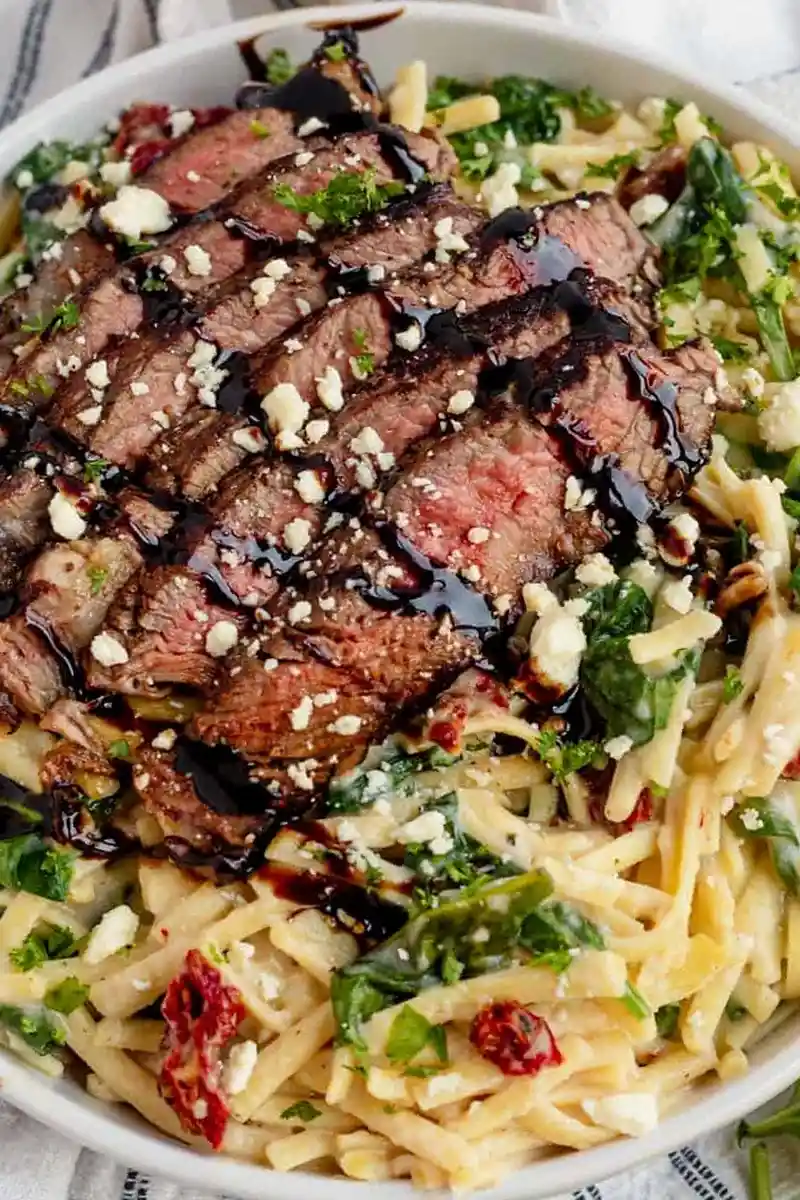
This elegant meal pairs tender, balsamic-marinated sirloin with a rich, velvety garlic parmesan cream sauce. It transforms simple pantry staples into a restaurant-quality dish that is surprisingly approachable for a weeknight dinner. By combining high-heat searing techniques with a classic roux-based sauce, you can have this impressive meal on the table in under forty-five minutes.
List of ingredients
- 1 1/2 lbs sirloin steak
- 1/3 cup balsamic vinegar
- 2 Tablespoons olive oil
- 12 oz fettuccine pasta
- 3 Tablespoons unsalted butter
- 3 cloves garlic, minced
- 3 Tablespoons flour
- 2 cups milk
- 1 teaspoon kosher salt
- 1/2 teaspoon black pepper
- 1/2 cup parmesan cheese
- Optional toppings: balsamic glaze, blue cheese, fresh chopped parsley
step-by-step instructions
- Step: Season the steak with salt and pepper, then combine in a bag with balsamic vinegar and olive oil. Marinate in the fridge for 30 minutes.
- Step: Bring a large pot of salted water to a boil, cook fettuccine until al dente, reserve 1/2 cup of pasta water, and drain.
- Step: Heat a skillet over medium-high heat. Remove steak from marinade and sear for 4 minutes per side until reaching 135°F. Rest for 10 minutes.
- Step: Melt butter in a deep skillet, add garlic and cook until fragrant. Whisk in flour and cook for 2-3 minutes to create a roux.
- Step: Gradually whisk in milk, salt, and pepper. Simmer for 5 minutes until thickened, then stir in parmesan until melted.
- Step: Toss the cooked pasta into the sauce, adding reserved water as needed to reach desired consistency.
- Step: Slice the steak thin, divide pasta into bowls, top with steak, and garnish with balsamic glaze, blue cheese, and parsley.
Refining Your Technique
Achieving the Perfect Sear
To ensure a deep, golden-brown crust on your steak, the surface must be as dry as possible before it touches the pan. Use a paper towel to pat the meat down thoroughly after removing it from the marinade. A damp steak will inevitably steam in the pan rather than caramelize, which leads to a gray, unappealing exterior.
Selecting the Right Beef Cut
While sirloin and ribeye are the gold standards for this recipe, you can also use a strip steak or a well-trimmed flank steak if sliced correctly. The key is to prioritize cuts with visible marbling, as the intramuscular fat renders down during cooking to keep the meat juicy. Avoid extremely lean cuts, which can turn tough and dry when subjected to the high-heat searing required for this dish.
Mastering the Roux Process
A roux is simply a mixture of fat and flour that acts as a thickener, and it requires careful attention to avoid clumping. Keep your heat at a steady medium and whisk constantly while adding the liquid to ensure the sauce remains silky and uniform. If the sauce happens to become too thick while simmering, adding an extra splash of milk or pasta water will quickly return it to the desired pouring consistency.
Customizing Your Experience
Vegetable Additions
Incorporating vegetables into this dish can add both color and texture without compromising the creamy nature of the sauce. Sautéing sliced mushrooms or baby spinach into the skillet after the garlic has softened works exceptionally well. Sun-dried tomatoes are another excellent addition, as their concentrated sweetness provides a sharp, acidic contrast to the rich parmesan sauce.
Pasta Alternatives
If you do not have fettuccine on hand, other long pasta shapes like linguine or tagliatelle are excellent alternatives. For a different mouthfeel, you can also use shorter, tubular pastas such as penne or rigatoni, which are designed to trap the thick sauce inside their centers. If you are serving a large crowd, using a slightly firmer pasta can help the dish maintain its structure if it sits for a few minutes before eating.
Dietary Adjustments
You can easily adapt this dish to fit various dietary needs without sacrificing the core appeal of the recipe. For those avoiding gluten, simply swap out the standard wheat pasta for a high-quality rice or corn-based alternative, and use a gluten-free all-purpose flour blend for the roux. If you need a dairy-free version, replace the butter with a plant-based stick, use unsweetened almond or oat milk for the sauce, and substitute the parmesan with a savory, salt-heavy nutritional yeast or a plant-based parmesan alternative.
Proactive Planning and Storage
Making Ahead of Time
You can prepare the balsamic marinade up to 24 hours in advance to save time on the day of cooking. While the steak is best cooked right before serving to maintain its texture, the Alfredo sauce can be made earlier and stored in the refrigerator. If you choose to do this, gently reheat the sauce over low heat, whisking in a small amount of milk to prevent it from breaking or becoming overly thick.
Preserving Leftovers
Store any leftover pasta and steak in an airtight container for up to three days. It is often best to store the sliced steak separately from the pasta if possible, as this prevents the meat from absorbing too much moisture from the sauce. This separation makes the final reheating process much more successful and ensures the beef remains tender.
Reviving the Texture
When reheating, the sauce will naturally thicken because the pasta continues to absorb moisture while in the fridge. Place the leftovers in a pan over low heat and add a tablespoon or two of milk or broth to loosen the sauce. Avoid using a high-powered microwave setting, as it can cause the dairy in the sauce to separate and the steak to become rubbery.
Frequently Asked Questions
What should I do if the steak is too chewy?
The most common cause of chewy steak is failing to slice against the grain. Locate the direction of the muscle fibers and cut perpendicularly to them to ensure each bite is tender. Also, verify that your steak rested for the full ten minutes, as cutting too early causes the internal juices to spill out immediately.
Can I add more greens to this dish?
Yes, folding in three cups of fresh baby spinach at the very end of the cooking process adds great color and nutritional value. The residual heat from the pasta and sauce will cause the spinach to wilt perfectly without becoming watery or mushy.
Is it necessary to use a thermometer?
Using an instant-read meat thermometer is the most reliable way to guarantee success, as steak thickness varies significantly between packages. Cooking to a target of 135°F ensures you have a safe, medium-rare center while still allowing for the necessary Maillard reaction on the surface of the meat.
What if my parmesan sauce is clumpy?
Clumpy sauce usually happens if the cheese is added while the pan is at too high a temperature or if pre-shredded cheese with anti-caking agents is used. Always remove the pan from the heat or lower it to the minimum setting before stirring in your freshly grated parmesan to ensure it emulsifies smoothly into the liquid.
How can I elevate the presentation?
A simple drizzle of high-quality balsamic glaze over the finished bowls adds a sophisticated, acidic pop that ties the marinated steak to the creamy sauce. Finishing the dish with fresh chopped parsley or even a few toasted pine nuts adds a professional look and a pleasant crunch that breaks up the softness of the pasta.
Print
Creamy Balsamic Steak Pasta
- Total Time: PT45M
- Yield: 6 servings 1x
- Diet: High Protein
Description
This creamy steak pasta features balsamic-marinated sirloin, seared golden and sliced thin, then tossed with fettuccine in a garlic parmesan cream sauce. A delicious weeknight dinner that tastes like a restaurant meal.
Ingredients
- 1 1/2 lbs sirloin steak
- 1/3 cup balsamic vinegar
- 2 Tablespoons olive oil
- 12 oz fettuccine pasta
- 3 Tablespoons unsalted butter
- 3 cloves garlic, minced
- 3 Tablespoons flour
- 2 cups milk
- 1 teaspoon kosher salt
- 1/2 teaspoon black pepper
- 1/2 cup parmesan cheese
- Optional toppings: balsamic glaze, blue cheese, fresh chopped parsley
Instructions
- Step: Season the steak with salt and pepper, then combine in a bag with balsamic vinegar and olive oil. Marinate in the fridge for 30 minutes.
- Step: Bring a large pot of salted water to a boil, cook fettuccine until al dente, reserve 1/2 cup of pasta water, and drain.
- Step: Heat a skillet over medium-high heat. Remove steak from marinade and sear for 4 minutes per side until reaching 135°F. Rest for 10 minutes.
- Step: Melt butter in a deep skillet, add garlic and cook until fragrant. Whisk in flour and cook for 2-3 minutes to create a roux.
- Step: Gradually whisk in milk, salt, and pepper. Simmer for 5 minutes until thickened, then stir in parmesan until melted.
- Step: Toss the cooked pasta into the sauce, adding reserved water as needed to reach desired consistency.
- Step: Slice the steak thin, divide pasta into bowls, top with steak, and garnish with balsamic glaze, blue cheese, and parsley.
Notes
Top sirloin and ribeye are best for this recipe. You can add 3 cups of fresh baby spinach and 1/3 cup sun-dried tomatoes when tossing the pasta for extra texture. Store leftovers in an airtight container for up to 3 days and reheat gently on the stovetop with a splash of milk.
- Prep Time: PT5M
- Cook Time: PT20M
- Category: Main Course
- Method: Stovetop
- Cuisine: American
Nutrition
- Serving Size: 1 serving
- Calories: 487 kcal
- Sugar: 4.9 g
- Sodium: 468 mg
- Fat: 13.6 g
- Saturated Fat: 6 g
- Unsaturated Fat: 7 g
- Trans Fat: 0 g
- Carbohydrates: 51.3 g
- Fiber: 2.7 g
- Protein: 37.2 g
- Cholesterol: 97 mg