
Creamy Chicken Penne Arrabbiata is a vibrant, spicy pasta dish that perfectly marries the fiery heat of traditional Arrabbiata with a luxurious, velvety finish. By incorporating high-quality chicken and a touch of cream, this recipe transforms a rustic Italian classic into a sophisticated, comforting meal that is achievable in just 35 minutes. It is an ideal choice for busy weeknights when you desire something bold, hearty, and packed with flavor.
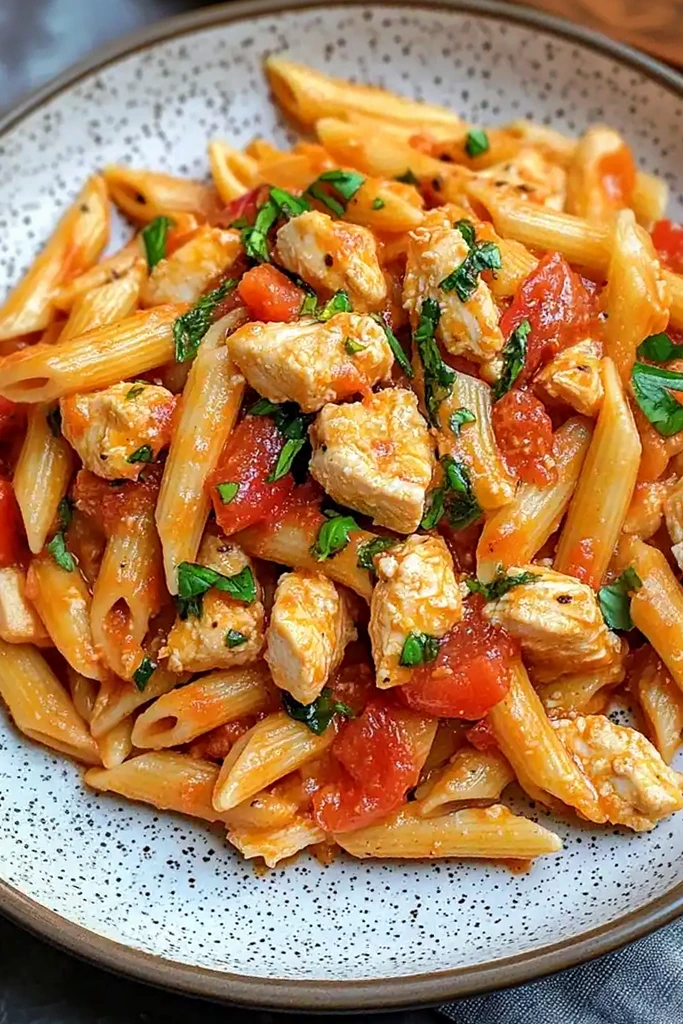
List of ingredients
- 2 boneless, skinless chicken breasts (diced)
- 12 ounces penne pasta
- 2 tablespoons olive oil
- 2 tablespoons butter
- Salt and black pepper to season
- 4 cloves garlic (minced)
- 1 small onion (finely chopped)
- 1 teaspoon red pepper flakes
- 1 teaspoon dried oregano
- 1 can (28 ounces) crushed tomatoes
- 2 tablespoons tomato paste
- 1/2 cup chicken broth
- 1/2 teaspoon salt
- 3/4 cup heavy cream
- 1/2 cup freshly grated Parmesan cheese
- Fresh basil or parsley (for garnish)
step-by-step instructions
- Cook the Pasta: Bring a large pot of salted water to a boil. Cook penne pasta until al dente according to package instructions. Reserve ½ cup of pasta water before draining. Set pasta aside.
- Cook the Chicken: Heat olive oil and butter in a large skillet over medium heat. Season chicken pieces with salt and black pepper. Cook until golden brown and fully cooked through, about 5-7 minutes. Remove chicken from the pan and set aside.
- Prepare the Arrabbiata Sauce: In the same skillet, add a bit more oil if needed. Sauté garlic and onions until soft and fragrant, about 2-3 minutes. Stir in red pepper flakes and oregano, cooking for another 30 seconds. Add tomato paste and crushed tomatoes, then pour in chicken broth. Simmer for 10-15 minutes, stirring occasionally, until sauce thickens.
- Make It Creamy: Lower the heat and slowly pour in heavy cream, stirring to combine. Add Parmesan cheese, letting it melt into the sauce. Adjust seasoning with more salt or red pepper flakes if needed.
- Toss Everything Together: Return the cooked chicken to the skillet. Add the drained pasta, tossing everything together until evenly coated. If needed, use reserved pasta water to loosen the sauce for a silkier consistency.
- Garnish and Serve: Remove from heat and sprinkle with fresh basil or parsley. Serve immediately with extra Parmesan cheese on top.
Refining your cooking technique
Achieving the perfect pasta texture
Cooking your pasta to the al dente stage is crucial because the noodles will continue to absorb liquid once they hit the warm sauce. If you overcook the pasta initially, it will become mushy and lose its structural integrity during the final tossing phase. Aim for a slight bite in the center of the noodle to ensure the dish maintains an appetizing mouthfeel.
Developing deep flavors in the base
The secret to a complex Arrabbiata sauce lies in the initial browning of the aromatics and the caramelization of the tomato paste. Do not rush the stage where you sauté the onion and garlic, as this forms the aromatic backbone of the recipe. Similarly, cooking the tomato paste for a minute before adding the canned tomatoes removes the metallic edge often associated with concentrated tomato products.
Customizing the flavor profile
Adjusting the heat intensity
While the essence of Arrabbiata is heat, you should always adjust the red pepper flakes to suit your palate. If you are cooking for a crowd with varying heat tolerances, start with a smaller amount and add more at the end when stirring in the cream. You can also toast the flakes in the oil for a few extra seconds to infuse the oil itself with heat if you want a more uniform spice distribution.
Balancing the acidity
Crushed tomatoes can sometimes have a sharp acidity that clashes with the richness of the cream. If you find the sauce is too tangy, a small pinch of sugar or even a tiny splash of heavy cream can help neutralize the bite. Adding a finely grated carrot during the onion-sautéing phase is another professional trick for naturally sweetening a tomato-based sauce without adding refined sugars.
Managing portion sizes and leftovers
Maintaining sauce consistency during storage
When storing this dish in the refrigerator, remember that pasta acts like a sponge and will absorb the liquid from the sauce as it cools. If you plan on eating leftovers, store the sauce and the pasta in separate containers if possible to keep the pasta from getting bloated. If they must be stored together, add a few tablespoons of extra broth when reheating to reconstitute the creamy texture.
Optimal reheating methods
The best way to reheat this dish is in a skillet on the stove rather than in the microwave. Heating it gently over medium-low heat with a small amount of liquid helps to gently emulsify the fats in the sauce again. Avoid high heat, as this can cause the heavy cream and cheese to separate, leaving you with an oily or grainy sauce instead of a silky one.
Creative ways to serve
Selecting the right accompaniments
A spicy and creamy pasta dish benefits from side dishes that provide a crisp or fresh contrast. A simple green salad tossed with a sharp vinaigrette helps cut through the richness of the parmesan and cream. Alternatively, crusty garlic bread is excellent for mopping up any leftover sauce that remains on the plate after the pasta is finished.
Building a more substantial plate
If you want to stretch the meal or add more nutrition, consider folding in fresh baby spinach leaves right at the end of the cooking process. The residual heat from the pasta will wilt the spinach perfectly without making it slimy. You can also incorporate roasted vegetables such as bell peppers or zucchini to add texture and increase the volume of the dish for larger families.
Common questions and answers
Can I use dried herbs if I don’t have fresh ones?
Yes, you can substitute dried basil or parsley for fresh garnishes, though you should use about one-third of the amount suggested. Fresh herbs are generally added at the very end to preserve their bright, volatile oils, whereas dried herbs are best added during the simmering phase to help them rehydrate.
What is the best type of pan for this recipe?
A wide, deep skillet or a large sauté pan is ideal for this recipe because it provides plenty of surface area to brown the chicken effectively. The wide shape also facilitates faster evaporation during the simmering phase, which helps the sauce thicken to the perfect consistency within the 15-minute timeframe.
Why should I reserve the pasta water?
Starchy pasta water is the secret ingredient in professional pasta cooking because it acts as an emulsifier. When you add it to your sauce, the starch binds with the fat from the cream and cheese, creating a smooth, cohesive glaze that clings to the pasta rather than sliding off it.
Can this dish be made without heavy cream?
While heavy cream provides the most traditional velvety texture, you can use half-and-half if you want a slightly lighter sauce. If you prefer to avoid dairy altogether, coconut cream is a common substitute, though note that it will impart a subtle tropical flavor that shifts the profile away from traditional Italian notes.
Print
Creamy Chicken Penne Arrabbiata (35-Minutes)
- Total Time: 35 minutes
- Yield: 4 servings 1x
- Diet: Non-Vegetarian
Description
Creamy Chicken Penne Arrabbiata is a spicy and rich pasta dish that combines bold red pepper flakes, tender chicken, and a creamy tomato-based sauce. This recipe transforms the traditional Arrabbiata into a luxurious, comforting meal with a smooth and velvety texture. Perfect for weeknight dinners or special occasions, this dish is easy to make in just 35 minutes.
Ingredients
- 2 boneless, skinless chicken breasts (diced)
- 12 ounces penne pasta
- 2 tablespoons olive oil
- 2 tablespoons butter
- Salt and black pepper to season
- 4 cloves garlic (minced)
- 1 small onion (finely chopped)
- 1 teaspoon red pepper flakes
- 1 teaspoon dried oregano
- 1 can (28 ounces) crushed tomatoes
- 2 tablespoons tomato paste
- 1/2 cup chicken broth
- 1/2 teaspoon salt
- 3/4 cup heavy cream
- 1/2 cup freshly grated Parmesan cheese
- Fresh basil or parsley (for garnish)
Instructions
- Cook the Pasta: Bring a large pot of salted water to a boil. Cook penne pasta until al dente according to package instructions. Reserve ½ cup of pasta water before draining. Set pasta aside.
- Cook the Chicken: Heat olive oil and butter in a large skillet over medium heat. Season chicken pieces with salt and black pepper. Cook until golden brown and fully cooked through, about 5-7 minutes. Remove chicken from the pan and set aside.
- Prepare the Arrabbiata Sauce: In the same skillet, add a bit more oil if needed. Sauté garlic and onions until soft and fragrant, about 2-3 minutes. Stir in red pepper flakes and oregano, cooking for another 30 seconds. Add tomato paste and crushed tomatoes, then pour in chicken broth. Simmer for 10-15 minutes, stirring occasionally, until sauce thickens.
- Make It Creamy: Lower the heat and slowly pour in heavy cream, stirring to combine. Add Parmesan cheese, letting it melt into the sauce. Adjust seasoning with more salt or red pepper flakes if needed.
- Toss Everything Together: Return the cooked chicken to the skillet. Add the drained pasta, tossing everything together until evenly coated. If needed, use reserved pasta water to loosen the sauce for a silkier consistency.
- Garnish and Serve: Remove from heat and sprinkle with fresh basil or parsley. Serve immediately with extra Parmesan cheese on top.
Notes
Adjust the red pepper flakes to suit your spice tolerance. Heavy cream provides the best texture, but cream cheese can be substituted for a thicker, richer consistency. Leftovers can be stored in an airtight container in the refrigerator for up to 3 days.
- Prep Time: 10 minutes
- Cook Time: 25 minutes
- Category: Main Course
- Method: Stovetop
- Cuisine: Italian
Nutrition
- Serving Size: 1 serving
- Calories: 575 kcal
- Sugar: 7 g
- Sodium: 850 mg
- Fat: 24 g
- Saturated Fat: 12 g
- Unsaturated Fat: 9 g
- Trans Fat: 0 g
- Carbohydrates: 62 g
- Fiber: 5 g
- Protein: 32 g
- Cholesterol: 115 mg