
This cheesy potato casserole is a crowd-pleasing side dish perfect for family gatherings and holiday meals. It combines a rich, creamy interior with a buttery, crunchy cornflake crust for a satisfying texture contrast.
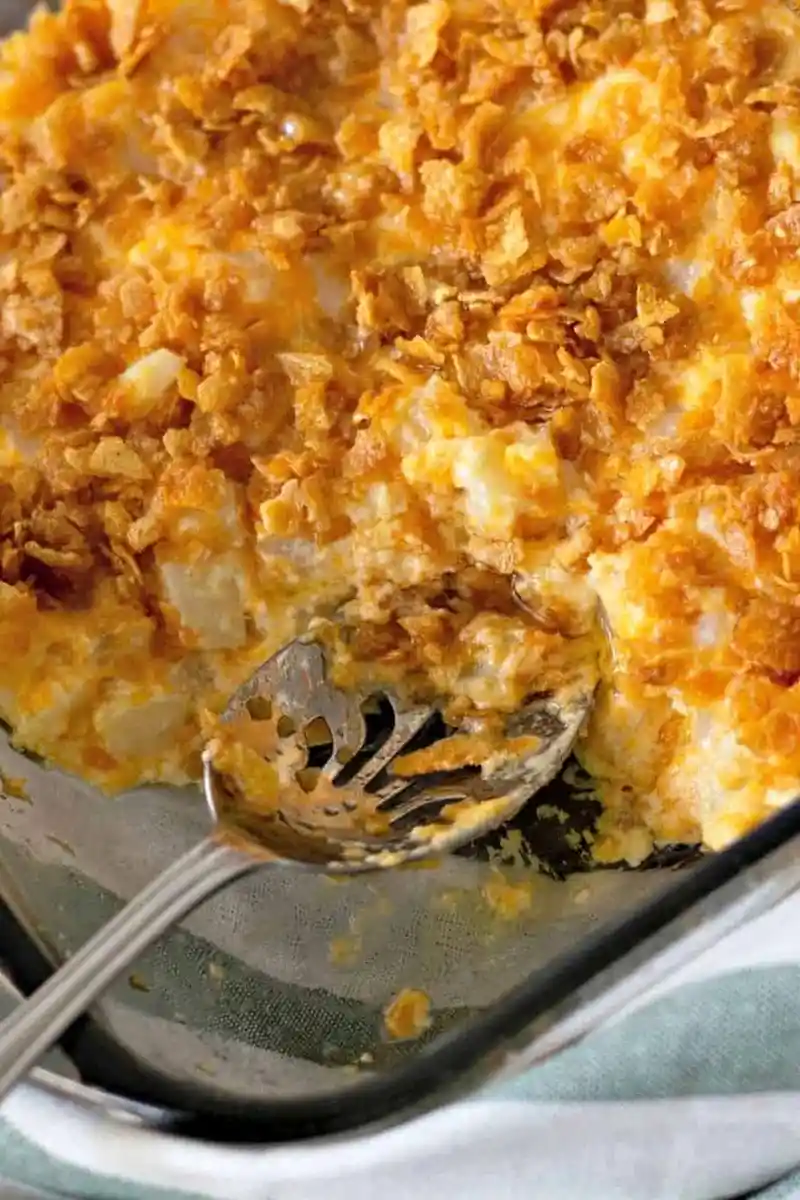
List of ingredients
- 1/3 cup butter, melted – provides a rich base for the potato mixture.
- 2 cups sour cream – adds tanginess and a creamy consistency.
- 10.5 oz cream of chicken soup – acts as the primary binding agent and flavor enhancer.
- 1 teaspoon salt – enhances all the savory elements of the dish.
- 1 teaspoon onion powder – adds a subtle, aromatic depth without the texture of fresh onions.
- 2 cups shredded cheddar cheese – provides a sharp, salty flavor and gooey texture.
- 24 ounces frozen hash browns, cubed or diced (not shredded), thawed – the heart of the casserole.
- 1/2 cup butter, melted (1 stick) – used specifically for the crunchy topping.
- 3 cups corn flakes, slightly crushed – creates the signature crispy outer layer.
step-by-step instructions
- Prep the oven: Preheat your oven to 350F degrees to ensure a consistent cooking temperature.
- Mix the creamy base: In a large mixing bowl, combine the 1/3 cup melted butter, sour cream, cream of chicken soup, salt, and onion powder. Stir until the mixture is smooth and well combined.
- Fold in main ingredients: Stir the shredded cheddar cheese and the thawed diced hash browns into the creamy mixture. Ensure every potato cube is evenly coated in the sauce.
- Prepare the baking dish: Pour the completed potato mixture into a 9×13 inch glass baking dish that has been greased with non-stick cooking spray to prevent sticking.
- Create the topping: In a medium mixing bowl, combine the 1/2 cup of melted butter and the slightly crushed corn flakes. Stir gently until all the flakes are thoroughly coated in butter.
- Apply the crust: Spoon the buttered corn flake mixture evenly over the top of the potato casserole, spreading it to the edges.
- Bake: Place the uncovered casserole in the oven and bake for 45 minutes. The dish is ready when it is bubbly and the edges are golden brown.
- Rest and serve: Remove from the oven and allow the casserole to cool for 5-10 minutes. This resting period helps the sauce set before serving.
Professional Tips for Better Casserole Results
Use Unsalted Butter for Precise Salt Control
When selecting butter for this recipe, opt for unsalted varieties. This allows you to control the sodium levels using the added salt and the salt already present in the canned soup and cheese. If you only have salted butter, reduce the added teaspoon of salt by half to avoid over-seasoning the dish.
Proper Corn Flake Crushing Method
To achieve the perfect crunch, avoid pulverizing the corn flakes into a powder. Place the cereal in a large plastic freezer bag and press down gently with your hands to break them into smaller pieces. This maintains a varied texture that provides more satisfying bites of crispiness.
Ensuring Hash Browns are Fully Thawed
Always thaw your frozen diced potatoes completely before mixing them into the base. If the potatoes are still frozen, they will release excess moisture as they cook, which can make the casserole watery. Thawing them in the refrigerator overnight is the safest and most effective method.
Selecting the Right Baking Dish
A 9×13 inch glass baking dish is ideal because it allows you to monitor the bubbling edges and the bottom of the casserole. Glass distributes heat evenly, ensuring the potatoes cook through without burning the bottom. Always use a non-stick spray or a light coating of butter to ensure clean edges when serving.
Ingredient Alternatives and Substitutions
Replacing Cream of Chicken Soup
If you do not have cream of chicken soup, cream of mushroom soup is an excellent alternative that provides a similar earthy flavor and thick consistency. For a more neutral taste, you can use a homemade white sauce (béchamel) made from butter, flour, and milk. Ensure the substitute has a similar thickness to maintain the structure of the casserole.
Experimenting with Different Cheeses
While sharp cheddar is traditional for its bold flavor, you can use Monterey Jack for a milder taste and superior melt. For a more complex flavor profile, try a blend of sharp cheddar and Gruyère or Parmesan. Grating your own cheese from a block is recommended to avoid anti-caking agents that can hinder smooth melting.
Alternative Crunchy Topping Options
If corn flakes are not available, crushed Ritz crackers or potato chips provide a similar buttery crunch. Panko breadcrumbs tossed in melted butter are another great option for a more refined texture. For a low-sugar alternative, avoid sweetened cereals and stick to savory crackers or breadcrumbs.
Using Fresh Potatoes Instead of Frozen
You can use fresh potatoes by peeling and dicing them into small, uniform cubes. Parboil the diced potatoes in salted water for about 2-5 minutes until they are slightly softened but not mushy. Drain them thoroughly and let them cool before adding them to the creamy mixture to avoid thinning the sauce.
Flavor Variations and Add-ins
Adding Fresh Garlic for Depth
To enhance the savory profile, stir in one or two cloves of finely minced fresh garlic into the creamy base. Garlic adds a pungent, aromatic quality that complements the onion powder. Alternatively, you can use a half teaspoon of garlic powder for a more subtle, integrated flavor.
Incorporating Green Onions for Color
Finely sliced green onions can be folded into the potato mixture or sprinkled on top after baking. The fresh, sharp taste of the scallions cuts through the richness of the cheese and sour cream. Using both the white and green parts of the onion provides the best balance of flavor and visual appeal.
Adding Black Pepper and Paprika
Adding a pinch of freshly ground black pepper to the base mixture adds a subtle heat that balances the creaminess. A light dusting of smoked paprika on top of the corn flakes before baking adds a beautiful reddish hue and a hint of smokiness. These small adjustments elevate the dish from simple to gourmet.
Turning the Side Dish Into a Main Meal
You can transform this casserole into a hearty main course by adding cooked proteins. Stir in diced cooked chicken breast or smoked turkey cubes into the potato mixture before baking. This adds protein and substance, making it a complete meal when served with a side of steamed vegetables.
Storage and Preservation Guidance
Refrigerating Leftovers Safely
Store leftover funeral potatoes in an airtight container in the refrigerator for up to 3-4 days. Ensure the casserole has cooled completely before sealing the container to prevent condensation from making the topping soggy. Keep the container tightly sealed to prevent the potatoes from absorbing other fridge odors.
Freezing the Casserole Before Baking
This recipe is excellent for meal prep and can be frozen before it is baked. Assemble the potato mixture in a freezer-safe dish, but do not add the corn flake topping yet. Cover the dish tightly with plastic wrap and aluminum foil to prevent freezer burn and store for up to three months.
Thawing Frozen Potatoes
When you are ready to bake a frozen casserole, thaw it in the refrigerator for 24 hours. Once thawed, prepare the buttered corn flake topping and spoon it over the potatoes. Note that baking time may increase by 10-15 minutes if the dish is not completely thawed before entering the oven.
Reheating and Serving Advice
Microwave Reheating for Individual Portions
The quickest way to reheat a single serving is in the microwave. Place a portion on a microwave-safe plate and heat in 30-second intervals, stirring gently, until heated through. Be aware that the corn flake topping will lose some of its crispness when microwaved.
Oven Reheating for Maximum Crispiness
To maintain the crunchy texture of the topping, reheat the casserole in the oven at 325F. Cover the dish loosely with foil to prevent the top from burning while the center warms up. Remove the foil for the last 5 minutes of heating to crisp the corn flakes back up.
Maintaining Topping Texture During Service
Avoid covering the casserole with a lid or tight foil while it is resting or being served. Trapping the steam can soften the buttery corn flake crust. Serving the dish immediately after the short resting period ensures the best contrast between the creamy interior and the crunchy top.
Ideal Main Course Pairings
Since this is a rich and heavy side dish, it pairs best with lean proteins. Roast chicken, baked turkey breast, or a pot roast are classic choices. A crisp green salad with a vinaigrette dressing also provides a necessary acidic balance to the creaminess of the potatoes.
Preparation and Planning
Make-Ahead Assembly Tips
You can assemble the base of the casserole several hours or even a day in advance. Mix all ingredients except the topping and store the dish in the refrigerator. Adding the corn flake topping just before baking prevents the cereal from absorbing moisture and becoming soggy.
Scaling the Recipe for Large Crowds
This recipe is easily scalable for potlucks. To double or triple the yield, simply multiply all ingredient quantities and use multiple 9×13 inch pans. Avoid overloading a single pan, as too deep a layer of potatoes may not cook evenly in the center.
Using Disposable Trays for Transport
If you are taking the dish to a party, use disposable aluminum foil trays. These are convenient for transport and eliminate the need to carry heavy glass dishes back home. Ensure the tray is sturdy enough to support the weight of the potatoes without bending.
Frequently Asked Questions
Why are these called funeral potatoes?
This dish is a traditional staple at post-funeral luncheons and church potlucks, particularly in the Midwest and among certain community groups. Its ability to be made in large quantities and its comforting nature make it a go-to choice for these gatherings.
Can I use Greek yogurt instead of sour cream?
While Greek yogurt is a common substitute for sour cream, it can change the flavor and consistency. Greek yogurt is thicker and more tart, which may make the casserole slightly more acidic and potentially more watery during the baking process.
Can I use shredded hash browns?
You can use shredded hash browns, but the texture will be significantly different. Shredded potatoes create a denser, more mashed-potato-like consistency, whereas cubed potatoes maintain their shape and provide a distinct bite.
How do I prevent the topping from burning?
If you notice the corn flake topping browning too quickly before the center is bubbly, loosely cover the pan with aluminum foil. This reflects some of the heat and allows the internal temperature to rise without over-browning the crust.
Print
Creamy Funeral Potatoes with Crunchy Cornflake Topping
- Total Time: 65 minutes
- Yield: 12 servings 1x
- Diet: General
Description
A traditional and delicious potato casserole side dish that is cheesy, creamy, and topped with a buttery, crunchy cornflake crust.
Ingredients
- 1/3 cup butter, melted
- 2 cups sour cream
- 10.5 oz cream of chicken soup
- 1 teaspoon salt
- 1 teaspoon onion powder
- 2 cups shredded cheddar cheese
- 24 ounces frozen hash browns, cubed or diced, thawed
- 1/2 cup butter, melted
- 3 cups corn flakes, slightly crushed
Instructions
- Step 1: Preheat the oven to 350F degrees.
- Step 2: In a large mixing bowl, combine the 1/3 cup melted butter, sour cream, cream of chicken soup, salt, and onion powder.
- Step 3: Stir in the shredded cheddar cheese and thawed diced hash browns.
- Step 4: Pour the mixture into a 9×13 inch glass baking dish greased with non-stick cooking spray.
- Step 5: In a medium mixing bowl, combine the ½ cup of melted butter and crushed corn flakes. Stir until the corn flakes are coated in the butter.
- Step 6: Spoon the corn flake mixture over the casserole.
- Step 7: Bake the casserole uncovered for 45 minutes until it is bubbly and golden brown around the edges.
- Step 8: Cool for 5-10 minutes before serving.
Notes
For the best results, use unsalted butter. You can substitute the corn flake topping with crushed potato chips or Ritz crackers for a different crunch.
- Prep Time: 10 minutes
- Cook Time: 45 minutes
- Category: Side Dishes
- Method: Baking
- Cuisine: American
Nutrition
- Serving Size: 1 serving
- Calories: 360 kcal
- Sugar: 2 g
- Sodium: 668 mg
- Fat: 28 g
- Saturated Fat: 16 g
- Unsaturated Fat: 11 g
- Trans Fat: 1 g
- Carbohydrates: 20 g
- Fiber: 1 g
- Protein: 8 g
- Cholesterol: 77 mg