
This creamy garlic butter chicken and rotini pasta dish offers a refined balance of tender protein, savory aromatics, and a velvety cheese sauce that clings perfectly to every spiral. Designed for efficiency, this one-skillet preparation ensures that flavors meld together seamlessly while minimizing cleanup time. It stands as a reliable, comforting staple that transforms simple pantry ingredients into an elegant meal for any evening.
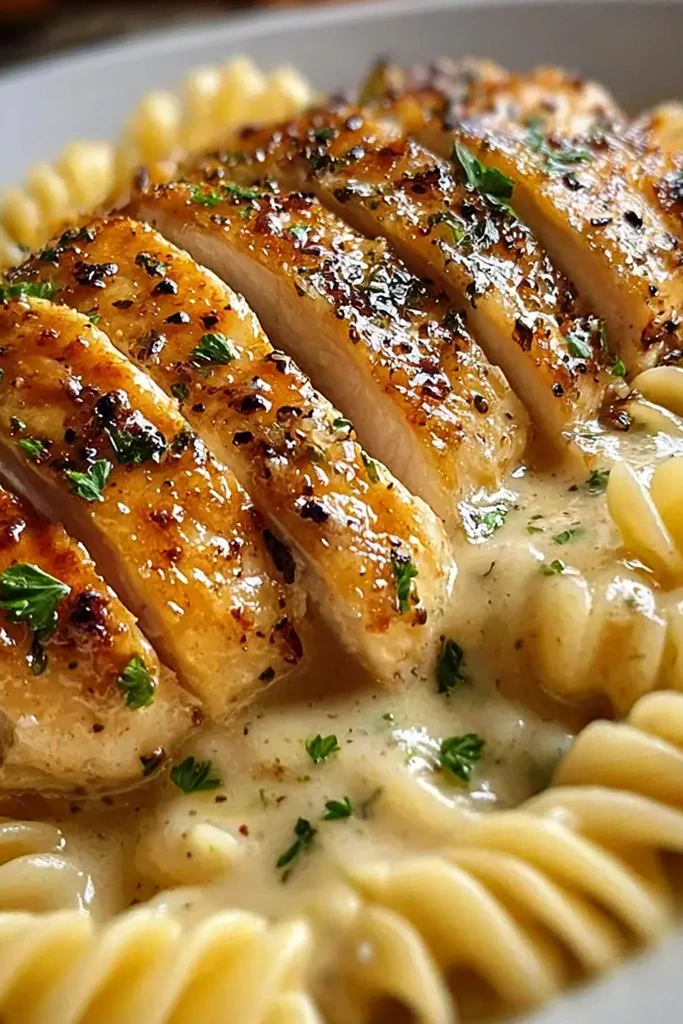
List of ingredients
- 4 boneless, skinless chicken breasts
- 2 tablespoons olive oil
- 4 cloves garlic, minced
- 1 cup heavy cream
- 1 cup grated Parmesan cheese
- 1/2 cup chicken broth
- 1 teaspoon Italian seasoning
- Salt and pepper, to taste
- 8 oz rotini pasta
- Fresh parsley, chopped (for garnish)
step-by-step instructions
- Step 1: Bring a large pot of salted water to a boil. Add the rotini and cook according to package directions until al dente, about 8-10 minutes. Drain and set aside, ensuring the pasta retains some heat.
- Step 2: In a large skillet over medium-high heat, heat the olive oil until it shimmers. Season the chicken breasts with salt and pepper. Sear the chicken for 6-7 minutes per side until golden brown and cooked through.
- Step 3: In the same skillet, reduce heat to medium and sauté the minced garlic for about 1 minute until fragrant. Add the chicken broth and bring to a simmer. Lower the heat and stir in the heavy cream, grated Parmesan, and Italian seasoning.
- Step 4: Add the cooked rotini to the skillet with the creamy sauce. Toss gently to coat the pasta thoroughly. If the sauce is too thick, thin it out with a little extra chicken broth until you reach the desired consistency.
- Step 5: Plate the creamy rotini and top it with the sliced chicken. Garnish with freshly chopped parsley to add a pop of color and freshness. Serve warm and enjoy your meal.
Refining Your Technique for Consistent Results
Managing the Searing Temperature
To ensure your chicken develops that professional-looking golden-brown crust, wait for the olive oil to shimmer before adding the meat. If the skillet is not hot enough, the chicken will steam rather than sear, which results in a pale appearance and a less savory surface. Always keep the pan space slightly open rather than crowding it, as overcrowding can cause the temperature to drop and lead to uneven cooking.
Achieving the Perfect Pasta Texture
Pasta that is slightly undercooked—or al dente—is essential for this dish because the noodles will continue to absorb liquid from the creamy sauce once combined. If you boil the pasta until it is completely soft in the water, it will likely turn mushy once you stir it into the heavy cream and broth mixture. Always test a piece of pasta two minutes before the package directions suggest to ensure it still has a firm, resilient bite.
Customizing Flavors and Texture
Swapping Aromatics and Herbs
While garlic is the star of this sauce, you can add depth by incorporating a small amount of shallot or finely diced leeks during the sauté phase. If you wish to amplify the herbal notes, fresh basil or thyme can replace the dried Italian seasoning. Remember that dried herbs have a more concentrated flavor, so start with smaller amounts if you decide to use fresh alternatives to avoid overwhelming the delicate cream base.
Integrating Different Protein Sources
If you prefer a lighter profile, thin strips of turkey breast or even large, deveined shrimp can replace the chicken. If using shrimp, reduce the cooking time significantly to about 2-3 minutes per side to prevent the texture from becoming rubbery. For a heartier variation, you can add diced sun-dried tomatoes to the sauce, which provides a concentrated acidity that cuts through the richness of the heavy cream.
Serving Ideas for Complete Meals
Selecting Complementary Side Dishes
Because this pasta is quite rich, it pairs best with vibrant, slightly acidic vegetable sides. Steamed broccoli florets tossed with lemon zest, or roasted asparagus spears drizzled with a balsamic glaze, provide a fresh crunch that cleanses the palate between bites. A simple garden salad featuring peppery arugula or mixed field greens with a light vinaigrette also serves as an excellent companion.
Enhancing the Presentation
For a restaurant-style presentation, serve the pasta in wide, shallow bowls which allow the cream sauce to pool slightly rather than settling at the bottom of the bowl. A dusting of freshly grated Parmesan cheese over the finished dish, right before serving, adds a visual freshness and a final layer of sharpness. If you enjoy heat, a light sprinkle of crushed red pepper flakes can provide a gentle warmth that complements the garlic.
Storage and Maintenance Advice
Cooling and Airtight Storage
When storing leftovers, allow the pasta and chicken to reach room temperature before sealing them in an airtight container to avoid creating excess steam inside the vessel. Properly sealed, the dish will remain flavorful in the refrigerator for up to 3 days. It is best to avoid storing the chicken directly on top of the pasta if you want to keep the meat moist, as the sauce can sometimes soften the surface of the chicken over time.
Reviving the Sauce Texture
Reheating creamy sauces often poses the challenge of the sauce splitting or becoming oily. To mitigate this, reheat the dish on the stovetop over low heat, stirring occasionally, rather than using high power in a microwave. Incorporating a small splash of chicken broth or a spoonful of water while heating will help re-emulsify the sauce, restoring its original smooth and glossy consistency.
Frequently Asked Questions
Can I prepare this dish without heavy cream?
You can substitute the heavy cream with a mixture of milk and a small amount of cornstarch or half-and-half to lower the fat content. Keep in mind that heavy cream provides the structural stability for the sauce, so lighter alternatives may require a slightly longer reduction time over low heat to thicken to the desired consistency.
Is there a way to prepare the sauce without chicken broth?
Vegetable broth is an excellent alternative that adds a slightly different but equally savory depth to the sauce. In urgent situations, you can use reserved pasta water, which contains starch that helps the sauce cling to the noodles, although you may need to add an extra pinch of salt to compensate for the missing savory notes of a true broth.
How can I tell if the chicken is properly cooked without a thermometer?
While a meat thermometer is the most accurate tool, you can check for doneness by pressing the thickest part of the chicken breast. It should feel firm to the touch with very little give, and the juices should run clear, not pink, when pierced with a knife. If you notice any pinkness in the center when slicing, return the pieces to the pan for an additional minute of cooking.
Can this recipe be frozen for later use?
Freezing pasta dishes with cream-based sauces is generally discouraged because the sauce is prone to separating upon thawing, resulting in a grainy texture. If you must freeze it, do so without the pasta, freezing only the chicken and the sauce. Cook fresh pasta at the time of serving and combine it with the thawed, reheated sauce mixture for the best quality experience.
Why does my sauce separate when I add the Parmesan cheese?
Sauce separation usually occurs when the heat is too high when the cheese is added. Always lower the heat to a minimum or remove the skillet from the burner entirely before stirring in the grated cheese. Whisking the cheese in gradually, rather than dumping it all at once, allows it to melt into the cream evenly without forming clumps or breaking the emulsion.
Print
Creamy Garlic Butter Chicken & Rotini in Parmesan Sauce
- Total Time: PT45M
- Yield: 4 servings 1x
- Diet: High Protein
Description
Delicious Creamy Garlic Butter Chicken & Rotini in Parmesan Sauce recipe with step-by-step instructions.
Ingredients
- 4 boneless, skinless chicken breasts
- 2 tablespoons olive oil
- 4 cloves garlic, minced
- 1 cup heavy cream
- 1 cup grated Parmesan cheese
- 1/2 cup chicken broth
- 1 teaspoon Italian seasoning
- Salt and pepper, to taste
- 8 oz rotini pasta
- Fresh parsley, chopped (for garnish)
Instructions
- Step 1: Bring a large pot of salted water to a boil. Add the rotini and cook according to package directions until al dente, about 8-10 minutes. Drain and set aside, ensuring the pasta retains some heat.
- Step 2: In a large skillet over medium-high heat, heat the olive oil until it shimmers. Season the chicken breasts with salt and pepper. Sear the chicken for 6-7 minutes per side until golden brown and cooked through.
- Step 3: In the same skillet, reduce heat to medium and sauté the minced garlic for about 1 minute until fragrant. Add the chicken broth and bring to a simmer. Lower the heat and stir in the heavy cream, grated Parmesan, and Italian seasoning.
- Step 4: Add the cooked rotini to the skillet with the creamy sauce. Toss gently to coat the pasta thoroughly. If the sauce is too thick, thin it out with a little extra chicken broth until you reach the desired consistency.
- Step 5: Plate the creamy rotini and top it with the sliced chicken. Garnish with freshly chopped parsley to add a pop of color and freshness. Serve warm and enjoy your meal.
Notes
Ensure the oil is hot before adding the chicken to achieve a perfect golden crust. For a creamier sauce, whisk the cream thoroughly to prevent separation.
- Prep Time: PT15M
- Cook Time: PT30M
- Category: Main Course
- Method: Stovetop
- Cuisine: Italian-inspired
Nutrition
- Serving Size: 1 serving
- Calories: 600 kcal
- Sugar: 3 g
- Sodium: 850 mg
- Fat: 32 g
- Saturated Fat: 15 g
- Unsaturated Fat: 12 g
- Trans Fat: 0 g
- Carbohydrates: 40 g
- Fiber: 2 g
- Protein: 35 g
- Cholesterol: 140 mg