
This creamy white pasta sauce is a rich and satisfying alternative to store-bought jars. It uses simple pantry staples to create a restaurant-quality texture without requiring heavy cream. It is an ideal base for various pasta types and additional proteins.
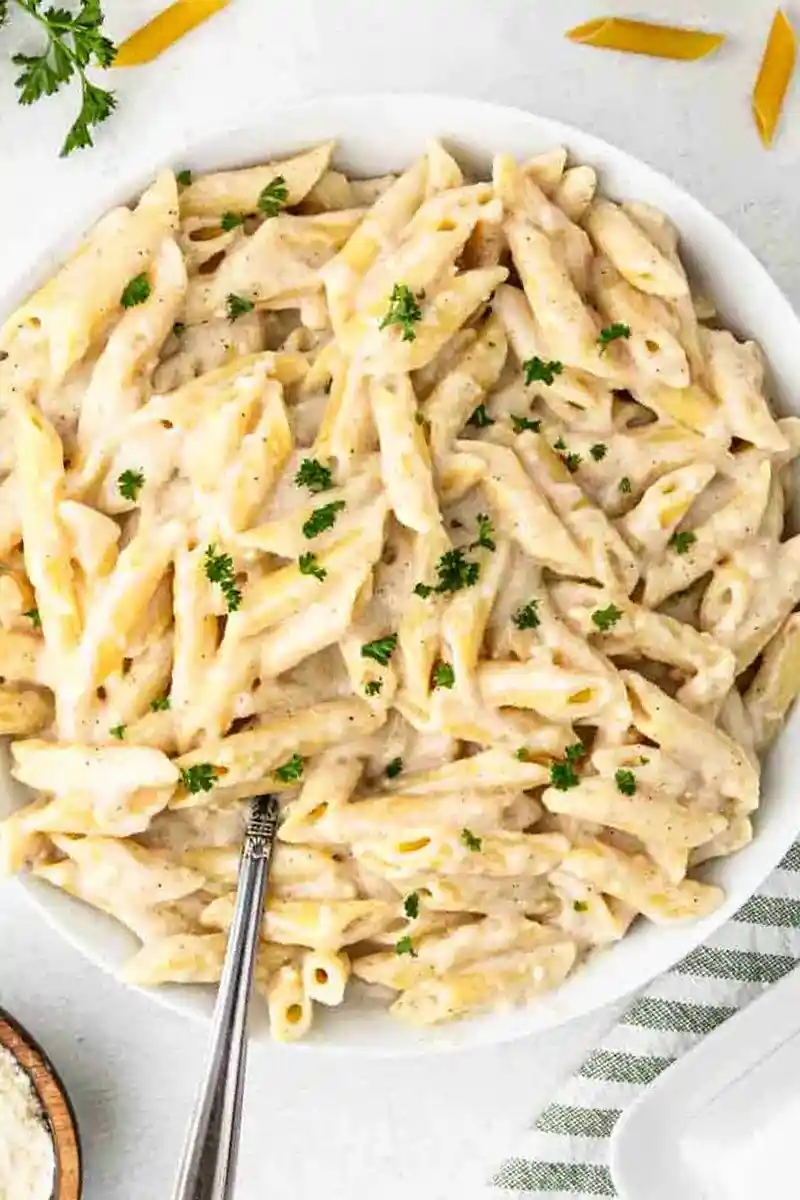
List of ingredients
- 1 lb Penne Pasta – cooked al dente.
- 1/4 cup Butter – unsalted preferred for flavor control.
- 1/4 cup Flour – all-purpose for a smooth roux.
- 2 tsp Minced Garlic – fresh for maximum aroma.
- 1 cup Chicken Broth – adds savory depth to the sauce.
- 1 cup Milk – whole milk provides the creamiest consistency.
- 1/2 cup Grated Parmesan Cheese – adds salty, nutty flavor.
- 1/2 tsp Salt – adjust to taste.
- 1/2 tsp Pepper – black pepper for a subtle kick.
step-by-step instructions
- Cook Pasta: Prepare 1 lb of penne pasta according to the package directions until it reaches an al dente texture, then drain.
- Sauté Garlic: Melt 1/4 cup of butter in a saucepan over medium heat. Add 2 tsp of minced garlic and cook for approximately 1 minute.
- Create Roux: Whisk in 1/4 cup of flour and cook for 1 minute until the mixture slightly thickens.
- Add Liquids: Slowly whisk in 1 cup of milk and 1 cup of chicken broth. Stir constantly until the sauce thickens and reaches a gentle boil.
- Incorporate Cheese: Stir in 1/2 cup of grated Parmesan cheese, 1/2 tsp salt, and 1/2 tsp black pepper until the cheese is fully melted and the sauce is smooth.
- Combine and Serve: Add the cooked pasta to the saucepan and stir to coat evenly. Serve immediately.
Ways to Customize Your Sauce
Integrating Lean Proteins
You can add grilled chicken breast, sautéed shrimp, or seared tofu to make the meal more filling. Cook the protein separately first to ensure it is browned and fully cooked before stirring it into the finished sauce.
Adding Fresh Vegetables
Steamed broccoli, frozen peas, or fresh spinach are excellent additions. Stir these in during the final step of the sauce preparation so they remain vibrant and slightly crisp.
Enhancing with Spices and Herbs
For a different flavor profile, stir in a pinch of nutmeg to create a traditional Béchamel style. Fresh basil, dried oregano, or red chili flakes also add depth and complexity to the creamy base.
Low-Carb Pasta Alternatives
Substitute traditional wheat pasta with zucchini noodles or roasted spaghetti squash. This allows you to enjoy the rich flavor of the white sauce while significantly reducing the overall carbohydrate count.
Essential Cooking Tips
Preventing Garlic from Burning
Garlic burns quickly over medium heat, which can make the sauce taste bitter. Keep the garlic moving constantly with a spoon and remove it from the heat as soon as it becomes fragrant.
Achieving a Lump-Free Sauce
The key to a smooth sauce is the slow addition of liquids. Pour the milk and broth in small increments, whisking vigorously after each addition to ensure the flour is fully incorporated.
Managing Pasta Texture
Always cook your pasta one minute less than the package instructions suggest. Since the pasta will be tossed in a hot sauce, this prevents it from becoming mushy during the final combination.
Controlling Sauce Consistency
If the sauce becomes too thick as it simmers, whisk in a tablespoon of chicken broth or milk at a time. This will thin the sauce without compromising the creamy flavor profile.
Alternative Ingredient Options
Gluten-Free Flour Substitutes
You can replace all-purpose flour with a 1:1 gluten-free flour blend or almond flour. Be aware that gluten-free options may result in a slightly different thickness and texture.
Dairy-Free Milk Choices
Unsweetened almond milk or oat milk can be used as a substitute for cow’s milk. Ensure the milk is completely unsweetened to avoid adding an unwanted sugary taste to the savory sauce.
Variations in Cheese Selection
While Parmesan is traditional, you can substitute it with Pecorino Romano for a sharper taste or Mozzarella for a stretchier, milder sauce. A mix of both often provides the best result.
Using Vegetable Broth
If you prefer a vegetarian base, substitute the chicken broth with a high-quality vegetable broth. This maintains the savory depth of the sauce while remaining plant-based.
Serving Suggestions
Pairing with Fresh Salads
A crisp Caesar salad or a simple garden salad with lemon vinaigrette balances the richness of the white sauce. The acidity in the salad dressing cuts through the creaminess of the pasta.
Roasted Vegetable Sides
Oven-roasted asparagus or honey-glazed carrots provide a nutritional balance to the meal. These sides add color and a different textural contrast to the soft pasta.
Bread Accompaniments
Warm garlic bread or a toasted baguette is ideal for scooping up any remaining sauce on the plate. Brush the bread with melted butter and garlic powder before toasting in the oven.
Storage and Preservation
Refrigeration Guidelines
Store any leftover pasta and sauce in an airtight container in the refrigerator for up to 3 to 5 days. Keep the sauce and pasta separate if you plan to store them for longer to prevent the pasta from absorbing all the liquid.
Freezing the Sauce
The sauce can be frozen in an airtight container for up to 6 months. It is recommended to freeze the sauce without the pasta, as cooked pasta often loses its texture when frozen and thawed.
Thawing and Recovery
Thaw frozen sauce slowly in the refrigerator overnight. When reheating, the sauce may appear separated; whisking it over low heat will bring the emulsion back together.
Reheating Instructions
Stovetop Reheating
Place the sauce in a small pan over low heat. Add a splash of milk or broth and stir constantly until the sauce is heated through and returns to its original creamy state.
Microwave Reheating
Heat the pasta in a microwave-safe bowl in 30-second intervals. Stir the sauce between each interval to ensure even heating and to prevent the cheese from separating.
Fixing Separated Sauce
If the sauce breaks and becomes oily, add a teaspoon of cornstarch mixed with a little cold water. Whisk this slurry into the simmering sauce to stabilize the emulsion.
Common Troubleshooting
Solving Sauce Lumps
If lumps form despite whisking, you can pass the sauce through a fine-mesh strainer. Alternatively, use an immersion blender for a few seconds to force the sauce into a smooth consistency.
Correcting Overly Thick Sauce
A sauce that is too thick usually results from over-reducing the liquids. Whisk in a small amount of warm milk or pasta water to loosen the sauce without cooling it down too much.
Adjusting Bland Flavors
If the sauce tastes flat, increase the amount of salt or add a squeeze of fresh lemon juice. The acidity of the lemon enhances the salt and cheese, brightening the overall flavor.
Frequently Asked Questions
Can this sauce be made in advance?
Yes, the sauce can be prepared up to 3 days in advance and stored in the fridge. Reheat it slowly on the stove, adding a bit of broth if it has thickened too much during storage.
What is the base of white pasta sauce?
The base is a roux, which is a cooked mixture of equal parts butter and flour. This mixture acts as a thickening agent for the milk and broth, creating the creamy texture.
How do I stop the sauce from curdling?
Avoid boiling the sauce vigorously once the cheese and milk are added. Keep the heat at a medium-low setting and stir constantly to maintain a stable emulsion.
Print
Creamy Homemade White Pasta Sauce
- Total Time: 15 minutes
- Yield: 6 servings 1x
- Diet: General
Description
White pasta sauce is rich and creamy without any heavy cream needed. You probably already have the ingredients needed for this easy sauce.
Ingredients
- 1 lb Penne Pasta
- 1/4 cup Butter
- 1/4 cup Flour
- 2 tsp Minced Garlic
- 1 cup Chicken Broth
- 1 cup Milk
- 1/2 cup Grated Parmesan Cheese
- 1/2 tsp Salt
- 1/2 tsp Pepper
Instructions
- Step: Cook 1 lb penne pasta to al dente according to package instructions.
- Step: In a saucepan, melt ¼ cup butter over medium heat. Add 2 tsp minced garlic and cook for 1 minute.
- Step: Whisk in ¼ cup flour and cook for 1 minute until slightly thickened.
- Step: Slowly whisk in 1 cup milk and 1 cup chicken broth, stirring constantly until the sauce thickens and begins to boil.
- Step: Stir in ½ cup grated Parmesan cheese, ½ tsp salt, and ½ tsp black pepper until melted and smooth.
- Step: Add the cooked pasta and stir to combine. Serve immediately.
Notes
Variations: Add shrimp, chicken, or vegetables like broccoli, peas, or spinach. For a lower-carb option, serve over zucchini noodles. Adding a pinch of nutmeg creates a classic Béchamel sauce.
- Prep Time: 5 minutes
- Cook Time: 10 minutes
- Category: Sauces
- Method: Stovetop
- Cuisine: American
Nutrition
- Serving Size: 1 serving
- Calories: 271 kcal
- Sugar: 3 g
- Sodium: 551 mg
- Fat: 12 g
- Saturated Fat: 7 g
- Unsaturated Fat: 4 g
- Trans Fat: 1 g
- Carbohydrates: 30 g
- Fiber: 2 g
- Protein: 10 g
- Cholesterol: 32 mg