
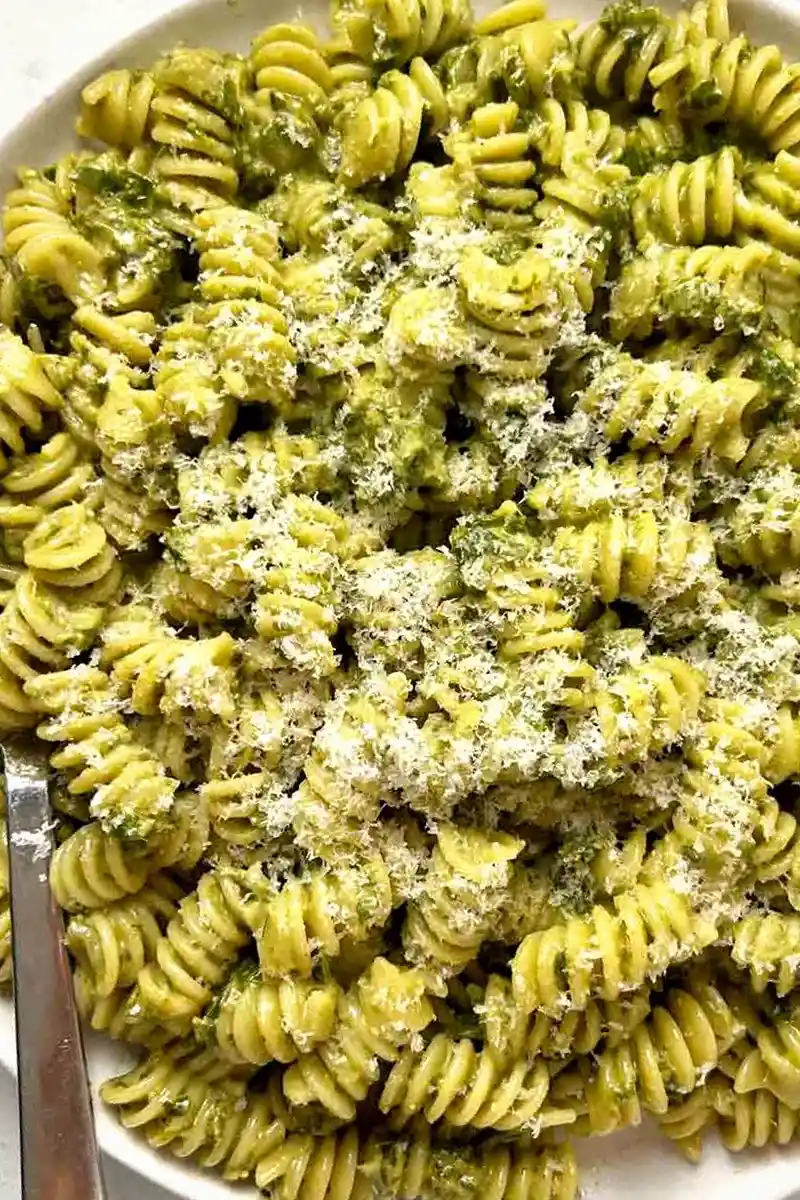
This creamy pesto pasta offers a decadent, restaurant-quality meal in just fifteen minutes of active kitchen time. By balancing the herbaceous notes of high-quality pesto with the rich texture of heavy cream, this dish transforms pantry staples into a sophisticated vegetarian dinner. It is an ideal solution for hurried weeknights when you desire a comforting, professional-tasting meal without extensive preparation.
List of ingredients
- 8 ounces uncooked pasta
- 2 tablespoons olive oil
- 1 cup pesto
- 1/3 cup heavy cream
- 1 tablespoon fresh lemon juice
step-by-step instructions
- Step: Cook the pasta according to package directions. Reserve 1 cup of pasta water. Drain.
- Step: Add the olive oil, pesto, cream, and ½ cup of pasta water to a large skillet. Bring to a simmer and cook over medium heat for 5-6 minutes until it thickens to your liking. If the sauce is too thick, add more pasta water to thin it out.
- Step: Add the cooked pasta and lemon juice to the pan. Toss until combined. Enjoy!
Refining your technique for the perfect sauce
Choosing the right pasta shape for sauce adherence
Selecting the correct pasta shape significantly improves the dining experience. Shapes with ridges, pockets, or spirals like rotini, fusilli, or farfalle are superior at trapping the pesto cream sauce, ensuring you get maximum flavor in every single bite. Longer noodles like fettuccine or linguine are also effective, as their surface area provides ample space for the sauce to cling.
Mastering the pasta water emulsion process
The starch-rich water you save from the pasta pot is a vital ingredient rather than just a byproduct. When combined with the heavy cream and pesto, the starch in this water acts as a natural binder, helping the sauce stick to the pasta instead of pooling at the bottom of the bowl. Always keep an extra splash on hand during the final tossing stage to ensure the dish stays creamy as it cools.
Managing heat to prevent sauce separation
Heavy cream can sometimes break or separate if exposed to temperatures that are too high for too long. Keep the skillet on a moderate, steady medium heat throughout the simmering process to maintain a stable emulsion. If you notice the sauce thickening too quickly, lower the heat immediately and introduce your reserved pasta water to restore the smooth texture.
Customizing your flavor profile
Enhancing the dish with fresh vegetables
You can easily turn this into a one-pan nutritional powerhouse by folding in cooked vegetables during the final stage. Steamed asparagus tips, sautéed zucchini ribbons, or blanched green peas add beautiful color and additional texture. Since these vegetables are already cooked, they will not disrupt the delicate balance of your sauce, providing extra depth without requiring extra cooking time.
Adjusting the creaminess to your preference
If you prefer a lighter sauce, you can substitute a portion of the heavy cream with half-and-half or even a touch of Greek yogurt mixed with a little bit of pasta water. While these alternatives change the mouthfeel, they still provide the necessary richness to balance the bold, concentrated flavors of the basil pesto. Always taste your sauce after making adjustments to ensure the flavor remains vibrant.
Integrating protein options
For those seeking a more substantial meal, incorporating protein is straightforward and seamless. Grilled chicken strips, pan-seared shrimp, or crispy chickpeas add a distinct savory element that pairs perfectly with the herb-forward sauce. Add these proteins right at the end when tossing the pasta so they become warm without overcooking or drying out.
Proactive planning and storage
Managing leftovers for maximum freshness
This dish stores exceptionally well if kept in an airtight container in the refrigerator for up to three days. Because pasta continues to absorb moisture as it sits, the sauce may appear slightly thicker the next day. This is normal and can be easily corrected by adding a small splash of water or a tiny bit of olive oil before reheating the pasta to loosen the texture.
Reheating the pasta correctly
To reheat, it is best to use a skillet over low heat rather than a microwave. Adding a tablespoon of water to the pan as the pasta warms helps re-emulsify the sauce, returning it to its original creamy consistency. If you must use a microwave, cover the dish with a damp paper towel and heat in thirty-second intervals, stirring in between to prevent the sauce from drying out or breaking.
Preparing ingredients in advance
If you are a fan of meal prepping, keep your pesto and cream measured out and ready to go. You can also par-cook your pasta, draining it when it is just slightly under al dente, and store it with a light coating of olive oil. When you are ready for dinner, simply toss the pasta into the simmering sauce, and it will finish cooking perfectly in the final minutes.
Common questions and answers
Why is my pesto sauce turning brown?
Pesto naturally loses its vibrant green color when heated for extended periods due to the oxidation of the fresh basil. To keep the color as bright as possible, stir the pesto into the sauce at the very end of the simmering process rather than letting it boil for the entire five minutes. Adding the lemon juice right before serving also helps maintain the color and provides a pop of freshness that masks any dullness.
Can I use dried basil instead of fresh pesto?
While you can use dried herbs, they will not provide the same depth, texture, or vibrant color as a traditional pesto made from fresh basil, garlic, and pine nuts. If fresh pesto is unavailable, consider using a high-quality jarred version, as it is designed to hold up well to heat. If you only have dried herbs, it is better to create a cream sauce with those separately rather than attempting to replicate a fresh pesto.
How do I know when the sauce is finished thickening?
The sauce is ready when it reaches a consistency that coats the back of a spoon and leaves a clear path when you draw your finger across it. It should look glossy and feel slightly sticky. If the sauce slides off the spoon immediately like water, it needs to simmer for another minute or two, or you may need to reduce the amount of pasta water initially added to the pan.
Is it possible to make this dish dairy-free?
Yes, you can substitute the heavy cream with a full-fat canned coconut milk or a high-quality oat-based cooking cream for a dairy-free alternative. Ensure your pesto is also prepared without cheese if you are strictly avoiding dairy. These plant-based fats provide a similar richness to heavy cream, though they may introduce a very subtle flavor note that pairs interestingly with the basil.
Print
Creamy Pesto Pasta
- Total Time: 15 minutes
- Yield: 4 servings 1x
- Diet: Vegetarian
Description
This quick and easy Creamy Pesto Pasta comes together in just 15 minutes and is made with simple ingredients. A perfect vegetarian dinner for busy weeknights, lunch, or meal prep.
Ingredients
- 8 ounces uncooked pasta
- 2 tablespoons olive oil
- 1 cup pesto
- 1/3 cup heavy cream
- 1 tablespoon fresh lemon juice
Instructions
- Step: Cook the pasta according to package directions. Reserve 1 cup of pasta water. Drain.
- Step: Add the olive oil, pesto, cream, and ½ cup of pasta water to a large skillet. Bring to a simmer and cook over medium heat for 5-6 minutes until it thickens to your liking. If the sauce is too thick, add more pasta water to thin it out.
- Step: Add the cooked pasta and lemon juice to the pan. Toss until combined. Enjoy!
Notes
Feel free to add grated parmesan cheese if desired. Best served immediately while hot.
- Prep Time: 5 minutes
- Cook Time: 10 minutes
- Category: Main Course
- Method: Stovetop
- Cuisine: American, Italian
Nutrition
- Serving Size: 1 serving
- Calories: 420 kcal
- Sugar: 2 g
- Sodium: 380 mg
- Fat: 22 g
- Saturated Fat: 6 g
- Unsaturated Fat: 14 g
- Trans Fat: 0 g
- Carbohydrates: 48 g
- Fiber: 3 g
- Protein: 10 g
- Cholesterol: 30 mg