
This one-pan meal combines pre-cooked chicken with toasted orzo and fresh vegetables for a fast dinner. It is designed for efficiency, taking only 30 minutes from preparation to serving.
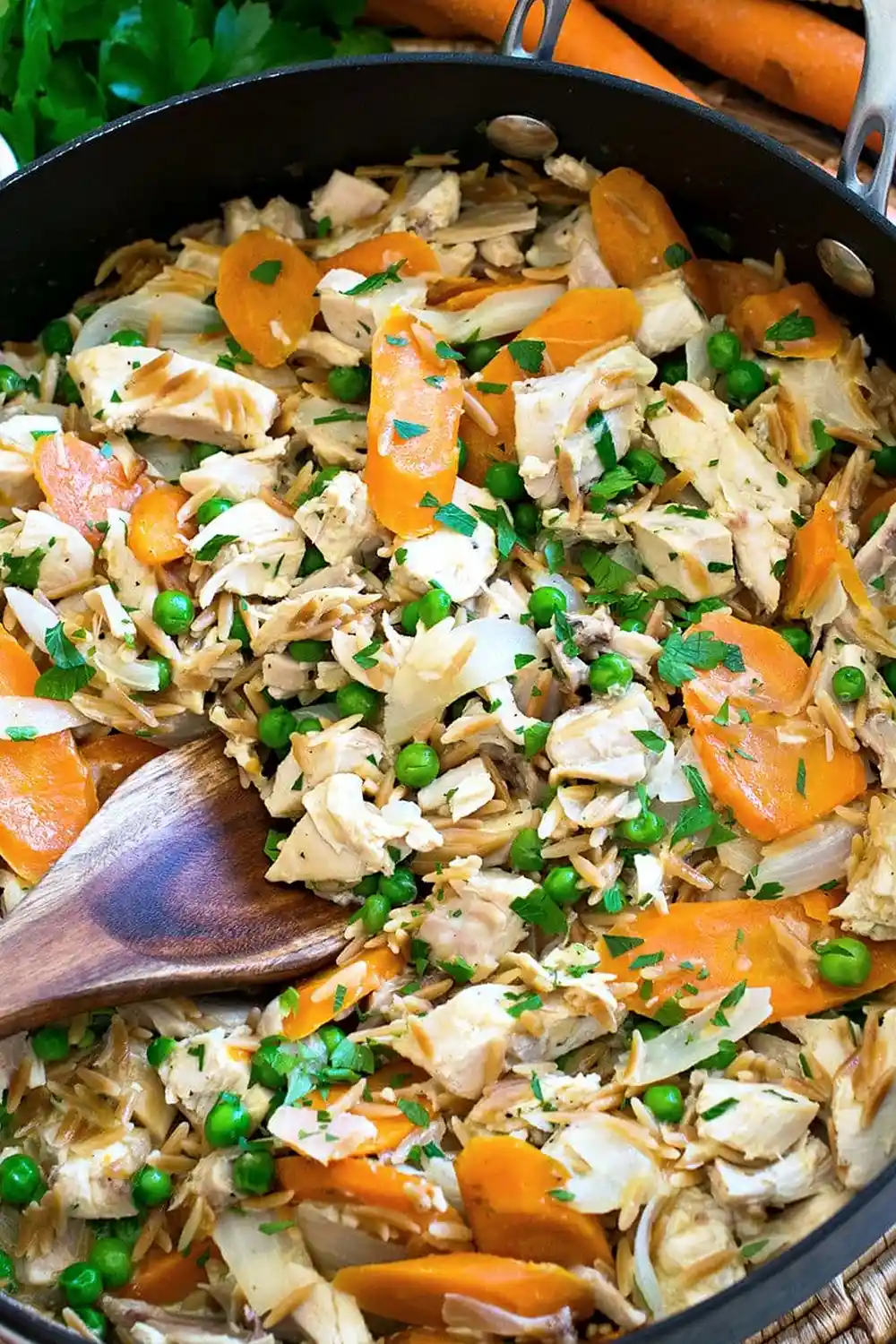
List of ingredients
- 1 whole rotisserie chicken (or 3 ½ cups cooked chicken meat) – provides the main protein and base flavor.
- ½ cup uncooked orzo pasta – small rice-shaped pasta that thickens the dish.
- 2 tablespoons olive or vegetable oil – used for sautéing vegetables.
- 2 cups carrots, cut on the bias – adds sweetness and texture.
- 1 cup onion, cut into thick strips – provides a savory aromatic base.
- 2 cups chicken stock – the primary cooking liquid for the pasta.
- ½ teaspoon garlic powder – adds a concentrated savory note.
- 1 teaspoon kosher salt – enhances all existing flavors.
- ½ teaspoon freshly ground black pepper – provides a mild spicy bite.
- ½ cup chopped fresh parsley – adds a bright, herbal finish.
- 1 cup frozen peas – adds color and pops of sweetness.
- ½ cup heavy cream – creates a rich, velvety sauce.
- ½ cup freshly grated Parmesan cheese – adds a salty, nutty finish.
step-by-step instructions
- Prepare the chicken: Remove the meat from the rotisserie chicken and cut it into rough, bite-sized pieces. Set the meat aside for later use.
- Toast the pasta: Place a large dry skillet over medium-high heat and add the orzo. Stir frequently for about 3 minutes until the pasta is lightly browned to enhance its nutty flavor.
- Sauté the vegetables: Transfer the browned orzo to a separate bowl. Pour oil into the hot skillet and add the carrots and onions, sautéing for 4 minutes until they begin to soften.
- Simmer the orzo: Return the toasted orzo to the pan. Stir in the chicken stock, garlic powder, salt, and pepper. Cover the skillet and reduce heat to a medium simmer, cooking for 8-10 minutes until the pasta is tender.
- Combine ingredients: Remove the lid and stir in the chopped parsley, frozen peas, heavy cream, and cooked chicken.
- Final heat: Increase the heat slightly and cook just until the entire dish is heated through and the ingredients are fully incorporated.
- Finish and serve: Remove from heat and sprinkle the grated Parmesan cheese over the top before serving.
Optimizing Your Ingredient Selection
Choosing the Right Rotisserie Chicken
Select a chicken that is freshly roasted and still warm to ensure the meat is tender. If using a store-bought version, check that the seasoning is mild so it does not overpower the other ingredients in the skillet.
Using High-Quality Chicken Stock
Use a low-sodium chicken stock to maintain control over the salt levels of the final dish. A stock with a high gelatin content will result in a silkier sauce once the cream is added.
Selecting the Best Orzo
Choose a high-quality durum wheat orzo for the best texture. This ensures the pasta maintains its shape and does not become mushy during the simmering process.
Preparing the Bias-Cut Carrots
Cutting carrots on the bias creates more surface area for browning and ensures they cook through at the same rate as the onions. Keep the slices uniform in thickness for consistent results.
Using Fresh Parsley for Brightness
Always use fresh flat-leaf parsley rather than dried alternatives. The fresh herbs provide a necessary acidic contrast to the heavy cream and Parmesan cheese.
Selecting Frozen Peas
Use garden-peas that have been flash-frozen to preserve their color and snap. Adding them at the very end prevents them from overcooking and turning gray.
Using Heavy Cream for Texture
Heavy cream with at least 36% milkfat is ideal for preventing the sauce from separating. This fat content creates a stable emulsion when combined with the starchy pasta water.
Choosing Freshly Grated Parmesan
Grate the Parmesan cheese from a block rather than using pre-shredded options. Pre-shredded cheeses often contain cornstarch or cellulose, which can prevent the cheese from melting smoothly.
Customizing Your Skillet Meal
Substituting the Heavy Cream
For a lighter version, substitute half-and-half or light cream for the heavy cream. While the sauce will be thinner, it still provides a creamy profile with fewer calories.
Using Coconut Milk for Dairy-Free Needs
Full-fat canned coconut milk serves as a suitable plant-based replacement for heavy cream. This changes the flavor profile slightly but maintains the desired creamy consistency.
Incorporating Leafy Greens
Stir in two cups of fresh baby spinach or chopped kale during the final heating step. The residual heat will wilt the greens quickly without overcooking them.
Adding Other Frozen Vegetables
Swap the frozen peas for corn or a mixed vegetable medley. Ensure the vegetables are added at the end to maintain their texture and color.
Swapping Orzo for Different Pasta
Small shapes like ditalini or acini di pepe can be used as substitutes. Adjust the simmering time based on the specific pasta’s package directions.
Introducing Additional Aromatics
Add two cloves of minced fresh garlic during the vegetable sauté phase. This provides a deeper, more pungent garlic flavor than the powder alone.
Increasing the Spice Level
Stir in a pinch of red pepper flakes along with the salt and pepper. This adds a subtle heat that cuts through the richness of the cream.
Adding Lemon for Acidity
Squeeze the juice of half a lemon into the skillet just before serving. The acidity brightens the flavor of the chicken and balances the salty Parmesan.
Using Different Cheese Varieties
Pecorino Romano can be used instead of Parmesan for a saltier, sharper taste. Grana Padano is another excellent alternative for a more mellow flavor.
Adjusting the Vegetable Ratio
Increase the amount of carrots or onions if you prefer a more vegetable-forward dish. If adding significantly more vegetables, you may need an extra tablespoon of oil.
Advanced Cooking Techniques
The Science of Toasting Orzo
Toasting the pasta in a dry pan creates a Maillard reaction, which develops a nutty flavor. It also helps the pasta grains remain distinct rather than clumping together during the simmer.
Managing the Simmer Temperature
Ensure the liquid is at a gentle simmer rather than a rolling boil. Excessive heat can cause the orzo to release too much starch too quickly, leading to a gummy texture.
Preventing Cream Curdling
Add the cream when the pan is not at a violent boil. Incorporating the dairy at a lower temperature prevents the proteins from denaturing and separating.
Achieving Optimal Vegetable Softness
Sautéing the carrots and onions for exactly four minutes ensures they are par-cooked. This allows them to finish softening during the simmering phase without becoming mushy.
Controlling Liquid Absorption
The ratio of stock to orzo is critical for the final consistency. If the pan looks too dry before the pasta is done, add a tablespoon of water or extra stock.
Integrating the Pre-Cooked Chicken
Add the rotisserie chicken only at the end to avoid overcooking it. Since the meat is already cooked, it only needs to reach a safe internal serving temperature.
Using the Right Skillet Material
A heavy-bottomed stainless steel or cast iron skillet provides the most even heat distribution. This prevents hot spots that could burn the toasted orzo.
Maintaining the Sauce Emulsion
Stir the dish gently once the cream and cheese are added. Over-stirring can break the emulsion and make the sauce appear oily.
Seasoning in Layers
Adding salt and pepper during the simmering phase allows the flavors to penetrate the pasta. The final addition of Parmesan provides a top layer of seasoning.
Timing the Frozen Peas
Add frozen peas in the final two minutes of cooking. Their high water content can dilute the sauce if they are simmered for too long.
Storage and Reheating Guidelines
Refrigerating Leftovers
Store the skillet meal in an airtight container in the refrigerator for up to three days. Ensure the dish is cooled slightly before sealing to prevent excessive condensation.
Freezing the Base
To freeze this meal, prepare it up until the step before adding the cream. Freeze the chicken, pasta, and vegetable mixture, then add fresh cream upon reheating.
Reheating on the Stovetop
Place leftovers in a pan over medium-low heat. Add a splash of chicken stock or water to loosen the sauce, as the orzo will absorb more liquid during storage.
Microwave Reheating Tips
Heat the meal in short 30-second intervals, stirring in between. This ensures the cream is heated evenly and does not separate.
Thawing Frozen Portions
Thaw frozen portions in the refrigerator overnight before reheating. This preserves the texture of the vegetables and prevents the chicken from becoming rubbery.
Serving and Presentation
Plating for Visual Appeal
Spoon the mixture into shallow bowls to showcase the colors of the peas and carrots. Ensure a generous amount of chicken is visible on top of the pasta.
Recommended Side Dishes
Pair this rich skillet with a crisp green salad or steamed asparagus. The freshness of a side vegetable balances the creaminess of the orzo.
Garnishing for a Professional Look
Add a pinch of fresh parsley and an extra dusting of Parmesan just before serving. A crack of fresh black pepper on top adds a professional finishing touch.
Managing Portion Sizes
Divide the skillet into six equal servings to maintain the correct ratio of sauce to pasta. This prevents the last few servings from becoming too dry.
Common Troubleshooting
Addressing Overcooked Orzo
If the pasta becomes too soft, stop simmering immediately and add the remaining ingredients. The addition of the chicken and cream will cool the pan and stop the cooking process.
Fixing a Thin Sauce
If the sauce is too watery, simmer the mixture uncovered for an additional two minutes. This allows excess liquid to evaporate and thicken the cream.
Correcting Overly Salty Results
If the dish is too salty, stir in a tablespoon of unsalted butter or a squeeze of lemon juice. The acidity and fat will help neutralize the saltiness.
Handling Lumpy Cheese
If the Parmesan does not melt smoothly, remove the pan from the heat. Stir the cheese in slowly while the dish is off the flame to allow it to melt gradually.
Frequently Asked Questions
Can I use raw chicken breast instead?
Yes, but you must sauté the diced raw chicken first until fully cooked before proceeding with the vegetables. This ensures the meat is safe and prevents it from steaming in the sauce.
How do I prevent the pasta from getting mushy?
Do not over-simmer the orzo; follow the 8-10 minute window closely. Toasting the orzo beforehand also creates a protective barrier that helps maintain structure.
Is this recipe suitable for meal prep?
Yes, it stores well for several days. However, the pasta will absorb more liquid over time, so be prepared to add a bit of stock when reheating.
Can I make this in a slow cooker?
No, this recipe relies on toasting and sautéing for flavor development. A slow cooker would result in a different texture and would lack the toasted notes of the orzo.
What if I don’t have a rotisserie chicken?
You can use any cooked chicken, such as poached or grilled breasts. Ensure you have 3.5 cups of meat to maintain the proper ratio of protein to pasta.
Why did my cream separate?
Separation usually occurs if the heat is too high or if the cream is added to a boiling liquid. Keep the heat at a medium simmer when incorporating the dairy.
Can I use brown rice instead of orzo?
Brown rice requires more liquid and a much longer cooking time. You would need to increase the stock and cook the rice separately before adding it to the sauce.
How do I ensure the carrots are tender?
Ensure you cut them into thin, bias-cut slices. If you prefer them very soft, you can sauté them for an additional two minutes before adding the orzo.
Can I substitute vegetable stock?
Yes, vegetable stock is a direct substitute for chicken stock. This will slightly alter the depth of flavor but will not change the cooking process.
What is the best way to store the Parmesan?
Store your Parmesan block wrapped in parchment paper in the refrigerator. This prevents the cheese from drying out or absorbing other odors.
Print
Creamy Rotisserie Chicken and Orzo Skillet
- Total Time: 30 minutes
- Yield: 6 servings 1x
- Diet: General
Description
Ready in 30 minutes, our Rotisserie Chicken Skillet might be the easiest, and most flavorful, dinner you’ve made all week.
Ingredients
- 1 whole rotisserie chicken, or 3 ½ cups cooked chicken meat
- ½ cup uncooked orzo pasta
- 2 tablespoons olive or vegetable oil
- 2 cups carrots cut on the bias
- 1 cup onion cut into thick strips
- 2 cups chicken stock
- ½ teaspoon garlic powder
- 1 teaspoon kosher salt
- ½ teaspoon freshly ground black pepper
- ½ cup chopped fresh parsley
- 1 cup frozen peas
- ½ cup heavy cream
- ½ cup freshly grated Parmesan cheese (microbial-rennet)
Instructions
- Step: Pick the meat from the cooked chicken and roughly cut up and set aside.
- Step: In a large dry skillet pan over medium high heat, cook orzo until lightly browned; about 3 minutes stirring frequently.
- Step: Remove browned orzo to a bowl and add oil to hot pan.
- Step: Add carrots and onion and sauté for 4 minutes.
- Step: Add orzo back in along with stock, garlic powder, salt and pepper. Cover and reduce heat to a medium simmer and simmer to cook the orzo, about 8-10 minutes.
- Step: Uncover and add parsley, peas, and cream along with cooked chicken.
- Step: Increase heat and cook just to bring the dish to temperature and incorporate the ingredients.
- Step: Serve with grated Parmesan sprinkled over the top.
Notes
You can use any leftover cooked chicken you like. For a dairy-free option, canned coconut milk can be used as a substitute for heavy cream.
- Prep Time: 10 minutes
- Cook Time: 20 minutes
- Category: entree
- Method: stovetop
- Cuisine: American
Nutrition
- Serving Size: 1 serving
- Calories: 480 kcal
- Sugar: 7 g
- Sodium: 820 mg
- Fat: 24 g
- Saturated Fat: 11 g
- Unsaturated Fat: 13 g
- Trans Fat: 0 g
- Carbohydrates: 31 g
- Fiber: 5 g
- Protein: 34 g
- Cholesterol: 125 mg