
This pasta dish features a velvety sauce made from sun-dried tomatoes and ricotta cheese for a rich, savory flavor. It is a quick meal that combines deep umami notes with a bright, zesty finish.
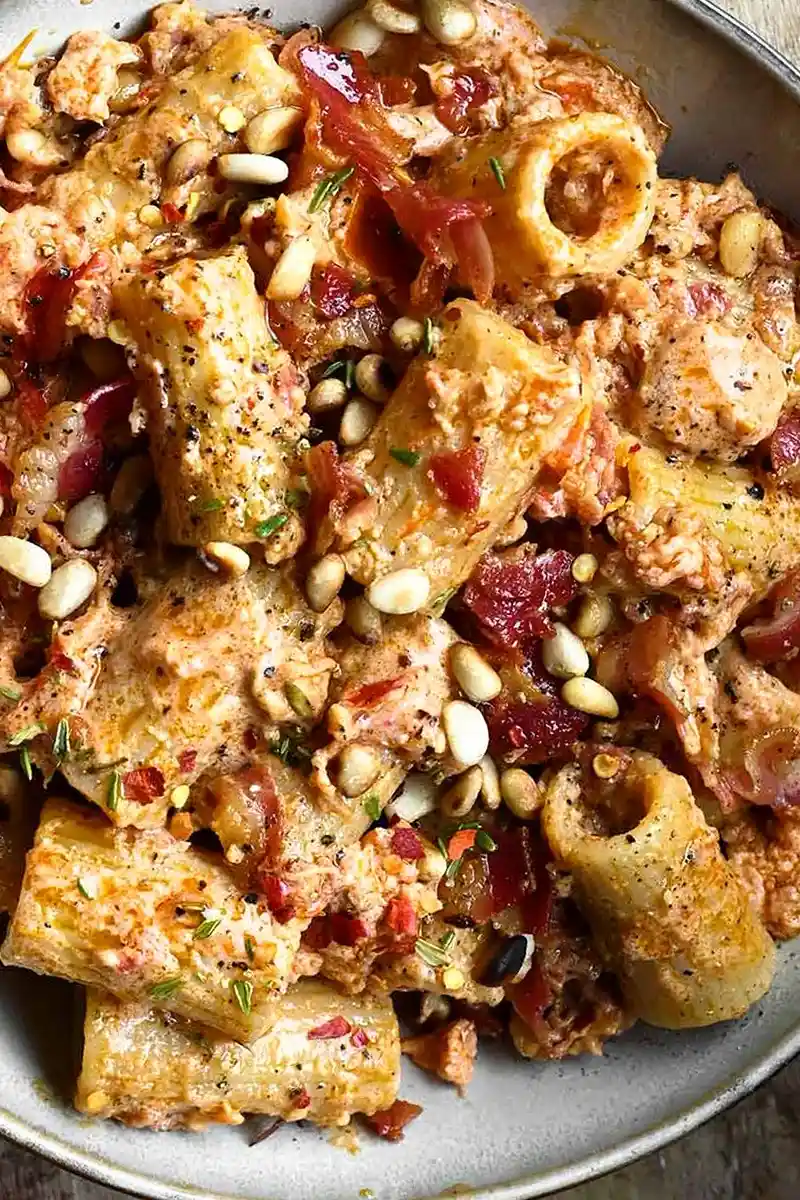
List of ingredients
- 7 ounces pasta (rigatoni, paccheri, or penne) – provides a hearty base for the sauce.
- 6 ounces smoked turkey breast cubes – a savory, pork-free alternative to pancetta.
- 2 garlic cloves (minced) – adds a sharp aromatic quality.
- 1 tbsp olive oil – used for sautéing the turkey and garlic.
- 3 tbsp pine nuts – adds a buttery crunch to the final dish.
- Fresh thyme (optional) – used for a fresh herbal garnish.
- 5 ounces sun-dried tomatoes (drained, reserve oil) – the primary flavor base for the pesto.
- 4.5 ounces ricotta – creates the creamy, smooth texture of the sauce.
- 1 ounce toasted pine nuts – integrated into the pesto for nuttiness.
- 1/3 cup oil from the sun-dried tomatoes – used to emulsify the pesto.
- 1 tsp white miso paste – provides a deep salty and umami kick.
- 1 tbsp lemon juice – cuts through the richness with acidity.
- 1 tsp crushed red chili flakes – adds a subtle heat to the sauce.
- 1 tsp smoked paprika – contributes a woody, smoked flavor.
- 1/2 tsp black pepper – provides basic seasoning and warmth.
step-by-step instructions
- Boil Pasta: Cook the pasta in a large pot of salted water until it reaches an al dente texture. Drain the pasta, but make sure to reserve 1/2 cup of the starchy cooking water for the sauce.
- Prepare Pesto: Place the sun-dried tomatoes, ricotta, toasted pine nuts, lemon juice, miso, chili flakes, smoked paprika, and black pepper into a food processor. Purée the mixture until it is finely chopped, then stream in the reserved tomato oil while processing until the sauce is completely smooth.
- Sauté Protein: Heat olive oil in a large skillet over medium-high heat. Add the smoked turkey cubes and cook for approximately 3 minutes. If the turkey releases too much fat, carefully drain the excess from the pan.
- Toast Nuts and Garlic: Stir in the 3 tablespoons of pine nuts and continue cooking for about 5 minutes until the turkey is browned and the nuts are golden. Lower the heat and add the minced garlic, sautéing for 1-2 minutes until softened and fragrant.
- Simmer Sauce: Pour the prepared pesto into the skillet and bring it to a gentle simmer over low heat for about 1 minute. Once the pesto is warmed through and combined with the turkey, turn off the heat immediately to prevent the cheese from separating.
- Combine and Emulsify: Add the cooked pasta and 1/4 cup of the reserved pasta water to the skillet. Toss everything together, adding more cooking water if necessary, until the sauce is glossy and clings to every piece of pasta.
- Final Seasoning: Taste the pasta and add more black pepper if needed. If you chose to omit the turkey, add a pinch of salt to compensate for the lack of cured meat.
- Plating: Divide the pasta evenly among bowls. Garnish with fresh thyme leaves and an extra sprinkle of ground black pepper before serving.
Pro Tips for the Perfect Red Pesto
Use a High-Power Food Processor for Smoothness
A high-speed processor ensures the sun-dried tomatoes and ricotta blend into a perfectly uniform cream. If you only have a mortar and pestle, you will get a chunkier texture, which is still tasty but less velvety. Process the solids first before adding the oil to ensure a stable emulsion.
Toast Your Pine Nuts for Enhanced Flavor
Toasting pine nuts in a dry pan over medium heat brings out their natural oils and deepens their flavor. Watch them closely as they can burn in seconds. Once they turn golden brown, remove them from the heat immediately to stop the cooking process.
Reserve Pasta Water for Emulsification
The starchy water from the pasta pot is essential for binding the oil-based pesto to the noodles. It creates a silky liaison that prevents the sauce from pooling at the bottom of the bowl. Always scoop out more water than you think you need before draining.
Temper the Pesto to Avoid Curdling
Ricotta can split if it is exposed to extreme heat for too long. Simmer the pesto only briefly to warm it through, and always turn off the burner before adding the pasta. This maintains the creamy consistency of the sauce.
Ingredient Substitutions and Modifications
Alternative Pasta Shapes for Better Sauce Adhesion
Rigatoni and penne are ideal because their hollow centers trap the thick pesto. Paccheri works well for a more gourmet presentation. Avoid thin noodles like spaghetti, as the heavy sauce may slide off rather than cling to the pasta.
Using Different Nut Options
If pine nuts are unavailable or too expensive, toasted walnuts or cashew nuts are excellent substitutes. Walnuts provide a more earthy, bitter note, while cashews add extra creaminess. Ensure they are toasted to maintain the intended texture.
Replacing Ricotta for Different Textures
For a thicker, tangier sauce, you can substitute ricotta with mascarpone or a blend of cream cheese and greek yogurt. Mascarpone will make the dish significantly richer. Greek yogurt will add a slight acidity and reduce the overall fat content.
Miso Alternatives for Umami
If you do not have white miso paste, a small amount of finely grated parmesan cheese or a dash of soy sauce can provide the necessary saltiness. Miso is preferred for its fermented depth, but these alternatives keep the flavor profile similar.
Creative Recipe Variations
Adding Roasted Vegetables
Roasted red bell peppers or zucchini can be folded into the pasta at the end. These vegetables complement the sun-dried tomato flavor without overpowering it. Roast them separately with olive oil and salt before adding them to the skillet.
Incorporating Fresh Baby Spinach
Stir in two handfuls of fresh baby spinach just as you add the pasta to the pan. The residual heat will wilt the spinach in about 30 seconds. This adds a pop of color and a boost of nutrients to the meal.
Adding Seared Shrimp for Protein
Replace the smoked turkey with medium shrimp sautéed in garlic and butter. Cook the shrimp separately and add them back to the pan along with the pesto. This turns the dish into a lighter, seafood-focused meal.
Creating a Spicy Version
Increase the amount of crushed red chili flakes to two teaspoons for a noticeable kick. You can also add a teaspoon of calabrian chili paste into the food processor with the pesto. This provides a more complex, fruity heat.
Serving Suggestions and Pairings
Pairing with a Fresh Green Salad
A simple arugula salad with a lemon-olive oil dressing balances the richness of the ricotta. The peppery taste of arugula cuts through the creaminess of the pesto. Add some shaved carrots or cucumber for extra crunch.
Serving with Garlic Toasted Bread
Warm baguette slices rubbed with raw garlic and brushed with olive oil are perfect for scooping up leftover sauce. Toast the bread in the oven until golden brown. This adds a necessary textural contrast to the soft pasta.
Complementing with Roasted Root Vegetables
Serve the pasta alongside roasted carrots or parsnips. The natural sweetness of root vegetables pairs well with the acidity of the sun-dried tomatoes. Roast them with a touch of honey and thyme to match the pasta garnish.
Storage and Reheating Guide
Refrigerating Leftover Pasta
Store leftovers in an airtight container in the refrigerator for up to three days. The sauce may thicken significantly as it cools due to the ricotta and starch. Do not be surprised if the pasta absorbs most of the moisture overnight.
Storing the Pesto Separately
If you make an extra batch of pesto, store it in a glass jar with a thin layer of olive oil on top. This seal prevents oxidation and keeps the colors vibrant. The pesto will stay fresh in the fridge for about one week.
Best Methods for Reheating
Reheat the pasta in a skillet over low heat instead of using a microwave. Add a splash of water or milk to loosen the sauce and restore its creaminess. Stir gently to avoid breaking the pasta shapes.
Make-Ahead Planning
Preparing Pesto in Advance
You can prepare the pesto 24 hours before you intend to cook the meal. This allows the flavors of the miso and smoked paprika to meld and deepen. Keep the pesto chilled until the moment it is ready to be simmered.
Pre-cooking Pasta Tips
If you must cook the pasta ahead of time, undercook it by two minutes. Toss the drained noodles in a small amount of olive oil to prevent them from sticking together. Finish cooking the pasta in the sauce during the final step.
Troubleshooting Common Issues
Fixing a Grainy Pesto Texture
Graininess usually occurs if the ricotta is too cold or the food processor was not run long enough. Continue pulsing the mixture for another 30-60 seconds. If it remains grainy, pass the pesto through a fine-mesh sieve for a professional finish.
Correcting a Sauce that is Too Thick
If the sauce becomes a paste rather than a cream, gradually add more pasta water one tablespoon at a time. Stir constantly over low heat. You can also add a teaspoon of heavy cream or milk to loosen the consistency.
Balancing Excessive Saltiness
If the miso or smoked turkey makes the dish too salty, add a squeeze of fresh lemon juice. The acid helps neutralize the perception of salt on the palate. Alternatively, stir in a handful of unsalted ricotta to dilute the intensity.
Frequently Asked Questions
Can I use dried tomatoes instead of oil-packed?
Yes, but you must rehydrate them first. Soak dried tomatoes in hot water for 15-20 minutes until soft. Use a portion of the soaking liquid or extra olive oil to replace the oil normally reserved from the jar.
Which ricotta cheese is best for this recipe?
Whole-milk ricotta is recommended for the creamiest result. Low-fat versions can be used, but they may result in a thinner sauce that is more prone to splitting. Ensure the ricotta is at room temperature before blending.
Can I freeze the red pesto?
You can freeze the pesto, but the ricotta may change texture slightly upon thawing. To prevent this, thaw the pesto slowly in the refrigerator. Whisk it vigorously after thawing to reintegrate the fats and solids.
Is it possible to make this dish vegan?
Yes, replace the ricotta with a cashew-based ricotta or firm tofu blended with lemon and nutritional yeast. Use a vegan-friendly pasta and ensure the miso paste contains no animal-derived additives.
Print
Creamy Sun-Dried Tomato and Ricotta Pesto Pasta
- Total Time: 20 minutes
- Yield: 2 servings 1x
- Diet: Vegetarian
Description
This creamy red pesto is a velvety, flavor-packed sauce that makes for a bright, light, and satisfying pasta night.
Ingredients
- 7 ounces pasta (rigatoni, paccheri or penne)
- 6 ounces smoked tofu cubes
- 2 garlic cloves, minced
- 1 tbsp olive oil
- 3 tbsp pine nuts
- fresh thyme for serving (optional)
- 5 ounces sun-dried tomatoes, drained (oil reserved)
- 4.5 ounces ricotta
- 1 ounce toasted pine nuts
- ⅓ cup oil from the sun-dried tomatoes
- 1 tsp white miso paste
- 1 tbsp lemon juice
- 1 tsp crushed red chili flakes
- 1 tsp smoked paprika
- ½ tsp black pepper
Instructions
- Step 1: Cook the pasta in salted water until al dente. Drain, reserving 1/2 cup of the cooking water.
- Step 2: Add sun-dried tomatoes, ricotta, pine nuts, lemon juice, miso, chili flakes, smoked paprika and black pepper to a food processor; purée until finely chopped, then add oil and process until smooth.
- Step 3: Heat olive oil in a large skillet over medium high heat, add smoked tofu cubes and cook for 3 minutes.
- Step 4: Add pine nuts and cook, tossing often, until tofu is browned and crisp, about 5 minutes.
- Step 5: Add garlic and sauté until soft over low heat for 1-2 minutes.
- Step 6: Add pesto and bring to a simmer over low heat for about 1 minute, then immediately turn off the heat.
- Step 7: Add pasta and 1/4 cup pasta water, toss while adding more cooking liquid until pasta is glossy and well coated with sauce.
- Step 8: Divide pasta among bowls and garnish with extra freshly ground black pepper and thyme.
Notes
Keep leftovers refrigerated in airtight containers for up to 3 days.
- Prep Time: 5 minutes
- Cook Time: 15 minutes
- Category: Main Course
- Method: Stovetop
- Cuisine: Italian
Nutrition
- Serving Size: 1 serving
- Calories: 740 kcal
- Sugar: 30 g
- Sodium: 249 mg
- Fat: 19 g
- Saturated Fat: 7 g
- Unsaturated Fat: 11 g
- Trans Fat: 0 g
- Carbohydrates: 119 g
- Fiber: 13 g
- Protein: 31 g
- Cholesterol: 33 mg