
This quick pasta dish combines rich sun-dried tomatoes with fresh baby spinach in a creamy garlic sauce. It is a convenient and sophisticated meal that comes together in just 20 minutes.
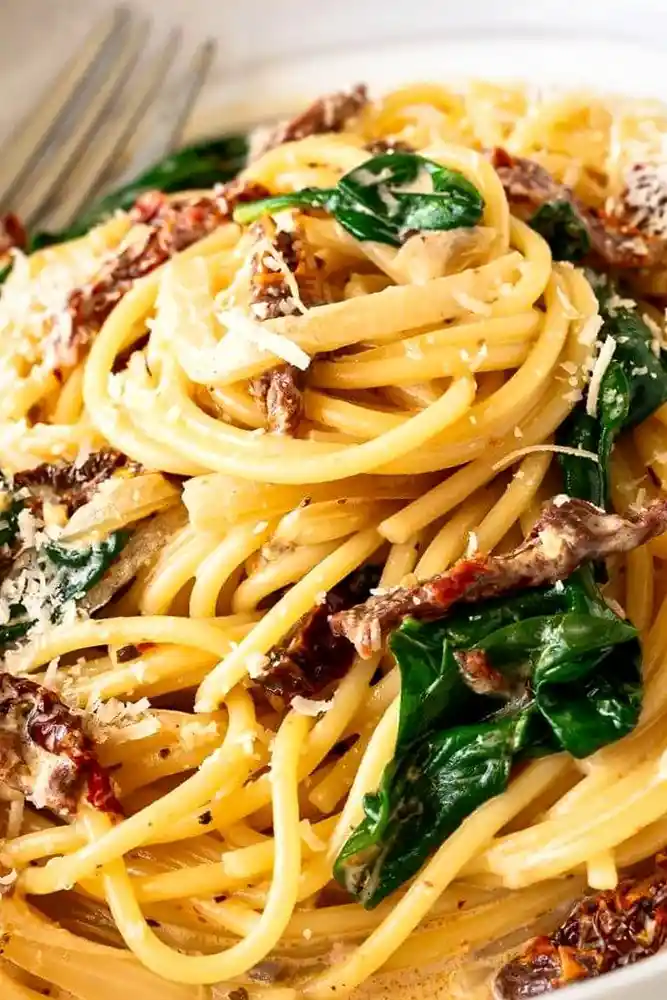
List of ingredients
- 8 oz spaghetti – use a high-quality durum wheat pasta for best results.
- 1/2 cup oil-packed sun-dried tomatoes, sliced – provides a concentrated sweet and tangy flavor.
- 1 tbsp sun-dried tomato oil – adds depth and consistent flavor to the base.
- 1/2 yellow onion, sliced thinly – adds a mild sweetness to the sauce.
- 2 garlic cloves, minced – provides a sharp, aromatic punch.
- 1 tsp Italian seasoning – a blend of dried herbs for classic Mediterranean flavor.
- 1/2 tsp red pepper flakes – adds a subtle, warm heat.
- 1/4 tsp salt – used to enhance all other flavors.
- 1/4 tsp freshly ground black pepper – adds a slight woody spice.
- 1/4 cup chicken broth with a squeeze of lemon juice – a non-alcoholic substitute for deglazing.
- 3/4 cup chicken broth – forms the liquid base of the sauce.
- 1/2 cup heavy cream – creates a rich and velvety texture.
- 1/4 cup grated Parmesan cheese – adds saltiness and helps thicken the sauce.
- 2 cups baby spinach leaves – adds freshness and nutritional value.
step-by-step instructions
- Cook the pasta: Boil a large pot of salted water and cook the spaghetti until it reaches an al dente texture according to the package directions. Drain the pasta and set it aside for later.
- Sauté aromatics: Heat 1 tablespoon of sun-dried tomato oil in a large skillet over medium heat. Add the sliced onion and sun-dried tomatoes, sautéing for approximately 2 minutes until the onion softens.
- Add seasonings: Stir in the minced garlic, Italian seasoning, and red pepper flakes. Cook for only 30 seconds to prevent the garlic from burning.
- Deglaze and reduce: Pour in the chicken broth with lemon juice to deglaze the pan, then add the remaining chicken broth. Allow the mixture to simmer until the liquid has reduced by half, which usually takes about 4 minutes.
- Create the cream sauce: Lower the heat to medium-low. Stir in the heavy cream and grated Parmesan cheese, cooking for about 2 minutes until the cheese is completely melted. Add salt and pepper to taste.
- Combine and finish: Stir in the baby spinach leaves until they are just wilted. Add the cooked spaghetti to the skillet and toss thoroughly until every strand is coated in the cream sauce. Serve immediately with extra Parmesan on top.
Professional Cooking Techniques
Managing Heat for Aromatics
When sautéing onions and garlic, maintain a consistent medium heat to prevent scorching. Garlic has a high sugar content and can turn bitter if burned, so add it only during the final seconds of the sauté process. This ensures the sauce maintains a sweet, aromatic profile.
The Science of Deglazing
Deglazing involves adding liquid to a hot pan to loosen the browned food particles stuck to the bottom. These particles, known as fond, contain highly concentrated flavor. Using a combination of broth and lemon juice mimics the acidity needed to lift these bits and integrate them into the sauce.
Achieving Proper Emulsification
Adding the Parmesan cheese slowly over medium-low heat helps the sauce emulsify without breaking. If the heat is too high, the fats in the cheese may separate from the solids, resulting in a greasy texture. Stirring constantly ensures a smooth, homogeneous cream sauce.
Cooking Pasta Al Dente
Al dente pasta means ‘to the tooth,’ referring to a firm bite. Since the pasta is tossed in a simmering sauce at the end, undercooking it slightly in the pot prevents it from becoming mushy. This preserves the structural integrity of the spaghetti during the final mixing stage.
Ingredient Substitutions
Dairy-Free Cream Alternatives
To make this recipe dairy-free, replace the heavy cream with full-fat coconut milk or cashew cream. Coconut milk adds a slight sweetness, while cashew cream provides a more neutral, savory taste. Ensure the substitute is unsweetened to maintain the savory profile of the dish.
Replacing Sun-Dried Tomatoes
If oil-packed tomatoes are unavailable, use dry-packed sun-dried tomatoes rehydrated in hot water for 15 minutes. Use high-quality extra virgin olive oil instead of the tomato-infused oil. You may need to add a pinch of extra salt to compensate for the lack of brine.
Variations in Pasta Shapes
While spaghetti is classic, shapes like penne, fusilli, or farfalle work equally well. These shapes have ridges and holes that trap the cream sauce more effectively than smooth spaghetti. Simply adjust the cooking time based on the specific pasta shape selected.
Broth Alternatives for Different Tastes
Vegetable broth can be used instead of chicken broth for a lighter flavor profile. Mushroom broth is another excellent alternative that adds an earthy, umami depth to the cream sauce. Keep the liquid ratios the same to ensure the sauce thickens correctly.
Ways to Expand the Meal
Incorporating Lean Proteins
Grilled chicken breast or sautéed shrimp are excellent additions to this pasta. Cook the protein separately in the same skillet before starting the sauce to keep the meat juicy. Stir the cooked protein back into the dish during the final step with the spaghetti.
Adding Complementary Vegetables
Adding sliced mushrooms or frozen peas can increase the nutritional density of the meal. Sauté mushrooms with the onions to develop a deep brown color and rich flavor. Peas can be added at the same time as the spinach for a pop of color and sweetness.
Selecting the Best Side Dishes
A crisp arugula salad with a light lemon vinaigrette provides a sharp contrast to the rich cream sauce. Roasted asparagus or steamed broccoli also pair well, adding a crunch that complements the soft texture of the pasta. Avoid other creamy sides to keep the meal balanced.
Ideal Bread Pairings
Warm garlic bread or a toasted ciabatta loaf is perfect for soaking up the remaining sauce on the plate. To make a quick version, brush sliced baguette with melted butter and garlic powder, then toast until golden. This adds a satisfying crunch to the dining experience.
Storage and Preservation
Optimal Refrigeration Methods
Store leftover pasta in an airtight container in the refrigerator for up to three days. The pasta will naturally absorb the sauce as it sits, which may make the dish seem drier over time. Keeping it in a sealed container prevents the pasta from drying out further.
Reheating for Best Texture
When reheating, add a splash of chicken broth or water to the pasta before microwaving or heating on the stove. This re-introduces moisture and helps the cream sauce return to its original consistency. Heat gently to avoid breaking the emulsion of the cream and cheese.
Managing Sauce Separation
It is common for cream-based sauces to separate slightly after cooling. To fix this, stir the pasta vigorously while heating it over low heat on a stove. The movement and heat will help the fats and liquids recombine into a smooth sauce.
Freezing Considerations
Cream sauces generally do not freeze well because the dairy tends to break and grain during the thawing process. If you must freeze this dish, freeze only the sauce components without the pasta or spinach. Thaw and simmer the sauce before adding freshly cooked pasta.
Common Cooking Issues
Correcting a Thin Sauce
If the sauce feels too watery, simmer it for an additional 2-3 minutes without the lid on. You can also stir in a small amount of extra Parmesan cheese to naturally thicken the liquid. For a faster fix, a tiny pinch of cornstarch mixed with water can be stirred in.
Fixing an Overly Thick Sauce
If the sauce becomes too thick or sticky, stir in a tablespoon of reserved pasta cooking water. The starchy water helps thin the sauce while maintaining its glossy appearance. Add the water one tablespoon at a time until the desired consistency is reached.
Balancing Excessive Saltiness
If the sauce tastes too salty due to the Parmesan and broth, add a squeeze of fresh lemon juice. The acidity helps neutralize the salt perception on the tongue. A small pinch of sugar can also balance out overly salty or acidic flavors.
Avoiding Overcooked Spinach
Spinach wilts almost instantly when exposed to heat, so add it at the very end. Stir it in just until the leaves collapse but still retain a vibrant green color. Overcooking the spinach will make it slimy and cause it to lose its bright hue.
Equipment Recommendations
Choosing the Right Skillet
A wide, deep stainless steel or non-stick skillet is ideal for this recipe. The wide surface area allows the broth to reduce quickly and provides enough room to toss the pasta without spilling. A deep pan prevents the cream from bubbling over the edges.
Using a Large Pasta Pot
Use a pot that is significantly larger than the amount of pasta to ensure the spaghetti has room to move. This prevents the pasta from clumping together and ensures it cooks evenly. Plenty of water helps maintain a consistent boiling temperature when the pasta is added.
The Importance of a Colander
A sturdy colander is essential for draining the spaghetti quickly and efficiently. Ensure the colander is placed firmly in the sink to avoid spills. Draining the pasta thoroughly prevents excess water from thinning out the cream sauce in the skillet.
Frequently Asked Questions
Can I use frozen spinach?
Yes, you can use frozen spinach, but it must be thawed and squeezed very dry first. Frozen spinach holds much more water than fresh baby spinach, which can dilute the sauce if not drained. Add it during the final step just like the fresh leaves.
Is there a way to make it spicier?
To increase the heat, add more red pepper flakes during the sauté step or stir in a pinch of cayenne pepper. For a different kind of heat, a dash of hot sauce can be added at the end. Adjust the spice level gradually to avoid overpowering the cream.
Can I use a different hard cheese?
Pecorino Romano is a great substitute for Parmesan, though it is saltier and has a sharper tang. Gruyere or Fontina can also be used for a richer, more meltable texture. If using a saltier cheese like Pecorino, reduce the added salt in the recipe.
How do I store the tomato oil?
Store the remaining oil from the sun-dried tomato jar in a cool, dark cupboard. This oil is infused with flavor and is excellent for roasting vegetables or making salad dressings. Ensure the jar is sealed tightly to prevent oxidation.
What if I don’t have Italian seasoning?
You can create your own blend using equal parts dried oregano, dried basil, and dried thyme. A pinch of dried rosemary also adds a nice woody note. If you have none of these, a simple mix of dried basil and oregano will suffice.
Print
Creamy Sun-Dried Tomato and Spinach Spaghetti
- Total Time: 20 minutes
- Yield: 4 servings 1x
- Diet: General
Description
A quick and creamy 20-minute pasta dish featuring baby spinach and savory sun-dried tomatoes, perfect for a sophisticated date night or a family dinner.
Ingredients
- 8 oz spaghetti
- ½ cup oil-packed sun-dried tomatoes, sliced
- 1 tbsp sun-dried tomato oil
- ½ yellow onion, sliced thinly
- 2 garlic cloves, minced
- 1 tsp Italian seasoning
- ½ tsp red pepper flakes
- ¼ tsp salt
- ¼ tsp freshly ground black pepper
- ¼ cup chicken broth
- ¾ cup chicken broth
- ½ cup heavy cream
- ¼ cup grated Parmesan cheese
- 2 cups baby spinach leaves
Instructions
- Cook the pasta: In a large pot of salted boiling water, cook the spaghetti until al dente, according to package instructions. Drain and set aside.
- Prepare the sauce: In a large skillet, heat 1 tbsp of sun-dried tomato oil over medium heat. Sauté the sliced onion and sun-dried tomatoes for about 2 minutes.
- Season: Stir in minced garlic, Italian seasoning, and red pepper flakes. Cook for an additional 30 seconds.
- Deglaze: Deglaze the pan with ¼ cup chicken broth, then add the remaining ¾ cup chicken broth. Cook until the liquid reduces by half, about 4 minutes.
- Finish the sauce: Reduce the heat to medium-low. Pour in the heavy cream and grated Parmesan cheese, cooking until the cheese melts, about 2 minutes. Add salt and pepper, if needed.
- Combine: Stir in the spinach until wilted, then add the cooked spaghetti. Toss until fully coated in the sauce. Serve immediately with additional Parmesan on top.
Notes
If making in advance, store the sauce and pasta separately. Reheat the sauce with a bit of water or chicken broth before combining with freshly cooked pasta.
- Prep Time: 5 minutes
- Cook Time: 15 minutes
- Category: Main Course
- Method: Stovetop
- Cuisine: American
Nutrition
- Serving Size: 1 serving
- Calories: 435 kcal
- Sugar: 5 g
- Sodium: 254 mg
- Fat: 16 g
- Saturated Fat: 5 g
- Unsaturated Fat: 2.5 g
- Trans Fat: 0 g
- Carbohydrates: 56 g
- Fiber: 4 g
- Protein: 15 g
- Cholesterol: 42 mg