
This creamy chicken pasta combines rich Parmesan and tangy sun-dried tomatoes for a comforting and flavorful meal. It is a fast-cooking dinner option that feels sophisticated while remaining simple to prepare on a busy weeknight.
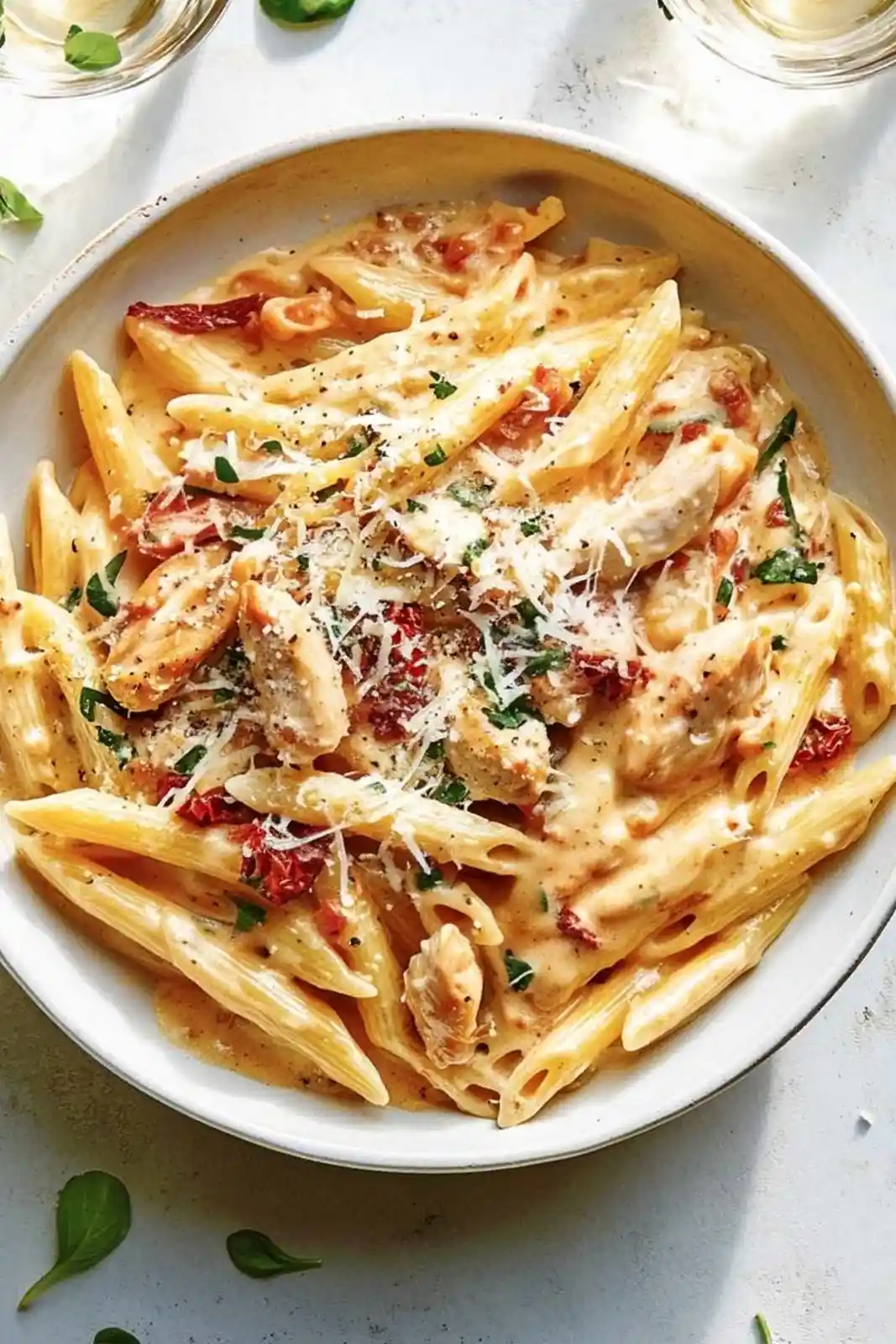
List of ingredients
- 4 boneless skinless chicken breasts, diced – cut into uniform bite-sized pieces.
- 10 oz pasta – penne, rigatoni, or fettuccine are recommended.
- 2 tbsp seasoned oil from sun-dried tomatoes – adds intense flavor to the sear.
- 2 tbsp cornstarch – used to create a golden coating on the chicken.
- 1 tbsp butter – provides richness to the aromatics.
- 4 cloves garlic, minced – fresh garlic offers the best pungent flavor.
- 1 cup sun-dried tomatoes, thinly diced – preferably oil-packed for softer texture.
- 1¼ cup heavy cream – creates the silky base of the sauce.
- 1 cup freshly grated Parmesan cheese – melts more smoothly than pre-shredded.
- 1 cup chicken broth – adds depth and helps adjust sauce thickness.
- 1 tsp red pepper flakes (optional) – adds a subtle heat to the dish.
- 2 tsp dried oregano – provides an earthy, herbal note.
- Salt and pepper – adjust to your personal taste.
- ½ oz torn fresh basil – used for a fresh, aromatic garnish.
step-by-step instructions
- Cook the Pasta: Boil 10 oz pasta in salted water until al dente. Reserve ½ cup pasta water before draining and set the pasta aside.
- Season and Coat the Chicken: In a bowl, toss 4 diced chicken breasts with 2 tbsp cornstarch, 1 tsp oregano, a pinch of salt, pepper, and a pinch of red pepper flakes.
- Cook the Chicken: Heat 2 tbsp oil from sun-dried tomatoes in a large skillet over medium-high heat. Cook the chicken until golden and crispy, about 5-6 minutes, then remove from skillet and set aside.
- Sãuté Garlic and Tomatoes: Melt 1 tbsp butter in the same skillet. Add 4 minced garlic cloves and 1 cup thinly diced sun-dried tomatoes, cooking for 2-3 minutes until fragrant.
- Make the Sauce: Stir in ¾ cup chicken broth and 1¼ cups heavy cream. Simmer for 3-5 minutes, stirring occasionally, then add 1 cup freshly grated Parmesan cheese and stir until melted and thickened.
- Add Chicken to Sauce: Return the cooked chicken to the skillet and simmer in the sauce for 5 minutes to allow the flavors to absorb.
- Combine Pasta and Sauce: Add the cooked pasta to the skillet and toss to coat. Use reserved pasta water as needed to adjust the sauce consistency.
- Garnish and Serve: Garnish with fresh basil or parsley and extra Parmesan cheese. Serve immediately while warm.
Cooking Mastery Tips
The Role of Pasta Water in Emulsification
Reserving starchy pasta water is essential for achieving a professional sauce texture. The starch acts as a bridge between the fat in the cream and the liquid, helping the sauce cling to the noodles. Add it one tablespoon at a time until the sauce reaches a silky consistency.
Using the Correct Pan for Searing
A wide stainless steel or cast iron skillet is ideal for this recipe. These materials distribute heat evenly, allowing the cornstarch-coated chicken to develop a deep golden-brown crust. A larger surface area also prevents the chicken from crowding, which avoids steaming the meat.
The Advantage of Freshly Grated Parmesan
Pre-shredded cheeses are often coated in cellulose or anti-caking agents to prevent clumping. These additives can hinder the melting process and result in a grainy sauce. Freshly grating your own cheese ensures a perfectly smooth and creamy emulsion.
Avoiding Overcrowding the Skillet
If you have a smaller pan, cook the chicken in batches rather than adding it all at once. Overcrowding lowers the temperature of the pan, which releases moisture and prevents the chicken from browning. Searing in batches ensures a crispy exterior and juicy interior.
Achieving the Perfect Golden Crust
The cornstarch coating is the secret to the chicken’s texture in this dish. It creates a thin barrier that browns quickly and helps the sauce adhere to the meat later. Ensure the oil is shimmering hot before adding the seasoned chicken to the pan.
Balancing Heat with Red Pepper Flakes
Red pepper flakes provide a gentle warmth that cuts through the richness of the heavy cream. If you prefer a milder flavor, reduce the amount or omit them entirely. For those who enjoy more heat, adding a pinch of cayenne pepper can enhance the spicy profile.
Finishing with Fresh Basil
Fresh herbs should always be added at the very end of the cooking process. Heat can destroy the delicate oils and bright color of fresh basil. Tearing the leaves by hand rather than chopping them with a knife helps prevent bruising and oxidation.
Ingredient Substitutions and Variations
Swapping Chicken Breasts for Thighs
Boneless, skinless chicken thighs can be used for a richer and more succulent result. Thighs are less prone to drying out than breasts, making them a great choice for longer simmering. Adjust the cooking time slightly as thighs may take a few minutes longer to sear.
Choosing Gluten-Free Pasta Options
Lentil, chickpea, or brown rice pasta are excellent alternatives for those avoiding gluten. Because gluten-free pasta can sometimes be more fragile, cook it slightly under the al dente stage. This prevents the noodles from breaking when they are tossed into the heavy sauce.
Using Vegetable Broth for a Different Profile
If you prefer a lighter base, vegetable broth can be swapped for chicken broth without altering the cooking method. This provides a slightly sweeter, garden-fresh undertone to the sauce. The overall creaminess remains unchanged regardless of the broth type.
Dairy-Free Cream Alternatives
Full-fat coconut cream or cashew cream can replace heavy cream for a dairy-free version. Coconut cream adds a subtle sweetness, while cashew cream offers a neutral, rich taste. Be aware that the sauce may thicken differently depending on the plant-based substitute used.
Replacing Parmesan with Other Hard Cheeses
Pecorino Romano is a strong alternative to Parmesan, offering a saltier and more pungent flavor. If using Pecorino, reduce the additional salt added to the dish to maintain balance. Grana Padano is another option for a milder, nuttier taste.
Alternative to Sun-Dried Tomatoes
If sun-dried tomatoes are unavailable, roasted red peppers provide a similar tangy and sweet profile. Dice them finely and sauté them with the garlic as directed. While the flavor differs slightly, the visual appeal and texture remain consistent.
Using Garlic Powder Instead of Fresh Garlic
In a pinch, garlic powder can be used if fresh cloves are not on hand. Use about ¼ teaspoon of powder for every clove of fresh garlic. Note that the flavor will be less pungent and will integrate more subtly into the sauce.
Substituting Dried Oregano with Italian Seasoning
Dried oregano can be easily replaced with a general Italian seasoning blend. These blends usually contain oregano along with thyme and rosemary, adding more complexity to the dish. Use the same measurement as the original oregano requirement.
Serving and Pairing Suggestions
Adding Sautéed Spinach or Kale
Stirring in a handful of fresh spinach or chopped kale during the final simmer adds color and nutrition. The greens wilt quickly in the heat of the sauce, absorbing the Parmesan and garlic flavors. This turns the pasta into a more complete one-pot meal.
Serving with a Crisp Arugula Salad
The richness of the cream sauce pairs perfectly with a peppery arugula salad. A simple dressing of lemon juice and olive oil provides the necessary acidity to cleanse the palate. This balance prevents the dish from feeling overly heavy.
Pairing with Toasted Garlic Bread
Warm, toasted garlic bread is an ideal accompaniment for mopping up any extra sauce left on the plate. Use a crusty baguette brushed with garlic butter and toasted until golden. The crunch of the bread contrasts well with the tender pasta.
Accompaniment of Roasted Broccoli
Roasted broccoli florets with a sprinkle of lemon zest provide a healthy and flavorful side. The char from roasting complements the seared chicken and creamy sauce. Serve the broccoli on the side or mix it directly into the pasta.
Using Low-Calorie Vegetable Sides
To lighten the overall meal, serve the pasta with a side of steamed asparagus or sautéed zucchini. These vegetables offer a fresh contrast to the dense Parmesan sauce. Keep the seasoning simple with just salt and pepper to let the pasta shine.
Storage and Reheating Guidelines
Proper Refrigeration Methods
Store leftover pasta in an airtight container to prevent the sauce from drying out. Allow the dish to cool slightly before sealing the lid to avoid excessive condensation inside the container. Place it in the coldest part of the refrigerator.
Maximum Storage Duration in the Fridge
This dish is best consumed within 3 to 4 days of preparation. Beyond this window, the cream sauce may begin to separate or the pasta may become overly soft. Always check for freshness before consuming leftovers.
Freezing Guidelines for Creamy Pasta
Cream-based sauces do not always freeze and thaw perfectly, often separating into oil and solids. If you choose to freeze the meal, do so in small portions. Thaw completely in the refrigerator before reheating to improve the texture.
Stovetop Reheating Techniques
The best way to reheat this pasta is in a skillet over low to medium heat. Add a splash of milk or chicken broth to loosen the sauce and restore its creamy consistency. Stir gently to avoid breaking the pasta noodles.
Microwave Reheating Tips
When using a microwave, heat the pasta in short 30-second intervals. Stir between each interval to ensure the heat is distributed evenly throughout the dense sauce. Adding a teaspoon of water before heating helps prevent the chicken from drying out.
Restoring Sauce Creaminess
If the sauce appears clumpy after reheating, whisk in a small amount of warm cream or broth. Stir slowly over low heat until the cheese and cream re-emulsify. This process returns the sauce to its original silky state.
Meal Prep and Advanced Planning
Preparing Chicken and Vegetables in Advance
You can dice the chicken and mince the garlic and sun-dried tomatoes up to 24 hours in advance. Store the prepped ingredients in separate airtight containers in the fridge. This significantly reduces the active prep time on the night of cooking.
Making the Sauce Base Ahead of Time
The garlic and tomato base can be sautéed and stored in the refrigerator. When ready to eat, simply reheat the base and proceed with adding the cream, broth, and cheese. This allows you to assemble the final dish in minutes.
Par-boiling Pasta for Faster Cooking
Cook the pasta until it is just shy of al dente and drain it. Toss it with a small amount of oil to prevent sticking and store it in the fridge. When combining with the sauce, the pasta will finish cooking as it simmers in the cream.
Batch Cooking for Weekly Meals
Double the recipe to create multiple servings for the work week. This dish holds up well for lunches, provided you follow the reheating guidelines. Store the portions individually to make reheating more efficient.
Troubleshooting Common Issues
Resolving a Sauce That Separates
If the sauce separates into oil and cream, it is usually due to excessive heat. Lower the temperature immediately and whisk in a tablespoon of reserved pasta water. Constant stirring over low heat will help the emulsion reform.
Fixing an Overly Thick Sauce
A sauce that becomes too thick is usually the result of too much cheese or over-reduction. Slowly stir in additional chicken broth or milk until the desired consistency is reached. Be careful not to add too much liquid at once, or the sauce may become watery.
Managing Excessive Saltiness
If the sauce tastes too salty, add a squeeze of fresh lemon juice or a pinch of sugar. The acidity or sweetness helps neutralize the salt from the Parmesan and broth. Alternatively, adding a splash more heavy cream can dilute the saltiness.
Preventing Chicken from Drying Out
Ensure the chicken is not overcooked during the initial searing process. Since the chicken returns to the pan for a final simmer in the sauce, it should be just cooked through when first removed. This two-stage cooking process keeps the meat tender.
Dealing with Clumpy Cheese
Clumping occurs when the cheese is added to a sauce that is boiling too vigorously. Turn the heat down to low or remove the pan from the heat entirely before stirring in the Parmesan. Stir constantly until the cheese is fully incorporated.
Frequently Asked Questions
Can this be made in a slow cooker?
While the searing and pasta boiling must be done separately, the sauce and chicken can be simmered in a slow cooker on low for 4-6 hours. Stir in the cream and cheese during the last 30 minutes of cooking to prevent the dairy from curdling.
Which pasta shape captures the most sauce?
Penne and rigatoni are the best choices because their hollow centers trap the creamy sauce. Fettuccine also works well due to its wide surface area, which allows the sauce to coat every strand evenly.
How to store the leftover sauce separately?
If you prefer to keep the pasta from getting mushy, store the cooked pasta and the sauce in two different containers. Combine and reheat them together just before serving to maintain the best texture for the noodles.
Can I use half-and-half instead of heavy cream?
Yes, half-and-half can be used, but the sauce will be thinner and less rich. To compensate for the lower fat content, you may need to simmer the sauce slightly longer or add an extra tablespoon of cornstarch to thicken it.
Print
Creamy Sun-Dried Tomato Chicken Pasta
- Total Time: 40 minutes
- Yield: 4 servings 1x
- Diet: General
Description
This creamy marry me chicken pasta is a simple, cozy dish with tender chicken, sun-dried tomatoes, and a rich, silky Parmesan sauce. Perfect with your favorite pasta, it’s easy to make and full of flavor!
Ingredients
- 4 boneless skinless chicken breasts, diced
- 10 oz pasta (penne, rigatoni, or fettuccine)
- 2 tbsp seasoned oil from sun-dried tomatoes
- 2 tbsp cornstarch
- 1 tbsp butter
- 4 cloves garlic, minced
- 1 cup sun-dried tomatoes, thinly diced
- 1¼ cup heavy cream
- 1 cup freshly grated Parmesan cheese
- 1 cup chicken broth
- 1 tsp red pepper flakes (optional)
- 2 tsp dried oregano
- Salt and pepper, to taste
- ½ oz torn fresh basil, for garnish
Instructions
- Cook the Pasta: Boil 10 oz pasta in salted water until al dente. Reserve ½ cup pasta water, then drain and set aside.
- Season and Coat the Chicken: In a bowl, toss 4 diced chicken breasts with 2 tbsp cornstarch, 1 tsp oregano, a pinch of salt, pepper, and a pinch of red pepper flakes.
- Cook the Chicken: Heat 2 tbsp oil from sun-dried tomatoes in a large skillet over medium-high heat. Cook the chicken until golden and crispy, about 5-6 minutes. Remove from skillet and set aside.
- Sauté Garlic and Tomatoes: Melt 1 tbsp butter in the same skillet. Add 4 minced garlic cloves and 1 cup sun-dried tomatoes, thinly diced. Cook for 2-3 minutes until fragrant.
- Make the Sauce: Stir in ¾ cup chicken broth and 1 ¼ cups heavy cream. Simmer for 3-5 minutes, stirring occasionally. Add 1 cup freshly grated Parmesan cheese and stir until melted and thickened.
- Add Chicken to Sauce: Return the cooked chicken to the skillet and simmer in the sauce for 5 minutes to absorb the flavors.
- Combine Pasta and Sauce: Add the cooked pasta to the skillet and toss to coat. Use reserved pasta water as needed to adjust the sauce consistency.
- Garnish and Serve: Garnish with fresh basil or parsley and extra Parmesan cheese. Serve warm.
Notes
Reserve pasta water to help the sauce cling to the pasta. Use freshly grated Parmesan for a smoother sauce. Avoid overcooking the chicken to keep it juicy.
- Prep Time: 10 minutes
- Cook Time: 30 minutes
- Category: Main Course
- Method: Stovetop
- Cuisine: American
Nutrition
- Serving Size: 1 serving
- Calories: 943 kcal
- Sugar: 6 g
- Sodium: 530 mg
- Fat: 46 g
- Saturated Fat: 22 g
- Unsaturated Fat: 20 g
- Trans Fat: 0 g
- Carbohydrates: 63 g
- Fiber: 5 g
- Protein: 51 g
- Cholesterol: 210 mg