
This slow-cooked chicken noodle soup is a quintessential comfort meal, perfect for chilly evenings or when you need a nourishing, effortless dinner. By utilizing your crockpot, you allow the ingredients to meld slowly, creating a deep, savory broth that tastes like it simmered on a stovetop for hours. With minimal prep work, this recipe provides a hearty, protein-packed meal that keeps your kitchen smelling inviting and warm.
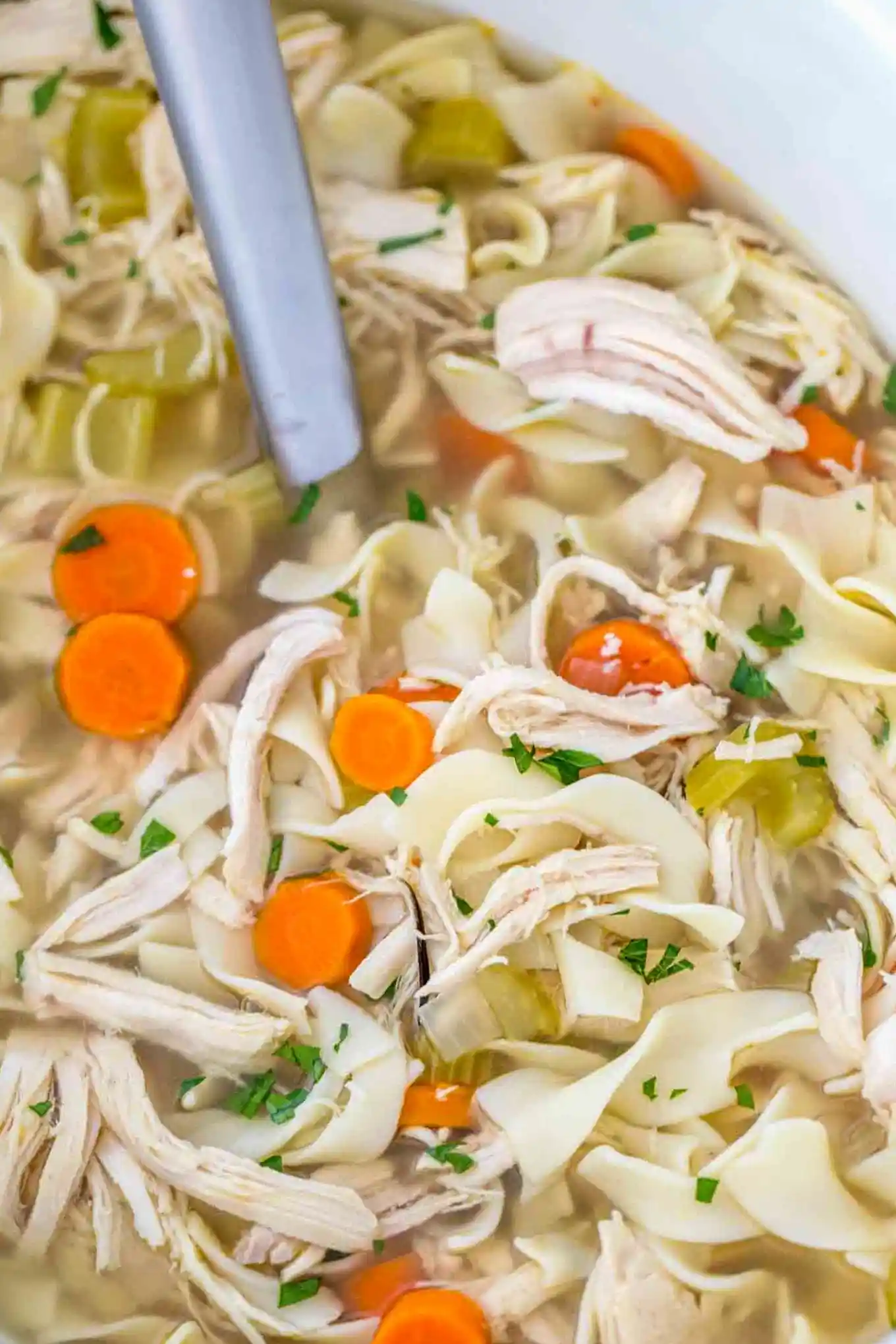
List of ingredients
- 1 1/2 lb. chicken breasts (boneless and skinless)
- 1 large sweet onion (diced)
- 5 cloves garlic (minced)
- 4 medium carrots (peeled and sliced into rounds)
- 3 stalks celery (cleaned and sliced)
- 1 teaspoon dried parsley flakes
- 1/4 teaspoon red pepper flakes
- 1/4 teaspoon salt
- 1/4 teaspoon ground black pepper
- 8 cups low-sodium chicken broth
- Small bunch of fresh thyme
- Small bunch of fresh rosemary
- 3 bay leaves
- 8 oz egg noodles (dry)
step-by-step instructions
- Step: Add chicken breasts, onion, garlic, carrots, and celery to an 8-quart slow cooker.
- Step: Add dried parsley, red pepper flakes, salt, and pepper.
- Step: Add the broth, then top with fresh rosemary, thyme, and bay leaves.
- Step: Cover and cook on low for six to seven hours or on high for about three to four hours.
- Step: Discard the herbs and bay leaves, then taste and adjust for salt and pepper.
- Step: Remove the chicken from the pot, shred it with two forks, and return it to the slow cooker.
- Step: Add the dry egg noodles.
- Step: Cover and cook on low for 20-30 minutes or on high for 15 minutes, until noodles are al dente.
- Step: Garnish with fresh parsley and serve.
Practical Cooking Tips
Achieving the Best Noodle Texture
Adding pasta too early into a slow cooker often leads to mushy, overcooked results. By waiting to add the dry egg noodles until the final phase of cooking, you ensure they remain perfectly al dente. Monitoring them closely during the last 15 minutes prevents the starch from breaking down into the broth.
Ensuring Flavor Consistency
Using low-sodium broth is a key technique because it allows the flavors of the fresh herbs and vegetables to shine without being overpowered by excess salt. If you prefer a more pronounced flavor, you can sauté the aromatics in a pan before they hit the crockpot. This simple step intensifies the sweetness of the onions and the potency of the garlic.
Proper Poultry Handling
Always ensure your chicken is fully thawed before placing it into the slow cooker to maintain safe internal temperatures. Cooking frozen poultry in a crockpot can cause the exterior to remain in the danger zone for too long. If you happen to have leftover rotisserie chicken on hand, you can substitute it; just add it during the last 30 minutes to prevent the meat from becoming stringy or overly dry.
Customizing Your Soup Bowl
Adjusting the Vegetable Profile
While carrots and celery provide a classic foundation, you can expand the nutritional profile by incorporating seasonal greens. Adding chopped kale, spinach, or green beans toward the end of the cooking process adds vibrancy and texture. For a heartier variation, consider including diced sweet potatoes or zucchini, which soak up the savory broth wonderfully.
Adding Creamy Elements
If you prefer a richer, more velvety consistency, stir in half a cup of heavy cream or coconut milk just before serving. This transforms the clear, light broth into a comforting, opaque chowder-like base. It works exceptionally well when paired with added corn or peas for a sweet and savory contrast.
Spicing Up the Broth
For those who enjoy a bit of fire, consider increasing the red pepper flakes or adding a teaspoon of diced fresh chiles during the initial cook. Adding a splash of hot sauce or a dash of cayenne pepper right before serving can also provide a bright kick. This variation is particularly popular when the weather is extremely cold.
Storage and Reheating Advice
Safe Refrigerator Storage
Transfer any leftover soup into airtight containers once it has cooled to room temperature. It will remain fresh in the refrigerator for up to one week. Because the noodles may continue to absorb the broth over time, you might notice the soup thickens significantly while chilled.
Optimal Reheating Methods
When you are ready to serve the leftovers, reheat the soup gently in a saucepan over medium-low heat. If the mixture has become too thick due to the noodles absorbing liquid, splash in an extra cup of chicken broth to restore the desired consistency. Avoid boiling the soup aggressively, as this can cause the vegetables and chicken to lose their structural integrity.
Freezing Guidelines
If you plan to make a large batch for future meals, it is best to freeze the soup base without the noodles. Once the soup is cooked and cooled, place it in freezer-safe bags or containers. When you are ready to eat, simply thaw the base in the refrigerator overnight, bring it to a simmer on the stove, and add a fresh batch of dry egg noodles for a perfect meal.
Common Questions
Why does the soup seem too watery?
Slow cookers are designed to trap steam, which means very little moisture escapes during the cooking process. To reduce the liquid volume, try removing the lid for the final 30 minutes of cooking. Another effective trick is to place a clean kitchen towel under the lid to absorb some of the excess condensation before it drips back into the pot.
How can I prevent the chicken from becoming dry?
Chicken breasts can dry out if cooked at a high temperature for too long. Aim to pull the chicken out as soon as it reaches an internal temperature of 155°F. Cooking beyond this point causes the muscle fibers to tighten, which pushes out the natural juices and results in a tough texture.
What is the best way to handle noodles if I want to save leftovers?
If you anticipate having leftovers, cook the noodles separately in a small pot of boiling water and add them to individual bowls as you serve the soup. This prevents the noodles from becoming overly soft or bloated while sitting in the refrigerator. If you choose to cook them in the crockpot, be prepared for a softer, more absorbent noodle texture the next day.
Print
Crockpot Chicken Noodle Soup
- Total Time: PT390M
- Yield: 8 servings 1x
- Diet: High Protein
Description
Crockpot Chicken Noodle Soup is soothing and hearty, perfect for cold weather. It takes just 20 minutes to prep with simple, real ingredients.
Ingredients
- 1 1/2 lb. chicken breasts (boneless and skinless)
- 1 large sweet onion (diced)
- 5 cloves garlic (minced)
- 4 medium carrots (peeled and sliced into rounds)
- 3 stalks celery (cleaned and sliced)
- 1 teaspoon dried parsley flakes
- 1/4 teaspoon red pepper flakes
- 1/4 teaspoon salt
- 1/4 teaspoon ground black pepper
- 8 cups low-sodium chicken broth
- Small bunch of fresh thyme
- Small bunch of fresh rosemary
- 3 bay leaves
- 8 oz egg noodles (dry)
Instructions
- Step: Add chicken breasts, onion, garlic, carrots, and celery to an 8-quart slow cooker.
- Step: Add dried parsley, red pepper flakes, salt, and pepper.
- Step: Add the broth, then top with fresh rosemary, thyme, and bay leaves.
- Step: Cover and cook on low for six to seven hours or on high for about three to four hours.
- Step: Discard the herbs and bay leaves, then taste and adjust for salt and pepper.
- Step: Remove the chicken from the pot, shred it with two forks, and return it to the slow cooker.
- Step: Add the dry egg noodles.
- Step: Cover and cook on low for 20-30 minutes or on high for 15 minutes, until noodles are al dente.
- Step: Garnish with fresh parsley and serve.
Notes
Avoiding mushy noodles: Do not rush the process; add the pasta during the last 15-20 minutes of cooking. Use the high setting for pasta to reach the al dente stage effectively. Be sure to use low-sodium broth to control salt levels.
- Prep Time: PT10M
- Cook Time: PT380M
- Category: Main Course
- Method: Slow Cooking
- Cuisine: American
Nutrition
- Serving Size: 1 bowl
- Calories: 254 kcal
- Sugar: 4 g
- Sodium: 1289 mg
- Fat: 4 g
- Saturated Fat: 1 g
- Unsaturated Fat: 2 g
- Trans Fat: 0 g
- Carbohydrates: 28 g
- Fiber: 2 g
- Protein: 24 g
- Cholesterol: 78 mg