
This Chicken and Pesto Pasta is a reliable solution for anyone seeking a flavorful, comforting meal that comes together in under 30 minutes. By combining tender chicken breasts with aromatic pesto and a creamy sauce, you create a satisfying main course that bridges the gap between quick cooking and gourmet taste. It serves as an excellent foundational recipe for busy households requiring minimal cleanup and maximum satisfaction.
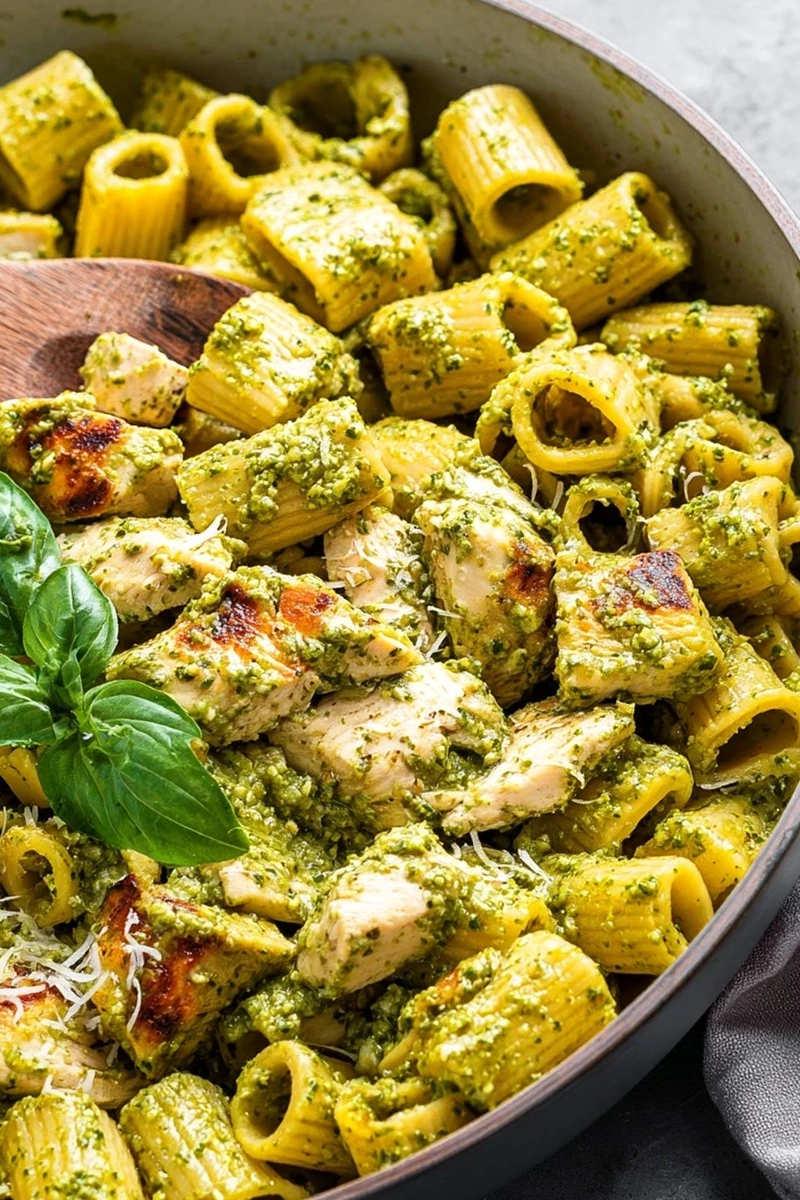
List of ingredients
- 12 ounces rigatoni or other short pasta
- 1 tablespoon olive oil
- 1 pound boneless skinless chicken breasts cut into 1 inch chunks
- 1 teaspoon Italian seasoning
- 3/4 teaspoon kosher salt
- Black pepper to taste
- 2 cloves garlic grated or minced
- 1/2 cup pesto
- 2 tablespoons lemon juice
- 1/4 cup heavy cream or half and half
- 1/4 cup grated parmesan cheese
- Chopped fresh basil for garnish optional
step-by-step instructions
- Step: Cook the pasta in salted boiling water until al dente. Reserve 1/2 cup of the pasta water, then drain and set aside.
- Step: Season the chicken chunks with salt, pepper, and Italian seasoning.
- Step: In a large sauté pan, heat olive oil over medium-high heat and add in the chicken. Cook for 2-3 minutes without touching, then flip and continue cooking until fully cooked (165°F).
- Step: Reduce heat to medium-low. Stir in the garlic and cook for an additional 30 seconds.
- Step: Combine the cooked pasta with the chicken, then add pesto, lemon juice, heavy cream, and parmesan. Mix until well combined and warmed through. If needed, add reserved pasta water to achieve desired consistency. Garnish with basil before serving.
Refining your technique
Achieving the perfect sear on chicken chunks
To ensure your chicken pieces remain juicy rather than turning rubbery, proper pan temperature is key. Ensure your oil is hot before adding the chicken, and resist the urge to move the pieces during the first few minutes of cooking. This lack of movement allows the Maillard reaction to occur, which builds deep, savory flavor on the surface of the meat.
Selecting the right type of pasta
While rigatoni is recommended for its hollow center, which catches the sauce, other short pastas like penne, fusilli, or farfalle are excellent alternatives. These shapes are designed to hold onto thick, emulsified sauces much better than long, flat noodles like linguine or spaghetti. Always aim for an al dente finish, as the pasta will continue to cook slightly when tossed in the hot skillet with the sauce.
Managing the heat for sauce stability
When incorporating dairy products like heavy cream or parmesan into a hot pan, avoid extreme heat. Adding these ingredients while the burner is turned to medium-low prevents the cream from breaking or separating. Consistent, gentle stirring ensures the parmesan melts evenly into the sauce, creating a smooth and cohesive final texture.
Customization and replacements
Protein and vegetable additions
If you prefer a higher vegetable content, you can stir in blanched broccoli florets, halved cherry tomatoes, or sautéed zucchini slices during the final assembly step. For a heartier meal, consider adding cooked chickpeas or even white beans, which absorb the pesto flavor beautifully. These additions not only boost the nutritional profile but also add texture and color variety to the dish.
Dairy-free and lighter adjustments
To make a lighter version of this recipe, you can swap the heavy cream for full-fat Greek yogurt or a splash of pasta water mixed with olive oil. For those avoiding dairy entirely, use a vegan pesto that omits cheese and substitute the cream with coconut cream or a plant-based heavy cream alternative. Ensure the nutritional yeast is used if you need to replicate that specific savory parmesan profile in your dairy-free version.
Storage and reheating strategy
Maintaining sauce quality in the refrigerator
This dish holds up well in the refrigerator for up to 3 days when kept in a tightly sealed glass container. Because pasta continues to absorb moisture as it cools, the dish may look a bit thirsty upon removal from the fridge. Simply stir in a tablespoon of warm water or broth when reheating to re-hydrate the sauce and bring back that creamy consistency.
Proper reheating techniques
Reheating in the microwave can sometimes cause the sauce to separate or the chicken to dry out, so the stovetop is the preferred method. Place your desired portion in a pan over medium-low heat with a splash of water, covering the pan to trap the steam. This gentle steam-warming process prevents the pasta from sticking to the pan and ensures the heat permeates the chicken pieces without overcooking them.
Common questions and answers
Is it possible to freeze the leftover pasta?
While pasta can be frozen, the texture of the sauce may change slightly upon thawing. If you plan to freeze portions, it is best to slightly undercook your pasta so that it reaches the perfect al dente texture once it is thawed and reheated later. Always store in a heavy-duty, freezer-safe bag with as much air removed as possible to prevent freezer burn.
What should be served alongside this main dish?
Since this dish is rich and flavorful, it pairs exceptionally well with simple, crisp side dishes. A salad tossed in a basic balsamic vinaigrette cuts through the creamy pesto, while roasted asparagus or sautéed spinach provides a clean vegetable contrast. Garlic-rubbed toasted bread also works as an excellent tool for scooping up any remaining sauce on the plate.
How can I make this dish more nutritious?
You can significantly enhance the nutrient density by adding a generous handful of fresh baby spinach leaves to the pan during the final minute of cooking. The residual heat will wilt the spinach, integrating it into the sauce without changing the flavor profile. Adding colorful bell peppers or sun-dried tomatoes is another simple way to increase your vegetable intake while adding sweet or tangy flavor dimensions.
What is the secret to a perfectly emulsified pesto sauce?
The secret lies entirely in the reserved pasta water, which is rich in dissolved starches. When you whisk a small amount of this water into the pesto and cream, the starch acts as a binder, pulling the fats and liquids together into a creamy, stable emulsion. Never discard all of your pasta water until you have finished assembling the final dish.
Can the recipe be prepared in a slow cooker?
This specific recipe is designed for rapid stovetop preparation to ensure the chicken remains tender and the pesto maintains its fresh, vibrant flavor. Cooking pesto for long periods in a slow cooker can cause the basil to lose its brightness and turn bitter. If you need a make-ahead meal, it is better to cook the components separately and combine them quickly just before serving.
Is there a way to intensify the garlic flavor?
If you love a pungent garlic punch, you can add half of the garlic when you first start browning the chicken and the other half right before combining the pasta. This creates two distinct layers of garlic flavor—one that is toasted and sweet, and one that is fresh and sharp. Adjusting the garlic variety to a roasted version can also provide a deeper, mellower sweetness that complements the pesto herbs.
Print
Easy Chicken and Pesto Pasta for Weeknight Dinners
- Total Time: PT30M
- Yield: 5 servings 1x
- Diet: High Protein
Description
This Chicken and Pesto Pasta combines tender chicken, fresh pesto, and rigatoni for a delightful dish that’s quick to prepare. Perfect for a speedy dinner or a comforting meal, this recipe is a straightforward way to enjoy delicious flavors at home.
Ingredients
- 12 ounces rigatoni or other short pasta
- 1 tablespoon olive oil
- 1 pound boneless skinless chicken breasts cut into 1 inch chunks
- 1 teaspoon Italian seasoning
- 3/4 teaspoon kosher salt
- Black pepper to taste
- 2 cloves garlic grated or minced
- 1/2 cup pesto
- 2 tablespoons lemon juice
- 1/4 cup heavy cream or half and half
- 1/4 cup grated parmesan cheese
- Chopped fresh basil for garnish optional
Instructions
- Step: Cook the pasta in salted boiling water until al dente. Reserve 1/2 cup of the pasta water, then drain and set aside.
- Step: Season the chicken chunks with salt, pepper, and Italian seasoning.
- Step: In a large sauté pan, heat olive oil over medium-high heat and add in the chicken. Cook for 2-3 minutes without touching, then flip and continue cooking until fully cooked (165°F).
- Step: Reduce heat to medium-low. Stir in the garlic and cook for an additional 30 seconds.
- Step: Combine the cooked pasta with the chicken, then add pesto, lemon juice, heavy cream, and parmesan. Mix until well combined and warmed through. If needed, add reserved pasta water to achieve desired consistency. Garnish with basil before serving.
Notes
Feel free to substitute the rigatoni pasta with your favorite short pasta. For a lighter version, use half-and-half instead of heavy cream. Add more veggies like spinach or cherry tomatoes for extra nutrition.
- Prep Time: PT10M
- Cook Time: PT20M
- Category: Main Dishes
- Method: Stovetop
- Cuisine: Italian
Nutrition
- Serving Size: 1 serving
- Calories: 540 kcal
- Sugar: 2 g
- Sodium: 800 mg
- Fat: 26 g
- Saturated Fat: 10 g
- Unsaturated Fat: 11 g
- Trans Fat: 0 g
- Carbohydrates: 44 g
- Fiber: 2 g
- Protein: 36 g
- Cholesterol: 90 mg