
These savory Korean-style beef rice bowls are a game changer for hectic weeknights when you need a nutritious, flavorful meal in less than fifteen minutes. By combining simple pantry staples with lean ground protein, you can create a restaurant-quality dinner without the hassle of long prep times or complex techniques. This recipe is designed to be efficient, flexible, and consistently delicious, making it a reliable staple for your rotating menu of quick family favorites.
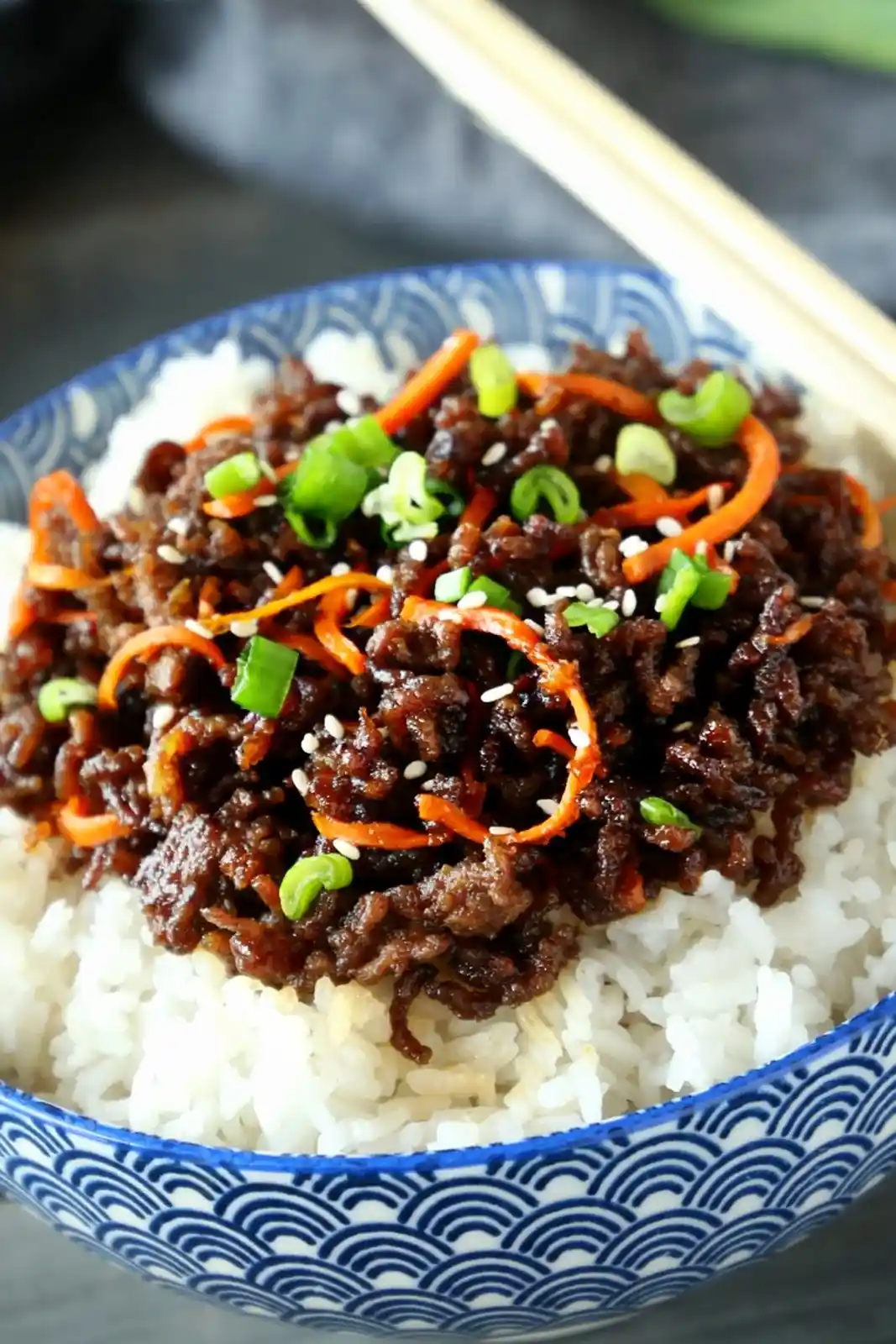
List of ingredients
- 4 cups cooked rice
- 1 teaspoon sesame oil
- 1 pound lean ground beef
- 3 cloves garlic, finely minced or pressed
- 4 tablespoons low sodium soy sauce
- 1 tablespoon minced ginger
- 3 tablespoons brown sugar
- Sriracha (optional)
- 1 cup carrots, julienne style
- Chopped green onions, toasted sesame seeds, and red pepper flakes for serving (optional)
step-by-step instructions
- Step: Prepare the rice according to package directions or cook in a pot or rice cooker.
- Step: Heat a large non-stick skillet over medium-high heat and add the sesame oil.
- Step: Add the ground beef to the skillet and brown until almost cooked through, about 6-10 minutes.
- Step: Add the garlic, soy sauce, ginger, brown sugar, and sriracha to the skillet and stir well until a sauce forms.
- Step: Add the carrots and cook for about 2 minutes until slightly softened.
- Step: Serve the beef mixture over rice and garnish with green onions, sesame seeds, and red pepper flakes.
Practical Cooking Advice
Managing Heat Levels
When cooking with ground beef, it is vital to monitor your burner temperature carefully. If the pan becomes too hot, the sugar in the brown sugar will burn and turn bitter rather than caramelizing into a savory glaze. Use a non-stick pan to ensure the sauce coats the meat properly rather than getting stuck to the bottom of the skillet.
Selecting the Right Rice
For this specific recipe, a medium or long-grain white rice provides the ideal texture. If you choose to use brown rice, be aware that it has a nuttier flavor and a firmer texture that will change the mouthfeel of the bowl slightly. Always ensure the rice is cooked and ready before you start the meat, as the beef cooks extremely quickly and needs to be served right away for the best quality.
Effective Ingredient Substitutions
Using Alternative Proteins
While beef is the traditional choice, you can successfully swap it for ground turkey or ground chicken. These leaner meats will cook slightly faster and have a more neutral flavor that acts as an excellent canvas for the ginger and soy sauce. Ensure you adjust the amount of sesame oil if using an extremely lean protein to prevent sticking.
Vegetable Alternatives
If you find that carrots are not to your liking, try swapping them for thinly sliced bell peppers or snap peas. These vegetables provide a similar crunch and maintain the aesthetic integrity of the dish. Mushrooms are another excellent choice, as they absorb the savory sauce and add an extra layer of earthiness to the overall bowl.
Storage and Reheating Methods
Maintaining Freshness
Store any leftovers in a tightly sealed container within the refrigerator for up to three days. It is often best to keep the rice and the beef mixture in separate containers if you anticipate having leftovers, as the rice can become soggy if it sits in the sauce for too long. When you are ready to eat, combine them just before reheating to ensure the best texture.
Restoring Texture During Reheating
To reheat, use a microwave-safe bowl and heat in thirty-second intervals, stirring in between. If the beef seems dry after refrigeration, add a small teaspoon of water or an extra drop of soy sauce before heating to loosen the glaze. Avoid overheating the beef, as this can cause the protein to become tough and rubbery.
Frequently Asked Questions
Can I make this meal gluten-free?
Yes, you can easily make this dish gluten-free by substituting the soy sauce with a certified gluten-free tamari. Ensure all your other pantry ingredients, such as any pre-packaged sauces, are also labeled gluten-free to avoid accidental contamination.
How can I adjust the sweetness of the sauce?
The brown sugar is essential for the characteristic glaze, but you can reduce the amount to two tablespoons if you prefer a less sweet profile. Alternatively, you could use a touch of honey or maple syrup, though these will alter the flavor profile slightly compared to the traditional brown sugar usage.
Is it possible to prepare this for a large group?
This recipe is highly scalable and perfect for doubling or tripling for a larger crowd. Simply use a very large wok or a wide, deep skillet to ensure the meat has enough surface area to brown evenly. If you have to cook in batches, do so to avoid steaming the meat, which prevents the proper caramelization required for the best flavor.
What is the purpose of adding the ginger at the end?
While the recipe calls for adding ginger with the aromatics, the timing is crucial to maintain its punchy, fresh flavor. Adding it when the garlic hits the pan allows the heat to mellow the ginger’s sharpness just enough so it becomes fragrant without losing its signature zing. Freshly minced ginger is significantly more potent than dried ginger powder, so stick to fresh roots if possible for the best results.
How do I achieve the perfect julienne cut for carrots?
Using a julienne peeler is the most efficient way to achieve thin, consistent strips. If you do not have one, stack thin planks of carrot and use a sharp knife to slice them into matchsticks. Aim for a consistent width so they cook through at the same rate as the beef and do not become mushy or leave some pieces raw.
Can I freeze this dish?
While it is best served fresh, you can freeze the cooked beef mixture for up to one month. Thaw the mixture completely in the refrigerator overnight before reheating it gently in a pan with a splash of liquid to bring the sauce back to life. Do not freeze the rice, as it often loses its fluffy texture and becomes unpleasantly grainy upon thawing.
Serving Ideas
Enhancing the Meal
Serve these bowls with a side of steamed bok choy or blanched broccoli to add an extra serving of greens to your meal. You can also place a fried or soft-boiled egg on top of the beef just before serving, as the yolk provides a creamy richness that pairs wonderfully with the salty soy sauce. For an extra refreshing bite, add a small side of quick-pickled cucumbers with rice vinegar and a pinch of salt.
Creating a Topping Bar
If you are hosting a casual dinner, set out small bowls of garnishes so everyone can customize their own rice bowl. Include items like extra sriracha, toasted sesame oil for drizzling, crispy fried onions, or even fresh cilantro. This interactive approach makes the dinner feel more festive and allows guests to balance the heat and acidity to their own personal preferences.
Print
Easy Korean Beef Rice Bowls
- Total Time: PT15M
- Yield: 4 servings 1x
- Diet: Dairy-free
Description
These Easy Korean Beef Rice Bowls make the perfect healthy weeknight meal that’s ready in about 15 minutes!
Ingredients
- 4 cups cooked rice
- 1 teaspoon sesame oil
- 1 pound lean ground beef
- 3 cloves garlic, finely minced or pressed
- 4 tablespoons low sodium soy sauce
- 1 tablespoon minced ginger
- 3 tablespoons brown sugar
- Sriracha (optional)
- 1 cup carrots, julienne style
- Chopped green onions, toasted sesame seeds, and red pepper flakes for serving (optional)
Instructions
- Step: Prepare the rice according to package directions or cook in a pot or rice cooker.
- Step: Heat a large non-stick skillet over medium-high heat and add the sesame oil.
- Step: Add the ground beef to the skillet and brown until almost cooked through, about 6-10 minutes.
- Step: Add the garlic, soy sauce, ginger, brown sugar, and sriracha to the skillet and stir well until a sauce forms.
- Step: Add the carrots and cook for about 2 minutes until slightly softened.
- Step: Serve the beef mixture over rice and garnish with green onions, sesame seeds, and red pepper flakes.
Notes
To make this recipe ahead of time, prepare as directed and store in an airtight container in the fridge for up to 3 days. Reheat in the microwave before serving.
- Prep Time: PT5M
- Cook Time: PT10M
- Category: Dinner, Lunch, Main Course
- Method: Stovetop
- Cuisine: Asian, Korean
Nutrition
- Serving Size: 1 serving
- Calories: 430 kcal
- Sugar: 11 g
- Sodium: 635 mg
- Fat: 7 g
- Saturated Fat: 3 g
- Unsaturated Fat: 3 g
- Trans Fat: 0 g
- Carbohydrates: 59 g
- Fiber: 2 g
- Protein: 30 g
- Cholesterol: 70 mg