
This vibrant and creamy pasta dish brings together the herbaceous notes of fresh basil pesto and the velvety texture of ricotta cheese. Designed to be both gluten-free and nut-free, it serves as a reliable solution for busy weeknights when you desire a nutritious, restaurant-quality meal at home. The entire process takes less than thirty minutes, ensuring you can enjoy a wholesome dinner even on your busiest days.
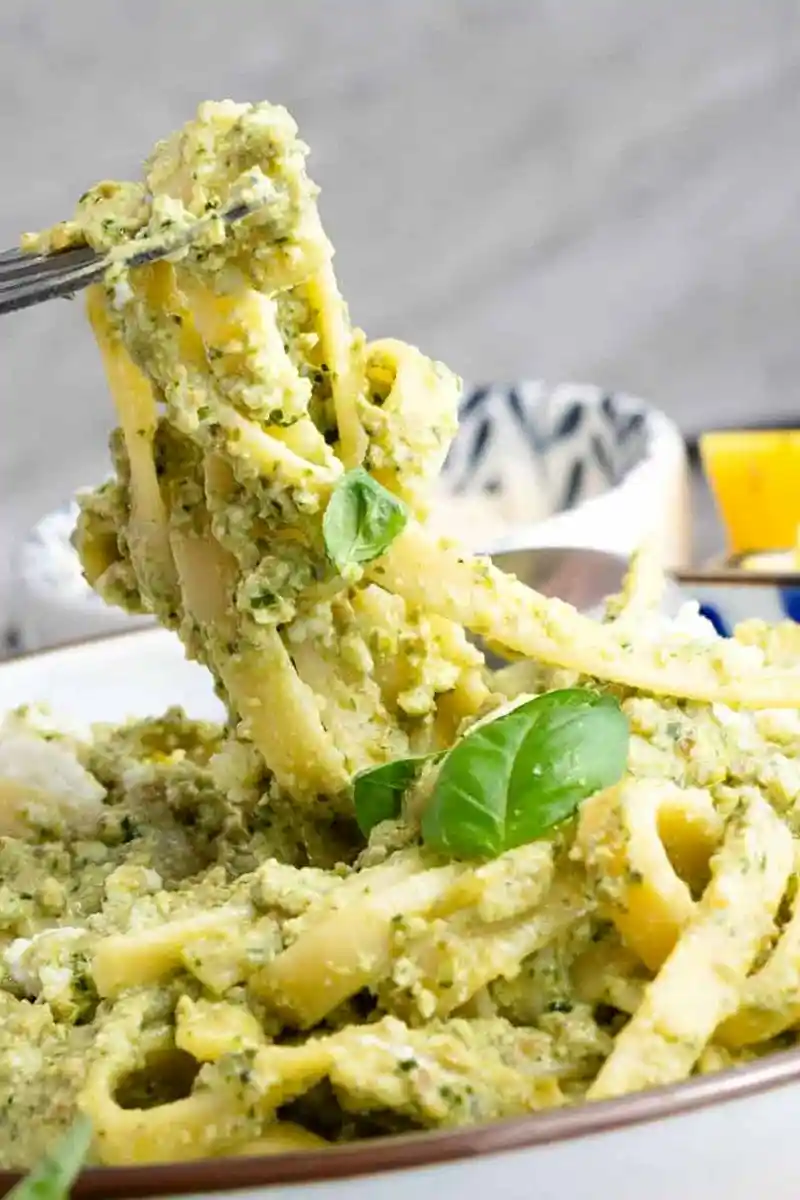
List of ingredients
- 12 oz fettuccini pasta (gluten-free)
- 1/4 cup ricotta cheese
- 2 cups fresh basil leaves (packed)
- 1 cup roasted pumpkin seeds (unsalted)
- 4 cloves garlic
- 1/4 cup lemon juice
- 1/4 cup grated parmesan cheese (or nutritional yeast)
- 1/4 cup olive oil
- 1/2 tsp salt
- 1/4 tsp black pepper
step-by-step instructions
- Prepare the Pesto: In a food processor, blend basil, pumpkin seeds, garlic, lemon juice, Parmesan (or nutritional yeast), salt, and pepper. With the processor running, slowly add olive oil until smooth.
- Cook the Pasta: Boil pasta as per package instructions until al dente; reserve 1/2 cup pasta water before draining.
- Combine: In the same pot, mix pesto, ricotta, lemon juice, and 1/4 cup pasta water over medium heat. Add more water if needed to reach the desired consistency.
- Serve: Toss cooked pasta with sauce, garnish with extra Parmesan and basil if desired, and serve immediately.
Refining Your Pasta Texture
Managing Pasta Water Starch Content
The starch released into the water during the boiling process is the secret to a professional sauce. When you reserve this water, ensure you are taking it from the pot just before draining. This water contains dispersed starch that acts as a natural emulsifier, helping the ricotta and oil mixture cling to the pasta strands rather than pooling at the bottom of the dish.
Preventing Sticking in Gluten-Free Noodles
Gluten-free noodles often possess a different starch composition than wheat-based varieties, making them more prone to clumping if allowed to sit dry. After draining, if you are not combining them with the sauce immediately, a quick rinse under warm water can help remove excess surface starch. Always keep the pasta warm to ensure it absorbs the flavor of the pesto sauce effectively upon contact.
Customizing the Pesto Base
Swapping Green Components for Variety
While fresh basil is the traditional choice, you can experiment with other leafy greens to alter the flavor profile. Spinach offers a much milder, softer taste, while kale provides a robust, earthy quality that stands up well to the richness of the ricotta. If using heartier greens like kale, ensure you blanch them for thirty seconds and shock them in cold water before processing to maintain a vibrant green color.
Utilizing Different Seeds
If you lack roasted pumpkin seeds, sunflower seeds are an excellent alternative that keeps the dish nut-free. They provide a similar crunch and healthy fat content that mirrors the texture of traditional pine nuts. To elevate the flavor, lightly toast the raw sunflower seeds in a dry pan until they become golden and fragrant before adding them to your food processor.
Managing Leftovers and Reheating
Proper Storage Techniques
To keep the pasta at its best, store any leftovers in a tightly sealed glass or plastic container within the refrigerator. It will stay fresh for up to three days, though the pesto may lose some of its vibrant green color due to natural oxidation. Keep the container away from the back of the fridge where temperatures can fluctuate, as this maintains the integrity of the dairy component.
Reviving the Sauce Texture
When reheating, the sauce may appear slightly absorbed into the noodles or separated. To revive it, add a tablespoon of water or a tiny drizzle of olive oil before heating on the stovetop over low intensity. Stirring constantly ensures the ricotta warms through evenly without curdling, restoring that silky, just-cooked mouthfeel.
Practical Serving Suggestions
Incorporating Extra Protein
If you desire a more substantial meal, consider adding cooked chickpeas or white beans directly into the sauce. These legumes offer a neutral flavor that complements the garlic and basil without overpowering the delicate ricotta. Alternatively, serve the pasta alongside a portion of roasted vegetables to round out the nutritional profile of your dinner.
Adjusting Herb Intensity
Some palates prefer a more subtle pesto, while others want a punchy garlic and basil flavor. If you find your homemade batch is too strong, simply increase the ratio of ricotta to pesto during the final mixing stage. This dilution creates a gentler, more kid-friendly flavor profile while still maintaining the creamy consistency that characterizes this dish.
Frequently Asked Questions
Can I prepare the pesto ahead of time?
Yes, the pesto base can be made up to three days in advance and kept in the refrigerator. To prevent the surface from darkening, pour a very thin layer of olive oil over the top before covering. Mix this extra oil into the sauce when you are ready to combine it with the pasta.
Is there a way to make this dish entirely plant-based?
Absolutely, the recipe is easily adapted by replacing the ricotta with a high-quality tofu ricotta substitute and swapping the parmesan for nutritional yeast. Tofu ricotta provides a similar protein density and creamy texture, ensuring the dish remains satisfying for those following a vegan diet.
Why does the sauce sometimes look grainy?
Graininess usually occurs if the ricotta is overheated or if the emulsion between the olive oil and pasta water is broken. To prevent this, always keep the heat at a medium-low level and add the pasta water gradually. Whisking the sauce components together before adding the pasta ensures the structure is stable before the noodles are introduced.
Can this recipe be frozen for later use?
You can freeze the pesto base successfully for up to three months in a freezer-safe bag or container. However, it is not recommended to freeze the fully assembled pasta, as the gluten-free noodles tend to lose their structural integrity and become overly soft upon thawing and reheating.
Enhancing the Culinary Experience
Choosing the Right Pasta Shape
While the recipe calls for fettuccini, shorter shapes like penne or fusilli are excellent at trapping bits of ricotta and pesto within their ridges. If you are serving young children, these smaller shapes can be easier to manage and less messy to eat. Choose a high-quality brown rice or quinoa-based pasta to ensure the texture stays firm throughout the cooking process.
The Role of Garlic Freshness
The intensity of the garlic plays a major role in the overall success of the pesto. Using fresh cloves rather than pre-minced or jarred versions will yield a cleaner, more vibrant bite. If you find raw garlic too sharp, you can briefly roast the cloves in their skins before peeling and blending, which softens the flavor into a mellow, savory sweetness.
Print
Easy Pesto and Ricotta Pasta (Gluten-Free, Nut-Free)
- Total Time: 25 minutes
- Yield: 4 servings 1x
- Diet: Gluten-Free, Nut-Free
Description
This Easy Pesto and Ricotta Pasta combines creamy ricotta and vibrant homemade pesto for a delightful dish that is perfect for any weeknight dinner. Gluten-free and nut-free, this recipe promises a delicious meal that is easy to prepare.
Ingredients
- 12 oz fettuccini pasta (gluten-free)
- 1/4 cup ricotta cheese
- 2 cups fresh basil leaves (packed)
- 1 cup roasted pumpkin seeds (unsalted)
- 4 cloves garlic
- 1/4 cup lemon juice
- 1/4 cup grated parmesan cheese (or nutritional yeast)
- 1/4 cup olive oil
- 1/2 tsp salt
- 1/4 tsp black pepper
Instructions
- Prepare the Pesto: In a food processor, blend basil, pumpkin seeds, garlic, lemon juice, Parmesan (or nutritional yeast), salt, and pepper. With the processor running, slowly add olive oil until smooth.
- Cook the Pasta: Boil pasta as per package instructions until al dente; reserve 1/2 cup pasta water before draining.
- Combine: In the same pot, mix pesto, ricotta, lemon juice, and 1/4 cup pasta water over medium heat. Add more water if needed to reach the desired consistency.
- Serve: Toss cooked pasta with sauce, garnish with extra Parmesan and basil if desired, and serve immediately.
Notes
Ricotta: For a dairy-free ricotta, substitute with a plant-based alternative or tofu ricotta. Homemade Pesto: Store any extra sauce in an airtight container in the refrigerator for up to 3 days or freeze for up to 3 months.
- Prep Time: 10 minutes
- Cook Time: 15 minutes
- Category: Main Course
- Method: Boiling
- Cuisine: Italian
Nutrition
- Serving Size: 1 serving
- Calories: 588 kcal
- Sugar: 3 g
- Sodium: 422 mg
- Fat: 27 g
- Saturated Fat: 6 g
- Unsaturated Fat: 19 g
- Trans Fat: 0 g
- Carbohydrates: 69 g
- Fiber: 4 g
- Protein: 20 g
- Cholesterol: 13 mg