
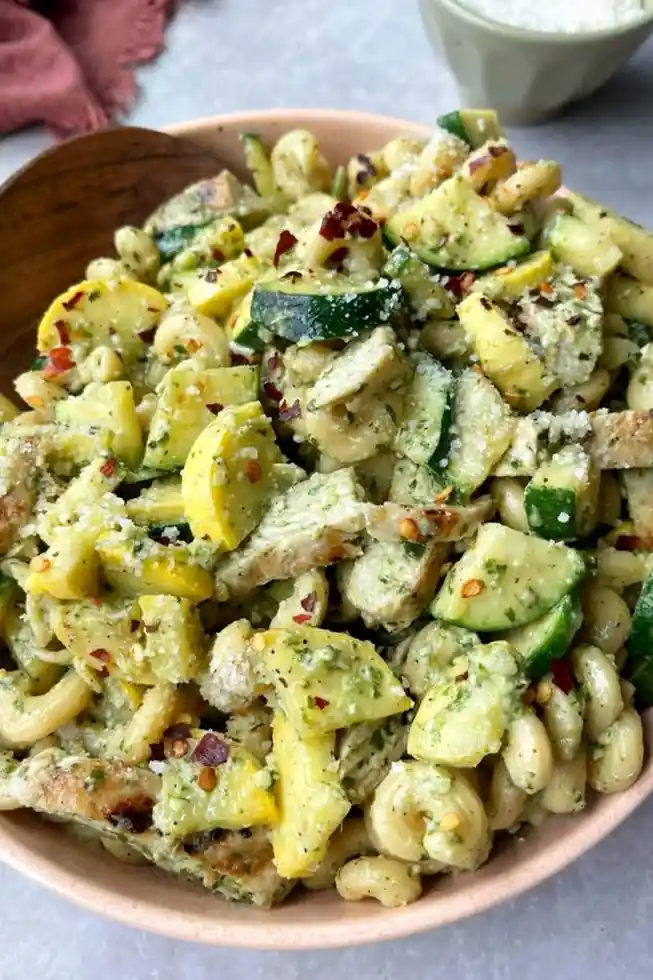
This vibrant grilled chicken pesto pasta delivers a perfect harmony of lean protein, fresh summer squash, and aromatic basil. Designed to be prepared in under twenty minutes, it is an ideal solution for busy weeknights when you need a nutritious meal without spending hours in the kitchen. The combination of charred chicken and garden-fresh pesto creates a sophisticated flavor profile that satisfies the entire family while remaining incredibly easy to assemble.
List of ingredients
- 8oz pasta
- 1 1/4 cup chopped zucchini
- 1 1/4 cup chopped yellow squash
- 0.8 lb chicken breast, cut in half
- 1 tbsp avocado oil
- 1/2 tsp sea salt
- 1/2 tsp black pepper
- 1/2 tsp garlic powder
- 3 tbsp grated parmesan
- 1 cup fresh basil
- 1/4 cup pine nuts
- 1/2 lemon, juiced
- 1 garlic clove, minced
- 1/4 cup olive oil
- 1/4 tsp sea salt
- 1/4 tsp black pepper
- 2 tbsp water
step-by-step instructions
- Step: Cook box of pasta according to package. Drain and set aside.
- Step: Make pesto by combining all ingredients into the food processor to blend. Set aside.
- Step: Saute on medium heat zucchini and squash with a little avocado oil spray, sea salt and garlic powder. Be sure to only lightly saute so the veggies don’t get mushy.
- Step: Prepare grilled chicken by cooking on hot grill or grill pan with avocado oil. Season with sea salt, pepper and garlic powder. Cook thoroughly.
- Step: In large bowl, combine pasta, sauted veggies, chopped grilled chicken and pesto. Mix to combine.
- Step: Add grated parmesan to mix.
- Step: Top with red pepper flakes. Enjoy!
Practical tips for success
Choosing the right pasta shape
Select a pasta shape that features ridges, such as rotini, penne, or fusilli. These shapes are designed specifically to trap thick sauces like pesto within their curves. Avoiding smooth, long noodles like spaghetti ensures that you get an equal amount of pesto, vegetables, and chicken in every single bite you take.
Achieving the perfect vegetable texture
The key to a professional pesto pasta is preventing the zucchini and squash from becoming watery. Always use a hot pan and keep the vegetables moving constantly during the sautéing process. If the pan looks crowded, cook the squash in two smaller batches to ensure it sears rather than steams in its own released moisture.
Enhancing the pesto emulsion
When blending your pesto, the order of operations matters. Start by pulsing the garlic and pine nuts before adding the basil leaves, as this ensures the nuts are broken down into a paste rather than leaving large, gritty chunks. Adding the olive oil in a slow, steady stream while the processor runs will create a more stable, velvety emulsion.
Substitutions and flavor variations
Alternative nut options
If you have an allergy or prefer a different texture, you can easily substitute the pine nuts in your pesto. Walnuts provide an earthy, robust flavor, while sunflower seeds offer a mild, slightly sweet profile that works exceptionally well with basil. If you want a nut-free version, simply omit the nuts and increase the parmesan cheese slightly to provide the necessary richness and body for the sauce.
Incorporating extra garden produce
To bulk up this meal further, consider adding sliced cherry tomatoes or baby spinach during the final mixing stage. The residual heat from the pasta and the sautéed squash will wilt the spinach perfectly, while the tomatoes provide a burst of acidity that cuts through the richness of the olive oil and parmesan. You could also toss in blanched asparagus spears for a crunchier alternative to the summer squash.
Adjusting the protein
While chicken breast is the classic choice, this dish is highly versatile. You can substitute the chicken with seared shrimp or even firm cubes of white fish. If you prefer a plant-forward meal, roasted chickpeas or white beans can be tossed in along with the pasta to provide fiber and a satisfying, dense protein source that complements the herbal notes of the pesto.
Storage and reheating strategy
Managing leftover pasta
To store your leftovers effectively, place the cooled pasta in an airtight glass container. Because pesto can oxidize and lose its vibrant color when exposed to air, place a small piece of plastic wrap directly against the surface of the pasta before sealing the lid. This simple step keeps the basil looking fresh for up to three days in the refrigerator.
Reviving the texture when reheating
When reheating your pesto pasta, the sauce may appear slightly absorbed or dry. Add a teaspoon of warm water or a light drizzle of extra virgin olive oil to the bowl before putting it in the microwave or on the stove. This restores the creamy consistency of the emulsion and ensures the chicken stays moist rather than becoming rubbery during the reheating process.
Frequently asked questions
Why did my pesto turn brown?
Pesto turns brown due to oxidation, which happens when the fresh basil comes into contact with the air. To prevent this, always ensure your pesto is tightly covered when storing it, and try to use it immediately after preparation. Adding a touch of extra lemon juice can also act as an antioxidant to help maintain the bright green hue for a longer period.
Can I serve this meal chilled?
Absolutely, this dish functions perfectly as a cold pasta salad. If you plan to serve it chilled, slightly undercook the pasta by one minute so it maintains a firm bite when cold. After mixing the pesto with the warm pasta and vegetables, let the entire mixture cool to room temperature before placing it in the refrigerator to allow the flavors to meld together.
How do I make the pesto thicker?
If your pesto appears too thin, add an additional tablespoon of parmesan cheese or a few extra pine nuts and pulse again. The cheese and nuts act as thickening agents that absorb the olive oil, creating a richer, more substantial sauce that clings more effectively to the pasta. Avoid adding more oil, as this will only thin the texture further without adding the necessary body.
Print
Grilled Chicken Pesto Pasta
- Total Time: 15 minutes
- Yield: 1 1x
- Diet: Balanced
Description
This Grilled Chicken Pesto Pasta comes together in less than 20 minutes and makes for a delicious weeknight summer dinner! Made with just a few simple ingredients.
Ingredients
- 8oz pasta
- 1 1/4 cup chopped zucchini
- 1 1/4 cup chopped yellow squash
- 0.8 lb chicken breast, cut in half
- 1 tbsp avocado oil
- 1/2 tsp sea salt
- 1/2 tsp black pepper
- 1/2 tsp garlic powder
- 3 tbsp grated parmesan
- 1 cup fresh basil
- 1/4 cup pine nuts
- 1/2 lemon, juiced
- 1 garlic clove, minced
- 1/4 cup olive oil
- 1/4 tsp sea salt
- 1/4 tsp black pepper
- 2 tbsp water
Instructions
- Step: Cook box of pasta according to package. Drain and set aside.
- Step: Make pesto by combining all ingredients into the food processor to blend. Set aside.
- Step: Saute on medium heat zucchini and squash with a little avocado oil spray, sea salt and garlic powder. Be sure to only lightly saute so the veggies don’t get mushy.
- Step: Prepare grilled chicken by cooking on hot grill or grill pan with avocado oil. Season with sea salt, pepper and garlic powder. Cook thoroughly.
- Step: In large bowl, combine pasta, sauted veggies, chopped grilled chicken and pesto. Mix to combine.
- Step: Add grated parmesan to mix.
- Step: Top with red pepper flakes. Enjoy!
Notes
Open to use prepared grilled chicken strips. If using store bought pesto, add 1/2 cup pesto or enough to desired coating.
- Prep Time: 5 minutes
- Cook Time: 10 minutes
- Category: Dinner
- Method: Grilling
- Cuisine: Italian-inspired
Nutrition
- Serving Size: 1 bowl
- Calories: 680 kcal
- Sugar: 4 g
- Sodium: 850 mg
- Fat: 32 g
- Saturated Fat: 6 g
- Unsaturated Fat: 24 g
- Trans Fat: 0 g
- Carbohydrates: 58 g
- Fiber: 6 g
- Protein: 42 g
- Cholesterol: 95 mg