
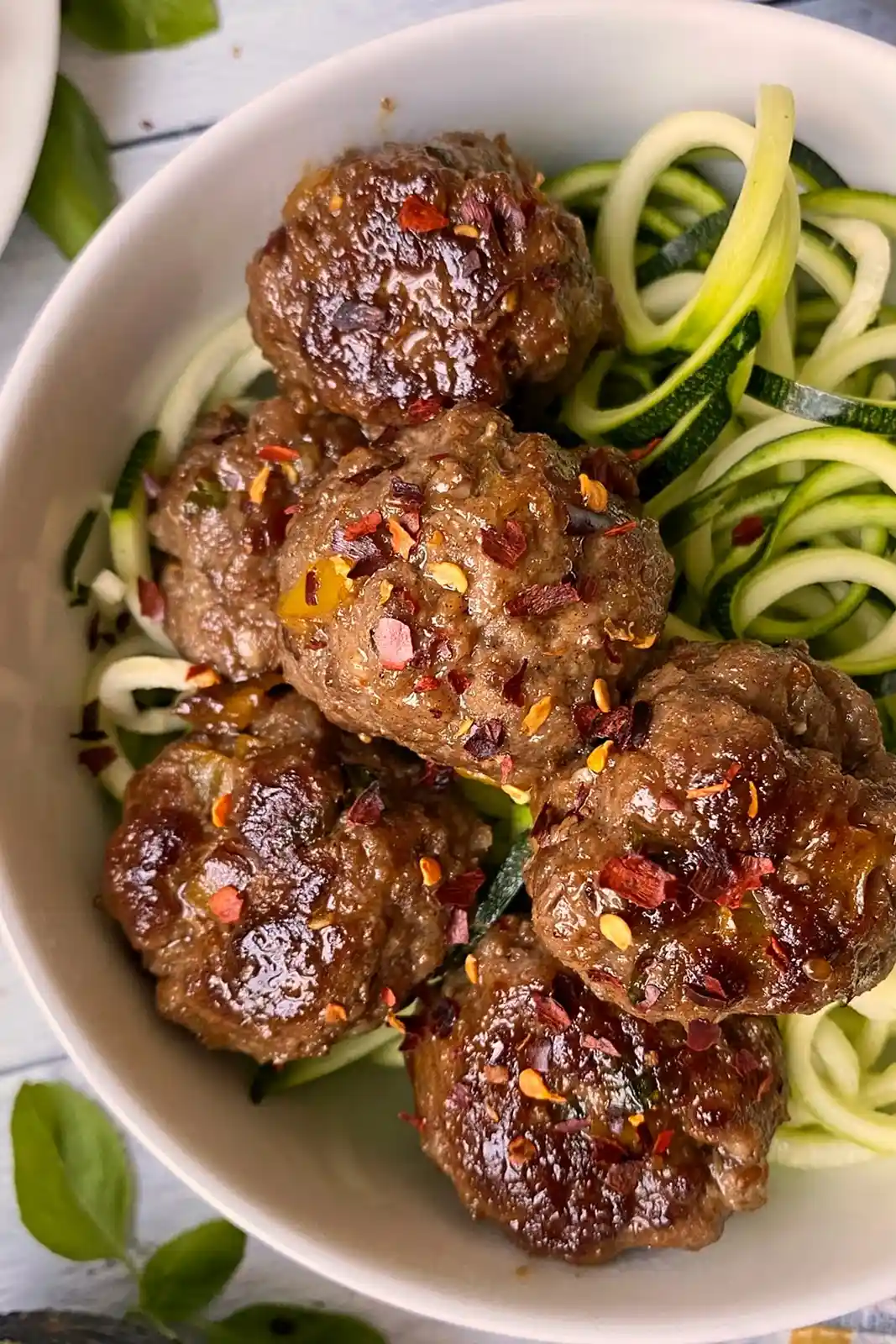
These savory teriyaki meatballs offer a wholesome, nutrient-dense alternative to traditional takeout. By focusing on fresh aromatics and quality ground beef, you can create a satisfying main course that fits perfectly into a paleo or gluten-free lifestyle. This simple skillet method ensures deep flavor development without the need for complex baking or breadcrumbs.
List of ingredients
- 1 lb 100% grass-fed ground beef
- 1/3 cup finely chopped bell pepper
- 4 large cloves of garlic, pressed
- 2 Tbsp chopped basil
- 2 Tbsp cassava flour
- 1/2 tsp salt
- 1/4 cup Primal Kitchen Teriyaki Sauce
step-by-step instructions
- Step: Prepare all of the veggies and herbs. Chop the basil, press the garlic and finely chop the bell pepper.
- Step: Place your frying pan on the stovetop and preheat it on medium heat.
- Step: In a medium-sized mixing bowl, combine the ground beef, bell pepper, basil, garlic, cassava flour and salt. Mix until well combined, then roll the mixture into balls about 2 tablespoons in size.
- Step: Place the meatballs on the frying pan. Once all of the meatballs are ready, cover the pan with a lid and cook on medium heat for 8-10 minutes, or until the meatballs have browned on the bottom.
- Step: Remove the lid, flip the meatballs and cook an additional 5 minutes (lid off).
- Step: Add the sauce on top of the meatballs. Continue cooking until the sauce thickens. During this time, continuously stir the meatballs so that they get fully coated in the sauce.
- Step: Once the sauce has thickened, turn off the heat on the stove top and serve with your favorite side dish.
Essential Cooking Techniques
Achieving Uniform Meatball Size
When forming your meatballs, consistency is crucial for even cooking. Using a standardized kitchen scoop helps you measure exactly two tablespoons of the meat mixture each time. If you do not have a scoop, lightly weigh the total mixture and divide it into seventeen equal portions before rolling, which prevents undercooked or overcooked meatballs.
The Role of Cassava Flour
Cassava flour is a versatile, grain-free binder that mimics the role of breadcrumbs without adding heavy carbohydrates. It absorbs a portion of the moisture released by the bell pepper and meat, preventing the meatballs from becoming too dense or falling apart during the flipping stage. Ensure you mix it thoroughly into the meat so you do not encounter any pockets of dry flour.
Managing Pan Heat
Because the sugar content in sauces can burn rapidly, keep your heat strictly at a medium setting. If you notice the sauce darkening too quickly or smelling scorched, immediately reduce the temperature to low or remove the pan from the heat source for a few seconds. Constant movement during the glazing phase is the best insurance against burnt sauce.
Substitutions and Adjustments
Alternative Vegetable Additions
If you prefer a different profile, consider swapping the bell pepper for finely grated carrots, which add a natural earthiness. If you love heat, fold in a small amount of diced chili or red pepper flakes to the raw meat mixture. Finely minced scallions or cilantro can also replace the basil if you prefer a sharper aromatic profile.
Sauce Considerations
If your specific dietary requirement restricts store-bought sauces, you can create a simple glaze at home by combining coconut aminos, a dash of ginger powder, and a small amount of date paste. This ensures you maintain the required paleo and Whole30 adherence while achieving that glossy finish. Adjust the sweetness according to your personal preference during the final reduction stage.
Serving Suggestions
Pairing with Vegetable Sides
These meatballs are highly versatile and shine when paired with lighter side dishes. Zucchini noodles serve as a great low-carb base that absorbs the extra teriyaki glaze. Alternatively, steamed cauliflower rice provides a clean, neutral canvas that balances the savory, salty notes of the beef.
Adding Fresh Elements
To provide contrast to the warm, cooked meat, include raw components on your plate. Freshly sliced avocado adds a creamy texture that cuts through the savory glaze beautifully. A side of thinly sliced cucumbers dressed with rice vinegar and sesame seeds also helps brighten the entire meal and provides a refreshing palate cleanser.
Storage and Reheating
Proper Refrigeration Methods
Always store leftover meatballs in an airtight glass container to preserve moisture. Glass prevents the meat from taking on refrigerator odors and is easy to clean. Consume any leftovers within 5-6 days, as the freshness of the fresh herbs and peppers will begin to decline after this window.
Best Reheating Practices
To reheat, use a skillet on the stove with a tiny splash of water or extra sauce to prevent the meat from drying out. Cover the pan and use low heat to warm them through without overcooking the protein. Avoid microwaving if possible, as it tends to make the texture of grass-fed beef tough and rubbery.
FAQs
Can I prepare the meat mixture ahead of time?
Yes, you can mix all the ingredients and store them in the refrigerator for up to 24 hours before shaping and cooking. This actually allows the garlic and basil flavors to penetrate the beef more deeply. Wait to form the balls until just before you are ready to heat the pan.
How do I make these meatballs without a lid?
If your skillet does not have a lid, use a heat-safe baking sheet or a piece of heavy-duty foil pressed firmly over the top. The goal is to trap steam to ensure the center of the meatball cooks through before the exterior browns too aggressively. Ensure the cover is tight enough to create the necessary steam environment.
What is the benefit of using grass-fed beef?
Grass-fed beef typically has a different fat profile compared to conventional beef, which often results in a cleaner, more robust flavor. It works particularly well in simple recipes where you want the quality of the primary protein to stand out without masking it with heavy spices. It also tends to be slightly leaner, which is why the addition of cassava flour helps keep the meatballs tender during the cooking process.
Is it possible to bake these instead?
You can bake these at 400 degrees Fahrenheit for approximately 18-20 minutes on a parchment-lined tray. However, you will lose the ability to glaze them in the pan. To compensate, brush the glaze on the meatballs during the last 5 minutes of baking, ensuring they are fully coated but not sitting in a pool of liquid that might make them soggy.
Can I freeze the raw meatballs?
Yes, form the balls and freeze them on a flat tray until solid, then transfer them to a freezer-safe bag. When you are ready to cook, let them thaw in the refrigerator overnight. You may need to add a minute or two to the cooking time to ensure the center reaches a safe internal temperature.
Print
Healthy Teriyaki Meatballs (Paleo, Gluten Free)
- Total Time: PT30M
- Yield: 17 meatballs 1x
- Diet: Paleo, Gluten-Free
Description
Healthy teriyaki meatballs made with ground beef and cooked on a frying pan. Paleo friendly, gluten free, egg free and whole30 approved!
Ingredients
- 1 lb 100% grass-fed ground beef
- 1/3 cup finely chopped bell pepper
- 4 large cloves of garlic, pressed
- 2 Tbsp chopped basil
- 2 Tbsp cassava flour
- 1/2 tsp salt
- 1/4 cup Primal Kitchen Teriyaki Sauce
Instructions
- Step: Prepare all of the veggies and herbs. Chop the basil, press the garlic and finely chop the bell pepper.
- Step: Place your frying pan on the stovetop and preheat it on medium heat.
- Step: In a medium-sized mixing bowl, combine the ground beef, bell pepper, basil, garlic, cassava flour and salt. Mix until well combined, then roll the mixture into balls about 2 tablespoons in size.
- Step: Place the meatballs on the frying pan. Once all of the meatballs are ready, cover the pan with a lid and cook on medium heat for 8-10 minutes, or until the meatballs have browned on the bottom.
- Step: Remove the lid, flip the meatballs and cook an additional 5 minutes (lid off).
- Step: Add the sauce on top of the meatballs. Continue cooking until the sauce thickens. During this time, continuously stir the meatballs so that they get fully coated in the sauce.
- Step: Once the sauce has thickened, turn off the heat on the stove top and serve with your favorite side dish.
Notes
Leftover meatballs can be stored in an air-tight glass container in the fridge for 5-6 days. Serving suggestions include zucchini noodles, sweet potato fries, avocado, or cauliflower rice.
- Prep Time: PT15M
- Cook Time: PT15M
- Category: Main Course
- Method: Stovetop
- Cuisine: American
Nutrition
- Serving Size: 3 meatballs
- Calories: 210 kcal
- Sugar: 2 g
- Sodium: 380 mg
- Fat: 12 g
- Saturated Fat: 4 g
- Unsaturated Fat: 7 g
- Trans Fat: 0 g
- Carbohydrates: 6 g
- Fiber: 1 g
- Protein: 19 g
- Cholesterol: 65 mg