
This nourishing chicken noodle soup is made entirely from scratch for a rich and comforting taste. It combines tender bone-in chicken with aromatic vegetables to create a wholesome meal. This recipe is ideal for those seeking a traditional, homemade broth.
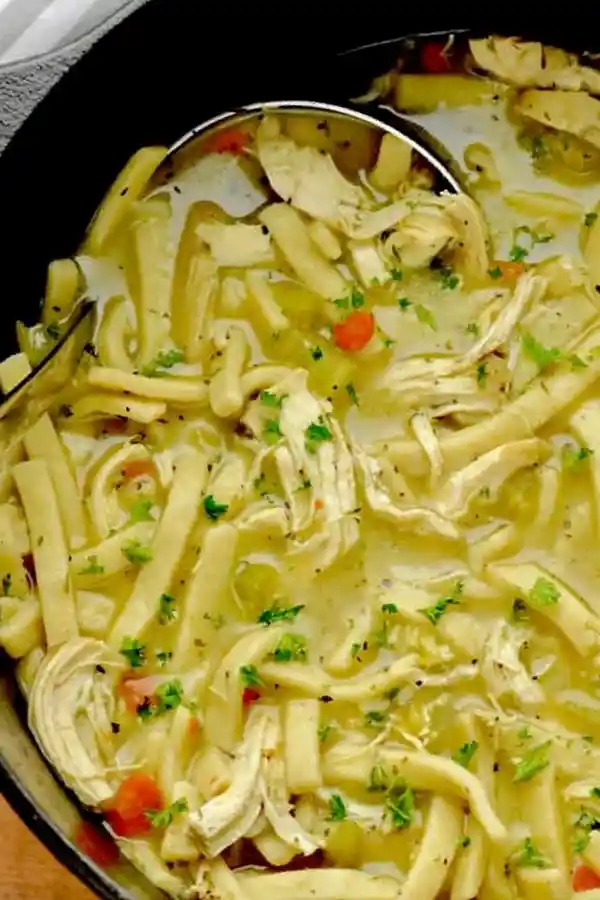
List of ingredients
- 2 TBSPs butter – used for sautéing the aromatics.
- 1 lb bone in chicken thighs – provides deep flavor and tender meat.
- 3 celery stalks (diced) – adds a classic savory base.
- 2 medium carrots (peeled and sliced) – provides sweetness and color.
- 1/2 a yellow onion (diced) – essential for the soup’s aromatic foundation.
- 1/2 TBSP dried thyme – adds an earthy herbal note.
- 1/2 TBSP dried basil – provides a sweet, aromatic flavor.
- 2 cloves garlic (minced) – adds pungent depth.
- 2 bay leaves – infuses the broth with a subtle floral aroma.
- 1/2 to 1 tsp salt – enhances all the savory flavors.
- 1/2 tsp black pepper – adds a mild, spicy warmth.
- 8 cups chicken stock – the liquid base for the soup.
- 12 ounces frozen egg noodles – provides a thick, satisfying texture.
step-by-step instructions
- Brown the chicken: Melt butter in a large stock pot over medium heat. Season the chicken thighs with salt and pepper, then cook for 3 to 4 minutes on each side.
- Prepare the pot: Remove the chicken from the pan and discard the skin. Pour out the pan drippings, reserving exactly 2 TBSPs in the pot.
- Sauté vegetables: Add the diced celery, carrots, onion, and minced garlic to the pan. Stir in the dried thyme and basil, and sauté for 3 to 4 minutes.
- Simmer the broth: Pour in the chicken stock and bring the mixture to a boil. Return the chicken to the pan, reduce the heat, and simmer for 25 to 30 minutes until the soup has a very slight bubble.
- Cook the noodles: Remove the chicken from the pot and bring the broth back to a boil. Stir in the frozen egg noodles and simmer for 20 minutes, or as indicated on the package.
- Final assembly: While the noodles cook, shred the chicken once it is cool enough to handle. Return the shredded chicken to the pot and serve immediately.
Flavor Enhancement Techniques
Browning the Meat for Depth
Browning the chicken thighs at the start creates a Maillard reaction, which develops complex savory flavors. Even though the skin is discarded, the rendered fat left in the pan adds a rich dimension to the vegetables.
Selecting a High-Quality Stock
Using a low-sodium chicken stock allows you to control the salt level more precisely. For a richer taste, consider using a bone broth, which contains more collagen and creates a silkier mouthfeel.
Balancing Dried and Fresh Herbs
Dried thyme and basil provide a concentrated flavor that stands up well to long simmering. If you prefer fresh herbs, use a 3:1 ratio of fresh to dried herbs to maintain the same flavor profile.
Deglazing the Stock Pot
When you add the chicken stock to the sautéed vegetables, use a wooden spoon to scrape the bottom of the pot. This releases the browned bits, known as fond, which are packed with concentrated flavor.
Ingredient Substitutions
Using Chicken Breasts Instead of Thighs
You can substitute boneless, skinless chicken breasts for a leaner option. Monitor the internal temperature closely during the simmer phase to avoid overcooking the meat, as breasts dry out faster than thighs.
Alternative Pasta Varieties
If you do not have egg noodles, ditalini or acini di pepe are excellent small pasta alternatives. For a gluten-free version, use brown rice noodles or chickpea pasta to maintain a similar bite.
Replacing Frozen Egg Noodles
Dry egg noodles can be used by boiling them directly in the soup according to the package directions. Freshly made noodles are also an option and will cook much faster than the frozen or dry versions.
Substituting Different Root Vegetables
Parsnips or turnips can be used in place of carrots for a slightly more peppery and earthy flavor. Leeks can replace yellow onions to provide a milder, more buttery taste to the broth.
Using Vegetable-Based Broths
For a different flavor profile, a high-quality vegetable stock can be used. This will change the richness of the soup but still provides a savory base for the chicken and noodles.
Adjusting the Fat Source
If you prefer not to use butter, olive oil or avocado oil are suitable replacements. These oils have higher smoke points and provide a clean, neutral taste.
Customizing Your Soup
Adding Leafy Green Vegetables
Stir in a handful of fresh spinach or chopped kale during the last two minutes of cooking. These greens add nutritional value and a vibrant pop of color without altering the base flavor.
Incorporating a Citrus Element
Squeeze half a fresh lemon into the pot just before serving. The acidity cuts through the richness of the chicken thighs and brightens the overall taste of the broth.
Increasing the Protein Content
You can add shredded rotisserie chicken to the pot along with the cooked thighs. This increases the heartiness of the meal and reduces the total cooking time for the meat.
Adding Extra Aromatic Garlic
For a more pungent flavor, increase the garlic to four cloves. Sauté the garlic for only 30 seconds before adding the broth to prevent it from burning and becoming bitter.
Experimenting with Pepper Varieties
White pepper can be used instead of black pepper for a more subtle, earthy heat. This is often used in professional kitchens to keep the broth looking clear.
Adding Cream for Richness
Stir in a splash of heavy cream or a tablespoon of cream cheese at the very end. This transforms the clear broth into a creamy soup with a more velvety consistency.
Storage and Preservation
Refrigeration Guidelines
Store leftover soup in an airtight glass container in the refrigerator for up to four days. Ensure the soup has cooled slightly before sealing the lid to prevent excessive condensation.
Freezing the Broth and Meat
Freeze the chicken and broth mixture in freezer-safe containers, leaving space for expansion. It is recommended to freeze the soup without the noodles to prevent them from becoming mushy.
Managing Noodle Texture in Leftovers
Noodles absorb liquid over time, which can leave the soup dry and the pasta bloated. To avoid this, store the cooked noodles in a separate container and add them back during reheating.
Using Proper Storage Containers
Glass containers are preferable to plastic for storing soups as they do not absorb odors. They also allow you to reheat the soup directly in the microwave if they are tempered glass.
Preserving Freshness with Lemon
If freezing, omit the lemon juice until the day you reheat the soup. Adding acid before freezing can sometimes alter the flavor of the broth over time.
Reheating Methods
Stovetop Reheating
Place the soup in a small pot over medium-low heat and stir occasionally. This method allows you to add a splash of water or stock to restore the original consistency.
Microwave Instructions
Heat the soup in short 1-minute bursts, stirring in between. Use a microwave-safe lid to trap steam, which keeps the chicken from drying out.
Restoring Liquid Volume
Since noodles absorb broth during storage, add 1/4 cup of chicken stock per serving during reheating. This ensures the soup remains a liquid rather than a thick stew.
Preventing Overcooked Noodles
Heat the broth and chicken first, then add the pre-cooked noodles at the very end. Only warm the noodles through to prevent them from breaking apart.
Slow Cooker Reheating
For larger quantities, use a slow cooker on the low setting for two hours. This gently warms the ingredients without risking the bottom of the pot scorching.
Common Cooking Challenges
Preventing a Cloudy Broth
Avoid boiling the soup vigorously for long periods, as this emulsifies fats and creates a cloudy appearance. Keep the soup at a gentle simmer with only a few bubbles breaking the surface.
Avoiding Mushy Vegetables
Cut your carrots and celery into uniform sizes to ensure they cook evenly. Adding the vegetables slightly later in the process can also help them maintain a bit of texture.
Controlling the Simmer Temperature
Use a thermometer or a visual check to ensure the liquid is not at a rolling boil. A true simmer happens around 185 to 205 degrees Fahrenheit.
Fixing Over-salted Soup
If the soup is too salty, add a peeled, halved potato and simmer it for 15 minutes. The potato will absorb some of the excess salt before you remove it from the pot.
Handling Undercooked Chicken
If the chicken is not tender enough after 30 minutes, continue simmering for another 10 minutes. Bone-in thighs vary in size, so the internal temperature should reach 165 degrees Fahrenheit.
Preventing Burnt Garlic
Always add minced garlic after the larger vegetables have had a few minutes to soften. Garlic burns quickly and can ruin the flavor of the entire pot if overheated.
Serving Ideas
Complementary Side Dishes
Serve the soup with a side of crusty sourdough bread or warm garlic toast. A light side salad with a vinaigrette provides a refreshing contrast to the rich broth.
Fresh Garnish Options
Top each bowl with freshly chopped parsley or chives for a burst of color. A sprinkle of fresh cracked black pepper adds a professional finishing touch.
Plating for Presentation
Use wide, shallow bowls to showcase the shredded chicken and vegetables. Ensure each serving has an equal distribution of noodles and carrots for a balanced look.
Pairing with Beverages
A glass of sparkling water with a wedge of lime pairs well with the savory notes of the soup. For a warm option, a cup of herbal tea complements the comfort of the meal.
Frequently Asked Questions
Can I use a rotisserie chicken?
Yes, you can use a pre-cooked rotisserie chicken to save time. Simply skip the browning step, simmer the vegetables in stock, and add the shredded rotisserie meat at the end.
How do I store the noodles separately?
Cook the noodles in a separate pot of salted water and drain them. Toss them with a teaspoon of olive oil to prevent sticking before storing them in a sealed container.
Can I make this in a slow cooker?
You can, but for the best flavor, brown the chicken and sauté the vegetables on the stove first. Transfer everything to the slow cooker and cook on low for 6 to 8 hours.
What is the best way to shred chicken?
Use two forks to pull the meat away from the bone in opposite directions. For larger batches, a hand mixer on low speed can shred cooked chicken thighs very quickly.
Which chicken stock is best?
Unsalted or low-sodium stocks are best because they allow you to season the soup to your preference. Organic, additive-free stocks often provide a cleaner taste.
Can I add cream for a richer base?
Yes, stirring in 1/4 cup of heavy cream at the end creates a creamy chicken noodle soup. Do not boil the soup after adding cream to prevent it from curdling.
Print
Hearty Homemade Chicken Noodle Soup
- Total Time: 70 minutes
- Yield: 6 bowls 1x
- Diet: General
Description
This is the best homemade chicken noodle soup recipe. It is made totally from scratch and so it is rich, delicious, and totally comforting
Ingredients
- 2 TBSPs butter
- 1 lb bone in chicken thighs
- 3 celery stalks (diced)
- 2 medium carrots (peeled and sliced)
- 1/2 a yellow onion (diced)
- 1/2 TBSP dried thyme
- 1/2 TBSP dried basil
- 2 cloves garlic (minced)
- 2 bay leaves
- 1/2 to 1 tsp salt
- 1/2 tsp black pepper
- 8 cups chicken stock
- 12 ounces frozen egg noodles
Instructions
- Step: In a large stock pot over medium heat, melt the butter. Sprinkle chicken with salt and pepper and add them to the pot. Cook for 3 to 4 minutes on each side.
- Step: Remove the chicken from the pan, and discard the skin. Remove the pan drippings, reserving 2 TBSPs and returning it to the pan.
- Step: Add the celery, carrots, onion, and garlic to the pan. Add the seasoning, and sauté for 3 to 4 minutes. Add the chicken broth to the pan, and bring to a boil. Return the chicken to the pan, reduce the heat and simmer for 25 to 30 minutes.
- Step: Remove the chicken and bring back to a boil. Add the frozen noodles and simmer for 20 minutes (or according to package instructions).
- Step: When the chicken is cool enough to handle, shred it. When the noodles are done cooking, return the chicken to the pot and serve!
Notes
This soup can absolutely be made with dry egg noodles or just regular pasta. Just bring your soup to a low boil throw in the dry noodles and cook for the length of time indicated on the package.
- Prep Time: 10 minutes
- Cook Time: 60 minutes
- Category: Soup
- Method: Simmering
- Cuisine: American
Nutrition
- Serving Size: 1 bowl
- Calories: 557 kcal
- Sugar: 8 g
- Sodium: 584 mg
- Fat: 24 g
- Saturated Fat: 7 g
- Unsaturated Fat: 17 g
- Trans Fat: 0 g
- Carbohydrates: 57 g
- Fiber: 2 g
- Protein: 28 g
- Cholesterol: 173 mg