
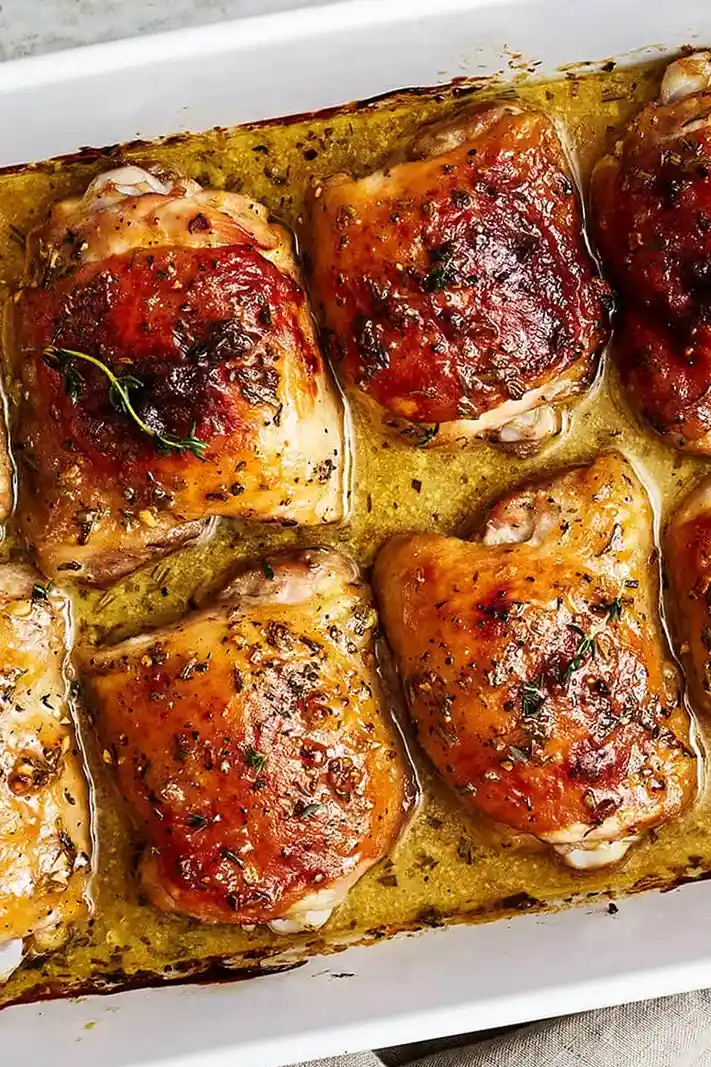
This baked honey mustard chicken provides a perfect balance of sweet and savory flavors with an aromatic herb finish. It is a practical, one-dish meal that is ideal for busy weeknights or organized meal prep.
List of ingredients
- 8 bone-in chicken thighs – skin-on is recommended for the best texture.
- 1/4 cup honey – provides the primary sweetness and helps with glazing.
- 1/4 cup Dijon mustard – adds a tangy, sharp contrast to the honey.
- 2 garlic cloves, minced – adds depth and pungent flavor.
- 1 tablespoon extra-virgin olive oil – helps the sauce adhere and promotes browning.
- 1 1/2 teaspoons finely chopped fresh rosemary – adds a woody, pine-like aroma.
- 1 1/2 teaspoons finely chopped fresh thyme – provides a subtle earthy note.
- 1/2 teaspoon kosher salt – enhances all the existing flavors.
- 1/4 teaspoon freshly ground black pepper – adds a mild heat and spice.
step-by-step instructions
- Prepare the Oven and Chicken: Preheat your oven to 350°F (177°C). Arrange the chicken thighs in a baking dish and pat the skin completely dry with paper towels to ensure maximum crispiness.
- Mix the Glaze: In a small mixing bowl, stir together the honey, Dijon mustard, minced garlic, olive oil, chopped rosemary, chopped thyme, salt, and pepper until the mixture is smooth and combined.
- Apply the Sauce: Use a brush or spoon to liberally coat the top and sides of each chicken thigh with the honey mustard mixture.
- Bake: Place the dish in the oven and bake for 40 to 45 minutes. The chicken is done when it reaches an internal temperature of 175°F (80°C).
- Crisp the Skin: For an extra golden-brown finish, turn on the oven broiler for the final 2 to 3 minutes of cooking, monitoring closely to prevent burning.
Pro Tips for Optimal Results
Ensure the Chicken Skin is Completely Dry
Moisture on the surface of the chicken creates steam, which prevents the skin from crisping. Patting the thighs with paper towels before applying the glaze allows the heat to sear the skin more effectively.
Use a Digital Meat Thermometer
Checking the internal temperature is the only way to guarantee the chicken is cooked safely without overdoing it. Aim for 175°F for thighs, as this higher temperature than breasts helps break down connective tissue for a more tender result.
Rotate the Baking Dish
Many ovens have hot spots that can cause one side of the chicken to brown faster than the other. Rotate your baking dish 180 degrees halfway through the cooking process for an even golden color.
Allow the Meat to Rest
Let the chicken rest for 5 to 10 minutes after removing it from the oven. This allows the juices to redistribute throughout the meat, ensuring each bite remains moist and succulent.
Ingredient Substitutions
Replacing Fresh Herbs with Dried
If fresh rosemary and thyme are unavailable, you can use dried versions. Use a ratio of one-third the amount of dried herbs, or simply use 1 teaspoon of a quality Italian herb blend.
Alternative Mustard Options
While Dijon provides a specific sharp tang, you can use whole grain mustard for a more rustic texture. Honey mustard from a bottle can work in a pinch, though you will need to reduce the added honey in the recipe.
Sweetener Alternatives
Pure maple syrup or agave nectar can be used as a substitute for honey. These options provide a similar viscosity and sweetness, though they may slightly alter the final flavor profile.
Using Boneless Thighs
You can use boneless, skinless chicken thighs, but the cooking time will decrease by approximately 10 to 15 minutes. Be careful not to overcook them, as they lack the protective bone and skin.
Flavor Variations
Adding a Spicy Element
For those who prefer a bit of heat, stir in a pinch of cayenne pepper or a teaspoon of sriracha into the glaze. This creates a sweet-and-spicy profile that complements the richness of the chicken thighs.
Incorporating Citrus Notes
Squeeze a tablespoon of fresh lemon juice into the honey mustard mixture. The acidity of the lemon cuts through the sweetness of the honey and brightens the overall flavor of the dish.
Smoky Paprika Twist
Adding half a teaspoon of smoked paprika to the sauce introduces a deep, woody flavor. This gives the chicken a taste reminiscent of grilling even when it is prepared in the oven.
Garlic Intensity Boost
If you enjoy a strong garlic presence, increase the amount to three or four cloves. You can also add a teaspoon of garlic powder to the salt and pepper mix for a more concentrated flavor.
Recommended Side Dish Pairings
Fresh and Crisp Vegetable Sides
A vinegar-based coleslaw or a crisp cucumber salad provides a refreshing contrast to the rich glaze. The acidity in these salads helps cleanse the palate between bites of the savory chicken.
Hearty Starch Options
Classic mashed potatoes or roasted garlic herb potatoes are excellent for soaking up the extra honey mustard sauce from the pan. For a lighter version, try mashed cauliflower.
Roasted Green Vegetables
Broccoli or Brussels sprouts roasted on a separate sheet pan pair naturally with this meal. Toss them in olive oil, salt, and pepper, and roast them at the same temperature as the chicken.
Light Leafy Salads
A massaged kale salad with a light lemon vinaigrette or a traditional Israeli salad adds a healthy, fresh element to the plate. These options balance the sweetness of the honey glaze.
Storage and Reheating Advice
Refrigeration Guidelines
Store leftover chicken in an airtight container in the refrigerator for 4 to 5 days. Ensure the chicken is cooled slightly before sealing the container to prevent excessive moisture buildup.
Freezing for Long Term
Leftover thighs can be frozen in freezer-safe bags or containers for up to 3 months. Thaw them slowly in the refrigerator overnight before reheating to maintain the best texture.
Reheating for Maximum Crispiness
Avoid the microwave if you want to preserve the skin’s texture. Instead, reheat the chicken in an air fryer or oven at 350°F until warmed through and the skin sizzles.
Managing Sauce During Reheat
If the chicken seems dry when reheating, brush a small amount of additional honey and mustard on top. This refreshes the glaze and adds a new layer of moisture.
Make-Ahead Strategies
Preparing the Glaze in Advance
The honey mustard sauce can be whisked together up to 24 hours before cooking. Store it in a sealed jar in the fridge and shake well before applying it to the chicken.
Marinating the Chicken
You can apply the glaze to the chicken and let it marinate in the refrigerator for several hours. This allows the herbs and garlic to penetrate deeper into the meat for more intense flavor.
Pre-portioning for Meal Prep
Once cooked and cooled, divide the chicken and your chosen side dishes into individual containers. This makes for a convenient, high-protein lunch that tastes great cold or reheated.
Troubleshooting Common Issues
Why is the Skin Not Crispy?
The most common cause is excess moisture on the skin or overcrowding the baking dish. Ensure the thighs have space between them to allow air to circulate and always pat them dry first.
Preventing the Sauce from Burning
Because honey contains natural sugars, it can burn if the heat is too high or the broiler is left on too long. Keep a close eye on the chicken during the final broiling phase.
Handling Undercooked Chicken
If the chicken hasn’t reached 175°F by 45 minutes, continue baking in 5-minute increments. Thicker thighs may require additional time depending on the oven’s efficiency.
Dealing with Excess Pan Liquid
If too much liquid collects in the pan, you can pour it into a small saucepan and simmer it over medium heat. This reduces the liquid into a thick, concentrated syrup for drizzling.
Frequently Asked Questions
Can I use skinless thighs?
Yes, you can use skinless thighs, but be aware that the meat may dry out faster. Reduce the baking time by 5 to 10 minutes and consider using a slightly more generous amount of glaze.
Is the oven temperature critical?
Yes, 350°F is the ideal balance for cooking the meat through while allowing the sugars in the honey to caramelize without burning. Higher temperatures may burn the glaze before the center is cooked.
How do I know when the chicken is safe to eat?
The chicken is safe when it reaches an internal temperature of 165°F, but thighs are best at 175°F. Use a meat thermometer in the thickest part of the thigh, avoiding the bone.
Can I make this in a slow cooker?
While possible, the skin will not be crispy in a slow cooker. Cook on low for 6-7 hours, then transfer the thighs to a baking sheet and broil them for 3 minutes to crisp the skin.
Print
Herbed Honey Mustard Roasted Chicken Thighs
- Total Time: 55 minutes
- Yield: 8 pieces 1x
- Diet: General
Description
These baked honey mustard chicken thighs are just what you need to jazz up weeknight dinners!
Ingredients
- 8 bone-in chicken thighs
- ¼ cup honey
- ¼ cup Dijon mustard
- 2 garlic cloves (minced)
- 1 tablespoon extra-virgin olive oil
- 1 ½ teaspoons finely chopped fresh rosemary
- 1 ½ teaspoons finely chopped fresh thyme
- ½ teaspoon kosher salt
- ¼ teaspoon freshly ground black pepper
Instructions
- Step: Preheat the oven to 350°F (177°C). Place the chicken in a baking dish and pat dry with a paper towel.
- Step: In a small bowl, stir together the honey, mustard, garlic, oil, rosemary, thyme, salt, and pepper.
- Step: Brush or spoon the honey mustard mixture liberally on top of the chicken.
- Step: Bake for 40 to 45 minutes or until the chicken is fully cooked and registers 175°F (80°C). Turn on the top oven broiler in the last 2 to 3 minutes to crisp up the skin.
Notes
If you don’t have fresh herbs you can use 1 teaspoon total of dried herbs. An Italian herb blend works great as well!
- Prep Time: 15 minutes
- Cook Time: 40 minutes
- Category: Main Course
- Method: Baking
- Cuisine: American
Nutrition
- Serving Size: 1 piece
- Calories: 371 kcal
- Sugar: 9 g
- Sodium: 343 mg
- Fat: 26 g
- Saturated Fat: 7 g
- Unsaturated Fat: 16 g
- Trans Fat: 0.1 g
- Carbohydrates: 10 g
- Fiber: 0.4 g
- Protein: 24 g
- Cholesterol: 142 mg