
This nutritious chicken and stars soup is a quick meal that uses simple pantry staples to create a comforting broth. It is an ideal choice for those seeking a wholesome, homemade alternative to canned soups.
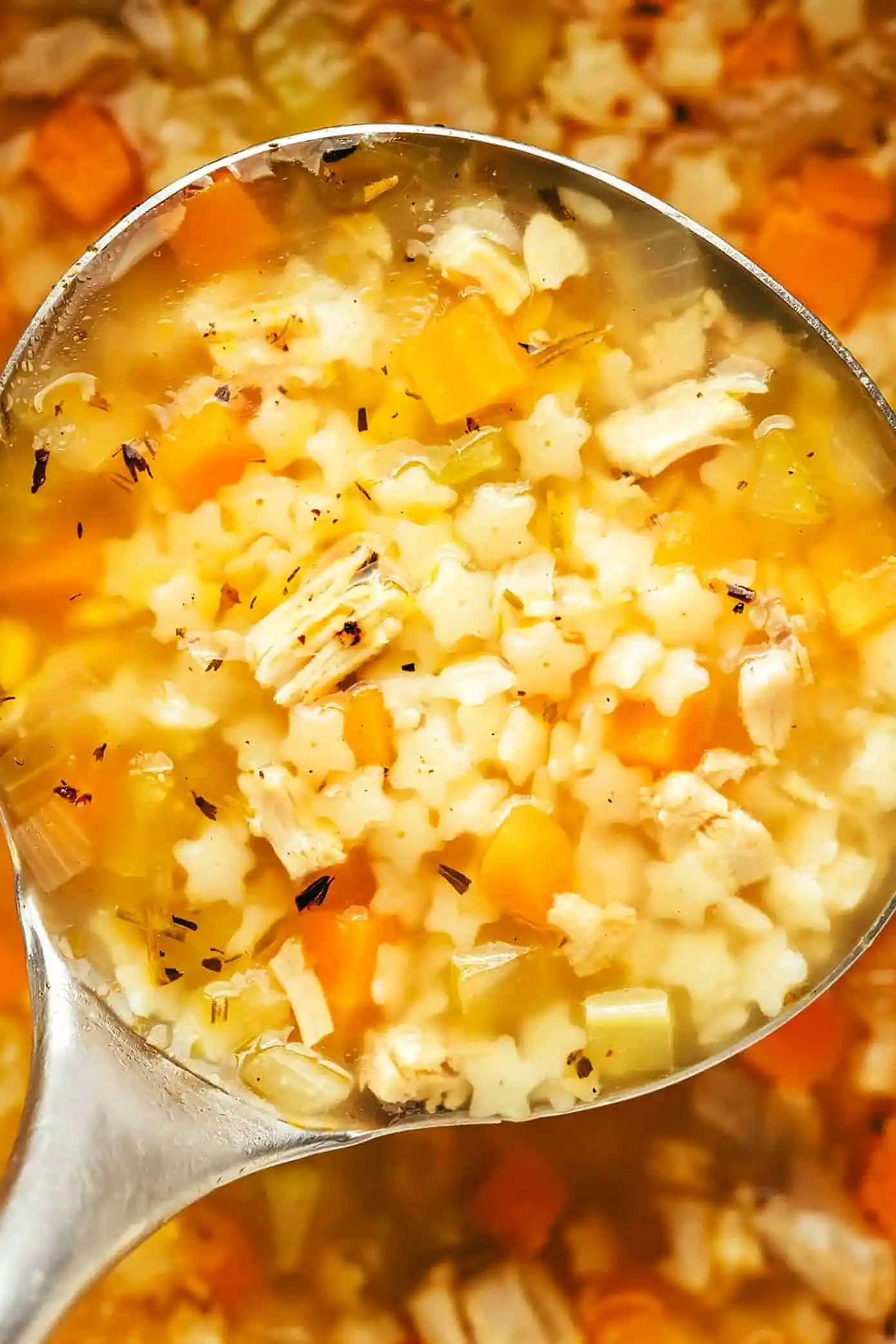
List of ingredients
- 1 tablespoon olive oil – used for sautéing the vegetables.
- 1 small white onion – finely diced for a sweet base.
- 2 carrots – diced into small, uniform pieces.
- 2 stalks celery – diced to match the size of the carrots.
- 2 cloves garlic – minced finely to release aromatic oils.
- 8 cups good-quality chicken stock – provides the savory liquid base.
- 2 cups finely-chopped cooked chicken – pre-cooked breast or thigh meat.
- 2 bay leaves – added for a deep, herbal aroma.
- 1/2 teaspoon dried rosemary – adds an earthy, pine-like flavor.
- 1/2 teaspoon dried thyme – provides a subtle lemony, minty note.
- 1/4 teaspoon crushed red pepper flakes – adds a very mild heat.
- 1 cup uncooked stelline (star-shaped pasta) – traditional small pasta.
- fine sea salt and freshly-ground black pepper – for seasoning to taste.
- optional garnishes: freshly-grated Parmesan (made with microbial rennet), lemon wedge, and/or chopped fresh parsley.
step-by-step instructions
- Sauté the mirepoix: Heat the olive oil in a large stockpot over medium-high heat. Add the diced onion, carrots, and celery, sautéing for about 5 minutes while stirring occasionally. Stir in the minced garlic and cook for another 2 minutes, stirring frequently to prevent burning.
- Simmer the base: Pour in the chicken stock and add the chopped cooked chicken, bay leaves, rosemary, thyme, and crushed red pepper flakes. Stir well to combine all ingredients and bring the broth to a simmer. Add the uncooked stelline pasta and cook, stirring often, until the pasta reaches an al dente texture.
- Season the soup: Locate and remove the bay leaves, then discard them. Taste the broth and add sea salt and black pepper, or additional dried herbs, until the flavor is balanced.
- Serve: Ladle the soup into bowls while hot. Garnish with grated Parmesan, a squeeze of fresh lemon juice, or chopped parsley before serving.
Pro Cooking Techniques for Best Results
Use Uniformly Diced Vegetables
Cutting the onion, carrots, and celery into small, equal-sized pieces ensures they cook at the same rate. This prevents some vegetables from becoming mushy while others remain raw. Small dices also fit better with the size of the star pasta.
Control the Garlic Sauté
Garlic burns much faster than onions and carrots. Adding it only during the last two minutes of sautéing prevents bitterness. Stir frequently to ensure the garlic browns slightly without scorching.
Manage Pasta Starch
Stirring the pasta frequently prevents the stelline from sticking to the bottom of the pot. It also helps release a small amount of starch into the broth, which slightly thickens the soup for a richer mouthfeel.
Optimize the Simmer
Keep the liquid at a gentle simmer rather than a rolling boil after adding the pasta. Excessive heat can break the small pasta shapes and cause the chicken to overcook and become tough.
Recommended Ingredient Substitutions
Alternative Small Pasta Shapes
If stelline is unavailable, orzo or ditalini are excellent replacements. Acini di pepe is another small pasta that works well, though it may cook faster than stelline. Adjust cooking times based on the specific pasta package instructions.
Substituting Fresh Herbs for Dried
You can replace dried rosemary and thyme with fresh versions for a brighter taste. Use one tablespoon of fresh chopped herbs for every teaspoon of dried herbs. Add fresh herbs toward the end of the simmering process to preserve their volatile oils.
Using Different Chicken Cuts
While chopped breast is lean, using shredded chicken thighs adds more flavor and moisture. For the best results, use chicken that has been poached or roasted. Avoid using heavily seasoned pre-cooked chicken to keep the broth flavor clean.
Vegetable Variations
Parsnips or turnips can be added along with the carrots for a different root vegetable profile. Fresh spinach or kale can be stirred in during the last minute of cooking for added nutrients. These additions provide a variety of textures and colors to the dish.
Flavor Enhancement and Variations
Adding a Bright Acidic Note
Squeezing a fresh lemon wedge into the bowl just before eating cuts through the richness of the stock. This acidity enhances the savory notes of the chicken and herbs. Lemon zest can also be stirred in for a more intense citrus aroma.
Creating a Creamier Broth
For a creamier consistency, stir in two tablespoons of heavy cream or a dollop of Greek yogurt at the very end. This changes the profile from a clear broth to a velvety soup. Ensure the soup is not boiling when adding dairy to prevent curdling.
Adjusting the Spice Level
Increase the crushed red pepper flakes to a half teaspoon if you prefer a noticeable kick. For a deeper warmth without sharp heat, add a pinch of ground white pepper. This adds a subtle pungency that complements the rosemary.
Enhancing the Savory Depth
Adding a teaspoon of tomato paste during the sautéing phase adds umami and a slight golden hue to the broth. Another option is to add a small piece of kombu or a pinch of nutritional yeast for extra depth. These additions intensify the savory characteristics of the chicken stock.
Storage and Reheating Guide
Refrigeration and Shelf Life
Store the soup in airtight containers in the refrigerator for up to four days. Keep the broth and pasta together, but be aware that the pasta will continue to absorb liquid over time. This often results in a thicker consistency upon cooling.
Freezing Best Practices
Freeze the broth, vegetables, and chicken, but omit the cooked pasta. Cooked pasta tends to become mushy and disintegrate when frozen and thawed. When reheating the frozen base, simply boil it and add fresh pasta at the end.
Reheating Without Mushy Pasta
When reheating, add a splash of water or extra chicken stock to compensate for the liquid absorbed by the pasta. Heat the soup slowly over medium-low heat. Avoid over-boiling the soup during reheating to maintain the pasta’s structural integrity.
Preventing Liquid Loss
If the soup becomes too thick after storage, whisk in a small amount of warm stock before heating. This restores the original soup-to-solid ratio. Adding a small knob of butter during reheating can also refresh the mouthfeel.
Make-Ahead Advice
Prepping the Mirepoix
Dice the onion, carrots, and celery a day in advance and store them in a sealed container. This reduces the active prep time on the day of cooking. Keep the garlic separate and mince it fresh for maximum potency.
Preparing the Broth Base
Cook the soup up until the point where the stock reaches a simmer, then cool and store it. When you are ready to eat, bring the base to a boil and then add the pasta. This ensures the pasta is perfectly al dente every time.
Batch Cooking and Portioning
Make a large batch of the vegetable and chicken base and freeze it in individual portions. Each portion can then be combined with a handful of fresh pasta for a quick meal. This is an efficient way to manage weekday dinner prep.
Troubleshooting Common Issues
What to do if the soup is too thick?
If the pasta absorbed too much liquid, stir in additional chicken stock or water. Add the liquid gradually while simmering until the desired consistency is reached. This is common when the soup sits for several hours.
How to fix overcooked pasta?
Once pasta is overcooked, it cannot be reversed. To prevent this in the future, cook the pasta in a separate pot and add it to the bowls just before pouring the broth. This allows for precise control over the pasta texture.
What to do if the broth lacks flavor?
If the soup tastes bland, increase the amount of salt or add a teaspoon of soy sauce for umami. A small amount of lemon juice can also wake up the other flavors. Ensure you are using a high-quality, seasoned chicken stock.
How to manage excessive saltiness?
If the stock was too salty, add a peeled, halved potato and simmer it for 10 minutes to absorb some salt. Alternatively, dilute the soup with a bit of unsalted water or more unsalted stock. Adding a splash of cream can also help neutralize the salt.
Frequently Asked Questions
How do I keep the broth clear?
Skim any foam that rises to the surface when the stock first reaches a simmer. Avoid boiling the soup vigorously, as this can emulsify fats and cloud the liquid. Using a fine-mesh strainer on homemade stock also helps.
Can I use frozen chicken?
Yes, but ensure the chicken is fully thawed and patted dry before adding it to the soup. Adding frozen chunks of meat can drop the temperature of the broth too quickly and affect the cooking time of the pasta.
What is the best pot for this soup?
A heavy-bottomed stockpot or Dutch oven is ideal because it distributes heat evenly. This prevents the vegetables and garlic from scorching on the bottom. A pot with a tight-fitting lid helps maintain a steady simmer.
How long does the soup stay fresh?
The soup remains safe and tasty in the refrigerator for about 3 to 4 days. If you notice a change in smell or the broth becomes excessively cloudy, discard it. Always store the soup in shallow containers for faster and more even cooling.
Print
Homemade Chicken and Stars Soup
- Total Time: 40 minutes
- Yield: 6–8 servings 1x
- Diet: General
Description
For anyone else who loved Chicken and Stars Soup as a kid like I did, here is the all-natural homemade version that tastes even better! Plus it’s quick and easy to make, and so delicious.
Ingredients
- 1 tablespoon olive oil
- 1 small white onion
- 2 carrots, diced
- 2 stalks celery, diced
- 2 cloves garlic, minced
- 8 cups good-quality chicken stock
- 2 cups finely-chopped cooked chicken
- 2 bay leaves
- 1/2 teaspoon dried rosemary
- 1/2 teaspoon dried thyme
- 1/4 teaspoon crushed red pepper flakes
- 1 cup uncooked stelline (star-shaped pasta)
- fine sea salt and freshly-ground black pepper
- optional garnishes: freshly-grated microbial-rennet Parmesan, lemon wedge, and/or chopped fresh parsley
Instructions
- Sauté the mirepoix: Heat the oil in a large stockpot over medium-high heat. Add the onion, carrots, celery and sauté for 5 minutes, stirring occasionally. Add the garlic and sauté for 2 minutes, stirring frequently.
- Simmer: Add the chicken stock, chicken, bay leaves, rosemary, thyme, crushed red pepper flakes and stir to combine. Continue cooking until the broth reaches a simmer. Add the pasta and cook, stirring frequently, until it is al dente.
- Season: Remove and discard the bay leaves. Taste and season the soup with salt and pepper (and/or additional herbs) as needed.
- Serve: Serve warm with your desired garnishes and enjoy!
Notes
All-natural homemade version of a childhood favorite.
- Prep Time: 10 minutes
- Cook Time: 30 minutes
- Category: Soup
- Method: Stovetop
- Cuisine: American
Nutrition
- Serving Size: 1 serving
- Calories: 250 kcal
- Sugar: 4 g
- Sodium: 820 mg
- Fat: 7 g
- Saturated Fat: 2 g
- Unsaturated Fat: 5 g
- Trans Fat: 0 g
- Carbohydrates: 22 g
- Fiber: 3 g
- Protein: 18 g
- Cholesterol: 45 mg