
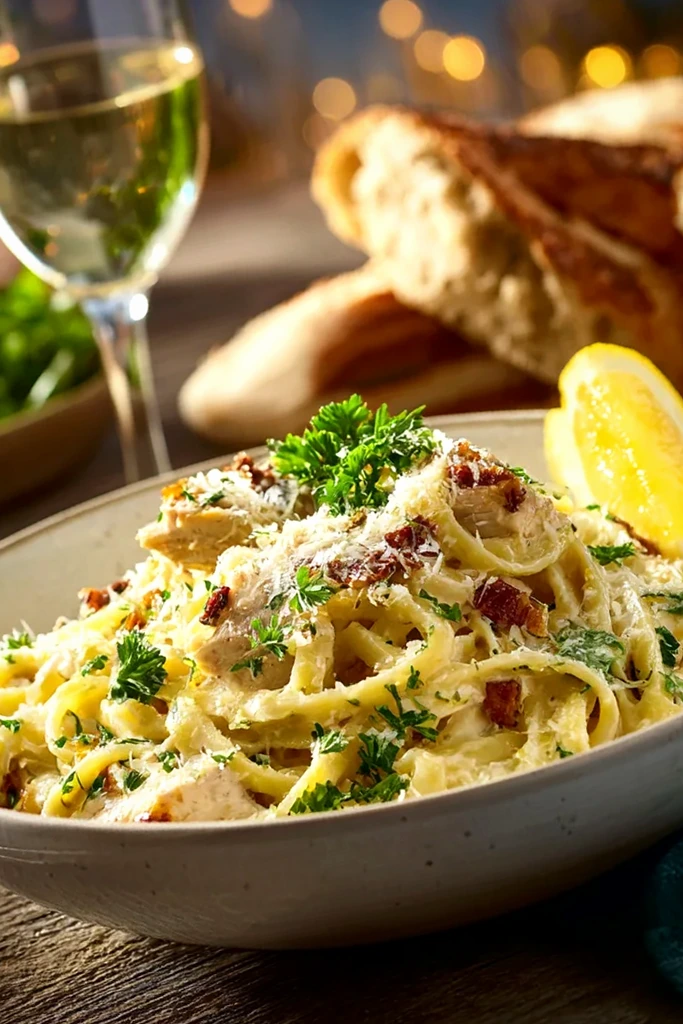
This comforting pasta dish combines tender strips of chicken with a silky, rich sauce made from eggs and sharp cheese. It is the perfect weeknight solution when you want a restaurant-quality meal that comes together in under thirty minutes. The technique relies on the heat of the freshly cooked pasta to create a luxurious coating, resulting in a balanced and satisfying dinner that is sure to please your entire family.
List of ingredients
- 340 g (12 oz) spaghetti or fettuccine
- 2 medium chicken breasts, sliced into thin strips
- 120 g (4 oz) cured turkey strips, diced
- 2 tbsp olive oil (divided)
- 3 large eggs
- 2 large egg yolks
- 1 cup freshly grated Parmesan or Pecorino Romano
- 3–4 cloves garlic, minced
- Salt and black pepper to taste
- ½ –¾ cup reserved hot pasta water
- Fresh parsley, chopped, for garnish
- Optional: ½ cup frozen peas
- Optional: 1 tsp lemon zest
step-by-step instructions
- Step: Bring a large pot of salted water to a boil. Cook pasta until al dente. Reserve 1 cup pasta water, then drain.
- Step: In a large skillet, cook cured turkey in 1 tbsp olive oil over medium heat until crisp. Remove and set aside, leaving 1–2 tbsp fat in the pan.
- Step: Add remaining olive oil if needed, then add chicken. Season with salt and pepper. Cook 5–7 minutes, until golden and cooked through. Add garlic in the last minute and cook until fragrant. Remove skillet from heat.
- Step: In a bowl, whisk together eggs, egg yolks, and grated cheese. Season with black pepper and a pinch of salt. Loosen with a splash of warm pasta water if needed.
- Step: Add hot drained pasta to the skillet with chicken and garlic. Toss to combine and let rest 30–60 seconds off the heat.
- Step: Pour in the egg-cheese mixture, tossing quickly with tongs. Add reserved pasta water, a little at a time, until sauce is creamy and coats the pasta.
- Step: Stir in crispy cured turkey and optional peas. Adjust seasoning, then finish with parsley and optional lemon zest.
- Step: Serve immediately with extra Parmesan and black pepper.
Refining Your Technique
Achieving the Perfect Sauce Consistency
The secret to a successful sauce is all about temperature management and emulsification. If the skillet is too hot when you add the eggs, you risk scrambling them instead of creating a creamy glaze. Always remove the pan from the direct heat source and let the pasta cool slightly before introducing the egg mixture. Using the starchy pasta water is the most important factor in bringing the eggs and cheese together into a cohesive, silky coating.
Balancing the Flavor Profile
While this dish is naturally rich, you can easily balance the flavor to ensure every bite is exciting. If you find the pasta is feeling too heavy, ensure you are generous with the freshly cracked black pepper, as the spice helps cut through the fats. Adding the lemon zest at the very end is another excellent way to add a bright, acidic spark that makes the dish feel lighter and more sophisticated.
Selecting High-Quality Components
Why Freshly Grated Cheese Matters
For the best possible results, always grate your Parmesan or Pecorino Romano by hand from a block. Pre-grated products are often coated in anti-caking agents that can prevent the cheese from melting into the sauce properly, leading to a gritty or grainy texture. Freshly grated cheese melts consistently and provides a much more robust, authentic salty bite that defines the quality of your finished meal.
The Role of Pasta Texture
The type of pasta you choose can influence how well the sauce clings to your noodles. Look for pasta varieties labeled as bronze-cut, which have a naturally rougher surface. This textured exterior acts like a sponge, allowing the creamy egg and cheese sauce to adhere firmly to every single strand, ensuring that you get plenty of flavor in every forkful.
Common Adjustments and Modifications
Swapping Pasta Varieties
While long noodles like spaghetti or fettuccine are traditional, you can certainly experiment with other shapes. Linguine works wonderfully, as does bucatini, which adds a bit of extra chew. If you are serving children or prefer smaller bites, short pasta shapes like penne or fusilli are also effective, though they require a bit more sauce to ensure they are fully coated compared to longer noodles.
Enhancing the Protein Element
If you prefer a different texture for your protein, consider using chicken thighs instead of breasts. Thigh meat is generally more forgiving during the cooking process and stays juicy even if you accidentally leave it in the pan for an extra minute. Simply trim away any excess fat and slice the thighs into thin, bite-sized pieces before sautéing them in the same manner as the chicken breast strips.
Serving and Storage Suggestions
Effective Reheating Methods
Because the sauce is based on eggs, it can be sensitive to intense heat during reheating. To restore leftovers, place your portion in a nonstick pan over very low heat with a small splash of water or milk. Gently stir the pasta until it becomes warm and creamy again, avoiding the microwave, which often heats unevenly and can cause the egg proteins to separate or toughen quickly.
Hosting and Presentation Tips
When serving this for guests, focus on the presentation by twirling the pasta into high, tight mounds on each plate using a carving fork. A final dusting of freshly grated cheese and a few extra cracks of black pepper create a clean, professional look. Serving the pasta alongside a bright, acidic side dish like a lemon-dressed arugula salad helps cleanse the palate and makes the dining experience feel complete.
Addressing Frequent Inquiries
How can I make the dish vegetarian-friendly?
You can easily substitute the chicken with heartier vegetables such as sautéed mushrooms or roasted cauliflower florets. These additions provide a savory, umami flavor that mimics the depth of chicken while maintaining the luxurious texture of the creamy sauce. Ensure you brown the mushrooms well in the initial step to replicate that necessary roasted aroma.
What should I do if the sauce is too thick?
If your pasta absorbs the sauce too quickly, simply add another tablespoon or two of warm pasta water. The key is to keep the pasta water hot, as this helps maintain the emulsion. Adding small amounts at a time while tossing allows you to maintain total control over the viscosity, ensuring the dish remains perfectly silky rather than stiff or dry.
Can I prepare the ingredients in advance?
You can definitely do the heavy lifting beforehand to make the cooking process a breeze. Chop your chicken, mince the garlic, grate the cheese, and whisk the eggs into a container ahead of time. When you are ready to eat, all you need to do is boil the water and sear the chicken, which takes significantly less than fifteen minutes, making this an ideal choice for busy weeknight schedules.
Print
Irresistible Creamy Chicken Pasta
- Total Time: PT30M
- Yield: 4 servings 1x
- Diet: High Protein
Description
A creamy, comforting Chicken Carbonara made with tender chicken, savory cured turkey bits, and a silky egg and Parmesan sauce, ready in about 30 minutes.
Ingredients
- 340 g (12 oz) spaghetti or fettuccine
- 2 medium chicken breasts, sliced into thin strips
- 120 g (4 oz) cured turkey strips, diced
- 2 tbsp olive oil (divided)
- 3 large eggs
- 2 large egg yolks
- 1 cup freshly grated Parmesan or Pecorino Romano
- 3–4 cloves garlic, minced
- Salt and black pepper to taste
- ½ –¾ cup reserved hot pasta water
- Fresh parsley, chopped, for garnish
- Optional: ½ cup frozen peas
- Optional: 1 tsp lemon zest
Instructions
- Step: Bring a large pot of salted water to a boil. Cook pasta until al dente. Reserve 1 cup pasta water, then drain.
- Step: In a large skillet, cook cured turkey in 1 tbsp olive oil over medium heat until crisp. Remove and set aside, leaving 1–2 tbsp fat in the pan.
- Step: Add remaining olive oil if needed, then add chicken. Season with salt and pepper. Cook 5–7 minutes, until golden and cooked through. Add garlic in the last minute and cook until fragrant. Remove skillet from heat.
- Step: In a bowl, whisk together eggs, egg yolks, and grated cheese. Season with black pepper and a pinch of salt. Loosen with a splash of warm pasta water if needed.
- Step: Add hot drained pasta to the skillet with chicken and garlic. Toss to combine and let rest 30–60 seconds off the heat.
- Step: Pour in the egg-cheese mixture, tossing quickly with tongs. Add reserved pasta water, a little at a time, until sauce is creamy and coats the pasta.
- Step: Stir in crispy cured turkey and optional peas. Adjust seasoning, then finish with parsley and optional lemon zest.
- Step: Serve immediately with extra Parmesan and black pepper.
Notes
Always remove the skillet from the heat before adding the egg mixture to prevent scrambling. Using fresh pasta water is the secret to emulsifying the sauce for a velvety finish.
- Prep Time: PT10M
- Cook Time: PT20M
- Category: Dinner
- Method: Stovetop
- Cuisine: Italian
Nutrition
- Serving Size: 1 serving
- Calories: 720 kcal
- Sugar: 2 g
- Sodium: 850 mg
- Fat: 30 g
- Saturated Fat: 9 g
- Unsaturated Fat: 18 g
- Trans Fat: 0 g
- Carbohydrates: 70 g
- Fiber: 3 g
- Protein: 40 g
- Cholesterol: 210 mg