
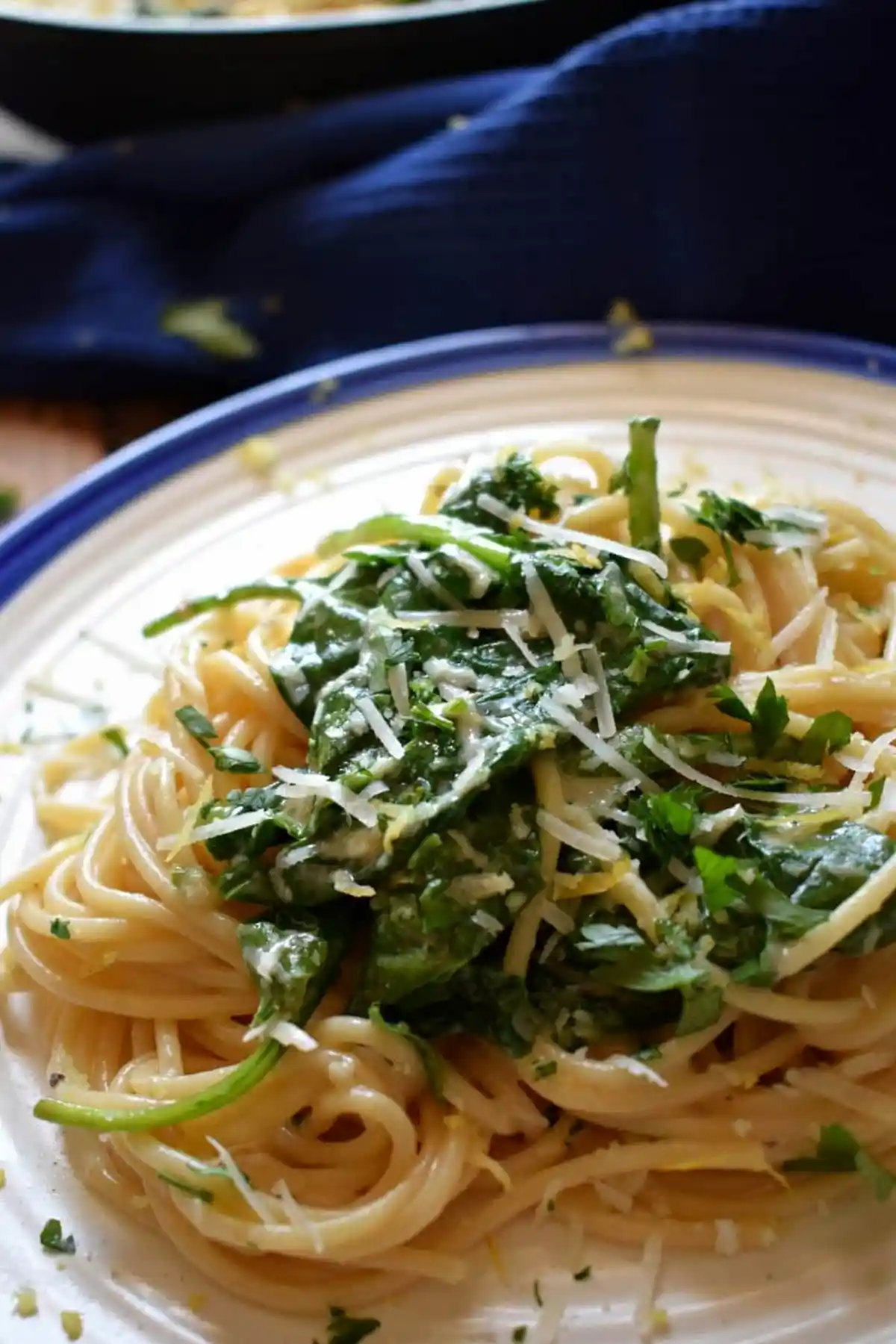
This vibrant Lemon Pasta with Spinach offers a perfect balance of zesty citrus notes and creamy, savory depths. It is an ideal solution for busy weeknights when you desire a sophisticated, restaurant-quality meal in under thirty minutes. The combination of fresh greens and bright lemon creates a light, refreshing experience that is as comforting as it is elegant.
List of ingredients
- 8 oz spaghetti
- 3 cups fresh spinach
- 1/2 onion, peeled and finely chopped
- 3 garlic cloves, crushed
- 1 cup cooking cream
- 1 cup grated parmesan
- 1 cup vegetable stock
- 1 cup reserved pasta water
- Juice and zest of one lemon
- 1 bunch freshly chopped parsley
- 2 tablespoons butter
- 2 tablespoons olive oil
- 1 dried chili
- 1 bay leaf
- 1/2 teaspoon salt
- 1/2 teaspoon black pepper
step-by-step instructions
- Step: In a large deep sided skillet set over medium heat, add the olive oil, garlic, chili and bay leaf. Give a good stir for about a minute until the garlic is fragrant.
- Step: Add the onions and cook, stirring occasionally, for about 5 minutes.
- Step: In a large pot of boiling water, add spaghetti and cook to instructions on the pack. When cooked, remove and drain. Reserve about 1 cup/240 ml of pasta water.
- Step: Increase heat to high, add the vegetable stock and bring to a simmer. Allow it to reduce about 3 minutes. Pour in the cooking cream and stir well and bring back to a gentle simmer.
- Step: Pour in the lemon juice and then the spaghetti. Give a really good stir around.
- Step: Add in a cup/240 ml of pasta water, the butter, cheese, lemon zest, the fresh spinach, parsley, salt and pepper. and give a really good stir.
- Step: Serve immediately. Can garnish with extra parmesan and parsley if desired.
Refining your technique
Prioritizing citrus extraction
Always remember to zest your lemon before you attempt to juice it. Once the peel is broken or the fruit is squeezed, it becomes significantly more difficult to obtain clean ribbons of zest, which are crucial for the final aromatic punch of the dish.
Starch management for perfect sauces
The reserved pasta water is your most important tool in this recipe. The dissolved starches from the boiling process act as an emulsifier, helping the cream and cheese bind to the spaghetti instead of sliding off the noodles.
Synchronizing the kitchen timeline
To keep the total time under thirty minutes, start boiling your pasta water as soon as you finish chopping your vegetables. Since the sauce base only takes about ten minutes to assemble, you can time the draining of the spaghetti to coincide perfectly with the reduction of your vegetable stock.
Customizing flavor profiles
Modifying pasta varieties
While spaghetti is the traditional choice for this recipe, you are not limited to long strands. Tubular shapes like penne or ridges like fusilli are excellent at trapping bits of spinach and sauce in their crevices, providing a different eating experience that works equally well.
Selecting alternative cheeses
If you prefer a milder flavor profile or are looking for something different, consider using aged Gouda or Emmental instead of parmesan. These cheeses melt beautifully into the cream sauce and offer a slightly nutty contrast to the sharpness of the lemon juice.
Adjusting the spice levels
The dried chili is intended only to provide a whisper of warmth rather than significant heat. If you or your guests are sensitive to spice, you can safely omit the chili entirely without altering the overall structural integrity of the sauce.
Smart serving suggestions
Presenting at the table
This dish performs best in wide, shallow bowls which allow the cream sauce to pool slightly at the base. Warming your bowls in the oven at a low setting for a few minutes before plating helps maintain the creamy texture of the sauce for the duration of the meal.
Adding fresh garnishes
Beyond the recommended parsley and parmesan, consider finishing the dish with a few toasted pine nuts or a sprinkle of toasted breadcrumbs. These additions provide a delightful, crunchy contrast to the soft, velvety texture of the sauced spaghetti.
Storage and reheating strategy
Managing leftovers properly
Because the sauce contains cream and cheese, it is best enjoyed immediately. If you have leftovers, allow them to cool completely before transferring them to an airtight container and storing them in the refrigerator for up to two days.
Reviving the sauce texture
When reheating, the sauce may appear slightly absorbed or thickened. Add a splash of water or a tiny bit of cream to the skillet while warming it over medium-low heat to restore the desired consistency. Avoid high heat during the reheating process, as it can cause the cream to separate or the cheese to become gritty.
Frequently Asked Questions
Is adding fresh spinach to pasta a nutritious choice?
Spinach is a nutrient-dense vegetable that introduces vitamin A and various antioxidants to your meal. Incorporating it into a pasta dish is an effective way to boost the overall nutritional profile of your dinner without compromising the flavor or comfort factor.
How does lemon juice affect the consistency of the sauce?
The acidity in lemon juice can act to brighten the heavy cream, but it is important to add it toward the end of the cooking process. Adding it too early while the cream is boiling can lead to premature curdling, so stir it in gently once the sauce has already reached its desired base thickness.
Can this dish be prepared in advance?
You can certainly chop all your vegetables, grate your cheese, and zest your lemons ahead of time to save on active kitchen minutes. However, the final assembly and cooking of the pasta should occur right before service to ensure the best texture for the sauce and the freshness of the spinach.
What is the benefit of using a deep-sided skillet?
A deep-sided skillet provides ample surface area for the aromatics to sauté evenly while offering enough depth to toss the pasta and sauce together without spilling. It ensures that every strand of spaghetti receives equal coverage from the creamy lemon mixture.
Print
Lemon Pasta with Spinach
- Total Time: 25 minutes
- Yield: 4 servings 1x
- Diet: Vegetarian
Description
Super simple pasta! Sometimes simple is best and it doesn’t get a whole lot easier than this Lemon Pasta with Spinach. On the table under half an hour and makes for the perfect spring time dinner or even lunch.
Ingredients
- 8 oz spaghetti
- 3 cups fresh spinach
- 1/2 onion, peeled and finely chopped
- 3 garlic cloves, crushed
- 1 cup cooking cream
- 1 cup grated parmesan
- 1 cup vegetable stock
- 1 cup reserved pasta water
- Juice and zest of one lemon
- 1 bunch freshly chopped parsley
- 2 tablespoons butter
- 2 tablespoons olive oil
- 1 dried chili
- 1 bay leaf
- 1/2 teaspoon salt
- 1/2 teaspoon black pepper
Instructions
- Step: In a large deep sided skillet set over medium heat, add the olive oil, garlic, chili and bay leaf. Give a good stir for about a minute until the garlic is fragrant.
- Step: Add the onions and cook, stirring occasionally, for about 5 minutes.
- Step: In a large pot of boiling water, add spaghetti and cook to instructions on the pack. When cooked, remove and drain. Reserve about 1 cup/240 ml of pasta water.
- Step: Increase heat to high, add the vegetable stock and bring to a simmer. Allow it to reduce about 3 minutes. Pour in the cooking cream and stir well and bring back to a gentle simmer.
- Step: Pour in the lemon juice and then the spaghetti. Give a really good stir around.
- Step: Add in a cup/240 ml of pasta water, the butter, cheese, lemon zest, the fresh spinach, parsley, salt and pepper. and give a really good stir.
- Step: Serve immediately. Can garnish with extra parmesan and parsley if desired.
Notes
A note on times provided: appliances vary, any prep and/or cook times provided are estimates only. Zest the lemon before you squeeze out the juice for better results. The reserved pasta water is essential for thickening the sauce.
- Prep Time: 10 minutes
- Cook Time: 15 minutes
- Category: Lunch, Main Course
- Method: Stove top
- Cuisine: Italian
Nutrition
- Serving Size: 1 serving
- Calories: 648 kcal
- Sugar: 3 g
- Sodium: 985 mg
- Fat: 43 g
- Saturated Fat: 23 g
- Unsaturated Fat: 15 g
- Trans Fat: 0 g
- Carbohydrates: 48 g
- Fiber: 2 g
- Protein: 19 g
- Cholesterol: 119 mg