
This satisfying one-pot meal brings the deep, savory notes of traditional French onion soup to a creamy pasta dish. By cooking the noodles directly in the beef broth and caramelized onions, the pasta absorbs maximum flavor while minimizing cleanup.
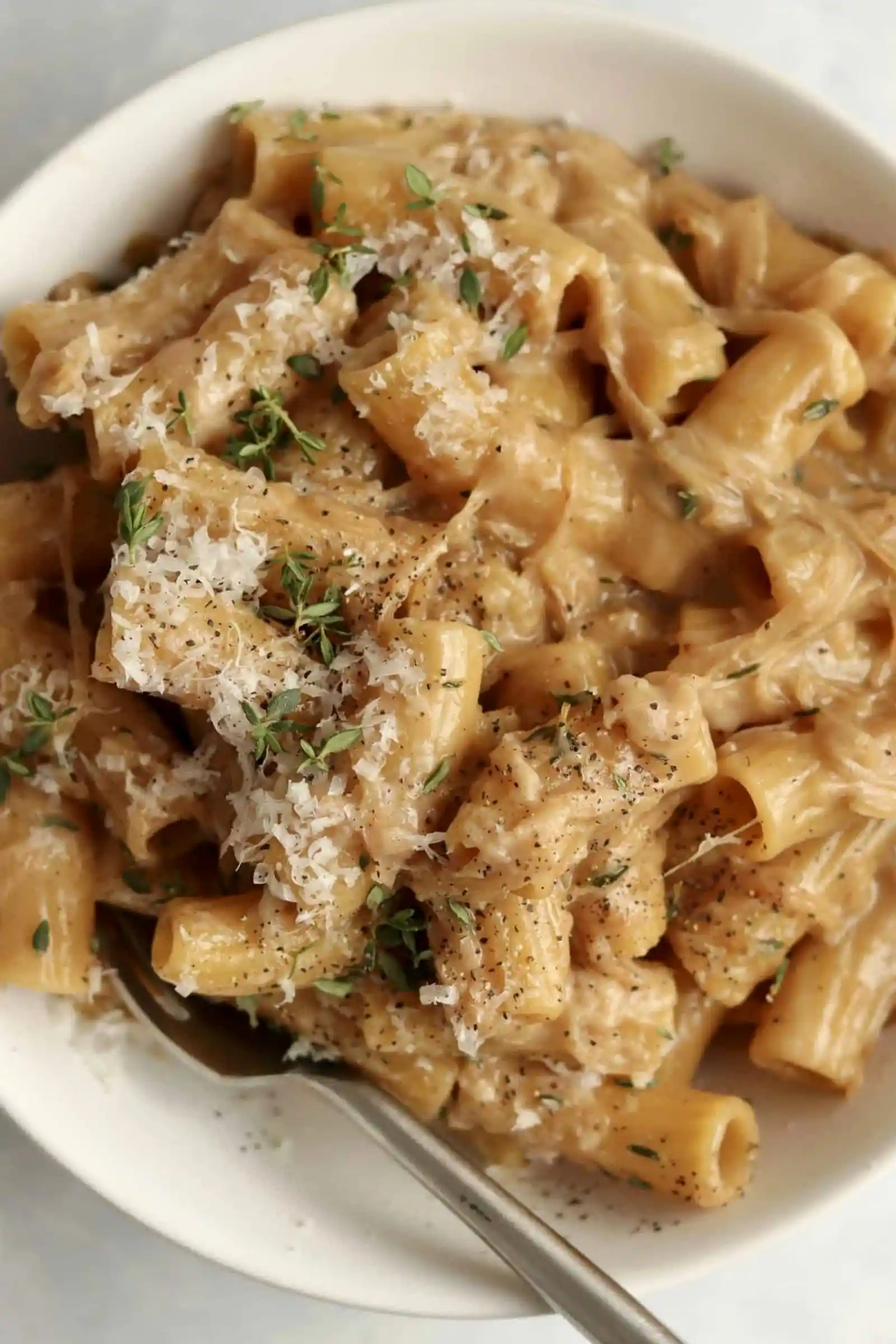
List of ingredients
- 1/4 cup unsalted butter – used for sautéing and adding richness to the base.
- 3 large yellow onions, halved and thinly sliced – provides the essential sweet and savory foundation.
- 3/4 cup beef broth mixed with 1 tablespoon lemon juice – a non-alcoholic substitute for sherry and white wine to provide acidity.
- 4-5 sprigs fresh thyme, plus extra for garnish – adds an earthy, aromatic quality.
- Kosher salt and ground black pepper – essential for seasoning the layers of flavor.
- 1 lb uncooked rigatoni – a sturdy pasta shape that holds the thick sauce well.
- 4 cups beef broth or stock – the primary cooking liquid for the noodles.
- 1 teaspoon Worcestershire sauce – enhances the umami and depth of the beefy profile.
- 1/2 cup freshly grated parmesan, plus more for serving – adds a salty, nutty finish.
- 1/2 cup heavy cream, or half and half – creates the smooth, velvety texture of the sauce.
step-by-step instructions
- Caramelize the Onions: Heat a large dutch oven or pot over medium heat and melt the butter. Add the thinly sliced onions and cook for about 5 minutes until they start to soften, then reduce the heat to medium-low and cook for 30 minutes, stirring occasionally, until they are deep brown and caramelized.
- Deglaze the Pan: Pour in the beef broth and lemon juice mixture. Scrape any browned bits from the bottom of the pot and simmer for a couple of minutes until the liquid reduces slightly.
- Combine Ingredients: Add the fresh thyme sprigs, a pinch of salt, a heavy pinch of pepper, the uncooked rigatoni, beef broth, and Worcestershire sauce. Stir everything well to combine.
- Simmer the Pasta: Bring the liquid to a boil, stir once, and immediately lower the heat. Cover the pot and simmer for approximately 10 minutes, or until the liquid is absorbed and the pasta is al dente.
- Finish the Sauce: Turn off the heat and remove and discard the thyme sprigs. Stir in the heavy cream and grated parmesan cheese until the mixture is fully combined and creamy.
- Final Touch: Taste and adjust the salt and pepper if necessary. Serve the pasta in bowls topped with additional fresh parmesan and a sprinkle of extra thyme leaves.
Pro Cooking Techniques
Achieving the Perfect Caramelization
The key to the flavor of this dish is the slow browning of the onions. Maintain a medium-low heat to allow the natural sugars to release without burning the exterior of the onion slices. If the onions begin to stick or brown too quickly, add a tablespoon of water to deglaze the pan and keep the process moving.
Managing Pasta Texture
Cook the rigatoni only until it reaches the al dente stage, meaning it still has a slight bite. The pasta will continue to cook and soften slightly as you stir in the hot cream and parmesan. Overcooking the noodles at the simmering stage can result in a mushy consistency that loses the structural integrity of the rigatoni.
Using Pre-Caramelized Onions
If you have a batch of caramelized onions prepared in advance, you can significantly reduce the cooking time. Simply add about 2 cups of pre-cooked onions to the pot and heat them through before proceeding with the deglazing step. This is an excellent way to turn this recipe into a quicker weeknight meal.
Choosing the Right Pot
A heavy-bottomed dutch oven is the ideal vessel for this recipe because it distributes heat evenly. This prevents the onions from scorching in one spot and helps maintain a consistent simmer for the pasta. If using a thinner pot, be extra vigilant about stirring and lowering the heat to avoid hot spots.
Ingredient Substitutions and Swaps
Alternative Pasta Shapes
While rigatoni is recommended for its ability to trap sauce, other short pasta shapes work equally well. Penne, ziti, or campanelle are great alternatives that provide a similar experience. Avoid using long pastas like spaghetti or linguine, as they can clump together more easily in one-pot cooking.
Dairy-Free Cream Alternatives
For a dairy-free version, replace the heavy cream with full-fat canned coconut milk or a cashew-based cream. Use a nutritional yeast or a vegan parmesan alternative to mimic the salty, nutty flavor of the cheese. Be aware that coconut milk may add a slight sweetness to the savory beef profile.
Broth Variations for Depth
While beef broth is the standard for a French onion flavor, you can use a high-quality mushroom broth for a more earthy, vegetarian-friendly base. If you find the broth too salty, use a low-sodium version and adjust the salt manually at the end of the cooking process.
Replacing the Acidity
If you do not have lemon juice, you can use a small amount of red wine vinegar or apple cider vinegar. The goal is to provide a bright contrast to the richness of the butter and beef broth. Start with a teaspoon and taste, as vinegar is more potent than lemon juice.
Protein Pairing Suggestions
Adding Steak Bites
Pan-seared sirloin or ribeye steak bites complement the French onion flavors perfectly. Cook the steak separately in a hot skillet to get a deep sear and serve the pieces directly on top of the plated pasta. The richness of the beef enhances the savory notes of the caramelized onions.
Serving with Roasted Chicken
Grilled or roasted chicken breasts provide a leaner protein option that balances the creaminess of the sauce. Slicing the chicken into strips and placing them over the pasta creates a complete, filling meal. Use a bit of the pasta sauce to glaze the chicken for extra flavor.
Incorporating Sautéed Mushrooms
For a meatless protein boost, sauté sliced cremini or shiitake mushrooms in butter until browned. Fold the mushrooms into the pasta during the final stir with the cream and parmesan. The mushrooms add a meaty texture and a boost of umami that fits the profile of the dish.
Serving and Presentation Ideas
Topping with Toasted Breadcrumbs
To add a textural contrast to the creamy pasta, sprinkle a handful of toasted panko breadcrumbs on top. Sauté the breadcrumbs in a bit of butter and garlic before adding them to the dish. This mimics the toasted baguette typically found on French onion soup.
Fresh Herb Garnishes
Beyond the thyme used in the cooking process, fresh parsley or chives can add a pop of color and freshness. Finely chop the herbs and sprinkle them over the bowls just before serving. This cuts through the richness of the heavy cream and parmesan.
Cheese Pairing Options
While parmesan is the primary cheese, a sprinkle of Gruyere or Swiss cheese can make the dish even more authentic to the soup inspiration. Melt a small amount of Gruyere on top of each portion under a broiler for a few minutes. This creates a bubbly, browned cheese crust that is classic to French onion dishes.
Storage and Reheating Guide
Refrigerator Storage
Store leftover pasta in an airtight container in the refrigerator for up to four days. Ensure the container is sealed tightly to prevent the pasta from drying out or absorbing other smells from the fridge. Let the pasta cool slightly before sealing to avoid excessive condensation.
Freezing Instructions
This pasta can be frozen for up to three months if stored in a freezer-safe bag or container. Portion the pasta into individual servings to make reheating easier and more efficient. Press as much air out of the bag as possible to prevent freezer burn.
Best Reheating Methods
To reheat, place the pasta in a pot over low heat or in the microwave. Add a splash of beef broth or a tablespoon of cream to loosen the sauce, which naturally thickens as it cools. Stir gently to avoid breaking the noodles and heat until warmed through.
Troubleshooting Common Issues
Fixing a Sauce That Is Too Thin
If the sauce is too liquid after adding the cream, simmer the pasta for another two to three minutes without the lid. This allows more of the moisture to evaporate and the starches from the pasta to thicken the sauce. Stir constantly during this time to prevent the bottom from scorching.
Correcting a Sauce That Is Too Thick
If the pasta has absorbed too much liquid and the sauce seems overly thick or sticky, stir in a small amount of beef broth. Add the broth one tablespoon at a time until the desired creamy consistency is achieved. This is especially common when reheating leftovers.
Addressing Burnt Onions
If the onions burn during the caramelization process, they will develop a bitter taste that cannot be removed. It is best to discard the burnt onions and start over with fresh butter and onions. To prevent this, keep the heat low and stir more frequently as the onions darken.
Frequently Asked Questions
Is this recipe gluten-free?
This recipe is not gluten-free as it uses wheat-based rigatoni. However, you can easily make it gluten-free by substituting the rigatoni with your favorite gluten-free pasta alternative. Be sure to monitor the cooking time, as gluten-free noodles often have different absorption rates and may cook faster or slower.
What is the best type of onion to use?
Yellow onions are the best choice for this recipe because they have a balanced sweetness and sulfur content that caramelizes well. While white onions can be used, they are milder and may not provide the same depth of flavor. Red onions are too sweet and will change the color of the final dish.
Can I use dried thyme instead of fresh?
Yes, you can use dried thyme if fresh is unavailable. Use a ratio of one teaspoon of dried thyme for every tablespoon of fresh thyme leaves. Add the dried thyme during the deglazing step to allow the flavors to bloom in the heat.
How do I know when the onions are properly caramelized?
Properly caramelized onions should be a deep golden brown, soft, and jam-like in consistency. They should smell sweet and savory, not pungent. This process takes time, so avoid the temptation to turn up the heat, which will burn the onions instead of caramelizing them.
Can I use half and half instead of heavy cream?
Yes, half and half is a suitable substitute for heavy cream. It will result in a slightly thinner sauce and a less rich flavor. If you use half and half, you may want to simmer the pasta slightly longer to ensure the sauce reaches the desired thickness.
} Print
One Pot Creamy French Onion Pasta
- Total Time: 1 hour
- Yield: 6–8 servings 1x
- Diet: General
Description
One Pot French Onion Pasta gives you the flavors of French Onion Soup in a filling, slightly creamy pasta recipe. Start with caramelized onions in a large pot then add the remaining ingredients, including the uncooked pasta.
Ingredients
- 1/4 cup unsalted butter
- 3 large yellow onions, halved and thinly sliced
- 1/4 cup beef broth with a splash of apple cider vinegar
- 1/2 cup vegetable broth with a splash of lemon juice
- 4–5 sprigs fresh thyme, plus extra for garnish
- Kosher salt and ground black pepper
- 1 lb uncooked rigatoni
- 4 cups beef broth or stock
- 1 teaspoon Worcestershire sauce
- 1/2 cup freshly grated parmesan, plus more for serving
- 1/2 cup heavy cream, or half and half
Instructions
- Caramelize Onions: Heat up a large dutch oven or pot over medium heat and melt the butter. Add the thinly sliced onions and cook over medium for about 5 minutes until starting to soften. Reduce the heat to medium-low and cook for about 30 minutes until caramelized. Stir the onions occasionally to keep them from sticking to the bottom.
- Deglaze Pan: Pour in the beef broth with cider vinegar and vegetable broth with lemon juice to the onions. Scrape any bits off the bottom and let cook for a couple minutes so the liquid reduces slightly.
- Add Pasta Ingredients: Add the sprigs of thyme, a pinch of salt, heavy pinch of pepper, the uncooked pasta, beef broth, and Worcestershire sauce. Stir to combine.
- Boil: Bring the broth to a boil, give one big stir, and immediately lower the heat and cover the pot so it simmer. Allow to simmer for about 10 minutes, or until the liquid is absorbed and the pasta is al dente.
- Finish Pasta: Turn off the heat and remove and discard the thyme sprigs. Stir in the heavy cream and parmesan until combined. Taste and adjust the salt and pepper, if needed.
- Serve: Serve the pasta in bowls. Top with fresh parmesan and a light sprinkle of extra thyme leaves.
Notes
Leftover pasta can be stored in an airtight container in the fridge for up to 4 days or frozen for up to 3 months. Reheat leftovers in the microwave or in a pot on the stove – you can add a splash of cream or broth to loosen things up.
- Prep Time: 10 minutes
- Cook Time: 50 minutes
- Category: Pasta
- Method: One Pot
- Cuisine: American
Nutrition
- Serving Size: 1/6 of recipe
- Calories: 475 kcal
- Sugar: 6.6 g
- Sodium: 525.5 mg
- Fat: 14.4 g
- Saturated Fat: 6 g
- Unsaturated Fat: 8.4 g
- Trans Fat: 0 g
- Carbohydrates: 66.5 g
- Fiber: 3.9 g
- Protein: 15.3 g
- Cholesterol: 36.4 mg