
This fast 20-minute lemon pasta with spinach is a bright and refreshing meal perfect for busy weeknights. It relies on simple pantry staples to create a rich, garlic-butter sauce that the whole family will enjoy.
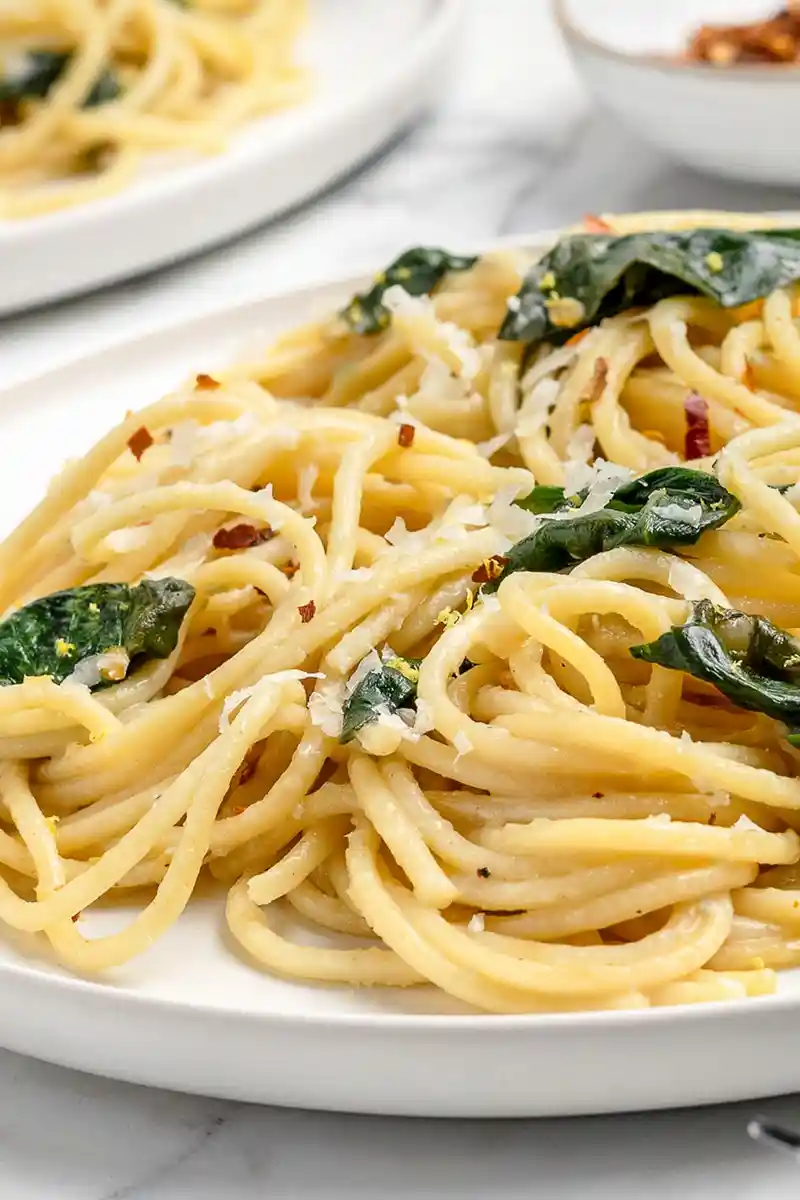
List of ingredients
- 8 ounces spaghetti – use a high-quality durum wheat pasta.
- 3 tablespoons unsalted butter – provides the rich base for the sauce.
- 3 cloves garlic – grated or finely minced for maximum flavor.
- 1/4 teaspoon red pepper flakes – adds a subtle hint of heat.
- 1 lemon – zested and then juiced.
- 2 cups baby spinach – fresh, pre-washed leaves.
- 1/2 cup parmesan cheese – freshly grated from a block.
- 1/2 teaspoon salt – plus extra for the pasta water.
- 1/4 teaspoon black pepper – for basic seasoning.
step-by-step instructions
- Boil the pasta: Bring a large pot of salted water to a boil. Add the spaghetti and cook according to the package instructions, typically for 9 to 10 minutes. Reserve 1 cup of the pasta water before draining the noodles; do not rinse the spaghetti.
- Sauté the aromatics: Melt the unsalted butter in a large skillet over medium heat. Add the minced garlic and red pepper flakes, stirring for 30 seconds to 1 minute until fragrant.
- Combine and wilt: Pour in the lemon juice and 1/2 cup of the reserved pasta water. Once the mixture begins to bubble, add the baby spinach and the cooked spaghetti. Toss everything together until the spinach wilts and the sauce thoroughly coats the noodles. If the sauce seems too dry, stir in an additional 1/4 cup of pasta water.
- Final seasoning: Remove the skillet from the heat. Add the lemon zest, freshly grated parmesan cheese, salt, and black pepper. Toss a few more times to combine before serving.
Essential Kitchen Tools for Success
Large Skillet for Easy Tossing
Use a wide, 12-inch skillet to prepare this dish. A larger pan ensures you have enough room to toss the long spaghetti and spinach without them spilling over the edges.
Handheld Citrus Juicer
A citrus juicer helps you extract the maximum amount of juice from the lemon. It also catches the seeds, preventing them from ending up in your garlic butter sauce.
Silicone-Tipped Kitchen Tongs
Tongs are the best tool for handling long noodles. Silicone tips grip the spaghetti securely, allowing you to toss the ingredients without breaking the pasta.
Pot with Integrated Straining Lid
A pot with a built-in strainer simplifies the draining process. This eliminates the need for a separate colander and makes it easier to reserve the pasta water.
Ingredient Selection and Substitutions
Choosing Alternative Pasta Shapes
While spaghetti is traditional, fettuccine or linguine are excellent alternatives. These flat noodles provide more surface area for the lemon butter sauce to cling to.
Using Olive Oil Instead of Butter
You can substitute the butter with an equal amount of extra-virgin olive oil. This reduces the saturated fat content and gives the dish a more Mediterranean flavor profile.
Substituting Fresh Spinach with Frozen
Thawed frozen spinach can be used if fresh leaves are unavailable. Be sure to squeeze out all excess moisture from the frozen spinach to prevent the sauce from becoming watery.
Selecting the Best Parmesan Cheese
Freshly grated parmesan from a block melts much smoother than pre-shredded varieties. Pre-shredded cheeses often contain anti-clumping agents that can make the sauce grainy.
Dairy-Free Sauce Alternatives
For a plant-based version, use nutritional yeast or a cashew-based cream. These substitutes provide the salty, nutty flavor associated with parmesan cheese.
Professional Cooking Techniques
Cooking Pasta Al Dente
Remove the pasta from the water 1 to 2 minutes before the package instructions suggest. The noodles will finish cooking in the skillet as they absorb the sauce, preventing them from becoming mushy.
The Importance of Salting Pasta Water
Add a generous amount of salt to the boiling water. This is the only opportunity to season the interior of the pasta noodle, which significantly improves the overall taste.
Utilizing Starch-Rich Pasta Water
The reserved pasta water contains starch released from the noodles during cooking. This starch acts as an emulsifier, helping the butter and lemon juice bind into a creamy sauce.
Preventing Garlic from Burning
Keep the skillet heat at a steady medium setting. Garlic burns quickly, and burnt garlic becomes bitter, which would overpower the bright citrus notes of the lemon.
Properly Zesting a Lemon
Use a fine grater to remove only the yellow outer layer of the lemon peel. Avoid grating into the white pith, as the pith is bitter and can affect the flavor.
Adding Proteins and Variations
Pairing with Grilled Chicken
Sauté chicken breast strips in the skillet before starting the sauce. This adds lean protein and makes the meal more filling for a main dinner course.
Adding Sautéed Shrimp
Cook shrimp quickly over high heat with a touch of garlic. Fold the cooked shrimp into the pasta at the very end to ensure they remain tender.
Incorporating Flaked Salmon
Gently stir in cooked salmon flakes during the final tossing step. Salmon pairs exceptionally well with the acidity of the lemon and the earthiness of the spinach.
Adding Toasted Pine Nuts
Toast pine nuts in a dry pan until they are golden brown. Sprinkle them over the finished dish for a nutty aroma and a contrasting crunch.
Using Different Leafy Greens
Kale or Swiss chard can be used as a substitute for baby spinach. Note that these greens are heartier and may require an extra minute of cooking to soften.
Serving and Pairing Suggestions
Complementary Side Salads
A simple arugula salad with a light balsamic vinaigrette is a great accompaniment. The peppery greens provide a sharp contrast to the rich butter sauce.
Best Breads for Dipping
Serve the pasta with toasted sourdough or homemade focaccia. These breads are ideal for soaking up the remaining lemon butter sauce from the plate.
Vegetable Side Pairings
Roasted asparagus or honey-glazed carrots add a sweet and earthy element to the meal. These vegetables complement the bright acidity of the lemon juice.
Refreshing Beverage Pairings
Sparkling water with a slice of fresh cucumber is a refreshing choice. It cleanses the palate between bites of the rich, cheesy pasta.
Storage and Preservation
Refrigeration Guidelines
Store any leftover pasta in an airtight container in the refrigerator for up to 4 days. Keeping the container tightly sealed prevents the noodles from drying out.
Avoiding Pasta Mushiness
If you plan to store the pasta, undercook the noodles slightly more than usual. This ensures they maintain a better texture after being reheated.
Why Freezing is Not Recommended
This dish should not be frozen. The butter-based sauce tends to separate upon thawing, and the spinach can become overly soft and watery.
Reheating the Pasta
Stovetop Reheating Method
Place the leftovers in a pan over low heat and add a splash of water. Gently stir until the pasta is warmed through and the sauce is re-emulsified.
Microwave Reheating Tips
Heat the pasta in 30-second intervals, stirring in between each session. Add a teaspoon of water or butter to maintain the moisture and creaminess.
Restoring Sauce Consistency
Pasta absorbs sauce as it sits in the refrigerator. Adding a small amount of water or milk during the reheating process restores the original silky consistency.
Common Troubleshooting
Fixing a Sauce That is Too Dry
Stir in a bit more of the reserved pasta water or a small knob of butter. This immediately restores the smooth, creamy texture of the sauce.
Correcting Overly Sour Lemon Flavor
If the lemon taste is too intense, add more parmesan cheese or a tiny pinch of sugar. These additions help neutralize the acidity and balance the flavor.
Preventing Cheese Clumping
Always remove the skillet from the heat before stirring in the parmesan. High heat can cause the cheese to seize, resulting in clumps rather than a smooth sauce.
Managing Red Pepper Flake Heat
If the dish is too spicy, stir in an extra tablespoon of butter or a splash of cream. These fats coat the palate and dull the intensity of the red pepper.
Frequently Asked Questions
Can I use frozen spinach?
Yes, you can use frozen spinach that has been thawed and squeezed of all excess moisture. Fresh baby spinach is preferred for texture, but frozen is a practical alternative.
How do I know if my lemon is ripe?
A ripe lemon should have a deep yellow color and feel slightly soft when pressed. Under-ripe lemons are typically paler and yield significantly less juice.
Can I make this gluten-free?
Yes, this recipe works well with gluten-free spaghetti or chickpea pasta. Be sure to follow the specific cooking times listed on the gluten-free pasta packaging.
Is this pasta suitable for meal prep?
This dish is suitable for meal prep and can be kept in the fridge for up to 4 days. Reheat it gently on the stove or in the microwave for the best results.
Print
Quick Spinach and Lemon Garlic Pasta
- Total Time: 20 minutes
- Yield: 4 servings 1x
- Diet: Vegetarian
Description
Make this easy, 20 minute Spinach Lemon Pasta for a quick weeknight dinner. It’s crowd-pleasing, bursting with flavor, and a recipe the whole family will love.
Ingredients
- 8 ounces spaghetti
- 3 tablespoons unsalted butter
- 3 cloves garlic (grated or finely minced)
- ¼ teaspoon red pepper flakes
- 1 lemon (zested and then juiced)
- 2 cups baby spinach
- ½ cup parmesan cheese (freshly grated)
- ½ teaspoon salt
- ¼ teaspoon black pepper
Instructions
- Step: Bring a large pot of salted water to a boil. Add and cook the spaghetti according to package instructions (typically 9 to 10 minutes). Reserve 1 cup of pasta water before draining the spaghetti, do not rinse.
- Step: In a large skillet, over medium heat, melt the unsalted butter. Add the minced garlic and red pepper flakes, stir and cook until fragrant (about 30 seconds to 1 minute).
- Step: Add the lemon juice and ½ cup of pasta water. Once it begins to bubble, add the spinach and pasta. Toss together until spinach wilts and the sauce coats the noodles. If the pasta sauce seems dry, add a ¼ cup of pasta water.
- Step: Remove skillet from heat, add lemon zest, parmesan cheese, salt, and black pepper. Toss a few times before serving.
Notes
Store leftovers in an airtight container in the refrigerator for up to 4 days. For a creamier sauce, substitute pasta water with milk or cream cheese. Olive oil can be used as a substitute for butter.
- Prep Time: 5 minutes
- Cook Time: 15 minutes
- Category: Main Course
- Method: Sautéing
- Cuisine: American
Nutrition
- Serving Size: 1 serving
- Calories: 304 kcal
- Sugar: 4 g
- Sodium: 620 mg
- Fat: 12 g
- Saturated Fat: 7 g
- Unsaturated Fat: 5 g
- Trans Fat: 0 g
- Carbohydrates: 38 g
- Fiber: 3 g
- Protein: 10 g
- Cholesterol: 42 mg