
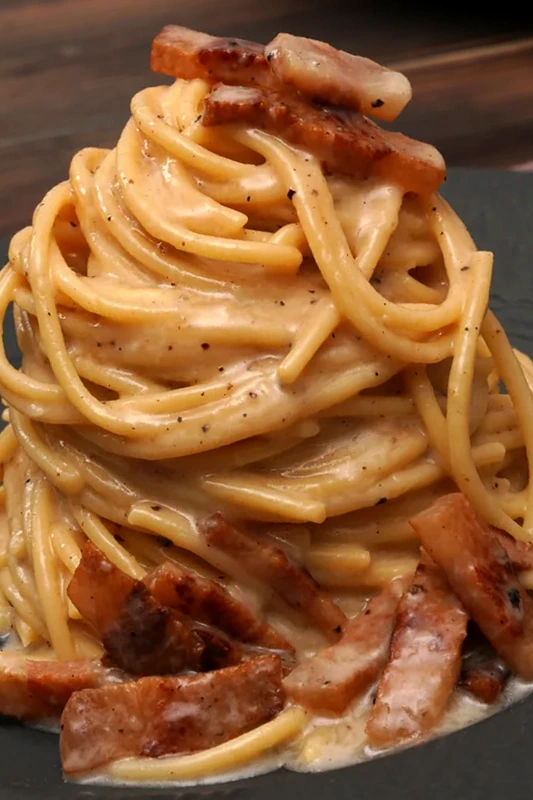
This Roman pasta dish features a rich, creamy cheese sauce and savory smoked meat. It is a simple yet flavorful meal that relies on a few high-quality ingredients for an authentic taste.
List of ingredients
- 1 tbsp black pepper (preferably freshly ground, medium coarse) – adds toasted aromatic heat.
- 6 oz pecorino romano cheese (semi-aged) – provides a sharp, salty flavor profile.
- 6 oz smoked beef strips – used as a savory alternative to traditional cured pork.
- 1/2 cup vegetable broth – used to deglaze the pan and build the sauce base.
- 11 oz spaghetti or tonnarelli – the ideal pasta choice for this dish.
step-by-step instructions
- Toast the Pepper: Place black pepper in a dry pan over low heat for about one minute until fragrant. Transfer the pepper to a small container and set it aside for later use.
- Fry the Beef: Slice the smoked beef into 1/2 inch strips. Fry them in a dry pan over medium-low heat until the fat renders and becomes translucent, then increase the heat slightly to crisp the edges.
- Partially Cook the Pasta: Boil a pot of salted water and cook the spaghetti for about 75% of the recommended al dente cooking time.
- De-glaze the Pan: Pour the vegetable broth into the pan with the fried beef. Stir well to loosen the browned bits from the bottom of the pan, which concentrates the flavor.
- Finish Cooking the Pasta: Transfer the drained pasta into the skillet with the beef and broth. Add a few ladles of hot pasta water and the toasted black pepper, then simmer until the pasta is fully cooked.
- Make the Cheese Sauce: Place finely grated pecorino romano in a bowl. Slowly drizzle in one ladle of hot pasta water while stirring constantly until a smooth, creamy paste forms.
- Finish the Pasta: Remove the pan from the heat entirely. Add the cheese paste to the pasta and toss vigorously with tongs until the sauce is creamy and emulsified.
Pro Tips for a Creamy Sauce
Use Finely Grated Cheese
The cheese must be grated as finely as possible to ensure it melts quickly. Coarse shreds are more likely to clump together and create strings of cheese rather than a smooth sauce.
Control the Temperature
Always remove the pasta from the heat source before adding the cheese paste. If the pan is too hot, the cheese will coagulate and separate into clumps instead of emulsifying.
Leverage Starchy Pasta Water
Do not discard all the pasta water immediately after draining. The starch in the water acts as a binder, helping the fat from the beef and the cheese to fuse into a cohesive sauce.
Use Semi-Aged Pecorino
Semi-aged pecorino romano typically melts more easily than very aged versions. This results in a smoother texture and a more balanced saltiness in the final dish.
Ingredient Substitutions and Variations
Choosing Different Pasta Shapes
While spaghetti is traditional, rigatoni or mezze maniche work well for this recipe. The ridges and holes in these shapes trap the cheese sauce and beef pieces more effectively.
Alternative Hard Cheeses
If pecorino romano is too salty, you can use a blend of pecorino and parmesan. This softens the sharp tang while maintaining the necessary creamy consistency.
Adding Fresh Herbs
Adding chopped fresh parsley at the very end provides a bright contrast to the heavy cheese and beef. Avoid adding herbs during the cooking process to prevent them from burning.
Adjusting the Meat Type
Smoked beef strips are an excellent choice, but smoked turkey breast can also be used. Ensure the meat has a high fat content to help create the emulsion for the sauce.
Serving and Pairing Suggestions
Fresh Vegetable Pairings
Serve this pasta with a side of roasted asparagus or sautéed spinach. The bitterness of these greens cuts through the richness of the pecorino cheese.
Light Salad Accompaniments
A simple arugula salad with lemon vinaigrette is a perfect pairing. The acidity of the lemon cleanses the palate between bites of the creamy pasta.
Plating for Best Results
Use a carving fork and a ladle to twirl the pasta into a high nest in the center of the plate. Spoon the remaining beef and sauce from the pan directly over the top.
Beverage Pairings
Pair this dish with a crisp, non-alcoholic sparkling cider or a chilled mineral water with lemon. These options balance the salty and fatty elements of the meal.
Storage and Reheating Guide
Storing Leftovers
Store any remaining pasta in an airtight container in the refrigerator for up to three days. Be aware that the sauce will thicken significantly as it cools.
Reheating for Creaminess
Avoid using a microwave to reheat the pasta as it can cause the cheese to separate. Instead, place the pasta in a pan over low heat with a splash of water or broth.
Preventing Dryness
Stir the pasta gently as it heats up to redistribute the fats. Add a small amount of extra grated cheese if the sauce has become too thick or dry.
Freezing Advice
This dish is not recommended for freezing. The emulsion of the cheese sauce typically breaks down during the freezing and thawing process, resulting in a grainy texture.
Troubleshooting Common Issues
Why is my sauce clumpy?
Clumping usually happens if the cheese is added while the pan is still on the heat. To fix this, add a tablespoon of hot pasta water and stir vigorously off the heat to try and re-emulsify.
How to fix a dry pasta?
If the pasta looks dry before serving, add another ladle of pasta water. Toss the pasta continuously over low heat for 30 seconds until the desired creaminess is reached.
Why is the meat not crisping?
This happens if the pan is overcrowded or the heat is too low. Fry the meat in batches if necessary and ensure the pan is hot enough to sear the edges.
Why does the sauce taste too salty?
Pecorino romano is naturally very salty, so avoid adding extra salt to the pasta water. If the final dish is too salty, add a squeeze of lemon juice to balance the flavor.
Frequently Asked Questions
Can I use pre-grated cheese from a bottle?
It is not recommended because pre-grated cheeses often contain cornstarch or cellulose to prevent clumping. These additives stop the cheese from melting smoothly into the sauce.
What is the best beef substitute for guanciale?
Smoked beef bacon or high-quality smoked beef strips are the best choices. They provide the necessary smokiness and fat content required for an authentic flavor profile.
Do I really have to toast the black pepper?
Toasting the pepper releases essential oils and creates a deeper, more complex flavor. It removes the raw bite of the pepper and replaces it with a warm, aromatic quality.
Can I use a different broth for deglazing?
Vegetable broth is the standard substitute, but a light chicken broth also works well. Avoid using heavy stocks that might overpower the delicate taste of the cheese.
What is mantecatura?
Mantecatura is the Italian technique of tossing pasta with its sauce and fat off the heat. This process creates the creamy emulsion that defines traditional Roman pastas.
Print
Roman Style Spaghetti alla Gricia
- Total Time: 25 minutes
- Yield: 4 servings 1x
- Diet: General
Description
This Pasta Gricia recipe is one of the pillars of Roman pasta, along with: Carbonara, Cacio e Pepe and Amatriciana! With a creamy pecorino cheese sauce and fine Italian beef pancetta, you’ll love this dish!
Ingredients
- 1 tbsp black pepper
- 6 oz pecorino romano cheese
- 6 oz beef pancetta
- ½ cup alcohol-free white wine
- 11 oz spaghetti
Instructions
- Toast the Pepper: Briefly toast black pepper in a dry pan over low heat—just until you start to smell it.
- Fry the Beef Pancetta: Cut the beef pancetta into thick slices, then into 1/2 inch strips. Fry the beef pancetta in a dry pan over medium-low heat until the fat turns translucent. Then raise the heat a bit to crisp up the outside of the pieces.
- Partially Cook the Pasta: Add the pasta to boiling water and cook it for 3/4 of the cook time recommended for ‘al dente’ pasta in the package instructions.
- De-Glaze the Pan: When the beef pancetta is fried to your liking, add the alcohol-free white wine to de-glaze the pan.
- Finish Cooking the Pasta: Add the partially cooked pasta (drained) to the skillet with the beef pancetta. Add a few ladles of the hot pasta water as well—and save the pasta water as we will still need it! Add the black pepper to the cooking pasta. Finish cooking the pasta in the pan for the rest of the cooking time.
- Make the Cheese Sauce: To the finely grated pecorino cheese, slowly drizzle in one ladle of hot pasta water—stirring continuously! Mix until you’ve created a smooth, creamy paste.
- Finish the Pasta: When the pasta is cooked, remove it from the heat. Add the cheese paste to the hot pasta and mix thoroughly using a pair of tongs.
Notes
Use semi-aged cheeses to ensure a creamier sauce. To prevent clumping, add the cheese paste to the pasta only after removing the pan from the heat.
- Prep Time: 15 minutes
- Cook Time: 10 minutes
- Category: Main Course
- Method: Stovetop
- Cuisine: Italian
Nutrition
- Serving Size: 1 serving
- Calories: 620 kcal
- Sugar: 4 g
- Sodium: 1150 mg
- Fat: 32 g
- Saturated Fat: 16 g
- Unsaturated Fat: 12 g
- Trans Fat: 0 g
- Carbohydrates: 58 g
- Fiber: 3 g
- Protein: 24 g
- Cholesterol: 85 mg