
This Beef Carbonnade is a rich, slow-cooked stew featuring tender short ribs and a savory mustard-infused sauce. It is a hearty meal perfect for cold weather and pairs excellently with mashed potatoes.
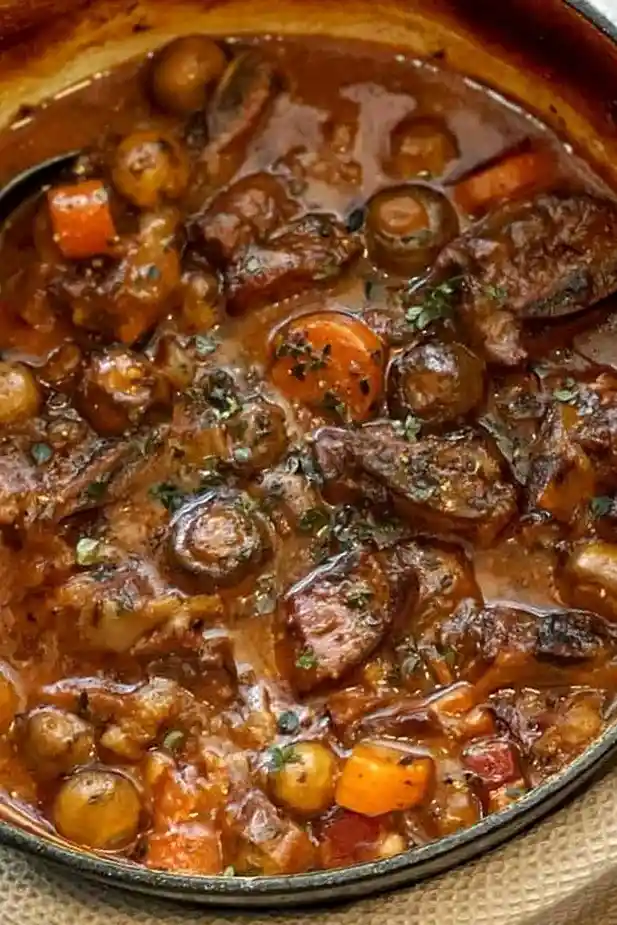
List of ingredients
- 1.5 kg beef short ribs – trimmed for best results
- 2 tbsp olive oil – for searing the meat
- 1/4 cup plain/all purpose flour – used for dusting the beef
- 1 large carrot – diced into uniform pieces
- 2 brown onions – sliced thinly
- 300 g button mushrooms – left whole if small or thickly sliced
- 150 g smoked beef cubes – diced to replace pork products
- 2 tbsp tomato paste – adds depth and color
- 2 fresh garlic cloves – crushed
- 2 tbsp wholegrain mustard – for a tangy flavor profile
- 1 tbsp fresh thyme leaves – or 1 tsp dried thyme
- 1 tbsp fresh rosemary – finely chopped
- 350 ml non-alcoholic beer – such as a non-alcoholic lager
- 500 ml beef stock – low sodium preferred
- salt & pepper – to taste
step-by-step instructions
- Preheat: Set your oven to 160c / 320f.
- Prepare Beef: Cut the beef short ribs into individual pieces and dust them evenly with the plain flour.
- Heat Pan: Pour 1 tablespoon of olive oil into a large flameproof casserole dish or Dutch oven over medium-high heat.
- Sear Meat: Fry the ribs in batches to ensure they brown well on all sides; remove each batch to a plate as they finish.
- Sauté Vegetables: Add the diced carrot, sliced brown onion, mushrooms, and smoked beef cubes to the pot and fry until they start to soften.
- Add Aromatics: Stir in the tomato paste and crushed garlic cloves and cook for approximately 30 seconds.
- Deglaze: Pour in the non-alcoholic beer and bring the mixture to a simmer.
- Season Sauce: Add the wholegrain mustard, fresh thyme, and fresh rosemary. Stir well, scraping any browned bits from the bottom of the pot for extra flavor.
- Simmer: Pour in the beef stock and return the seared ribs and any collected juices to the pot, then bring to a simmer.
- Bake: Cover the pot with a lid and bake for 2 hours or until the beef is tender. Season with salt and pepper before serving.
Pro Techniques for the Perfect Stew
Searing the Meat in Batches
Do not crowd the pan when browning the beef ribs. Adding too much meat at once lowers the temperature of the oil, which causes the beef to steam rather than sear. Brown the meat in small groups to achieve a deep crust and maximum flavor.
Deglazing the Casserole Dish
The brown bits stuck to the bottom of the pot are called fond and contain concentrated flavor. When you add the non-alcoholic beer, use a wooden spoon to scrape these bits into the liquid. This incorporates all the roasted beef juices back into the sauce.
Choosing the Right Cookware
Use a heavy-bottomed cast iron Dutch oven for this recipe. These pots distribute heat evenly and hold it well during the long baking process. This prevents the bottom of the stew from burning while the top remains tender.
Controlling Oven Temperature
Keep the oven strictly at 160c / 320f to ensure a gentle braise. If the temperature is too high, the liquid may boil too vigorously, which can make the muscle fibers in the beef tough. A low and slow approach ensures the collagen breaks down into gelatin.
Ingredient Substitutions and Variations
Selecting Non-Alcoholic Beer
A non-alcoholic lager or pilsner works best for a traditional flavor profile. If you prefer a richer, darker taste, you can use a non-alcoholic stout or porter. Ensure the replacement is truly alcohol-free to meet dietary requirements.
Alternative Beef Cuts
If short ribs are unavailable, you can use beef chuck roast cut into large chunks. Chuck is also rich in connective tissue, which makes it ideal for slow cooking. Ensure the pieces are cut into 2-inch cubes for even cooking.
Replacing Fresh Herbs
If you do not have fresh thyme or rosemary, you can use dried versions. Use a ratio of one teaspoon of dried herbs for every tablespoon of fresh. Add the dried herbs slightly earlier in the process to allow them to hydrate.
Using Different Mushrooms
While button mushrooms are standard, cremini or shiitake mushrooms provide a more intense earthy flavor. Cut them into sizes that match the other vegetables for a consistent texture in every bite.
Serving and Pairing Suggestions
Preparing Creamy Mashed Potatoes
Boil peeled starchy potatoes in salted water until soft. Mash them with butter and a splash of warm milk or cream until smooth. The creamy texture of the potatoes balances the acidity of the mustard and beer sauce.
Pairing with Crusty Bread
Serve the stew with a toasted baguette or a sourdough loaf. The bread is ideal for soaking up the thick, savory gravy. Rub a clove of raw garlic on toasted bread for additional aroma.
Adding a Side of Steamed Greens
Balance the richness of the beef with steamed green beans or sautéed spinach. The brightness of green vegetables cuts through the heavy flavors of the short ribs. Lightly season the greens with lemon juice and salt.
Serving with Steamed Rice
For a different texture, serve the carbonnade over a bed of steamed basmati or jasmine rice. The rice absorbs the sauce effectively and provides a neutral base that highlights the mustard flavor.
Storage and Reheating Guidance
Refrigerating the Stew
Allow the stew to cool completely before transferring it to an airtight container. Store it in the refrigerator for up to four days. The flavors often deepen and improve after a day of resting in the fridge.
Freezing for Long Term Storage
This dish freezes well for up to three months. Place the stew in freezer-safe containers, leaving a small amount of space at the top for expansion. Thaw the stew in the refrigerator overnight before reheating.
Stovetop Reheating Method
Heat the stew slowly over medium-low heat on the stove. Add a small splash of beef stock or water if the sauce has thickened too much during storage. Stir occasionally to prevent the bottom from scorching.
Oven Reheating Process
Place the stew in an oven-safe dish and cover it with foil to retain moisture. Heat at 150c / 300f until the center is hot. This method is best for reheating larger quantities to ensure even heating.
Common Troubleshooting and FAQs
What to do if the Beef is still Tough?
If the meat is not tender after two hours, return it to the oven for another 30 to 60 minutes. Different cuts of beef have varying amounts of connective tissue. Continue cooking until the meat easily pulls apart with a fork.
How to Thicken a Thin Sauce?
Remove the beef ribs from the pot and place them on a plate. Set the pot on the stove over medium-high heat and simmer the sauce uncovered for 5 to 10 minutes. The liquid will reduce and thicken naturally before you return the meat.
Can I make this in a Slow Cooker?
Yes, you can adapt this for a slow cooker. Brown the meat and vegetables in a pan first, then transfer everything to the slow cooker. Cook on low for 7 to 8 hours or on high for 4 to 5 hours.
Why is my sauce too tart?
The mustard and beer provide a significant amount of acidity. If the sauce is too tart, stir in a small pinch of brown sugar or a teaspoon of honey. This balances the acidity without making the dish sweet.
How to prevent the flour from clumping?
Ensure the beef is dusted lightly and evenly with flour before searing. Shake off any excess flour before the meat hits the oil. This prevents the flour from burning or creating lumps in the final sauce.
Print
Savory Beef Carbonnade Stew
- Total Time: 155 minutes
- Yield: 4 servings 1x
- Diet: General
Description
Beef Carbonnade – beef, mustard, and onions are slow cooked for a tender, melt-in-your-mouth stew that you want to eat all year round!
Ingredients
- 1.5 kg beef short ribs – trimmed
- 2 tbsp olive oil
- ¼ cup plain/all purpose flour
- 1 large carrot (diced)
- 2 brown onions (sliced)
- 300 g button mushrooms (if small leave whole, or thickly sliced)
- 150 g smoked beef cubes
- 2 tbsp tomato paste
- 2 fresh garlic cloves (crushed)
- 2 tbsp wholegrain mustard
- 1 tbsp fresh thyme leaves (or 1 tsp dried)
- 1 tbsp fresh rosemary (finely chopped)
- 350 ml non-alcoholic malt beverage
- 500 ml beef stock
- salt & pepper to taste
Instructions
- Preheat: Preheat oven to 160c / 320f.
- Prep Beef: Cut beef into individual ribs, then dust ribs in plain/all-purpose flour.
- Brown Beef: Heat 1 tbsp of olive oil in a large flameproof casserole dish/dutch oven over medium high heat. Fry ribs in batches until well browned all over (adding extra oil if needed) and then remove to a plate.
- Sauté Veg: Add carrot, brown onion, mushrooms and smoked beef cubes to pot and fry until the vegetables start to soften.
- Aromatics: Add tomato paste (2 tbsp) and garlic cloves (2 – crushed) to vegetable mixture and continue to cook for 30 seconds.
- Deglaze: Add non-alcoholic malt beverage and bring to a simmer.
- Season: Add wholegrain mustard, fresh thyme leaves and fresh rosemary and stir to combine & scrape any flavour spots from the base of the pot.
- Combine: Add beef stock and return beef ribs (along with any resting juices) to the pot then bring to a simmer.
- Bake: Cover & bake for 2 hours or until beef is tender, add salt and pepper to taste and serve.
Notes
Browning the ribs well adds significant flavor. If the beef isn’t tender after 2 hours, bake for an additional 30 minutes. To thicken the sauce, remove ribs and simmer the liquid on the stove before serving.
- Prep Time: 20 minutes
- Cook Time: 135 minutes
- Category: Main Course
- Method: Slow Cooking
- Cuisine: Belgian
Nutrition
- Serving Size: 1 serving
- Calories: 519 kcal
- Sugar: 8 g
- Sodium: 850 mg
- Fat: 32 g
- Saturated Fat: 12 g
- Unsaturated Fat: 20 g
- Trans Fat: 0 g
- Carbohydrates: 18 g
- Fiber: 4 g
- Protein: 45 g
- Cholesterol: 110 mg