
This simplified take on classic Korean bibimbap brings all the bold, savory, and slightly spicy flavors to your table in under thirty minutes using a single skillet. By utilizing lean ground beef and a quick-cooking vegetable medley, you can enjoy a nutrient-dense and satisfying dinner without the intensive preparation usually associated with traditional versions. It is an ideal solution for busy weeknights when you crave something vibrant, balanced, and deeply flavorful.

List of ingredients
- 2 tablespoons gochujang (plus more for serving)
- 1 teaspoon toasted sesame oil
- 3 tablespoons low sodium soy sauce
- 1 tablespoon rice vinegar
- 1 pound lean ground beef
- 1 teaspoon avocado oil
- 8 ounces shiitake mushrooms (sliced)
- 3 cloves garlic (chopped)
- 1 teaspoon ginger (grated)
- 1 cup carrot (grated or pre-shredded)
- 5 ounces baby spinach (roughly chopped)
- 4 large eggs
- sesame seeds (for garnish)
- 3 cups cooked white rice (or brown rice, for serving)
- Mixed greens (for serving)
step-by-step instructions
- Step: Add the gochujang, sesame oil, soy sauce, and vinegar to a small mixing bowl and whisk to evenly combine. Set aside.
- Step: Heat a large skillet over medium high heat. Add the ground beef and break the meat up into small pieces. Cook, stirring occasionally, until the meat is mostly cooked through, about 5 minutes. Drain off any excess liquid.
- Step: Add the mushrooms, garlic, and ginger and stir to combine. Cook until the mushrooms have released their liquid, about 5 minutes. Add the carrots and spinach; cook until the spinach is wilted, about 3 minutes. Add the gochujang sauce and stir to combine. Remove from heat.
- Step: In the meantime, heat the avocado oil over medium/low heat in a large nonstick skillet. Once the pan is hot, crack the eggs into the skillet and cook covered until the whites are set, 4-6 minutes. Remove from heat.
- Step: To assemble the bowls, add some rice and mixed greens to the base of a bowl. Top with the beef mixture and fried egg. Garnish with sesame seeds and serve with gochujang.
Refining Your Bibimbap Preparation
Achieving the Perfect Egg Texture
For the most authentic experience, the egg yolk should be liquid enough to act as a natural sauce for the rice once broken. Using a nonstick skillet is non-negotiable for ensuring the eggs lift easily without breaking. Covering the pan with a lid is the most reliable way to steam the whites until opaque without having to flip the egg.
Managing Moisture Levels in the Skillet
Mushrooms are high in water content and will naturally release liquid as they cook. It is important to let that moisture evaporate before adding the spinach to ensure the beef mixture stays concentrated and flavorful. If the pan looks too watery after adding the mushrooms, increase the heat slightly for a minute to reduce the liquid before moving to the next step.
Customizing Your Bowl
Substituting Proteins Effectively
If you prefer to move away from beef, ground bison is an excellent one-to-one swap that maintains the same texture and cooking time. For a leaner option, ground turkey or chicken also performs very well, though you may need to add a touch more sesame oil to compensate for the lower fat content of poultry. These alternatives absorb the gochujang sauce just as effectively, making the dish highly versatile.
Selecting Alternative Vegetables
While shiitake mushrooms, carrots, and spinach are standard, you can adapt based on your pantry. Zucchini cut into thin matchsticks makes a great addition that mirrors the texture of the carrots. If you are not a fan of spinach, kale provides a similar nutritional profile with a sturdier texture that holds up well during the quick sauté process.
Serving and Storage Suggestions
Storing Components for Later Use
To keep the ingredients fresh for meal prep, store the beef-and-vegetable mixture in one airtight container and the cooked rice in another. This prevents the rice from soaking up too much of the sauce, which can make it mushy during storage. The meat mixture will remain delicious in the refrigerator for up to four days, making it a perfect candidate for a quick lunch.
Reheating Strategy for Best Quality
When reheating, it is best to do so in the microwave using short intervals to ensure even warming without drying out the beef. Place the beef and rice in a bowl, cover it with a microwave-safe plate, and heat until just warm. Add the fresh mixed greens after heating so they maintain a crisp, cool contrast to the warm, seasoned base of the dish.
Common Queries Addressed
How can I make this dish gluten-free?
The primary concern for gluten-free diets is the soy sauce and the gochujang. Ensure your soy sauce is replaced with a certified gluten-free tamari or coconut aminos, and verify the label on your gochujang, as some commercial brands incorporate wheat as a thickener.
What is the most effective way to store leftover rice?
If you have extra rice, store it in an airtight container immediately after it cools to room temperature. If you plan to freeze it, portion it into individual servings so you can thaw only what you need. Frozen rice can be reheated directly in the microwave with a tablespoon of water sprinkled on top to restore its original fluffy texture.
Is it possible to prepare this dish without a second pan?
Yes, you can save on cleanup by preparing the beef and vegetable mixture first, removing it to a serving bowl, and wiping the skillet clean with a paper towel. Then, use the same skillet to fry the eggs. This approach keeps your kitchen tidier while achieving the same results.
Can I add more heat to the recipe?
The gochujang provides a mild, complex heat, but if you desire a spicier bowl, you can stir in a half-teaspoon of crushed red pepper flakes during the sauté phase. Alternatively, serving extra gochujang on the side allows each diner to customize their spice level without overwhelming those who prefer a milder meal.
How do I grate ginger easily?
The trick to effortless ginger preparation is to keep it in the freezer. When you are ready to cook, use a fine microplane grater to shred the frozen ginger directly into the pan; the skin will remain in your hand while the aromatic flesh is processed finely and evenly. This eliminates the need for peeling and provides a consistent texture that melts into the sauce.
Print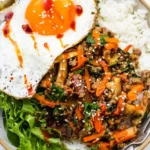
Shortcut Ground Beef Bibimbap Skillet
- Total Time: PT30M
- Yield: 4 servings 1x
- Diet: Dairy-Free
Description
Korean-inspired Ground Beef Bibimbap comes together in under 30 minutes with seasoned beef, sautéed veggies, and a flavorful sauce—great for busy nights.
Ingredients
- 2 tablespoons gochujang (plus more for serving)
- 1 teaspoon toasted sesame oil
- 3 tablespoons low sodium soy sauce
- 1 tablespoon rice vinegar
- 1 pound lean ground beef
- 1 teaspoon avocado oil
- 8 ounces shiitake mushrooms (sliced)
- 3 cloves garlic (chopped)
- 1 teaspoon ginger (grated)
- 1 cup carrot (grated or pre-shredded)
- 5 ounces baby spinach (roughly chopped)
- 4 large eggs
- sesame seeds (for garnish)
- 3 cups cooked white rice (or brown rice, for serving)
- Mixed greens (for serving)
Instructions
- Step: Add the gochujang, sesame oil, soy sauce, and vinegar to a small mixing bowl and whisk to evenly combine. Set aside.
- Step: Heat a large skillet over medium high heat. Add the ground beef and break the meat up into small pieces. Cook, stirring occasionally, until the meat is mostly cooked through, about 5 minutes. Drain off any excess liquid.
- Step: Add the mushrooms, garlic, and ginger and stir to combine. Cook until the mushrooms have released their liquid, about 5 minutes. Add the carrots and spinach; cook until the spinach is wilted, about 3 minutes. Add the gochujang sauce and stir to combine. Remove from heat.
- Step: In the meantime, heat the avocado oil over medium/low heat in a large nonstick skillet. Once the pan is hot, crack the eggs into the skillet and cook covered until the whites are set, 4-6 minutes. Remove from heat.
- Step: To assemble the bowls, add some rice and mixed greens to the base of a bowl. Top with the beef mixture and fried egg. Garnish with sesame seeds and serve with gochujang.
Notes
Sauce makes a little over ¼ cup. Meat mixture makes 4 heaping cups. Great for meal prep.
- Prep Time: PT10M
- Cook Time: PT20M
- Category: Dinner
- Method: Stir-fry
- Cuisine: Korean
Nutrition
- Serving Size: 1 bowl
- Calories: 508.5 kcal
- Sugar: 5.5 g
- Sodium: 952 mg
- Fat: 15.5 g
- Saturated Fat: 5.5 g
- Unsaturated Fat: 9.5 g
- Trans Fat: 0 g
- Carbohydrates: 52.5 g
- Fiber: 3 g
- Protein: 38 g
- Cholesterol: 257.5 mg