
This slow cooker beef stew is a comforting meal packed with tender meat and root vegetables in a rich broth. It is designed for easy preparation and long, slow cooking to ensure maximum tenderness.
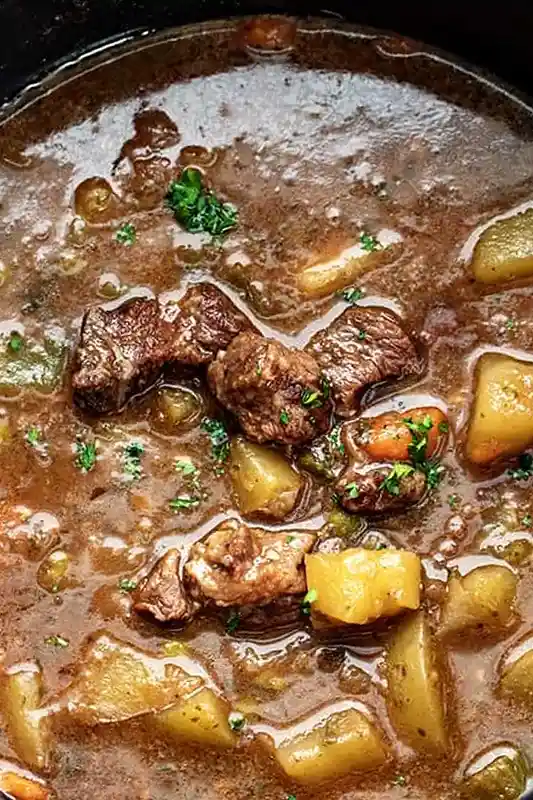
List of ingredients
- 3 tablespoons extra-virgin olive oil – used for searing the meat.
- 1 ½ pounds chuck beef, cut into cubes – provides a rich flavor and tender texture.
- ¼ cup (31.25 g) all-purpose flour – helps brown the beef and thicken the sauce.
- 2 ribs celery, chopped – adds a classic aromatic base.
- 3 large carrots, sliced into rounds – provides sweetness and color.
- ½ cup frozen peas – added for pops of green and texture.
- 5 Yukon gold potatoes, cut into bite-sized cubes (about 2 pounds) – keeps their shape better than russets.
- 1 yellow onion, chopped – creates a savory depth of flavor.
- 2 cloves garlic, minced – adds a pungent, savory aroma.
- 2 bay leaves – imparts a subtle herbal note to the broth.
- 1 teaspoon dried thyme – adds a woody, earthy fragrance.
- ¼ cup fresh parsley leaves, chopped – used for a fresh finish.
- 2 tablespoons tomato paste – thickens the broth and adds umami.
- ½ teaspoon kosher salt – enhances all the flavors.
- ½ teaspoon pepper – provides a mild spice.
- 2 ½ cups (600 g) beef broth – the primary liquid base.
- ½ cup beef broth – replaces the wine for a rich, savory taste.
step-by-step instructions
- Sear the beef: Heat the olive oil in a large cast-iron skillet over medium-high heat. Once the oil is hot, add the cubed beef and the flour, browning the meat for about 4-6 minutes.
- Combine ingredients: Transfer the browned beef into the slow cooker. Add the chopped celery, sliced carrots, frozen peas, cubed potatoes, chopped onion, minced garlic, bay leaves, thyme, parsley, tomato paste, salt, pepper, and all the beef broth.
- Slow cook: Set the slow cooker to low for 8 hours, or to high for 3-3 ½ hours. Cook until both the meat and the potatoes are fork-tender.
- Final touch: Carefully remove the bay leaves from the pot. Taste the stew and add more salt or pepper if desired before serving.
Beef Selection and Preparation
Why Chuck Roast is the Best Choice
Chuck roast comes from the shoulder of the cow and contains a high amount of connective tissue and marbling. During the long cooking process, this collagen breaks down into gelatin, which makes the meat incredibly tender. This cut ensures the beef does not dry out during eight hours of simmering.
Alternative Beef Cuts for Stew
If chuck roast is unavailable, bottom round or brisket are suitable alternatives. Bottom round is leaner, so you may find the texture slightly different, while brisket offers a rich flavor. Ensure any cut used is specifically intended for slow cooking or braising to avoid toughness.
Correct Cubing Techniques
Cut the beef into uniform cubes, approximately one inch in size, to ensure they cook evenly. Always cut against the grain of the meat to shorten the muscle fibers, which results in a more tender bite. Uniformity prevents some pieces from overcooking while others remain tough.
Vegetable Customization and Tips
Essential Root Vegetable Pairings
Carrots and celery form the aromatic foundation of the stew, while Yukon Gold potatoes provide a creamy texture. Yukon Golds are preferred over Russet potatoes because they hold their shape better over long cooking periods. This prevents the potatoes from dissolving into the broth and making it too thick.
Integrating Green Vegetables
Frozen peas are added to provide a bright color and a slight sweetness to the dish. For additional greens, you can stir in chopped kale or spinach during the last 30 minutes of cooking. This ensures the greens stay vibrant and do not overcook into a mushy consistency.
Expanding the Vegetable Variety
You can customize the stew by adding mushrooms, parsnips, or turnips for a more complex flavor profile. Green beans are another great addition, though they should be added later in the process. These vegetables add different textures and nutritional value to the meal.
Optimizing the Cooking Process
The Importance of Searing Meat
Browning the beef in a skillet creates a Maillard reaction, which develops complex flavor compounds that slow cooking alone cannot produce. This step seals in juices and gives the meat a deeper, richer taste. While optional, skipping this step results in a less savory broth.
Managing Slow Cooker Temperature Settings
Cooking on low for 8 hours allows the meat to break down more slowly and tenderize more effectively. The high setting is useful for tighter schedules, but it may result in slightly less tender beef. Always ensure the lid remains closed to maintain a consistent internal temperature.
Preventing Vegetable Mushiness
To avoid overcooked vegetables, ensure they are cut into large, consistent pieces. Potatoes should be cubed into at least one-inch pieces to withstand the long simmer. If using very soft vegetables, consider adding them halfway through the cooking cycle.
Adjusting Stew Consistency
Creating a Cornstarch Slurry
If you prefer a thicker gravy, ladle out half a cup of the hot liquid 15 minutes before serving. Whisk two teaspoons of cornstarch into this liquid until completely smooth, then stir the mixture back into the pot. Let it simmer for a few minutes to activate the thickening agent.
Reducing the Broth Volume
Another way to thicken the stew is by reducing the amount of liquid at the beginning. You can also leave the slow cooker lid slightly ajar during the last hour of cooking to allow some steam to escape. This concentrates the flavors and thickens the natural juices.
Using Flour for Thickness
The flour used during the browning stage helps thicken the stew naturally as it integrates with the broth. For a thicker result, you can increase the flour amount slightly when tossing the beef in the skillet. This creates a light roux that binds the liquid together.
Storage and Preservation
Guidelines for Refrigeration
Allow the stew to cool to room temperature before transferring it to an airtight container. Store it in the refrigerator for up to 3-4 days. Keeping it in a glass container helps maintain the flavor and prevents odors from leaching into the food.
Long-Term Freezing Methods
Beef stew freezes exceptionally well for 2-3 months. Use freezer-safe containers or heavy-duty resealable plastic bags, pressing out as much air as possible to prevent freezer burn. Label the bags with the date of preparation for easy tracking.
Safe Thawing Procedures
To thaw frozen stew, move it from the freezer to the refrigerator 24 hours before you plan to eat it. Avoid thawing it on the counter at room temperature to prevent bacterial growth. Once fully thawed, it can be reheated using any of the standard methods.
Reheating the Stew
Stovetop Reheating Instructions
Place the stew in a pot over medium-low heat and stir occasionally to prevent sticking. Add a small splash of beef broth or water if the stew has thickened too much in the fridge. Heat until it reaches a simmer before serving.
Using the Microwave for Quick Heating
Transfer the stew to a microwave-safe bowl and cover it with a lid or damp paper towel. Heat in short intervals, stirring every 60 seconds to ensure the heat is distributed evenly. This prevents hot spots and ensures the meat is heated through.
Slow Cooker Reheating Method
For larger portions, place the chilled stew back into the slow cooker on the low setting for 2-3 hours. This gentler heat helps the flavors meld again without overcooking the vegetables. Add a tablespoon of water if the liquid has reduced too much.
Troubleshooting Common Issues
Fixing a Watery Broth
If the stew is too thin, use the cornstarch slurry method described earlier. Alternatively, you can mash a few of the cooked potato cubes directly into the broth. This releases natural starches that thicken the liquid instantly.
Solving Tough Meat Problems
Tough meat usually indicates that the beef was not cooked long enough or the wrong cut was used. If the meat is still chewy, continue cooking on low for another 1-2 hours. Ensure you are using a marbled cut like chuck roast for the best results.
Balancing Overly Salty Stew
If the stew tastes too salty, add a peeled, halved potato to the pot and simmer for an hour; the potato will absorb some of the excess salt. You can also dilute the stew with a bit more unsalted beef broth or water. A teaspoon of sugar or lemon juice can also help balance the saltiness.
Frequently Asked Questions
Can I use a different type of potato?
Yes, you can use Russet potatoes, but they are starchier and more likely to break apart. Red potatoes are also a good option as they hold their shape well. Yukon Golds are recommended for the best balance of texture and creaminess.
Do I have to brown the meat?
You can skip browning if you are short on time, and the stew will still be edible. However, you will lose the depth of flavor and the rich color associated with the Maillard reaction. Browning is highly recommended for a professional taste.
Can this be made in a pressure cooker?
Yes, this recipe can be adapted for a pressure cooker or Instant Pot. Reduce the cooking time to approximately 35-45 minutes under high pressure. Remember to perform the browning step using the saute function before pressure cooking.
Print
Slow Cooker Beef Stew with Hearty Vegetables
- Total Time: 8 hours 25 minutes
- Yield: 8 servings 1x
- Diet: General
Description
Crock Pot Beef Stew is loaded with tender beef, hearty vegetables, and a flavorful broth for a dish that is the ultimate comfort food.
Ingredients
- 3 tablespoons extra-virgin olive oil
- 1 ½ pounds chuck beef, cut into cubes
- ¼ cup (31.25 g) all-purpose flour
- 2 ribs celery, chopped
- 3 large carrots, sliced into rounds
- ½ cup frozen peas
- 5 Yukon gold potatoes, cut into bite-sized cubes (about 2 pounds)
- 1 yellow onion, chopped
- 2 cloves garlic, minced
- 2 bay leaves
- 1 teaspoon dried thyme
- ¼ cup fresh parsley leaves, chopped
- 2 tablespoons tomato paste
- ½ teaspoon kosher salt
- ½ teaspoon pepper
- 3 cups beef broth
Instructions
- Step 1: To a large cast-iron skillet over medium-high heat, add oil.
- Step 2: Once hot, add beef with the flour. Brown the beef in the skillet (4-6 minutes).
- Step 3: Add the browned beef to the slow cooker along with the remaining ingredients.
- Step 4: Cook on low for 8 hours, or on high for 3-3 ½ hours, or until the potatoes and meat are tender. Remove the bay leaves and season with more salt and pepper if needed.
Notes
Browning the meat enhances flavor and creates a better texture. For a thicker stew, whisk 2 teaspoons of cornstarch into 1/2 cup of the liquid from the stew and stir it back in 15 minutes before serving.
- Prep Time: 25 minutes
- Cook Time: 8 hours
- Category: Main Course
- Method: Slow Cooking
- Cuisine: American
Nutrition
- Serving Size: 1 serving
- Calories: 371 kcal
- Sugar: 7 g
- Sodium: 820 mg
- Fat: 18 g
- Saturated Fat: 7 g
- Unsaturated Fat: 11 g
- Trans Fat: 0 g
- Carbohydrates: 30 g
- Fiber: 6 g
- Protein: 25 g
- Cholesterol: 85 mg