
This slow cooker beef stew is a hearty, protein-packed meal featuring tender beef, root vegetables, and a savory gravy. It is designed for long, slow cooking to ensure the meat is fork-tender and the flavors are fully developed.
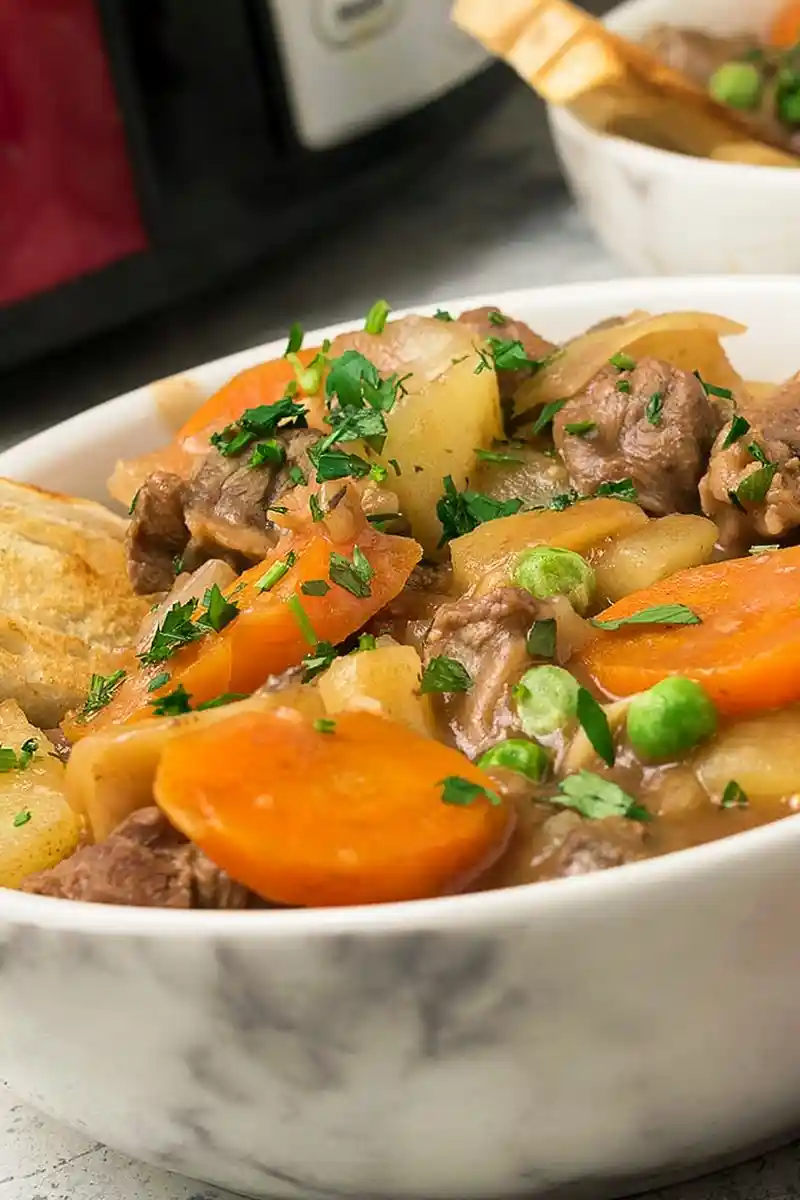
List of ingredients
- 1 tablespoon olive oil – used for searing the beef.
- 3 pounds beef chuck – trimmed of excess fat and cut into 1-inch pieces.
- Freshly ground salt and pepper – to taste for seasoning the meat.
- 2 1/2 cups beef broth or beef bone broth – provides the liquid base.
- 2 tablespoons tomato paste – adds thickness and umami depth.
- 1 tablespoon Worcestershire sauce – enhances the savory flavor.
- 1/2 tablespoon balsamic vinegar – adds a subtle tang and sweetness.
- 1 teaspoon dried thyme – provides an earthy herbal note.
- 1 teaspoon salt – for overall seasoning.
- Freshly ground black pepper – for added spice.
- 6 garlic cloves – minced for aromatic flavor.
- 1 large yellow onion – cut into chunks.
- 4 large carrots – peeled and cut into 1/2-inch diagonal slices.
- 1 pound Yukon gold potatoes – diced into 1/2-inch cubes.
- 1/4 cup all-purpose flour – or all-purpose gluten-free flour for thickening.
- 1 cup frozen peas – added at the end for color and texture.
step-by-step instructions
- Sear the Beef: Heat 1 tablespoon of olive oil in a large pan over medium heat. Season beef pieces with salt and pepper, then brown them in batches for about 5 minutes each to avoid overcrowding. Transfer the browned beef to a 6- or 8-quart slow cooker.
- Combine Liquids: Add the beef broth, tomato paste, Worcestershire sauce, balsamic vinegar, dried thyme, salt, and black pepper to the slow cooker. Stir these ingredients together until well mixed.
- Add Vegetables: Stir in the minced garlic, onion chunks, sliced carrots, and cubed potatoes.
- Slow Cook: Cover the slow cooker and cook on low for 7 to 8 hours, or on high for 4 to 5 hours. Cooking on low is recommended for maximum meat tenderness.
- Prepare Thickener: Ladle 1 cup of the hot cooking liquid from the slow cooker into a medium bowl. Whisk in the flour until the mixture is smooth and free of lumps.
- Thicken the Stew: Stir the flour slurry back into the slow cooker.
- Final Simmer: Add the frozen peas and simmer uncovered on high for an additional 10 to 15 minutes until the gravy reaches the desired thickness.
- Serve: Dish the stew into bowls and serve immediately with toasted French bread, cornbread, crackers, or biscuits.
Meat Selection and Preparation
Use Beef Chuck for Maximum Tenderness
Beef chuck is the ideal cut for slow cooking because it contains a high amount of connective tissue and collagen. During the long cooking process, this collagen breaks down into gelatin, which makes the meat tender and adds richness to the sauce. Leaner cuts may become dry or tough when cooked for several hours.
Trim Excess Fat for a Cleaner Sauce
While some fat is necessary for flavor, trimming large pieces of hard white fat from the chuck roast prevents the stew from becoming overly greasy. Aim for a balanced amount of marbling within the meat cubes. This ensures the gravy remains savory without a heavy oil layer on top.
The Importance of Searing the Meat
Browning the beef in a pan before adding it to the slow cooker creates a Maillard reaction, which develops deep, complex flavors. Searing the exterior helps the meat retain its juices and prevents it from having a boiled texture. Working in batches ensures the pan stays hot enough to brown the meat rather than steaming it.
Vegetable Preparation and Timing
Selecting the Best Potatoes
Yukon Gold or red potatoes are preferred over russet potatoes for this recipe. Waxy potatoes have less starch and hold their shape much better during long simmer times. Russet potatoes tend to break down and dissolve, which can make the stew unintentionally cloudy or mushy.
Slicing Carrots for Even Cooking
Cutting carrots into 1/2-inch diagonal slices increases the surface area and ensures they cook at a similar rate to the potatoes. Consistency in size is key to preventing some vegetables from being overcooked while others remain hard. Peel the carrots thoroughly to remove the bitter outer skin.
Adding Peas at the Final Stage
Frozen peas should only be added during the last 15 minutes of cooking. Cooking them for the full duration would cause them to lose their bright green color and become mushy. Adding them at the end preserves their snap and provides a fresh visual contrast to the rich brown gravy.
Flavor Enhancement Techniques
Adding Depth with Tomato Paste
Tomato paste provides a concentrated burst of flavor and a subtle acidity that cuts through the richness of the beef. It also contributes to the body of the sauce, helping it feel more substantial on the palate. Stir it well into the broth to avoid clumps of paste in the final dish.
Balancing Flavor with Balsamic Vinegar
A small amount of balsamic vinegar introduces a complex sweetness and acidity. This brightness balances the heavy, savory notes of the beef broth and Worcestershire sauce. The acid also helps in breaking down the meat fibers, contributing to a more tender result.
Enhancing Umami with Worcestershire Sauce
Worcestershire sauce adds a layer of fermented, salty depth known as umami. This condiment complements the beef and garlic, creating a more professional, rounded flavor profile. It transforms a simple broth into a rich, savory gravy.
Thickening the Stew Properly
Creating a Flour Slurry to Avoid Lumps
Adding flour directly into a hot slow cooker often results in clumps that are impossible to stir out. By mixing the flour with one cup of the cooking liquid first, you create a smooth slurry. This ensures the thickening agent is evenly distributed throughout the entire pot.
Gluten-Free Flour Alternatives
For those avoiding gluten, all-purpose gluten-free flour blends work effectively as a substitute. Most 1:1 blends maintain the same thickening power as wheat flour. Alternatively, a cornstarch slurry can be used, though it may produce a slightly glossier finish.
Timing the Thickening Process
Thickening should be the final step before adding the peas. This allows you to gauge the exact consistency of the stew and add more slurry if a thicker gravy is desired. Simmering uncovered for 10-15 minutes allows excess moisture to evaporate, further concentrating the flavor.
Slow Cooker Management
Comparing Low and High Heat Settings
Cooking on the low setting for 7 to 8 hours is superior for beef stew. The gentler heat allows the muscle fibers to relax and the collagen to melt slowly. The high setting is faster but can occasionally lead to tougher meat if the liquid evaporates too quickly.
Preventing Overcooked Beef
If the stew is finished before you are ready to eat, switch the slow cooker to the ‘warm’ setting. Continuing to cook the beef beyond the point of tenderness can cause the protein fibers to tighten again, making the meat dry. The warm setting maintains the temperature without further cooking the ingredients.
Monitoring Liquid Levels
Ensure the beef and vegetables are mostly submerged in the broth. If you notice the liquid level is too low during the cooking process, add a small amount of water or extra beef broth. Sufficient liquid is necessary to prevent the bottom of the pot from scorching.
Serving and Pairing Ideas
Best Breads for Dipping
Because the gravy is rich and thick, crusty breads are the best accompaniment. Toasted French bread or a warm sourdough baguette can soak up the sauce. Cornbread provides a slightly sweet contrast that pairs well with the savory beef.
Complementary Side Dishes
A light, acidic side dish can balance the heaviness of the stew. A simple green salad with a vinaigrette or steamed green beans almondine provides a refreshing counterpoint. Avoid other heavy starches, as the potatoes in the stew are already filling.
Presentation Tips for Family Meals
Serve the stew in wide, shallow bowls to showcase the colorful carrots and peas. Garnish with a sprinkle of freshly chopped parsley or chives for a professional look. Placing a toasted biscuit on the side of the plate completes the presentation.
Storage and Reheating
Refrigeration Guidelines for Leftovers
Store leftover beef stew in an airtight glass container in the refrigerator for 3 to 4 days. As the stew cools, the gravy will likely thicken further due to the gelatin in the beef. This makes it very stable for short-term storage.
Freezing for Long-Term Storage
Beef stew freezes well for up to 3 months. Allow the stew to cool completely before transferring it to a freezer-safe container or heavy-duty freezer bags. Leave a small amount of headspace at the top of the container to allow for expansion during freezing.
Stovetop Reheating Method
For the best texture, reheat the stew in a saucepan over low to medium heat. Add a splash of beef broth or water to loosen the gravy, which often thickens significantly when cold. Stir gently to avoid breaking up the tender beef and vegetables.
Microwave Reheating Tips
Place the stew in a microwave-safe dish and cover it with a lid to retain moisture. Heat in 60-second intervals, stirring in between to ensure the heat is distributed evenly. This prevents the edges from overcooking while the center remains cold.
Reheating in the Slow Cooker
You can reheat leftovers in the crockpot on the low setting for 2 to 3 hours. Ensure there is enough liquid to prevent scorching. This method is ideal for reheating large quantities for a second family meal.
Troubleshooting and FAQ
Why is my stew too thin?
If the stew is too watery, you may not have simmered it long enough uncovered at the end. You can prepare another small batch of flour slurry and stir it in, then simmer on high for another 10 minutes to achieve the desired thickness.
Why is the beef still tough?
Tough beef usually means it has not cooked long enough for the collagen to break down. Continue cooking on low for another hour. If the meat is lean, it may never become truly tender, as collagen is only found in tougher cuts like chuck.
Can I use a different cut of meat?
While chuck is best, you can use beef brisket or bottom round. Brisket is also high in collagen and works well. Avoid using sirloin or tenderloin, as these lean cuts will become dry and tough during a long slow-cook cycle.
How do I prevent the vegetables from becoming mushy?
Ensure you are using waxy potatoes like Yukon Gold. If you find your carrots are softening too much, cut them into larger chunks. Avoid stirring the pot too vigorously during the final stages of cooking.
Is it necessary to sear the beef first?
Searing is not required for safety, but it is highly recommended for flavor. Without searing, the beef lacks the deep caramelized notes that characterize a traditional stew. The meat will also have a paler color and a softer texture.
Does the stew taste better the next day?
Yes, like many braised dishes, the flavors continue to meld and intensify after refrigeration. The redistribution of flavors into the meat and vegetables often makes the leftovers taste more cohesive than the initial batch.
Print
Slow Cooker Beef Stew with Root Vegetables
- Total Time: 7 hours 20 minutes
- Yield: 6 servings 1x
- Diet: General
Description
Pioneer Woman’s Crockpot Beef Stew is a wonderful dish, cooked to perfection with garlic, fresh herbs, potatoes, and carrots. It provides a tasty, protein-packed supper that the entire family will enjoy!
Ingredients
- 1 tablespoon olive oil
- 3 pounds beef chuck, trimmed of excess fat and cut into 1-inch pieces
- Freshly ground salt and pepper, to taste
- 2 1/2 cups beef broth
- 2 tablespoons tomato paste
- 1 tablespoon Worcestershire sauce
- 1/2 tablespoon balsamic vinegar
- 1 teaspoon dried thyme
- 1 teaspoon salt
- Freshly ground black pepper
- 6 garlic cloves, minced
- 1 large yellow onion, cut into chunks
- 4 large carrots, peeled and cut into 1/2-inch diagonal slices
- 1 pound Yukon gold potatoes, diced into 1/2-inch cubes
- 1/4 cup all-purpose flour
- 1 cup frozen peas
Instructions
- Step: Add 1 tablespoon of olive oil to a large pan set over medium heat.
- Step: Season the beef with salt and pepper. Cook in batches to allow a good sear, add the beef to the pan and allow to cook until browned, about 5 minutes per batch. Transfer the beef to a 6- or 8-quart capacity slow cooker.
- Step: Add the beef broth, tomato paste, Worcestershire sauce, balsamic vinegar, thyme, salt, and pepper to the slow cooker, stirring until mixed. Add the garlic, onion pieces, carrots, and cubed potatoes to the slow cooker.
- Step: Cover and cook on low for 7 to 8 hours or on high for 4 to 5 hours.
- Step: Transfer 1 cup of the juices from the slow cooker to a medium-sized bowl. Whisk in the flour until there are no lumps.
- Step: Stir the flour mixture into the slow cooker.
- Step: Add the frozen peas and simmer, uncovered, on high for an additional 10 to 15 minutes, until the beef stew thickens slightly.
- Step: Serve immediately with French bread, cornbread, crackers, or biscuits that have been toasted.
Notes
Sear the beef before cooking in the crockpot to add more flavor. Cooking on low for 7 to 8 hours ensures the meat becomes tender. To avoid lumps when thickening, whisk flour into 1 cup of beef stock from the pot before stirring it back in.
- Prep Time: 20 minutes
- Cook Time: 7 hours
- Category: Main Course
- Method: Slow Cooking
- Cuisine: American
Nutrition
- Serving Size: 1 serving
- Calories: 569 kcal
- Sugar: 6 g
- Sodium: 1058 mg
- Fat: 29 g
- Saturated Fat: 12 g
- Unsaturated Fat: 18 g
- Trans Fat: 2 g
- Carbohydrates: 29 g
- Fiber: 5 g
- Protein: 49 g
- Cholesterol: 156 mg