
This easy slow cooker recipe delivers a comforting bowl of chicken noodle soup with minimal effort. Simply combine the fresh ingredients and let your crockpot simmer the flavors all day long.
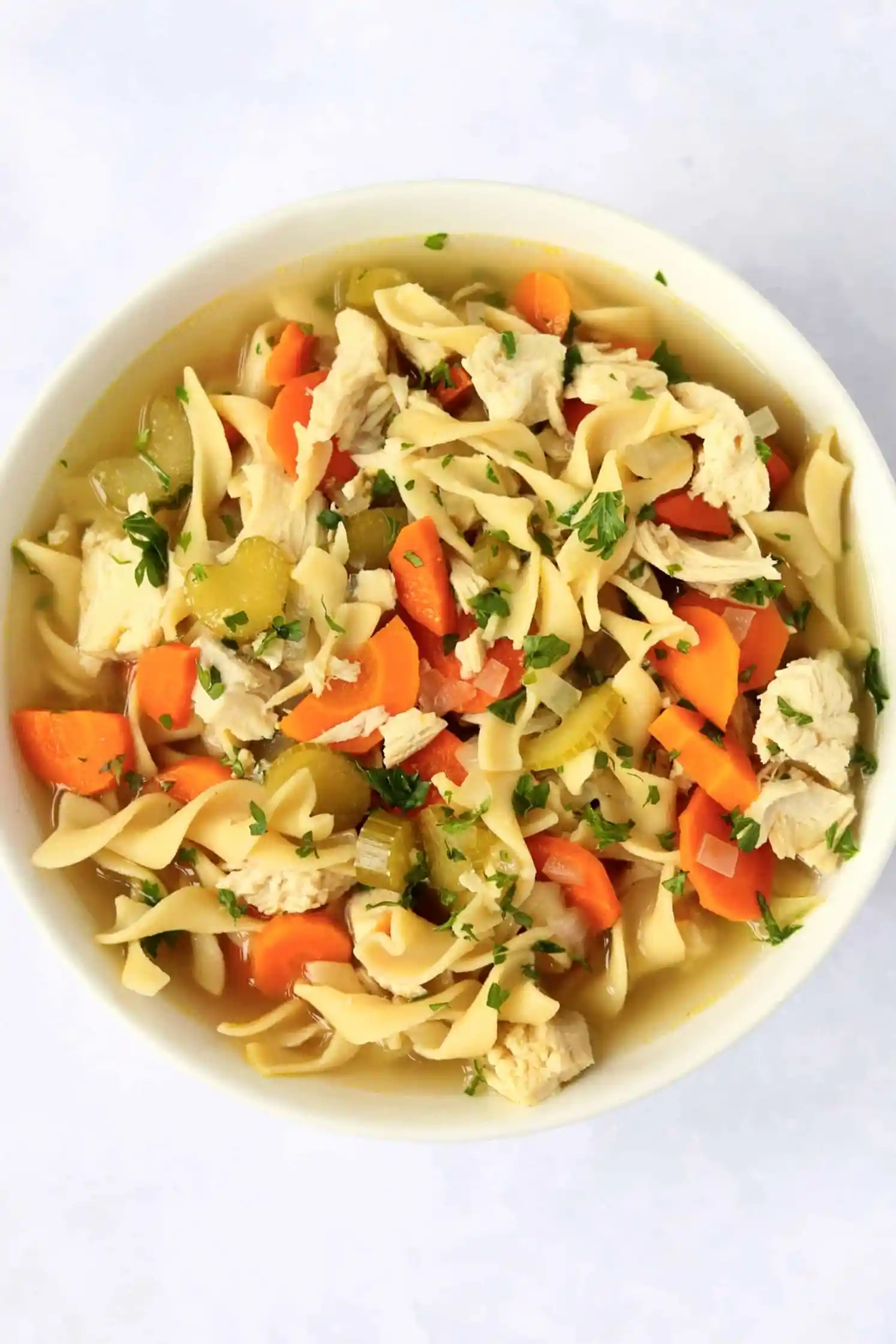
List of ingredients
- 1 medium yellow onion, diced – provides a sweet, aromatic base.
- 4 medium carrots, sliced into rounds or half moons – adds color and natural sweetness.
- 4 stalks celery, sliced – contributes classic savory depth to the broth.
- 4 cloves garlic, minced – provides a pungent, aromatic punch.
- 8 cups chicken stock or broth, low sodium preferred – the essential savory liquid base.
- 2 large boneless, skinless chicken breasts, about 1.5lbs (or chicken thighs) – the primary lean protein.
- 2 dried bay leaves – adds a subtle, herbal complexity.
- 1 teaspoon dried thyme (or 1 tbs fresh) – provides a woody, citrusy note.
- 1 teaspoon dried rosemary (or 1 tbs fresh, chopped) – adds a deep earthy aroma.
- salt and pepper, to taste – essential seasonings for overall balance.
- 8 ounces egg noodles – the hearty, comforting pasta element.
- 1/2 lemon, juiced – adds brightness and a touch of acidity.
- 3 tablespoons fresh parsley, finely chopped – provides a fresh, clean finish.
step-by-step instructions
- Combine Base: In a large slow cooker, add all ingredients except for the fresh parsley, lemon juice, and egg noodles. Season the mixture with salt and pepper to taste.
- Slow Cook: Cook on low for 6-8 hours until the chicken is fully cooked and the vegetables are tender. Note that cook times may vary depending on your specific crockpot model and the size of your chicken.
- Prepare Chicken and Noodles: Remove the chicken breasts from the pot and shred or chop them using two forks. Return the shredded chicken to the slow cooker and stir in the egg noodles, ensuring they are fully submerged in the liquid.
- Final Simmer: Cover the slow cooker and cook on low for another 5-10 minutes until the noodles are just tender. Alternatively, you can cook the noodles separately in a pot of boiling water on the stove to keep them firmer.
- Finish and Serve: Once the noodles are cooked, stir in the fresh lemon juice and chopped parsley. Serve immediately while hot.
Flavor Enhancement Strategies
Brown the Chicken First
Searing the chicken breasts or thighs in a skillet over medium-high heat before adding them to the slow cooker creates a Maillard reaction. This process develops deep, caramelized flavors that enrich the overall taste of the broth. Remember to scrape the browned bits from the pan into the pot.
Use Low Sodium Broth
Starting with low sodium chicken stock allows you to maintain complete control over the salt levels. Because slow cookers reduce liquid over time, using standard broth can often result in a soup that is too salty. You can always add more salt at the end to reach your preferred taste.
Sauté the Mirepoix
While you can dump the vegetables in raw, sautéing the onion, carrots, and celery in a bit of oil first enhances their natural sweetness. This extra step creates a more complex flavor profile in the final soup. It only takes a few minutes but makes a noticeable difference in depth.
Choosing Fresh vs Dried Herbs
Dried herbs are more concentrated and hold up well during long cooking times, while fresh herbs provide a bright, vibrant note. If you prefer fresh thyme or rosemary, use three times the amount listed for the dried version. Adding fresh parsley at the very end preserves its delicate flavor.
Ingredient Modifications
Swap Breasts for Chicken Thighs
Boneless, skinless chicken thighs are an excellent alternative to breasts for slow cooking. Thighs contain more fat and connective tissue, which means they remain juicy and tender even after eight hours. They offer a richer flavor and are much harder to overcook.
Using Different Pasta Types
While egg noodles are the traditional choice, you can use ditalini, rotini, or small shells for a different texture. Be mindful that different pasta shapes have varying cook times. Always check the package instructions and test the pasta for doneness before serving.
Incorporating Extra Vegetables
You can easily customize this recipe by adding more vegetables like diced parsnips, turnips, or peas. Harder root vegetables should be added at the beginning of the cooking process. Softer vegetables, like frozen peas or spinach, should be stirred in during the last ten minutes.
Utilizing Rotisserie Chicken
If you have a leftover rotisserie chicken, you can significantly shorten the cooking time. Cook the soup base without the raw chicken until the vegetables are tender. Add the pre-cooked shredded chicken during the final hour of cooking just to warm it through.
Cooking Methods and Equipment
Stovetop Adaptation
To make this on the stove, sauté the vegetables in a large Dutch oven and then add the broth and seasonings. Simmer the raw chicken breasts in the liquid for about 15 to 20 minutes until cooked through. Remove the chicken to shred it, boil the noodles separately, and combine everything at the end.
Pressure Cooker Method
For a faster version, use an Instant Pot or similar pressure cooker on the high-pressure setting for 10 to 15 minutes. Perform a quick pressure release, shred the chicken, and then use the sauté function to cook the noodles. This reduces the total time from hours to under an hour.
Selecting the Correct Crockpot Size
This recipe is designed for a large 7-8 quart slow cooker to ensure there is plenty of room for the liquid and ingredients. If you use a smaller 4-6 quart model, you should halve the recipe. Overfilling a slow cooker can lead to uneven cooking and potential overflows.
Storage and Preservation
Refrigerator Storage Tips
Store leftover soup in an airtight container in the refrigerator for up to four days. Be aware that egg noodles will continue to absorb liquid while sitting in the fridge. You may need to add a splash of chicken broth when reheating to restore the original consistency.
Freezing the Soup Base
This soup is freezer-friendly, but it is best to freeze it without the noodles. Noodles tend to become mushy and break apart when frozen and thawed. Store the broth, vegetables, and chicken in freezer bags for up to four months, then cook fresh noodles when you are ready to serve.
Preventing Mushy Noodles
The most effective way to avoid mushy noodles, especially for leftovers, is to cook the pasta separately on the stove. Add a portion of cooked noodles to each individual bowl before ladling the hot soup over them. This ensures the pasta maintains its structure and texture.
Serving and Presentation
Garnishing for Visual Appeal
A final sprinkle of fresh chives or cracked black pepper adds a professional touch to the presentation. Serving the soup with a fresh lemon wedge on the side allows guests to adjust the acidity to their liking. This simple addition brightens the heavy flavors of the broth.
Ideal Side Dish Pairings
Pair this hearty soup with a slice of toasted sourdough bread or a warm garlic baguette. A crisp green salad with a light vinaigrette provides a refreshing contrast to the richness of the chicken and noodles. A grilled cheese sandwich is also a classic and comforting accompaniment.
Adjusting the Soup Consistency
If you prefer a thicker broth, you can mash a few of the cooked carrots against the side of the pot. Alternatively, stir in a small amount of cornstarch slurry during the final heating phase. This creates a slightly creamier texture without adding heavy dairy.
Preparation Efficiency
Buying Pre-cut Mirepoix
To save time on prep work, you can purchase pre-cut mirepoix from the produce section of most grocery stores. Mirepoix is the standard mixture of diced onion, carrots, and celery. This allows you to start your slow cooker in minutes rather than spending time chopping.
Advance Meal Prepping
You can chop all your vegetables and mince the garlic the night before. Store them in a sealed container or a freezer bag in the refrigerator. In the morning, simply dump the prepped vegetables and other ingredients into the crockpot and turn it on.
Nutritional Enhancements
Adding Nutrient-Dense Greens
Stirring in a handful of chopped kale, baby spinach, or Swiss chard during the last five minutes of cooking adds vital nutrients. The residual heat will wilt the greens perfectly without overcooking them. This adds a pop of color and extra vitamins to every bowl.
Boosting the Protein Content
For an even heartier meal, consider adding white cannellini beans or shredded turkey to the mix. These additions increase the protein and fiber content, making the soup more filling. Ensure any canned beans are rinsed and drained before being added to the pot.
Customizing the Spice Profile
Adding a Hint of Heat
If you enjoy a bit of spice, stir in a pinch of red pepper flakes or a dash of cayenne pepper. This adds a subtle warmth that can be particularly soothing during the winter months. Start with a small amount and adjust based on your heat preference.
Deepening the Umami Flavor
A teaspoon of Worcestershire sauce or a small amount of soy sauce can add a layer of umami to the broth. This enhances the savory quality of the chicken and vegetables. Use these additions sparingly so they do not overpower the natural flavor of the chicken.
Troubleshooting and FAQs
Why is my soup too salty?
This usually happens if the broth has reduced too much or if a high-sodium stock was used. To fix this, stir in a cup of unsalted chicken broth or water to dilute the salt. Adding a small amount of unsalted diced potato can also help absorb some of the excess salt.
How can I thicken the broth?
If the soup is too thin, simmer it without the lid for 30 minutes to reduce the liquid. You can also whisk in a slurry of one tablespoon of cornstarch and one tablespoon of water. Stir the slurry into the boiling soup and simmer for a few minutes until thickened.
Can I add more vegetables to this recipe?
Yes, you can add any vegetables you enjoy, such as corn, peas, or diced potatoes. Ensure that hard vegetables like potatoes are added at the beginning so they have time to soften. Add soft vegetables like peas in the last 30 minutes to prevent them from becoming overcooked.
What should I do if the chicken is dry?
Dry chicken usually occurs when chicken breasts are overcooked. To avoid this, check the internal temperature to ensure it reaches 165 degrees F but does not go far beyond it. Switching to chicken thighs is the best way to ensure moist meat in a slow cooker.
Print
Slow Cooker Chicken Noodle Soup
- Total Time: 7 hours 10 minutes
- Yield: 6–8 servings 1x
- Diet: General
Description
Slow Cooker Chicken Noodle Soup is the ultimate comfort recipe. Hearty, comforting, and perfect for cold weather. Let your crockpot do the work. Just add all the ingredients and let it cook all day.
Ingredients
- 1 medium yellow onion, diced
- 4 medium carrots, sliced into rounds or half moons
- 4 stalks celery, sliced
- 4 cloves garlic, minced
- 8 cups low sodium chicken stock or broth
- 2 large boneless, skinless chicken breasts, about 1.5lbs
- 2 dried bay leaves
- 1 teaspoon dried thyme
- 1 teaspoon dried rosemary
- salt and pepper, to taste
- 8 ounces egg noodles
- 1/2 lemon, juiced
- 3 tablespoons fresh parsley, finely chopped
Instructions
- Add Ingredients: In a large slow cooker, add all ingredients except for the fresh parsley, lemon juice, and egg noodles. Season with salt and pepper to taste.
- Slow Cook: Cook on low for 6-8 hours until the chicken is fully cooked and the veggies are tender.
- Shred and Add Noodles: Remove chicken breasts, shred with two forks, and add back into the slow cooker. Stir in egg noodles, ensuring they are submerged, cover, and cook on low for another 5-10 minutes until tender.
- Finish: Stir in the lemon juice and fresh parsley.
Notes
Egg noodles will continue to cook in the hot soup. If you prefer firmer noodles or are storing leftovers, cook the noodles separately on the stove and add them to individual bowls.
- Prep Time: 10 minutes
- Cook Time: 7 hours
- Category: Main Dish
- Method: Slow Cooker
- Cuisine: American
Nutrition
- Serving Size: 1 bowl
- Calories: 276 kcal
- Sugar: 4 g
- Sodium: 410.1 mg
- Fat: 5.9 g
- Saturated Fat: 1.5 g
- Unsaturated Fat: 4.4 g
- Trans Fat: 0 g
- Carbohydrates: 21.6 g
- Fiber: 2.9 g
- Protein: 34.7 g
- Cholesterol: 93.7 mg