
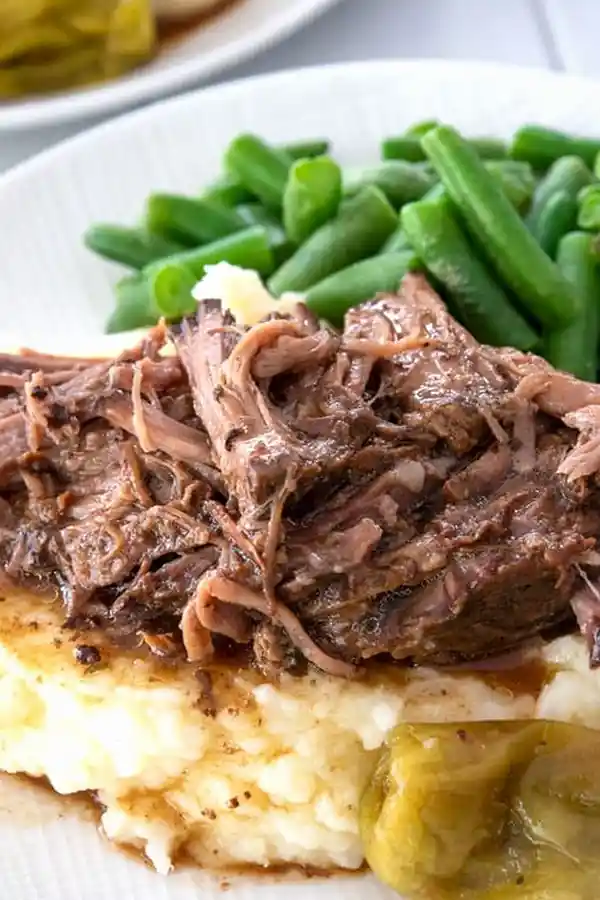
This savory beef roast is exceptionally tender and features a zesty gravy made from ranch seasoning and pepperoncini peppers. It is a simple dump-and-go meal that requires minimal preparation for a high-yield dinner.
List of ingredients
- 3-4 lbs beef chuck – select a piece with good marbling for maximum tenderness.
- 1 packet ranch seasoning – adds a blend of herbs and garlic.
- 1 packet au jus gravy – provides a deep, salty beef base.
- 2 tablespoons unsalted butter (optional) – used to enrich the consistency of the sauce.
- 1/2 16oz jar peperoncini peppers (about 10 peppers and 1/2 cup juice) – provides acidity and a mild tang.
step-by-step instructions
- Prepare the pot: Place the beef chuck roast into a 6-quart slow cooker.
- Season the meat: Sprinkle the ranch seasoning packet and the au jus gravy packet evenly over the top of the roast.
- Add aromatics: Place the butter pieces, whole pepperoncini peppers, and the reserved pepper juice on top of the seasoning.
- Slow cook: Cover the slow cooker with a tight lid and cook on the LOW setting for 8 hours, or until the meat is tender enough to shred easily with a fork.
- Oven alternative: If using an oven, place all ingredients in a baking dish, cover tightly with foil, and bake at 300°F for approximately 1 hour per pound of meat.
Cooking Techniques for Maximum Tenderness
Selecting the Right Cut of Beef
Beef chuck is the ideal choice for this recipe because it comes from the shoulder area, which contains significant connective tissue. During the long cooking process, this collagen breaks down into gelatin, resulting in a melt-in-your-mouth texture. Avoid lean cuts like sirloin or eye of round, as they can become dry and tough when cooked for several hours.
The Importance of Low Heat
Using the LOW setting on your slow cooker ensures the meat cooks evenly without boiling. High temperatures can cause the muscle fibers to contract too quickly, which may lead to a tougher result. Cooking at a lower temperature allows the fats and connective tissues to render slowly, ensuring a consistent tender texture throughout the roast.
Testing for Doneness
The roast is fully cooked when it easily separates into shreds using two forks with very little resistance. If the meat still feels rubbery or resists shredding, it needs more time to break down the collagen. Continue cooking in 30-minute increments until the desired fall-apart consistency is achieved.
Alternative Cooking Methods
Oven Braising Process
When using an oven, it is critical to seal the baking dish or roasting pan tightly with heavy-duty aluminum foil. This creates a closed environment that traps steam and prevents the liquids from evaporating. A temperature of 300°F is recommended to mimic the gentle heat of a slow cooker over several hours.
Pressure Cooker Adaptation
To make this in an Instant Pot, use the manual high-pressure setting for 60 to 90 minutes depending on the size of the roast. Allow for a natural pressure release for at least 15 minutes to keep the meat tender. This method significantly reduces the cooking time while maintaining the core flavor profile.
Dutch Oven Method
A heavy-bottomed Dutch oven is an excellent tool for this roast when used on a stovetop at the lowest heat setting. Keep the lid tightly closed and check the liquid levels occasionally to ensure the meat does not scorch. This method allows for better heat distribution and a more robust braising environment.
Flavor Customizations and Substitutions
Controlling the Zest Level
If you prefer a milder flavor, omit the whole pepperoncini peppers and use only the brine from the jar. The vinegar in the juice provides the necessary acidity to balance the richness of the beef without adding the texture of the peppers. This is a great option for children or those sensitive to mild heat.
Managing Salt Content
Since both the ranch and au jus packets contain a high amount of sodium, avoid adding extra salt during the preparation. If you are monitoring salt intake, look for low-sodium versions of these packets or make your own blends using garlic powder, onion powder, and dried parsley. Always taste the gravy at the end before adding any additional seasoning.
Enhancing the Gravy with Herbs
Adding a sprig of fresh rosemary or thyme on top of the roast can introduce earthy notes that complement the beef. These herbs pair well with the tanginess of the pepperoncini and the creaminess of the ranch seasoning. Remove the stems before serving the final dish.
Optimal Side Dish Pairings
Creamy Mashed Potatoes
Mashed potatoes are the classic accompaniment because they act as a neutral base for the robust gravy. The starch in the potatoes helps absorb the salty and tangy flavors of the sauce. For a richer side, fold in a small amount of sour cream or chives.
Buttered Egg Noodles
Wide egg noodles provide a great texture that holds onto the thick gravy. Toss the cooked noodles in a bit of butter and parsley before topping them with the shredded beef. This creates a comforting, hearty meal that feels like a traditional casserole.
Steamed White or Brown Rice
Rice is an excellent alternative for those avoiding gluten or looking for a lighter base. The grains absorb the beef juices and pepper juice, making the rice flavorful. Basmati or Jasmine rice are recommended for their aromatic qualities.
Crusty French Bread
A toasted baguette or sourdough loaf is perfect for dipping into the remaining gravy. The crunch of the bread provides a contrast to the softness of the slow-cooked beef. Slicing the bread into thick pieces makes it easy to serve as a side for sharing.
Creative Serving Suggestions
Shredded Beef Sandwiches
Transform the roast into sandwiches by piling the shredded beef onto a toasted sub roll or French baguette. Top the meat with a slice of provolone or Swiss cheese and melt it under a broiler for a minute. Add a few extra pepperoncini slices for a spicy kick.
Beef Sliders with Caramelized Onions
Use small brioche buns to create sliders filled with the Mississippi roast. Topping the beef with sautéed caramelized onions adds a sweetness that balances the acidity of the pepper brine. Serve these with a side of coleslaw for a complete meal.
Open-Faced Roast Sandwiches
Place a thick slice of toasted sourdough on a plate and heap the shredded beef on top. Pour a generous amount of the cooking gravy over the meat and bread until it is thoroughly soaked. This presentation is traditional and allows the bread to absorb the maximum amount of flavor.
Storage and Preservation
Refrigerating Leftovers
Store the cooked roast and the accompanying gravy in an airtight glass or plastic container in the refrigerator. Keep the meat submerged in the liquid to prevent it from drying out during storage. The roast will stay fresh and flavorful for 3 to 4 days.
Freezing for Long-Term Use
For longer storage, place the cooled beef and gravy into a heavy-duty freezer-safe bag. Squeeze out as much air as possible to prevent freezer burn. The roast can be stored in the freezer for up to 3 months without a significant loss in quality.
Thawing Process
Thaw frozen roast slowly in the refrigerator overnight to maintain the best texture. Avoid thawing the meat at room temperature to ensure food safety. Once thawed, follow the reheating instructions to restore the temperature and flavor.
Reheating Guidelines
Stovetop Reheating Method
Place the beef and gravy in a saucepan over medium-low heat. Add a tablespoon of water or beef broth if the sauce has thickened too much in the fridge. Stir gently to avoid over-shredding the meat and heat until steaming.
Microwave Reheating
Transfer a portion of the roast and gravy to a microwave-safe dish and cover it with a lid or damp paper towel. Use medium power and heat in 1-minute intervals, stirring in between. This prevents the edges of the beef from becoming rubbery or overcooked.
Oven Reheating
Place the roast in a small oven-safe dish and add a splash of beef broth. Cover the dish with foil and heat at 300°F until the meat is warmed through. This method is best for larger portions that need to be served all at once.
Make-Ahead Advice
Preparing the Slow Cooker Insert
You can assemble all the ingredients in the slow cooker insert the night before and store it in the refrigerator. In the morning, simply place the insert into the machine and turn it on to the LOW setting. Ensure the lid is securely fastened before storing it in the fridge.
Creating Freezer Dump Bags
Place the raw beef, seasoning packets, and pepperoncini ingredients into a gallon-sized freezer bag. Freeze the bag flat to save space in your freezer. When ready to cook, thaw the bag in the fridge and dump the contents directly into the slow cooker.
Troubleshooting Common Issues
Fixing Thin Gravy
If the sauce is too watery after cooking, you can thicken it with a cornstarch slurry. Mix one tablespoon of cornstarch with one tablespoon of cold water, then stir it into the simmering gravy. Let it cook for a few minutes until the desired thickness is reached.
Removing Excessive Grease
Depending on the fat content of the beef chuck, there may be a layer of oil on top. Use a large spoon or a fat separator to skim the grease off the surface before serving. Alternatively, chill the roast in the fridge, which allows the fat to harden on top for easy removal.
Dealing with Tough Meat
If the beef is still tough after 8 hours, it simply needs more time to break down the connective tissue. Add another hour of cooking on the LOW setting. Ensure there is enough liquid in the pot, as the meat must be partially submerged to tenderize correctly.
Frequently Asked Questions
Can I use a different cut of beef?
While chuck roast is recommended, you can use a rump roast or brisket, but these cuts are leaner. Leaner meats may require more liquid and a slightly shorter cooking time to avoid becoming dry.
Is this recipe spicy?
The recipe is generally considered mild rather than spicy. The pepperoncini peppers provide a tangy, vinegary zest rather than intense heat, making it suitable for most palates.
Do I need to sear the meat first?
Searing is not required for this recipe because it is a dump-and-go method. However, browning the meat in a pan before adding it to the slow cooker can add a deeper, caramelized flavor to the final roast.
Print
Slow Cooker Mississippi Pot Roast
- Total Time: 8 hours 5 minutes
- Yield: 6 servings 1x
- Diet: General
Description
This Mississippi pot roast recipe is fall-apart tender with a robust gravy flavored with ranch and pepperoncini peppers. Serve with mashed potatoes, rice or on sandwiches.
Ingredients
- 3–4 lbs beef chuck
- 1 packet ranch seasoning
- 1 packet au jus gravy
- 2 tablespoons unsalted butter (optional)
- 1/2 16oz jar peperoncini peppers (about 10 peppers and ½ cup juice)
Instructions
- Step: Place the chuck roast in a 6-quart slow cooker.
- Step: Sprinkle with ranch and au jus packets.
- Step: Top with pieces of butter, peppers and juice.
- Step: Cover and cook on LOW for 8 hours or until tender and falls apart with a fork.
Notes
For the oven method: Place the ingredients in a large oven-safe baking dish or roasting pan, cover tightly with foil, and bake at 300°F for about 1 hour per pound until easily shredded with a fork.
- Prep Time: 5 minutes
- Cook Time: 8 hours
- Category: Entrees & Sides
- Method: Slow Cooking
- Cuisine: American
Nutrition
- Serving Size: 1 serving
- Calories: 356 kcal
- Sugar: 4 g
- Sodium: 1250 mg
- Fat: 22 g
- Saturated Fat: 9 g
- Unsaturated Fat: 13 g
- Trans Fat: 0 g
- Carbohydrates: 8 g
- Fiber: 1 g
- Protein: 30 g
- Cholesterol: 95 mg