
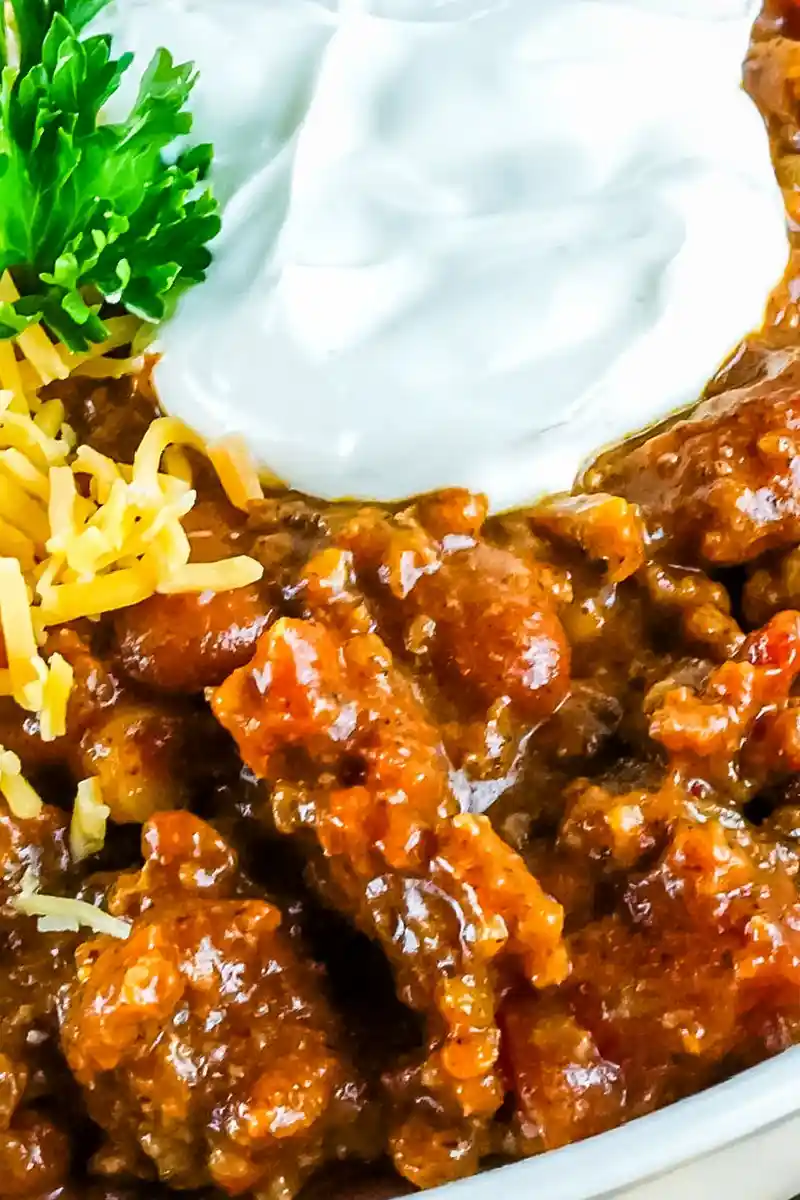
This smoked beef chili uses a smoker grill to infuse hearty ingredients with a deep, woody aroma. It is a simple preparation that yields a thick, flavor-packed meal perfect for cold weather.
List of ingredients
- 3 lbs lean ground beef, browned and drained – provides the hearty base.
- 16 ozs tomato sauce – adds smooth texture and acidity.
- 6 oz can tomato paste – thickens the chili and intensifies tomato flavor.
- 14.5 oz can petite diced tomatoes – adds chunks of texture.
- 15.5 oz can Northern beans, drained – adds a creamy contrast.
- 15.5 oz can red kidney beans – provides a classic chili structure.
- 1/4 cup chili powder – the primary seasoning for warmth.
- 3 Tablespoons unsalted butter – adds richness and a smoother mouthfeel.
- 2 Tablespoons coarse black pepper – provides a sharp, spicy bite.
- 2 Tablespoons diced dried onion – adds concentrated savory flavor.
- 2 Tablespoons garlic powder – delivers consistent garlic notes throughout.
- 1 Tablespoon coarse salt – enhances all other seasonings.
- 1 cup beef broth – provides necessary moisture for the smoking process.
- Shredded cheddar cheese – optional garnish for creaminess.
- Sour cream – optional garnish to balance heat.
step-by-step instructions
- Prepare the Smoker: Preheat your smoker grill to 250 degrees Fahrenheit for approximately 20 minutes to ensure a stable temperature.
- Brown the Beef: Cook the ground beef in a skillet on the stovetop until fully browned, then drain the excess grease thoroughly.
- Combine Ingredients: Place the browned beef, tomato sauce, tomato paste, diced tomatoes, both types of beans, chili powder, butter, pepper, dried onion, garlic powder, salt, and beef broth into a dutch oven. Stir well to combine all components.
- Smoke the Chili: Place the uncovered dutch oven on the smoker grate. Close the smoker lid and cook for 3 to 4 hours, stirring the mixture every hour to ensure even heating.
- Final Seasoning: Taste the chili about one hour into the cooking process and add additional salt or spices if needed based on your preference.
Optimal Wood Selections for Smoking
Use Hickory for a Bold Traditional Taste
Hickory is one of the strongest smoking woods and provides a classic barbecue profile. It pairs exceptionally well with beef and creates a robust flavor that stands up to the acidity of the tomatoes.
Choose Apple Wood for a Milder Flavor
Apple wood offers a sweeter, more subtle smoke that does not overpower the other seasonings. This is a great choice if you prefer the smoky element to be a background note rather than the dominant flavor.
Use Mesquite for Intense Smokiness
Mesquite produces a very powerful and pungent smoke that is common in Tex-Mex cooking. Use this option if you want an aggressive smoky taste, but be careful not to over-smoke the chili.
Select Oak for a Balanced Profile
Oak is a versatile medium-smoke wood that provides a clean and consistent flavor. It is an excellent middle-ground option that complements the beef without being too sweet or too pungent.
Bean Substitutions and Variations
Incorporate Black Beans for Density
Black beans offer a firmer texture and a slightly earthier taste than kidney beans. You can replace one or both of the canned bean varieties with black beans for a different mouthfeel.
Use Pinto Beans for Creaminess
Pinto beans are softer and break down more during the long smoking process. This helps naturally thicken the sauce while adding a mild, nutty flavor to the dish.
Try Cannellini Beans for a Light Contrast
White cannellini beans provide a creamy texture and a very neutral flavor. They are a great alternative to Northern beans if you want the tomato and beef flavors to remain the center of attention.
Combine Multiple Bean Types
Using a mixture of three or four different bean types can add visual variety and different textures. A blend of black, pinto, and kidney beans is a common way to make the chili feel more rustic.
Alternative Meat Choices
Use Beef Chuck for a Chunkier Texture
Instead of ground beef, you can use cubed beef chuck roast. Note that this will require a longer smoking time to ensure the meat becomes tender through the breakdown of connective tissue.
Incorporate Smoked Brisket Scraps
Adding pre-smoked brisket points or burnt ends adds an extra layer of richness. This increases the fat content and depth of the smoky flavor significantly.
Swap for Lean Ground Turkey
Ground turkey is a leaner alternative that absorbs the smoke and seasonings well. You may need to add a small amount of extra butter or oil to compensate for the lack of beef fat.
Try Venison for a Gamey Profile
Ground venison is very lean and has a distinct, bold flavor that pairs perfectly with smoky woods. Like turkey, venison benefits from the added butter in this recipe to prevent the meat from drying out.
Consistency and Thickening Techniques
Apply a Cornstarch Slurry
If the chili is too thin after smoking, mix one tablespoon of cornstarch with cold water. Stir this slurry into the simmering chili and cook for a few more minutes until the desired thickness is reached.
Puree a Portion of the Beans
Take a cup of the cooked beans and blend them into a paste. Stirring this paste back into the pot creates a thick, creamy consistency without altering the flavor profile.
Increase the Tomato Paste Ratio
Adding an extra two ounces of tomato paste during the mixing phase provides more solids. This ensures the chili is hearty and clings to the meat and beans rather than being soupy.
Serving and Pairing Suggestions
Pair with Honey Cornbread
A slightly sweet honey cornbread balances the savory and spicy notes of the smoked chili. Serving the chili inside a hollowed-out piece of cornbread is a practical way to present the meal.
Serve Over Steamed White Rice
Placing a ladle of chili over a bed of white or brown rice makes the meal more filling. The rice absorbs the excess sauce, ensuring none of the flavor is wasted.
Add Fresh Vegetable Garnishes
Diced raw onions, sliced jalapeños, and chopped cilantro add freshness and crunch. These raw elements contrast with the slow-cooked, soft texture of the smoked beef and beans.
Utilize Dairy Toppings for Balance
A dollop of sour cream or a handful of shredded sharp cheddar cheese helps neutralize excessive heat. The fat in the dairy coats the palate and mellows the intensity of the chili powder.
Storage and Preservation
Refrigeration Guidelines
Allow the chili to cool to room temperature before transferring it to an airtight glass container. It will remain fresh and safe to eat in the refrigerator for up to five days.
Freezing for Long-Term Use
Place cooled chili in freezer-safe bags or plastic containers, leaving a small amount of space for expansion. This recipe freezes well and can be stored for two to three months.
Safe Thawing Methods
The safest way to thaw frozen chili is in the refrigerator overnight. For faster results, place the sealed bag in a bowl of cold water, changing the water every hour.
Optimal Reheating Methods
Stovetop Reheating for Best Quality
Transfer the chili to a saucepan and heat over medium-low heat. Stir occasionally and add a splash of beef broth if the mixture has thickened too much during storage.
Oven Reheating for Large Batches
Place the chili in an oven-safe dish and cover it with foil to retain moisture. Heat at 325 degrees Fahrenheit until the center reaches an internal temperature of 165 degrees.
Microwave Tips for Quick Meals
Heat the chili in a microwave-safe bowl in one-minute increments. Stir between each interval to avoid cold spots and prevent the sauce from spluttering.
Troubleshooting Common Issues
Fixing Overly Salty Chili
If the chili is too salty, add a peeled, halved raw potato to the pot and simmer for 20 minutes. The potato absorbs some of the salt before you remove it before serving.
Balancing Excessive Heat
To reduce the spice level, stir in a small amount of brown sugar or a tablespoon of unsweetened cocoa powder. These ingredients neutralize the capsaicin without making the dish taste sweet.
Correcting a Watery Consistency
If the chili is too liquid, check the temperature of your smoker to ensure it was hot enough for evaporation. Simmering the chili on the stovetop without a lid for 15 minutes is the fastest fix.
Neutralizing Strong Acidic Tones
If the tomato sauce makes the dish too tart, add a pinch of baking soda. This alkaline addition neutralizes the acid and smooths out the overall flavor of the tomato base.
Recipe FAQs
What is the best meat to use for chili?
Ground beef is the standard for its fat content and flavor, but beef chuck or brisket are excellent for those who prefer a coarser, chunkier texture.
Can you smoke ground beef?
Yes, you can smoke ground beef, though it is often browned first for better texture. In this recipe, browning on the stove prevents the meat from becoming too greasy in the smoker.
Should chili be thick or soupy?
Chili is traditionally thick and hearty. If yours is too soupy, use a cornstarch slurry or puree some of the beans to achieve a denser consistency.
Print
Smoked Beef Chili
- Total Time: 4 hours 35 minutes
- Yield: 6 servings 1x
- Diet: General
Description
This hearty bowl of Smoked Chili is perfect year-round but especially comforting during the winter months. This is a simple recipe with very little prep time.
Ingredients
- 3 lbs lean ground beef, browned and drained
- 16 oz tomato sauce
- 6 oz can tomato paste
- 14.5 oz can petite diced tomatoes
- 15.5 oz can Northern beans, drained
- 15.5 oz can red kidney beans
- ¼ cup chili powder
- 3 Tablespoons unsalted butter
- 2 Tablespoons coarse black pepper
- 2 Tablespoons diced dried onion
- 2 Tablespoons garlic powder
- 1 Tablespoon coarse salt
- 1 cup beef broth
- Shredded cheddar cheese
- Sour cream
Instructions
- PREHEAT SMOKER: Preheat your smoker to 250 degrees for 20 minutes.
- BROWN BEEF AND PREP CHILI: Brown the ground beef. Place all of the chili ingredients into a dutch oven and stir well.
- SMOKE CHILI: Place the dutch oven, uncovered, on the smoker. Put the lid on the smoker and cook for about 3-4 hours, stirring every hour.
Notes
I used hickory pellets for this recipe, but just about any wood option will do; fruit woods are lighter in flavor. You can use any combination of beans you prefer.
- Prep Time: 15 minutes
- Cook Time: 4 hours
- Category: Main Dish
- Method: Smoking
- Cuisine: American
Nutrition
- Serving Size: 1.5 cups
- Calories: 607 kcal
- Sugar: 11 g
- Sodium: 2534 mg
- Fat: 20 g
- Saturated Fat: 9 g
- Unsaturated Fat: 9 g
- Trans Fat: 1 g
- Carbohydrates: 48 g
- Fiber: 15 g
- Protein: 63 g
- Cholesterol: 156 mg