
This vibrant lemon chicken pasta combines tender poultry with a bright, citrus-infused sauce and earthy artichokes for a balanced weeknight meal. It is designed to be prepared in minimal steps, ensuring you get a restaurant-quality dish on your dinner table without the need for multiple heavy pans. By utilizing fresh aromatics and starchy pasta water, you create a silky, flavor-packed coating that clings perfectly to every strand of fettuccine.
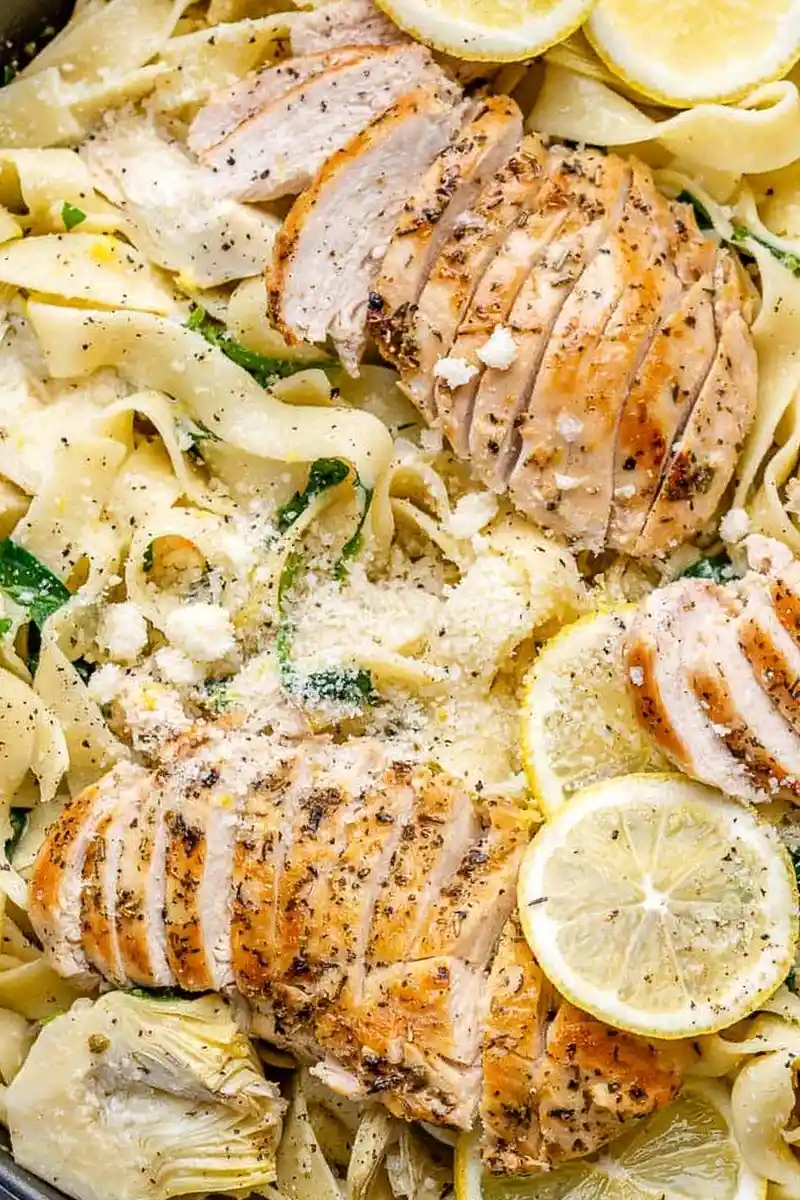
List of ingredients
- 2 tablespoons olive oil (divided)
- 1½ pounds chicken breast (skinless and boneless)
- Kosher salt and pepper (to taste)
- 1 teaspoon herbs de Provence (or Italian seasoning)
- 8 ounces fettuccine pasta
- 3-4 cloves garlic (minced)
- 14 ounces artichoke hearts (coarsely chopped)
- 2 cups baby spinach (coarsely chopped)
- 1 large lemon (juice and zest)
- 1/2 cup grated parmesan cheese
step-by-step instructions
- Step: Heat 1 tablespoon of olive oil in a large skillet over medium-high heat.
- Step: Season the chicken breast with salt, pepper, and herbs de Provence, then cook for 4-5 minutes per side until done; let rest before slicing.
- Step: Bring a pot of water to a boil, add 1/2 tablespoon salt and the fettuccine, cook according to package directions, and reserve 1 cup of pasta water before draining.
- Step: Add the remaining tablespoon of oil to the skillet, sauté garlic for 30 seconds, then stir in artichoke hearts and spinach until wilted.
- Step: Add the cooked pasta, reserved pasta water, lemon juice, lemon zest, and parmesan cheese to the skillet.
- Step: Toss to combine for a few minutes, top with sliced chicken, and serve immediately.
Keys to Success
The Role of Starchy Pasta Water
The water used to boil your pasta contains small amounts of starch released from the noodles. When you combine this water with cheese and lemon juice in the skillet, it helps emulsify the fat into a cohesive, velvety sauce. Skipping this step often results in a dish that feels dry or lacks the ability to properly bind the flavorings to the pasta strands.
Achieving the Perfect Sear
To avoid drying out your chicken breast, ensure your skillet is preheated properly before adding the meat. Cooking over medium-high heat allows the exterior to develop a nice golden brown color while keeping the center succulent. Always let the meat rest for at least five minutes after cooking, which allows the juices to redistribute and ensures the slices remain moist when served over the pasta.
Selecting the Right Spinach
While fresh baby spinach provides a vibrant green color and a delicate texture, frozen spinach is a perfectly viable alternative for this dish. If you choose to use the frozen variety, ensure it is completely thawed in a sieve and squeezed firmly with a paper towel to remove excess water. This prevents the sauce from becoming diluted and watery during the final tossing phase.
Substitutions and Variations
Alternative Protein Options
If you wish to deviate from chicken breast, shrimp is an excellent replacement that cooks much faster and pairs wonderfully with lemon and garlic. You can also use thin-cut chicken thighs if you prefer a more forgiving cut of meat that stays juicy under high heat. For a vegetarian variation, simply omit the chicken and incorporate white beans or chickpeas for added plant-based protein and fiber.
Managing the Herb Profile
Herbs de Provence is a blend that typically includes savory, marjoram, rosemary, thyme, and oregano, often with the addition of dried lavender. If you do not have this blend available, you can easily replicate the flavor by mixing equal parts of dried rosemary, thyme, and oregano. Adding a pinch of dried basil can also round out the flavor profile if you enjoy a more classic Mediterranean taste.
Serving and Storage Recommendations
Creating a Balanced Plate
This dish is a complete meal on its own, featuring protein, fiber, and carbohydrates. If you want to expand the spread, consider serving it alongside a crisp side salad dressed with a light vinaigrette. The brightness of a lemon-based dressing will complement the citrus notes in the pasta perfectly while adding a refreshing crunch that balances the richness of the parmesan.
Effective Reheating Techniques
When reheating leftovers, the pasta may absorb the moisture of the sauce, making it appear slightly dry. To fix this, add a splash of water or a tiny bit of olive oil to the skillet when warming it back up. Heat it over low to medium-low heat, stirring gently to restore the creaminess without overcooking the pasta or making the chicken tough.
Proper Storage Guidelines
Store your leftovers in an airtight container in the refrigerator to keep the ingredients fresh for up to five days. If you find yourself with an excess of the dish, you can freeze it for up to three months. When freezing, try to keep the pasta and chicken in a single-layer container if possible, which makes the eventual thawing and reheating process much more uniform and effective.
Frequently Asked Questions
Can I use dried herbs instead of fresh?
Yes, dried herbs work perfectly in this recipe. Just be mindful that dried herbs are more concentrated, so you should generally use about one-third the amount of what would be required for fresh herbs. Since the recipe calls for one teaspoon of a dried herb blend, the current measurement is already optimized for dried ingredients.
What is the best way to zest a lemon?
The best way to zest a lemon is to use a microplane grater, which allows you to remove only the yellow outer layer while leaving the bitter white pith behind. Rotate the lemon as you zest to capture the most fragrant oils. If you do not have a microplane, you can use the smallest side of a standard box grater, moving carefully to ensure you only collect the colored peel.
Can I make this pasta sauce ahead of time?
It is recommended to prepare the chicken and the pasta component separately if you are planning to serve this later, but the final toss should happen just before eating. Pasta continues to soak up liquid even after it is cooked, so combining everything and letting it sit for too long may lead to a soggy consistency. Keeping components separate keeps the final textures at their absolute best.
Why does the recipe call for such a large skillet?
Using a large skillet is essential because it provides enough surface area to finish the pasta dish properly. When you add the pasta to the vegetables and sauce, you need enough room to toss everything thoroughly without noodles spilling over the edges. This ensures that every bite of pasta is well-coated in the lemon, garlic, and parmesan mixture, which is the hallmark of a successful pasta dish.
Should I rinse the pasta after boiling?
Never rinse your pasta after cooking it for a warm dish. The starch left on the surface of the cooked noodles is what acts as a glue for the sauce. Rinsing the pasta removes this starch, which makes the sauce slide right off the noodles rather than clinging to them for the best flavor distribution.
Print
Zesty Lemon Chicken Fettuccine
- Total Time: 30 minutes
- Yield: 4 servings 1x
- Diet: High Protein
Description
Simple and delicious fettuccine pasta made with garlic, parmesan cheese, lemon, and herbs. Then topped with sliced chicken breast.
Ingredients
- 2 tablespoons olive oil (divided)
- 1½ pounds chicken breast (skinless and boneless)
- Kosher salt and pepper (to taste)
- 1 teaspoon herbs de Provence (or Italian seasoning)
- 8 ounces fettuccine pasta
- 3–4 cloves garlic (minced)
- 14 ounces artichoke hearts (coarsely chopped)
- 2 cups baby spinach (coarsely chopped)
- 1 large lemon (juice and zest)
- 1/2 cup grated parmesan cheese
Instructions
- Step: Heat 1 tablespoon of olive oil in a large skillet over medium-high heat.
- Step: Season the chicken breast with salt, pepper, and herbs de Provence, then cook for 4-5 minutes per side until done; let rest before slicing.
- Step: Bring a pot of water to a boil, add 1/2 tablespoon salt and the fettuccine, cook according to package directions, and reserve 1 cup of pasta water before draining.
- Step: Add the remaining tablespoon of oil to the skillet, sauté garlic for 30 seconds, then stir in artichoke hearts and spinach until wilted.
- Step: Add the cooked pasta, reserved pasta water, lemon juice, lemon zest, and parmesan cheese to the skillet.
- Step: Toss to combine for a few minutes, top with sliced chicken, and serve immediately.
Notes
Reserve pasta water to help sauce bind to the pasta. If Herbs de Provence is unavailable, use equal parts rosemary, thyme, and oregano. Store leftovers in an airtight container for up to 3 days or freeze for up to 3 months.
- Prep Time: 15 minutes
- Cook Time: 15 minutes
- Category: Main Course
- Method: Stovetop
- Cuisine: Italian
Nutrition
- Serving Size: 1 serving
- Calories: 557 kcal
- Sugar: 3 g
- Sodium: 1380 mg
- Fat: 16 g
- Saturated Fat: 4 g
- Unsaturated Fat: 9 g
- Trans Fat: 0 g
- Carbohydrates: 52 g
- Fiber: 5 g
- Protein: 49 g
- Cholesterol: 120 mg