
This one-pot creamy chicken pot pie noodles recipe delivers the comforting flavors of a traditional pot pie in a fraction of the time. It is a hearty, satisfying meal that combines tender chicken and vegetables in a rich, velvety sauce.
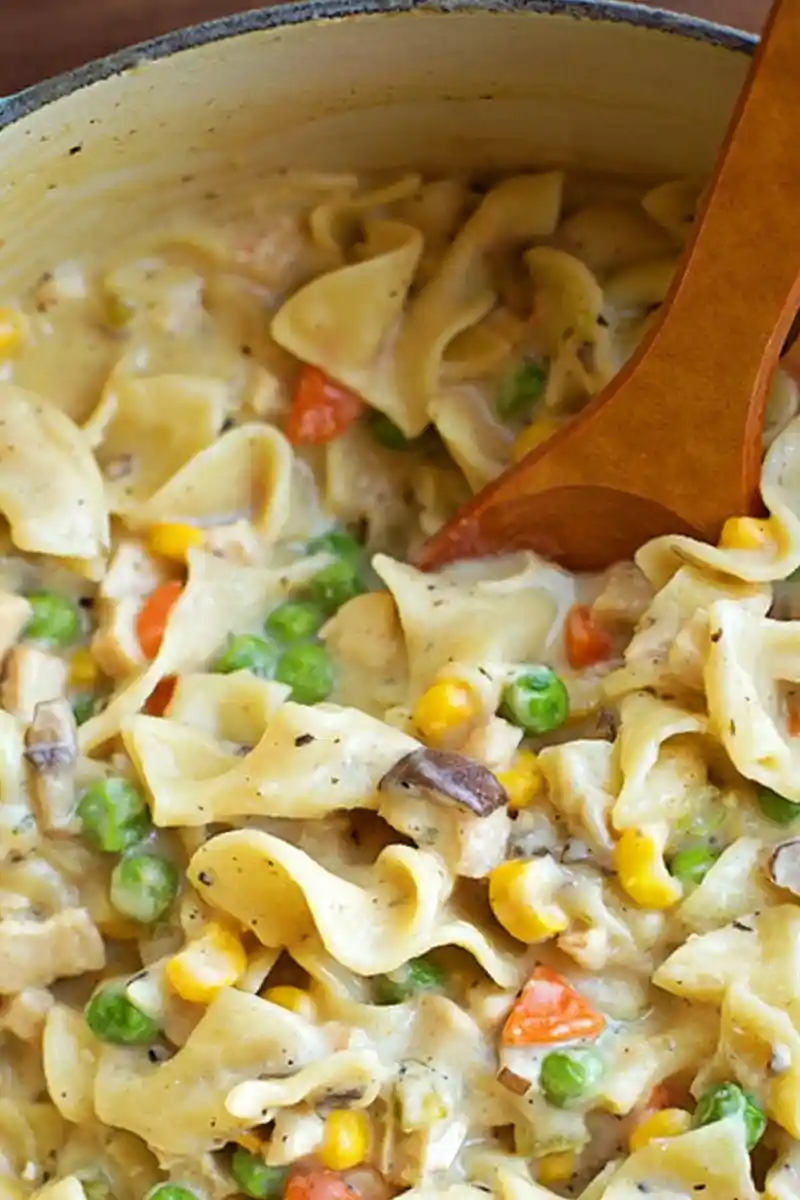
List of ingredients
- 2 tbsp unsalted butter – used for sautéing and adding richness.
- 1 lb chicken breasts – filleted and seasoned with salt and pepper.
- 4 oz crimini mushrooms – sliced (optional).
- 1/2 small yellow onion – diced.
- 2 stalks celery – diced.
- 2 carrots – diced.
- 4 cloves garlic – minced.
- 4 cup low-sodium chicken broth – provides the savory liquid base.
- 2 cup half and half – creates a thick, creamy consistency.
- 2 tsp kosher sea salt – for seasoning.
- 1 teaspoon ground black pepper – for a touch of heat.
- 1/2 tsp garlic powder – enhances the savory profile.
- 1/2 tsp dried thyme – adds earthy herbal notes.
- 1/2 tsp ground sage – provides the classic pot pie flavor.
- 1/4 tsp cayenne pepper – adds a subtle warmth.
- 1/4 tsp paprika – for color and depth.
- 8 oz egg noodles – or your preferred pasta variety.
- 1 cup frozen corn – thawed.
- 1 cup frozen peas – thawed.
- 2 tablespoons fresh parsley – roughly chopped.
- pie crust crumbles – optional topping.
step-by-step instructions
- Sear the chicken: Melt butter in a large pot over medium heat. Add the seasoned chicken and cook until golden brown on both sides or until the internal temperature reaches 160 degrees Fahrenheit (71 degrees Celsius).
- Rest the meat: Remove the chicken from the pot and place it on a cutting board. Let it rest for 5 minutes to retain juices.
- Sauté the aromatics: In the same pot, add sliced mushrooms, diced onion, celery, and carrots. Cook until tender, which usually takes 5-7 minutes, then stir in the minced garlic and cook until fragrant.
- Create the sauce base: Pour in the chicken broth and half and half. Whisk the mixture while scraping the browned bits from the bottom of the pan to incorporate all the flavor. Increase heat to medium-high and bring to a boil.
- Season and combine: Cut the rested chicken into bite-sized chunks and return them to the pot. Stir in salt, pepper, garlic powder, thyme, sage, cayenne, and paprika.
- Cook the pasta: Once the liquid boils, add the egg noodles and reduce the heat to medium. Simmer for 10-15 minutes.
- Final additions: Stir in the thawed corn, peas, and chopped parsley. Cook for another 6-8 minutes until the pasta is tender and the sauce has thickened.
- Serve: Remove from heat. Serve immediately, topping with baked pie crust crumbles if desired.
Essential Ingredient Selection Guide
Choosing the Best Cut of Chicken
Chicken breasts are used here for a lean, tender result. Filleting them into even thicknesses ensures they cook uniformly without drying out the edges while the center stays raw.
If you prefer a juicier texture, boneless skinless chicken thighs can be substituted. Thighs are more forgiving during the searing process and hold up well during the simmering stage with the pasta.
Selecting the Ideal Pasta Shape
Wide egg noodles are the traditional choice because their shape and texture mimic the filling of a classic pot pie. They absorb the creamy sauce efficiently, making every bite rich.
Alternatively, you can use rotini or penne for a more modern pasta feel. These shapes are excellent for capturing the smaller pieces of corn and peas in their ridges and holes.
Preparing the Vegetable Mix
Using a combination of fresh carrots, celery, and onions provides the aromatic foundation of the dish. Dicing them into uniform, small pieces ensures they cook at the same rate and distribute evenly.
Frozen peas and corn are added at the end to maintain their bright color and slight snap. Thawing them beforehand prevents the sauce temperature from dropping too sharply when they are added.
Optimal Dairy Choices for Creaminess
Half and half provides a balanced richness that is neither too thin like milk nor too heavy like heavy cream. It creates a velvety sauce that clings to the noodles perfectly.
For a denser sauce, you can use heavy cream, though you may need to slightly increase the broth to prevent the dish from becoming overly thick. Always stir the dairy in slowly to avoid curdling.
Advanced Cooking Techniques
Achieving a Proper Golden Sear
To get a golden-brown crust on the chicken, avoid overcrowding the pot. Give the meat space to sear rather than steam, which locks in flavor and adds visual appeal to the final dish.
Ensure the butter is fully melted and bubbling before adding the chicken. This prevents the meat from sticking and ensures a consistent brown color across the entire surface.
The Importance of Deglazing the Pot
The brown bits left at the bottom of the pot after searing the chicken are called the fond. This is where the most concentrated savory flavor resides.
When you pour in the chicken broth, use a whisk or wooden spoon to scrape these bits. This process, known as deglazing, integrates those deep flavors directly into the sauce.
Cooking Pasta Al Dente in Sauce
Cooking the pasta directly in the broth and cream allows the noodles to release starch into the liquid. This naturally thickens the sauce without needing additional flour or cornstarch.
Watch the pasta closely during the final minutes. Remove the pot from the heat while the noodles still have a slight bite, as they will continue to cook in the residual heat.
Controlling Sauce Viscosity
The sauce will naturally thicken as it cools. If the mixture seems too thin when the pasta is done, simmer it for an additional 2-3 minutes on medium-high heat.
If the sauce becomes too thick, stir in a small amount of additional chicken broth or water. This will loosen the consistency without altering the flavor profile significantly.
Practical Dietary Substitutions
Dairy-Free Creamy Alternatives
To make this dish dairy-free, replace the half and half with full-fat coconut milk or coconut cream. This provides a similar thickness, though it adds a subtle coconut flavor to the meal.
Another option is blended cashew cream, made by soaking raw cashews and blending them with water. Cashew cream is more neutral in taste and mimics the richness of dairy very closely.
Plant-Based Butter Substitutes
You can replace unsalted butter with a high-quality vegan butter stick or a neutral oil. Olive oil or avocado oil works well for searing the chicken and sautéing the vegetables.
If using oil, you may miss the buttery flavor in the final sauce. Adding a small amount of nutritional yeast can help replicate that savory, buttery depth.
Gluten-Free Pasta Options
Substitute egg noodles with gluten-free pasta such as brown rice noodles or chickpea pasta. Be mindful that gluten-free pastas often have different cooking times and starch levels.
Since gluten-free pasta can sometimes become mushy, consider cooking it separately and stirring it into the sauce at the very end. This ensures the texture remains firm.
Reducing Sodium Levels
Use a no-sodium chicken broth and replace the kosher salt with a smaller amount of sea salt. This allows you to control the salt intake while keeping the savory essence of the chicken.
Increasing the amount of fresh herbs, like parsley and thyme, can compensate for reduced salt. Acidic elements, such as a squeeze of lemon juice at the end, also enhance flavor without adding sodium.
Creative Flavor Variations
Adding Supplemental Vegetables
For more nutrition, you can incorporate diced bell peppers or sliced zucchini. Add these during the sautéing stage with the carrots and celery.
Fresh spinach or kale can also be stirred in at the final step. The residual heat will wilt the greens quickly without overcooking them, adding a vibrant color and earthy taste.
Increasing the Spice Profile
If you prefer a spicier dish, double the amount of cayenne pepper or add a pinch of red pepper flakes during the sautéing process. This adds a lingering heat that cuts through the cream.
Adding a teaspoon of Dijon mustard to the sauce base also adds a sophisticated tang and a slight spicy kick that complements the sage and thyme.
Seasonal Herbal Adjustments
While sage and thyme are classic, you can use fresh rosemary for a more piney, wintery flavor. Chop the rosemary very finely so it doesn’t become woody in the sauce.
In the spring, substituting some of the dried herbs with fresh basil or chives can lighten the dish. This makes the pot pie noodles feel fresher and more seasonal.
Integrating Cheese for Extra Richness
Stirring in a handful of grated Parmesan or sharp white cheddar at the end adds a salty, nutty dimension. Ensure the heat is low when adding cheese to prevent it from separating.
For a stretchier texture, use shredded mozzarella or provolone. This turns the dish into a hybrid between a pot pie and a creamy pasta bake.
Serving and Presentation Ideas
Preparing the Baked Crust Topping
To replicate the pie crust, crumble a pre-made frozen pie crust into small pieces. Bake these crumbles at 350 degrees Fahrenheit until they are golden brown and crisp.
Sprinkle the toasted crumbles over each bowl just before serving. This adds a necessary crunch that contrasts with the soft noodles and creamy sauce.
Using Breadcrumb Alternatives
If pie crust is unavailable, panko breadcrumbs are an excellent substitute. Toast them in a pan with a little butter and garlic powder until golden.
Crushed buttery crackers also work well as a topping. They provide a salty, crisp element that mirrors the flavor of a traditional pastry crust.
Suggested Side Dish Pairings
A crisp green salad with a lemon vinaigrette balances the richness of the creamy sauce. The acidity of the dressing cleanses the palate between bites.
Steamed broccoli or roasted asparagus are also great additions. These green vegetables add freshness and a nutritional balance to the hearty pasta.
Plating for a Family Meal
Serve the noodles in deep bowls to keep the sauce warm. Garnish with extra freshly chopped parsley for a pop of color and a fresh aromatic finish.
Place a large platter of the noodles in the center of the table and serve the crust crumbles in a separate bowl. This allows each person to customize the amount of crunch they prefer.
Storage and Reheating Guidelines
Refrigeration Best Practices
Store leftover noodles in an airtight container in the refrigerator. The dish will remain fresh and safe to eat for 3 to 4 days.
Keep in mind that the noodles will continue to absorb the sauce while sitting in the fridge. This means the leftovers will be much thicker than the freshly cooked version.
Freezing and Thawing Instructions
Allow the dish to cool completely before transferring it to freezer-safe bags or containers. It can be stored in the freezer for 1 to 2 months.
Thaw the noodles slowly in the refrigerator overnight before reheating. This prevents the dairy from separating and ensures the pasta doesn’t become overly soft.
Effective Stovetop Reheating
Gently warm the leftovers in a pot over medium-low heat. Add a splash of chicken broth or milk to loosen the sauce and restore the original creamy consistency.
Stir occasionally to ensure even heating and to prevent the bottom from scorching. Avoid boiling the sauce again, as this can cause the dairy to break.
Quick Microwave Reheating
Place a portion in a microwave-safe bowl and cover it with a damp paper towel. This helps trap steam and keeps the noodles from drying out.
Heat in 1-minute intervals, stirring in between. Add a teaspoon of water or milk if the sauce has become too thick during storage.
Troubleshooting Common Issues
Fixing a Sauce That Is Too Thin
If the sauce is too runny after cooking the pasta, simmer it for a few more minutes on medium-high heat to reduce the liquid.
Alternatively, mix a teaspoon of cornstarch with a tablespoon of cold water to create a slurry. Stir this into the boiling sauce and cook for one minute to thicken it instantly.
Preventing Mushy Noodles
Mushy noodles usually occur from overcooking or stirring too vigorously. Use a gentle stir to avoid breaking the pasta strands.
Set a timer for the pasta and start tasting them two minutes before the suggested time. Remove the pot from the heat the moment the noodles are al dente.
Managing Dry Chicken
Dry chicken happens when the meat is overcooked during the initial sear or the final simmer. Use a meat thermometer to ensure it reaches 160 degrees Fahrenheit and no more.
Letting the chicken rest for 5 minutes after searing is crucial. This allows the juices to redistribute, ensuring the meat remains moist when it returns to the pot.
Correcting Over-Salted Sauce
If the sauce tastes too salty, add a splash of heavy cream or a bit more half and half. Dairy helps neutralize the perception of salt on the tongue.
Adding a small amount of unsalted steamed vegetables, like extra corn or peas, can also dilute the saltiness. A pinch of sugar or a squeeze of lemon can further balance the flavor.
Frequently Asked Questions
Can I use rotisserie chicken?
Yes, you can use rotisserie chicken to save time. Shred about 2 cups of chicken and add it to the pot during the vegetable sautéing stage instead of searing raw breasts.
Which pasta works best?
Egg noodles are best for authenticity, but any short pasta like fusilli or farfalle works well. Avoid very thin pastas like spaghetti, as they may overcook too quickly in the thick sauce.
Can I use whole milk instead of half and half?
You can use whole milk, but the sauce will be thinner. To compensate, you may need to simmer the sauce longer or add a small amount of flour or cornstarch to thicken it.
Is this recipe suitable for meal prep?
Yes, it is excellent for meal prep. Just be sure to add a bit of extra broth when reheating to account for the noodles absorbing the liquid over time.
Print
Creamy Chicken Pot Pie Noodles
- Total Time: 40 minutes
- Yield: 6 servings 1x
- Diet: General
Description
Missing the comfort of a chicken pot pie but don’t have the time? Try my one-pot Creamy Chicken Pot Pie Noodles—creamy, delicious, and ready in just 40 minutes!
Ingredients
- 2 tbsp unsalted butter
- 1 lb chicken breasts, filleted and seasoned with salt and pepper
- 4 oz crimini mushrooms, sliced, optional
- 1/2 small yellow onion, diced
- 2 stalks celery, diced
- 2 carrots, diced
- 4 cloves garlic, minced
- 4 cup low-sodium chicken broth
- 2 cup half and half
- 2 tsp kosher sea salt
- 1 teaspoon ground black pepper
- 1/2 tsp garlic powder
- 1/2 tsp dried thyme
- 1/2 tsp ground sage
- 1/4 tsp cayenne pepper
- 1/4 tsp paprika
- 8 oz egg noodles
- 1 cup frozen corn, thawed
- 1 cup frozen peas, thawed
- 2 tablespoons fresh parsley, roughly chopped
- pie crust crumbles, optional
Instructions
- Step: In a large pot over medium heat, add the butter. Once the butter has melted, add the prepared chicken and cook until golden brown on each side/reaches an internal temperature of 160 degrees Fahrenheit (71 degrees Celsius).
- Step: Remove the chicken from the pot and transfer it to a cutting board. Allow to rest for 5 minutes.
- Step: Meanwhile, add the mushrooms, onion, celery, and carrots to the pot, and sauté until tender, about 5-7 minutes. Add the garlic and cook until fragrant.
- Step: Pour in the chicken stock along with the half and half, whisk, scraping up any browned bits from the bottom of the pan. Turn the heat up to medium-high and bring the mixture to a boil.
- Step: Cut the chicken into small bite-size chunks and return it to the pot. Add the salt, pepper, garlic powder, thyme, sage, cayenne, and paprika.
- Step: When the mixture begins to boil, add the pasta and reduce heat to medium. Cook for 10-15 minutes, then add the corn, peas, and parsley.
- Step: Cook until the pasta is tender and the sauce has thickened, about 6-8 minutes. Remove from the heat and serve with pie crust crumbles, if desired.
Notes
Cook pasta al dente to prevent it from becoming mushy. Deglaze the pot after cooking chicken with a splash of chicken broth to incorporate flavorful browned bits.
- Prep Time: 10 minutes
- Cook Time: 30 minutes
- Category: Main Course
- Method: Stovetop
- Cuisine: American
Nutrition
- Serving Size: 1 serving
- Calories: 469 kcal
- Sugar: 7 g
- Sodium: 1073 mg
- Fat: 18 g
- Saturated Fat: 9 g
- Unsaturated Fat: 7 g
- Trans Fat: 0.2 g
- Carbohydrates: 48 g
- Fiber: 5 g
- Protein: 30 g
- Cholesterol: 118 mg