
This quick shrimp pasta combines tender seafood with a light cream sauce and nutrient-dense vegetables. It is a balanced meal that comes together in just 30 minutes, making it ideal for busy weeknights.
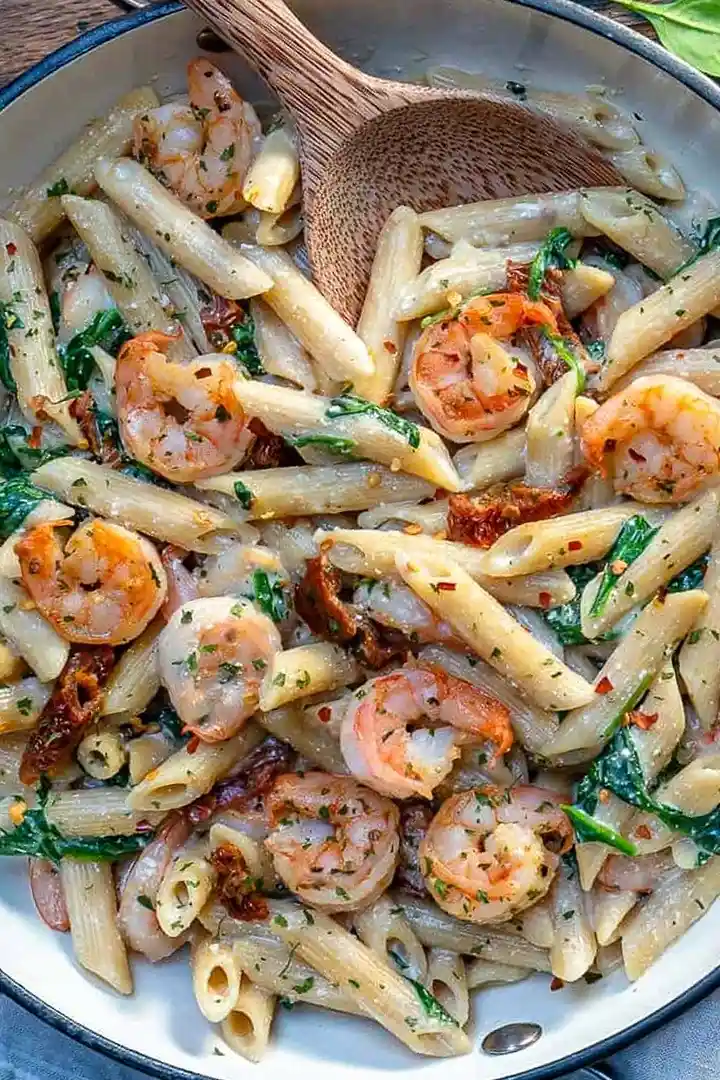
List of ingredients
- 8 oz Whole Wheat Penne – a nutritious alternative to white pasta.
- 1 lb Jumbo Shrimp – peeled and deveined for easy eating.
- 2 Tbsp Olive Oil – for sautéing the shrimp and garlic.
- 3-4 Garlic Cloves – minced or pressed for aromatic flavor.
- 4 oz Sun-dried Tomatoes – drained and chopped to add a tangy sweetness.
- Sea salt and pepper – added to taste for seasoning.
- 2 Cup Baby Spinach – fresh leaves for added color and vitamins.
- 1 ½ Cup Skimmed Milk – used as a lighter base for the sauce.
- 1 Tbsp Corn or Gluten-free Flour – used as a thickening agent.
- 1 Tbsp Dried Basil – adds an earthy, herbal note.
- ½ Tsp Chili Flakes – provides a subtle heat to the dish.
step-by-step instructions
- Boil the Pasta: Fill a pot with salted water and bring it to a boil. Add the penne and cook for 6-8 minutes, or until al dente.
- Sauté the Garlic: While the pasta cooks, heat olive oil in a large skillet over medium-high heat. Add the garlic and cook for about 1 minute until fragrant.
- Cook the Shrimp: Stir in the shrimp, chopped sun-dried tomatoes, chili flakes, dried basil, and a pinch of salt. Cook for 3-4 minutes until the shrimp turn pink, then remove them from the pan and set aside on a plate.
- Prepare the Sauce: In the same skillet, stir in the skimmed milk and flour. Whisk constantly for 3-4 minutes until the sauce thickens, then season with salt and pepper.
- Wilt the Spinach: Add the baby spinach to the sauce and cook for about 1 minute until just wilted.
- Combine: Stir the cooked pasta and the cooked shrimp back into the skillet. Gently mix everything to combine and serve immediately.
Cooking Tips for Better Results
Prevent Overcooking the Shrimp
Shrimp cook very quickly and can become tough and rubbery if left on the heat too long. They are done once they curl into a ‘C’ shape and turn opaque pink. Remove them from the pan immediately once this happens.
Achieving Al Dente Pasta
Always cook your pasta for 1-2 minutes less than the package directions suggest. Since the pasta is finished in the hot sauce, undercooking it slightly prevents it from becoming mushy. This maintains a firm, pleasing texture.
Managing the Garlic Sauté
Garlic burns quickly at high temperatures, which can make the sauce taste bitter. Ensure the oil is hot but not smoking, and stir the garlic constantly. Remove it from the heat as soon as the aroma is released.
Using Reserved Pasta Water
Save about a quarter cup of the starchy pasta water before draining the noodles. If the sauce becomes too thick after mixing, stir in a tablespoon of this water. It helps emulsify the sauce and allows it to cling better to the pasta.
Ingredient Substitutions
Alternative Pasta Varieties
While whole wheat penne is recommended, you can use any pasta shape such as fusilli or farfalle. For lower-calorie or higher-protein options, chickpea pasta or lentil pasta work well. Just be mindful of the different cooking times for legume-based pastas.
Swapping the Protein Source
If you do not have shrimp, diced chicken breast is an excellent substitute. Simply sauté the chicken until fully cooked before removing it from the pan. For a vegetarian version, replace the shrimp with chickpeas or extra mushrooms.
Different Milk Options
Skimmed milk keeps the dish light, but you can use whole milk for a richer taste. For dairy-free needs, unsweetened almond or soy milk works well. Ensure the milk is unsweetened to avoid an unwanted sugary flavor in the savory sauce.
Thickening Alternatives
If you are avoiding corn flour, arrowroot powder or tapioca starch are effective substitutes. Use them in a 1:1 ratio with the flour. These options often result in a slightly glossier sauce texture.
Fresh vs. Dried Herbs
Dried basil is convenient, but fresh basil leaves offer a brighter, more aromatic flavor. Add fresh basil at the very end of the cooking process. This prevents the delicate leaves from darkening or losing their flavor.
Customizing Your Shrimp Pasta
Adding Extra Vegetables
You can boost the nutrient profile by adding sliced zucchini, mushrooms, or frozen peas. Sauté these vegetables along with the garlic before adding the shrimp. This adds variety in texture and more vibrant colors to the dish.
Increasing the Creaminess
For a more indulgent sauce, stir in a quarter cup of light cream cheese during the milk-thickening step. This adds a velvety consistency and a slight tang. Whisk thoroughly to ensure there are no lumps in the sauce.
Adding a Cheese Garnish
Freshly shredded parmesan or pecorino romano cheese adds a salty, nutty finish to the meal. Sprinkle the cheese over the individual servings just before eating. This keeps the cheese from clumping during the mixing process.
Adjusting the Spice Level
If you prefer a spicier dish, increase the amount of chili flakes or add a pinch of cayenne pepper. For a milder version, omit the flakes entirely. You can also add a squeeze of fresh lemon juice to balance the heat with acidity.
Serving Suggestions
Best Side Dish Pairings
Serve this pasta with a side of toasted garlic bread to soak up the remaining creamy sauce. A light arugula salad with a lemon vinaigrette also complements the richness of the dish. These sides provide a contrast in texture and flavor.
Presentation Tips
Garnish the finished dish with a sprinkle of fresh parsley or extra basil leaves. Using a wide, shallow bowl helps showcase the shrimp and colorful sun-dried tomatoes. A final crack of black pepper on top adds a professional touch.
Wine-Free Beverage Pairings
Pair this meal with sparkling water infused with lemon or lime slices. The carbonation and acidity help cleanse the palate between creamy bites. An iced herbal tea is another refreshing, non-alcoholic option.
Storage and Reheating
Proper Refrigeration
Store leftover pasta in an airtight container in the refrigerator for up to 3-4 days. Ensure the pasta is completely cooled before sealing the lid to prevent excess moisture. This keeps the shrimp and vegetables fresh.
Effective Reheating Methods
Reheat the pasta on the stovetop over low heat, adding a splash of milk or water to loosen the sauce. If using a microwave, heat in short intervals and stir in between. This prevents the shrimp from overcooking during the reheating process.
Freezing Considerations
While the sauce freezes reasonably well, the pasta and shrimp may change texture upon thawing. If you plan to freeze, undercook the pasta significantly. Thaw completely in the fridge before reheating on the stove.
Make-Ahead Strategies
Prepping the Seafood
Clean and devein the jumbo shrimp a day in advance and store them in a sealed container. Pat them dry with paper towels before cooking. This ensures they sear properly in the pan rather than steaming.
Pre-Chopping Vegetables
Mince the garlic and chop the sun-dried tomatoes ahead of time. Store these in small containers in the fridge. This reduces the active prep time to just a few minutes on the night of cooking.
Cooking Pasta Early
You can boil the pasta a few hours early and toss it with a drizzle of olive oil to prevent sticking. When ready to eat, simply stir the pre-cooked noodles into the hot sauce. This streamlines the final assembly process.
Troubleshooting Common Issues
Fixing a Sauce That Is Too Thick
If the sauce becomes overly thick or pasty, it is usually due to the flour. Stir in a tablespoon of milk or reserved pasta water at a time. Continue stirring over low heat until the desired consistency is reached.
Handling a Sauce That Is Too Thin
If the sauce is too runny, let it simmer for an extra 2-3 minutes without the pasta. You can also whisk in a tiny bit more flour mixed with cold water. This slurry will thicken the sauce quickly without creating lumps.
Preventing Shrimp from Sticking
Use a high-quality non-stick skillet and ensure the oil is fully heated before adding the shrimp. Avoid crowding the pan, as this lowers the temperature and causes the shrimp to release water. Cook in batches if necessary.
Frequently Asked Questions
Can you boil pasta in chicken broth?
Yes, boiling pasta in chicken broth adds an extra layer of savory flavor to the noodles. Use enough broth to fully cover the pasta and simmer at medium heat. Once cooked, proceed with the sauce as usual.
What is a good sauce to go with shrimp pasta?
A creamy white sauce, like the one in this recipe, provides a rich contrast to the shrimp. Alternatively, a tomato-based marinara or a garlic-butter sauce also works well. The choice depends on whether you want a hearty or a light meal.
How do you cook raw shrimp for pasta?
Clean the shrimp by removing the vein and shells, then pat them dry. Sauté them in a skillet with oil and seasonings over medium-high heat for 3-4 minutes per side. Once they turn pink and opaque, they are ready for the pasta.
Print
Creamy Shrimp Pasta with Sun-Dried Tomatoes and Spinach
- Total Time: 30 minutes
- Yield: 4 servings 1x
- Diet: Low-fat
Description
Easy creamy pasta recipe made with shrimp, sun-dried tomatoes, and fresh spinach. Ready in just 30 minutes and packed with flavor.
Ingredients
- 8 oz Whole Wheat Penne
- 1 lb Jumbo Shrimp (peeled and deveined)
- 2 Tbsp Olive Oil
- 3–4 Garlic Cloves (minced or pressed)
- 4 oz Sun-dried Tomatoes (drained and chopped)
- Sea salt and pepper, to your taste
- 2 Cup Baby Spinach
- 1 ½ Cup Skimmed Milk
- 1 Tbsp Corn or Gluten-free Flour
- 1 Tbsp Dried Basil
- ½ Tsp Chili Flakes
Instructions
- Step 1: Fill a pot with salted water and bring it to the boil. Add in the pasta and cook for 6-8 minutes, or until al dente.
- Step 2: Meanwhile, heat oil in a large skillet over medium-high heat. Add garlic and cook until fragrant, 1 minute.
- Step 3: Add shrimps, dried tomatoes, chili flakes, dried basil and a pinch of salt. Cook until shrimps are pink, about 3-4 minutes, then set aside on a plate.
- Step 4: In the same pan add milk and flour and cook whisking constantly, until sauce thickens(about 3-4 minutes). Season with salt and pepper to your taste.
- Step 5: Add baby spinach and cook until just wilted about 1 more minute.
- Step 6: Stir in the cooked pasta and shrimps and gently mix to combine. Enjoy!
Notes
You can make this creamy shrimp pasta with some light cream cheese to give it a more creamy taste and texture by adding about 1/4 cup in step 4. Avoid overcooking the shrimp to prevent a rubbery texture. For added flavor, garnish with freshly shredded parmesan cheese. Saving about 1/4 cup of pasta water can help create a more saucy texture if desired.
- Prep Time: 10 minutes
- Cook Time: 20 minutes
- Category: Main Course
- Method: Sautéing
- Cuisine: American, Italian
Nutrition
- Serving Size: 1 serving
- Calories: 497 kcal
- Sugar: 16 g
- Sodium: 1010 mg
- Fat: 13 g
- Saturated Fat: 3 g
- Unsaturated Fat: 10 g
- Trans Fat: 0 g
- Carbohydrates: 58 g
- Fiber: 8 g
- Protein: 38 g
- Cholesterol: 293 mg