
Experience a unique fusion of Italian technique and Japanese flavors with this creamy miso carbonara. This dish combines the richness of traditional egg-based sauce with the deep umami punch of fermented miso paste. It is an ideal quick dinner for those seeking a comforting yet sophisticated meal.

List of ingredients
- 8 ounces of spaghetti – use a high-quality durum wheat pasta for the best texture.
- 4 slices of thick turkey bacon – cut into small pieces for evenly distributed smokiness.
- 1 tablespoon of miso paste – white miso provides a mild sweetness, while red miso is more intense.
- 1 teaspoon of red chili flakes – adds a subtle heat to balance the creamy sauce.
- 1 teaspoon of freshly ground black pepper – essential for the classic carbonara flavor profile.
- 1/2 cup of hot reserved pasta water – crucial for emulsifying the sauce into a smooth consistency.
- 2 large eggs – room temperature eggs incorporate more easily into the sauce.
- 2 large egg yolks – adds extra richness and a deep golden color.
- 1 cup of Parmigiano Reggiano cheese – freshly grated for the best melting properties.
- Freshly chopped green parsley – used for a bright, fresh garnish.
step-by-step instructions
- Cook the Pasta: Bring a large pot of heavily salted water to a boil. Cook the spaghetti according to the package directions until it is al dente. Before draining, carefully reserve 1 cup of the starchy pasta water, then drain the noodles.
- Cook the Turkey Bacon: Place a large skillet over medium heat and cook the turkey bacon pieces until they are crispy and browned. Remove most of the rendered fat from the pan, leaving approximately one tablespoon. Stir in the red chili flakes, then immediately turn off the heat to prevent the flakes from burning.
- Prepare the Sauce: In a separate mixing bowl, whisk together the miso paste, whole eggs, egg yolks, and grated Parmigiano Reggiano until the mixture is completely smooth. Slowly drizzle in the hot reserved pasta water while whisking continuously to create a creamy, tempered emulsion.
- Combine Pasta and Turkey Bacon: Transfer the cooked spaghetti directly into the skillet containing the turkey bacon fat. Toss the noodles thoroughly to ensure every strand is coated in the savory fat.
- Add the Sauce: Pour the prepared egg and miso sauce over the pasta. Toss rapidly and continuously until the sauce thickens and coats the pasta in a glossy, creamy layer.
- Serve: Stir the crispy turkey bacon pieces back into the skillet. Plate the pasta and garnish with additional Parmigiano Reggiano and finely chopped parsley.
Techniques for a Perfect Emulsion
Temper the Egg Mixture with Hot Water
Adding hot pasta water to the egg and cheese mixture before it hits the pan is called tempering. This process slowly raises the temperature of the eggs, which prevents them from shocking and scrambling when added to the hot pasta. It ensures the sauce remains liquid and smooth.
Utilize Residual Heat Only
The most critical rule of carbonara is to never cook the sauce over a direct flame. The heat from the pan and the pasta is sufficient to cook the eggs to a safe, creamy consistency. If the pan is too hot, the eggs will curdle and separate into clumps.
Leverage Starch for Sauce Thickness
Pasta water is rich in starch, which acts as a bridge between the fats in the cheese and the proteins in the eggs. This emulsification creates a velvety texture that clings to the noodles rather than sliding off. Always reserve more water than you think you need.
Whisk Miso Paste Thoroughly
Miso paste can be thick and clump easily when mixed with eggs. Using a whisk or a fork to blend it into a smooth paste before adding other ingredients prevents salty pockets of miso in the final dish. A smooth base is the key to a consistent flavor.
Ingredient Substitutions and Modifications
Swap Spaghetti for Fettuccine or Linguine
While spaghetti is traditional, wider noodles like fettuccine or linguine provide more surface area. This allows more of the creamy miso sauce to adhere to the pasta. Fresh pasta can also be used, though it requires a shorter cooking time.
Replace Turkey Bacon with Smoked Tofu
For a plant-based protein option, use extra-firm smoked tofu cut into small cubes. Pan-fry the tofu in a bit of olive oil until the edges are crisp to mimic the texture of bacon. This maintains the smokiness of the dish without using meat.
Use Red Miso for Bolder Umami
White miso is sweet and mild, but red miso is fermented longer and has a stronger, saltier taste. If you prefer a more pungent and earthy flavor profile, substitute red miso in equal parts. Be cautious with additional salt if using red miso.
Substitute Parmigiano Reggiano with Pecorino Romano
Pecorino Romano is made from sheep’s milk and offers a sharper, saltier flavor than Parmigiano Reggiano. Using a blend of both cheeses can create a complex depth of flavor. Ensure you grate the cheese finely so it melts instantly.
Use Scallion Greens Instead of Parsley
If you want to lean further into the Japanese fusion theme, swap the parsley for thinly sliced scallions. The oniony bite of the greens cuts through the richness of the egg and cheese. It also adds a vibrant green color to the presentation.
Flavor Variations to Try
Incorporate Sautéed Mushrooms for Earthiness
Adding sliced shiitake or cremini mushrooms enhances the umami quality of the miso. Sauté the mushrooms in the skillet before adding the turkey bacon. This adds a meaty texture and a deeper, forest-like aroma to the pasta.
Add Frozen Peas for Color and Sweetness
Stir in a handful of frozen peas during the final tossing stage. The residual heat will thaw the peas and add a pop of sweetness that balances the salty miso. This also adds a nutritional boost and visual contrast to the dish.
Use Shichimi Togarashi for Complex Heat
Instead of standard red chili flakes, use Shichimi Togarashi, a Japanese seven-spice blend. This adds notes of orange peel and sesame alongside the heat. It provides a more authentic Asian flavor profile to the fusion sauce.
Stir in Fresh Baby Spinach
Add a handful of fresh baby spinach to the pasta just before adding the sauce. The heat from the noodles will wilt the spinach quickly without overcooking it. This provides a fresh, mineral quality to the heavy creaminess of the dish.
Serving and Pairing Suggestions
Pair with a Crisp Arugula Salad
Because this pasta is very rich, a side salad with peppery arugula and a lemon vinaigrette is highly recommended. The acidity of the lemon helps cleanse the palate between bites. This creates a balanced dining experience.
Serve with Garlic Braised Kale
Bitter greens like kale provide an excellent contrast to the savory, salty notes of the miso. Braise the kale with minced garlic and a splash of vegetable broth until tender. This side dish adds a healthy, earthy element to the meal.
Complement with Roasted Broccoli
Broccoli florets roasted with olive oil and salt add a necessary crunch to the meal. The charred edges of the broccoli pair well with the smokiness of the turkey bacon. It fills the plate with volume and nutrients.
Plate with Extra Grated Cheese
For a restaurant-style presentation, finish the dish with a generous dusting of finely grated cheese. The cheese melts slightly into the hot pasta, creating an extra layer of richness. A final crack of black pepper also enhances the visual appeal.
Proper Storage and Reheating
Store in Airtight Containers
Place leftover miso carbonara in a glass airtight container and refrigerate immediately. The pasta will absorb the sauce over time, so it may appear drier the next day. It is best consumed within 48 hours to maintain the quality of the eggs.
Reheat Gently Over Low Heat
Avoid using a microwave, as high heat can cause the egg sauce to separate and scramble. Instead, place the pasta in a pan over low heat. Stir continuously to warm the noodles evenly without overheating the sauce.
Restore Creaminess with Pasta Water
When reheating, add a tablespoon or two of reserved pasta water or a splash of water. This helps re-emulsify the sauce and restores the glossy texture. This simple step prevents the pasta from becoming clumpy or dry.
Troubleshooting Common Issues
Fixing a Sauce That Is Too Thick
If the sauce becomes too thick or sticky, stir in additional reserved pasta water one tablespoon at a time. Continue tossing the pasta over very low heat until the desired consistency is reached. The starch in the water will smooth out the texture.
Preventing the Sauce from Breaking
If you see the sauce separating into oil and clumps, the temperature is too high. Immediately remove the pan from the heat source. Stir in a small amount of cold water or a knob of unsalted butter to help bind the emulsion back together.
Handling Lumpy Miso Paste
If the miso paste does not blend well with the eggs, use a small sieve to strain the mixture. Alternatively, whisk the miso with a teaspoon of warm water to create a slurry before adding the eggs. This ensures no large chunks remain in the sauce.
Frequently Asked Questions
Why is reserved pasta water essential for this recipe?
The starchy water acts as an emulsifier that blends the fat from the cheese and turkey bacon with the proteins in the eggs. Without it, the sauce would likely separate and fail to coat the noodles evenly.
Can I use white miso instead of red miso?
Yes, white miso is a great alternative and is actually more common in many households. It provides a milder, sweeter flavor that allows the cheese and pepper to stand out more prominently.
How do I stop my carbonara from turning into scrambled eggs?
The key is to remove the pan from the heat entirely before adding the egg mixture. Use only the residual heat of the pasta and pan to thicken the sauce. Stirring constantly also helps distribute the heat evenly.
Is it possible to make this dish ahead of time?
Carbonara is best served immediately because the sauce is a delicate emulsion. While it can be stored and reheated, the texture will never be as creamy as it is fresh. For the best results, cook it right before serving.
Print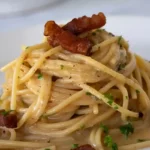
Creamy Miso Carbonara Fusion Pasta
- Total Time: 25 minutes
- Yield: 2 servings 1x
- Diet: General
Description
This is my take on miso carbonara recipe, one of the best fusion pasta recipes I have ever had. It has so many umami elements that will blow your mind.
Ingredients
- 8 ounces of spaghetti
- 4 slices of thick turkey bacon (cut into small pieces)
- 1 tbsp of miso paste
- 1 tsp of red chili flakes
- 1 tsp of freshly ground black pepper
- 1/2 cup of hot reserved pasta water
- 2 eggs
- 2 egg yolks
- 1 cup plus more for garnish parmigiano reggiano cheese
- finely chopped green parsley for garnish
Instructions
- Cook the Pasta: Bring a large pot of salted water to a boil. Cook the spaghetti according to package instructions until al dente. Reserve 1 cup of pasta water, then drain the pasta.
- Cook the Bacon: In a large skillet over medium heat, cook the turkey bacon pieces until crispy. Get rid of some of the bacon fat and only leave only a tablespoon. Add red chili flakes then turn off the heat.
- Prepare the Sauce: In a mixing bowl, whisk together the miso paste, eggs, egg yolk, and Parmigiano Reggiano until smooth. Use the hot reserved pasta water and slowly drizzle on the sauce stirring continuously to create a creamy sauce.
- Combine Pasta and Bacon: Add the cooked spaghetti to the skillet with the bacon fat. Toss to coat.
- Add the Sauce: Add the sauce to the pasta and toss until well combined.
- Serve: Add the turkey bacon back into the skillet. Garnish with additional Parmigiano Reggiano and finely chopped parsley.
Notes
Reserve Pasta Water: hot pasta water will help emulsify the sauce, achieve a creamy texture, and cook the eggs. Take it off the heat: the eggs will curdle if you combine the pasta and the sauce on the stovetop. You need to remove the pan from the stove and mix in the egg and cheese mixture.
- Prep Time: 5 minutes
- Cook Time: 20 minutes
- Category: Main Course
- Method: Skillet
- Cuisine: Japanese-Italian Fusion
Nutrition
- Serving Size: 1 serving
- Calories: 680 kcal
- Sugar: 4 g
- Sodium: 1250 mg
- Fat: 34 g
- Saturated Fat: 15 g
- Unsaturated Fat: 19 g
- Trans Fat: 0 g
- Carbohydrates: 54 g
- Fiber: 3 g
- Protein: 31 g
- Cholesterol: 220 mg