
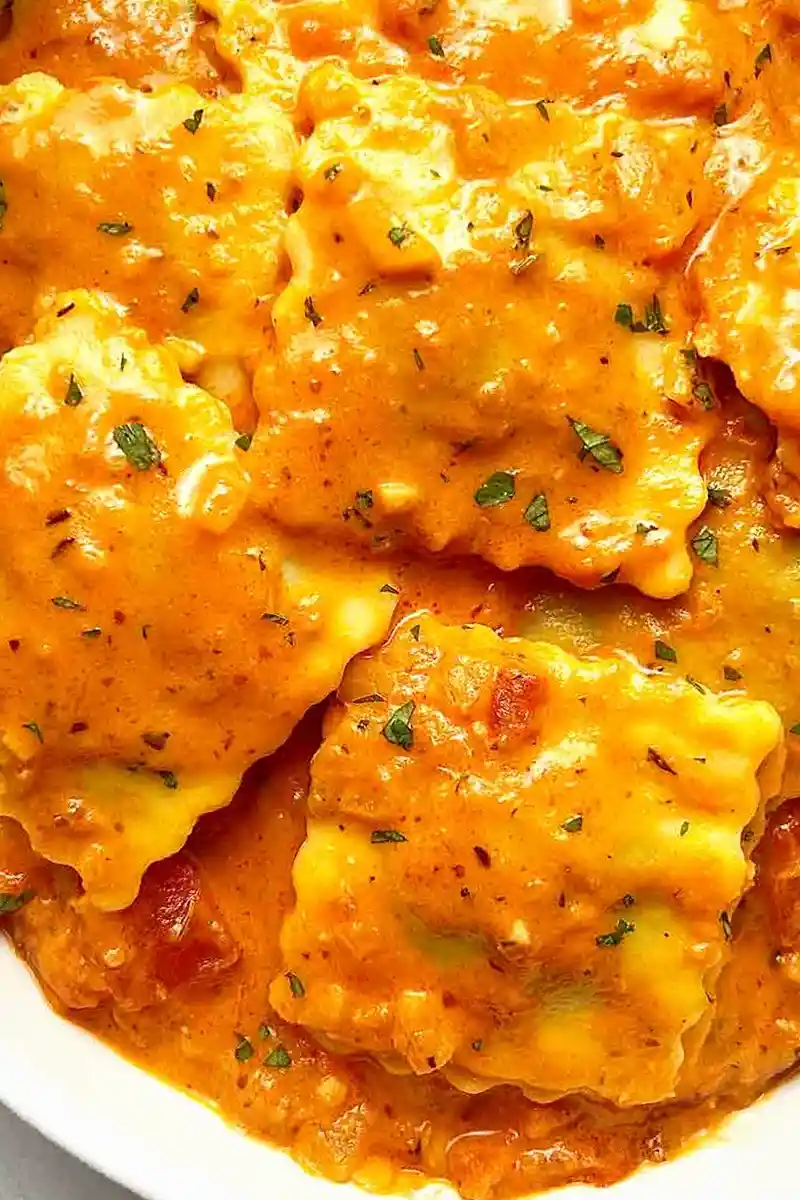
This creamy tomato-based sauce provides a rich and balanced flavor profile that complements a variety of stuffed pastas. It combines the acidity of tomatoes with the smoothness of heavy cream for a professional result in under 30 minutes.
List of ingredients
- 2 tablespoons extra virgin olive oil – used for sautéing the aromatics.
- 1 medium onion (finely diced) – provides a sweet, foundational flavor.
- 3 cloves garlic (minced) – adds a pungent, aromatic depth to the sauce.
- 1/3 cup tomato paste – thickens the consistency and concentrates the tomato taste.
- 1 cup low-sodium chicken stock – provides the liquid base for simmering.
- 1 (15-ounce) can diced tomatoes – adds texture and pops of juiciness.
- 1 tablespoon sugar – balances the natural acidity of the canned tomatoes.
- 1 teaspoon Italian seasoning – a convenient blend of dried herbs.
- 1/4 teaspoon salt – enhances the overall flavor profile.
- 1/4 teaspoon ground black pepper – adds a subtle, warm spice.
- 1/3 cup heavy cream – creates the signature velvety, pink finish.
step-by-step instructions
- Sauté Aromatics: Heat the olive oil in a medium pot over medium-high heat. Add the onions and garlic, and cook for 4-5 minutes until the onions are soft and translucent.
- Concentrate Tomato Flavor: Add the tomato paste to the pot and cook for 1 minute. This allows the paste to caramelize slightly, removing the raw metallic taste.
- Simmer the Base: Stir in the chicken stock, diced tomatoes, sugar, Italian seasoning, salt, and black pepper. Bring the mixture to a boil, then reduce heat to a simmer and cook for 15-20 minutes.
- Finish with Cream: Stir in the heavy cream and cook for 2 more minutes. This ensures the cream is well integrated and the sauce reaches its final consistency.
- Serve: Pour the finished sauce over cooked ravioli and serve immediately.
Professional Cooking Techniques
Caramelizing the Tomato Paste
Cooking the tomato paste for one minute before adding liquids is a critical step. This process, known as pincer, browns the sugars in the paste and deepens the color of the sauce. It transforms the flavor from a sharp, raw taste to a rich, savory sweetness.
Managing the Simmer Temperature
Maintaining a gentle simmer rather than a rolling boil is important during the 20-minute cook time. A low simmer allows the water in the stock to evaporate slowly, which thickens the sauce naturally. High heat can cause the sauce to splatter or break the emulsion once the cream is added.
Selecting the Right Cookware
A medium-sized pot with a heavy bottom is ideal for this recipe. Heavy-bottomed pots distribute heat more evenly, which prevents the tomato paste from scorching. A pot with higher sides helps contain the bubbling sauce during the initial boil.
Ingredient Substitutions
Using Vegetable Broth
To make this sauce suitable for different dietary preferences, replace the chicken stock with an equal amount of low-sodium vegetable broth. This keeps the savory depth while removing meat-derived ingredients. The flavor difference is minimal and does not affect the final texture.
Alternative Dairy Options
For a lighter version, you can substitute the heavy cream with half-and-half or whole milk. Note that these options will result in a thinner consistency and a lighter color. To compensate for the thinner texture, you may need to simmer the sauce for an additional five minutes before adding the dairy.
Fresh Tomato Alternatives
If you prefer fresh tomatoes over canned, use about 3 cups of finely chopped ripe plum tomatoes. You will need to simmer the fresh tomatoes for a longer period to break them down and reduce their water content. Ensure you keep the tomato paste to maintain the thickness of the sauce.
Sugar Replacements for Acidity
If you prefer not to use refined sugar, a teaspoon of honey or maple syrup works well. These alternatives provide the same acidity-balancing effect. In some cases, finely grated carrots can also add a natural sweetness to the sauce during the sautéing phase.
Custom Flavor Variations
Adding a Spicy Element
For those who enjoy heat, stir in a pinch of red pepper flakes during the garlic sauté. Alternatively, add a teaspoon of Sriracha or a small amount of cayenne pepper. This creates a spicy rosé sauce that cuts through the richness of the heavy cream.
Incorporating Fresh Herbs
While dried Italian seasoning is convenient, adding fresh basil or parsley at the very end enhances the flavor. Stir in chopped basil after removing the pot from the heat to preserve the herb’s bright green color. Fresh oregano can also be added during the simmer for an earthier taste.
Integrating Hard Cheeses
Stirring in a handful of grated Parmesan or Pecorino Romano cheese after adding the cream adds a salty, nutty dimension. The cheese helps further thicken the sauce and creates a more cohesive bond with the ravioli. Ensure the cheese is finely grated to avoid clumps.
Adding Sautéed Mushrooms
Adding sliced cremini or button mushrooms during the onion sauté adds an earthy, umami quality. Cook the mushrooms until they release their moisture and brown slightly before adding the garlic. This variation pairs exceptionally well with mushroom or spinach ravioli.
Best Serving Suggestions
Pairing with Cheese Ravioli
Ricotta and mozzarella ravioli are the classic choice for this sauce. The mildness of the cheese allows the tomato and cream flavors to stand out. A sprinkle of fresh parsley on top adds a professional visual contrast.
Pairing with Spinach and Ricotta Ravioli
The earthy notes of spinach ravioli complement the acidity of the tomato base. Because spinach ravioli often have a stronger flavor, the creamy element of this sauce helps balance the palate. This combination is particularly satisfying as a vegetarian-style main course.
Complementary Side Dishes
Serving this dish with a side of toasted garlic bread helps soak up the remaining sauce on the plate. A simple arugula salad with a lemon vinaigrette provides a crisp, acidic contrast to the rich, creamy pasta. This balance prevents the meal from feeling too heavy.
Protein Additions
For a more substantial meal, you can add grilled chicken strips or sautéed shrimp on top of the ravioli. The cream sauce acts as a bridge between the protein and the pasta. Simply sear the protein separately and place it on the plated dish.
Storage and Preservation
Refrigeration Guidelines
Store leftover sauce in an airtight glass container in the refrigerator for up to four days. Ensure the sauce has cooled slightly before sealing the lid to prevent excessive condensation. This prevents the sauce from developing an off-flavor from the fridge.
Freezing the Base
You can freeze the sauce without the cream for up to three months. Follow the recipe up until the simmer step, cool the sauce, and freeze it in portions. Add the heavy cream fresh during the reheating process to maintain the best texture.
Thawing Procedures
Thaw frozen sauce overnight in the refrigerator for the safest results. If you are in a rush, you can thaw it in a saucepan over low heat. Avoid using a microwave for thawing as it can cause the tomato solids to separate.
Reheating and Refreshing
Stovetop Reheating Method
Place the chilled sauce in a small saucepan over medium-low heat. Stir constantly to ensure the cream does not separate or burn at the bottom. Add a tablespoon of water or milk if the sauce has become too thick during storage.
Microwave Reheating Tips
Heat the sauce in a microwave-safe bowl in 30-second intervals. Stir between each interval to distribute the heat evenly and prevent hotspots. This method is faster but may slightly alter the creamy emulsion if overheated.
Correcting Sauce Consistency
If the sauce is too thick after reheating, whisk in a small amount of pasta water or chicken stock. If it is too thin, simmer it for a few minutes on the stove to reduce the liquid. Avoid adding more cream during reheating as it can make the sauce overly heavy.
Make-Ahead Preparation
Preparing Aromatics in Advance
Dice the onions and mince the garlic several hours before you plan to cook. Store them together in a small container in the fridge. This streamlines the actual cooking process and reduces the time spent at the stove.
Cooking the Tomato Base
The entire sauce can be cooked up to the point of adding cream a day in advance. The flavors of the tomato, stock, and herbs actually deepen overnight. Simply reheat the base and stir in the cream just before serving.
Organizing for Dinner Parties
For large groups, prepare the sauce in a large batch and keep it warm in a slow cooker on the ‘warm’ setting. Boil the ravioli in batches and toss them directly into the slow cooker. This ensures the pasta remains hot while you serve guests.
Troubleshooting Common Issues
Reducing Excessive Acidity
If the sauce tastes too sharp or acidic, add a tiny pinch more sugar or a small knob of unsalted butter. The fats in butter help neutralize the acidity of the tomatoes. Stir it in over low heat until completely melted.
Preventing Cream Curdling
To prevent the cream from curdling, ensure it is at room temperature or slightly warmed before adding it to the hot sauce. Avoid boiling the sauce vigorously once the cream has been incorporated. Keep the heat on low to medium.
Thickening a Runny Sauce
If the sauce remains too thin, you can simmer it for an additional five to ten minutes without a lid. Alternatively, stir in a tablespoon of grated Parmesan cheese. The protein and fat in the cheese will help bind the liquid.
Correcting Over-Salting
If you accidentally add too much salt, stir in a teaspoon of heavy cream or a small amount of unsalted butter. The extra fat helps mask the saltiness. You can also add a bit more diced tomato to increase the volume and dilute the salt concentration.
Frequently Asked Questions
Can I use this for other pasta types?
Yes, this sauce works excellently with penne, rigatoni, or fettuccine. It is especially good with shapes that have ridges or holes that can trap the creamy sauce. It also works well as a dip for crusty bread.
Do I need to strain the diced tomatoes?
Straining the tomatoes is not necessary and can lead to a loss of flavor. The liquid in the can contributes to the overall volume and acidity of the sauce. The simmering process will naturally reduce this liquid to the correct thickness.
Can I make this vegan?
To make this vegan, replace the chicken stock with vegetable broth and the heavy cream with full-fat coconut milk or a cashew-based cream. Use a vegan-friendly butter substitute for the sautéing process if preferred. Ensure the ravioli used are also plant-based.
Why add sugar to a savory sauce?
Sugar is used not to make the sauce sweet, but to balance the natural acidity of the tomatoes. Canned tomatoes can sometimes have a sharp, metallic tang. A small amount of sugar rounds out the flavor and creates a more balanced taste.
Print
Creamy Tomato Rosé Ravioli Sauce
- Total Time: 30 minutes
- Yield: 4 servings 1x
- Diet: Vegetarian
Description
This easy ravioli sauce is rich, flavorful, creamy, and tomatoey. It’s so delicious and comes together in only 30 minutes. You can use it for non-ravioli pasta dishes as well!
Ingredients
- 2 tablespoons extra virgin olive oil
- 1 medium onion (finely diced)
- 3 cloves garlic (minced)
- 1/3 cup tomato paste
- 1 cup low-sodium vegetable broth
- 1 (15-ounce) can diced tomatoes
- 1 tablespoon sugar
- 1 teaspoon Italian seasoning
- 1/4 teaspoon salt
- 1/4 teaspoon ground black pepper
- 1/3 cup heavy cream
Instructions
- Step 1: In a medium pot, heat the olive oil over medium-high heat. Add the onions and garlic, and cook for 4-5 minutes until the onions are soft and translucent.
- Step 2: Add the tomato paste and cook for 1 minute.
- Step 3: Add the vegetable broth, diced tomatoes, sugar, Italian seasoning, salt, and black pepper. Bring to a boil, then reduce to a simmer and cook for 15-20 minutes.
- Step 4: Stir in the heavy cream and cook for 2 more minutes.
- Step 5: Serve with cooked ravioli. Enjoy!
Notes
This rosy pink sauce provides a great balance of creaminess and tomato flavor. Using diced tomatoes adds a nice texture compared to crushed tomatoes.
- Prep Time: 5 minutes
- Cook Time: 25 minutes
- Category: Main Course
- Method: Stovetop
- Cuisine: American, Italian
Nutrition
- Serving Size: 1 serving
- Calories: 202 kcal
- Sugar: 10 g
- Sodium: 353 mg
- Fat: 15 g
- Saturated Fat: 6 g
- Unsaturated Fat: 9 g
- Trans Fat: 0 g
- Carbohydrates: 16 g
- Fiber: 3 g
- Protein: 4 g
- Cholesterol: 22 mg