
This one-pot meal delivers the classic flavors of traditional stuffed peppers in a convenient soup format. It combines lean ground beef, colorful bell peppers, and cooked rice in a savory tomato broth. This dish is an efficient way to enjoy a filling dinner with minimal cleanup.
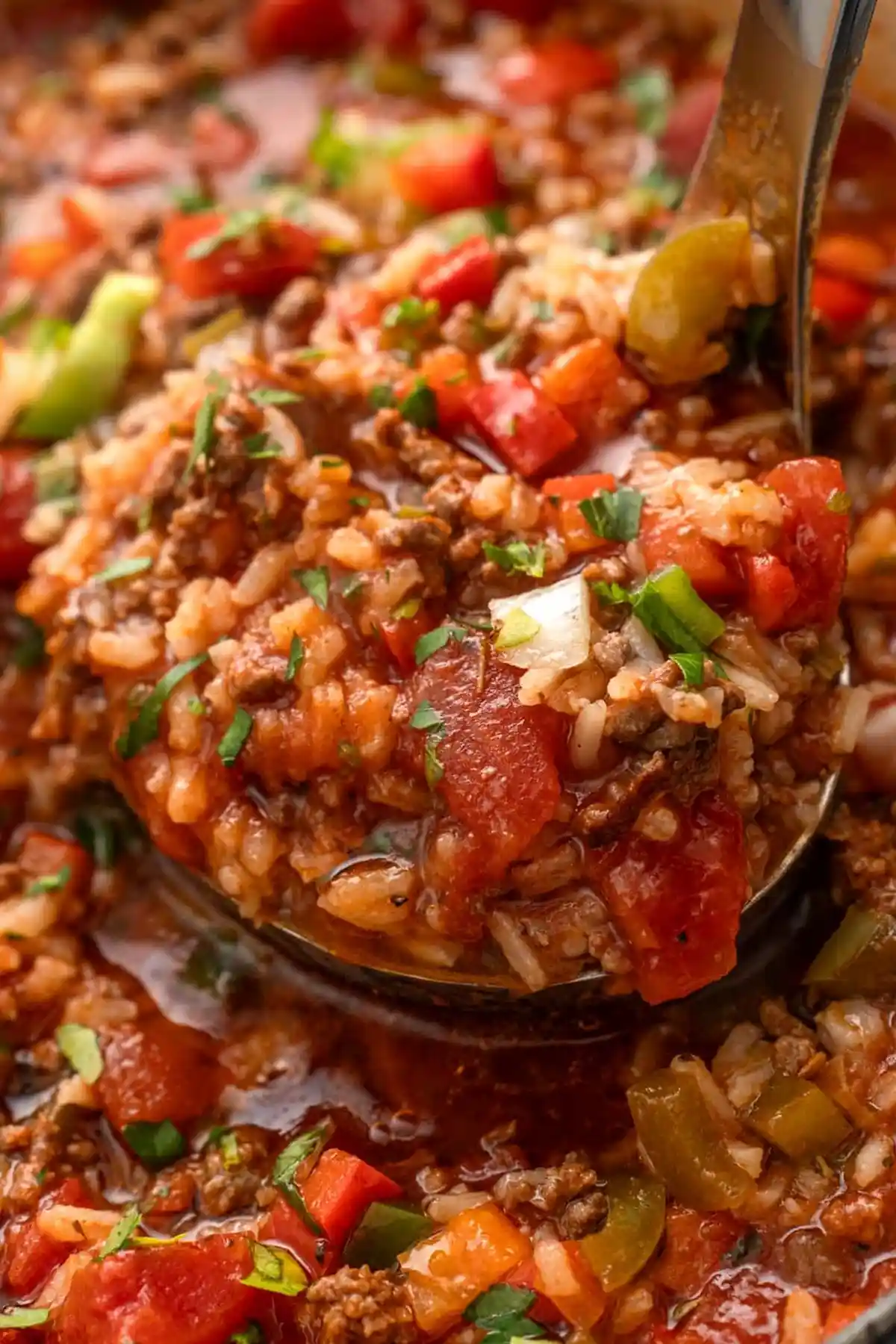
List of ingredients
- 1 lb. lean ground beef – provides the primary protein and savory base.
- 1 tablespoon olive oil, divided – used for browning meat and sautéing vegetables.
- 1/2 medium yellow onion, diced (about 1/2 cup) – adds aromatic depth.
- 2 cloves garlic, minced – enhances the overall flavor profile.
- 1 red bell pepper, finely chopped – adds sweetness and color.
- 1 green bell pepper, finely chopped – provides a traditional peppery taste.
- 2 (14.5 oz.) cans diced tomatoes – adds texture and bulk to the broth.
- 1 (15 oz.) can tomato sauce – thickens the soup and intensifies tomato flavor.
- 2 cups beef broth – creates the liquid base and adds richness.
- 1 tablespoon Worcestershire sauce – adds a salty, tangy depth of flavor.
- 1 tablespoon sugar, or to taste (optional) – balances the acidity of the tomatoes.
- 1 teaspoon Italian seasoning – provides a blend of dried herbs.
- Salt and pepper, to taste – basic seasonings for flavor balance.
- 2 cups cooked long grain white rice – adds heartiness and structure.
- 2 tablespoons fresh Italian parsley, chopped – adds a fresh finish.
- Shredded cheddar or mozzarella cheese, for serving (optional) – adds a creamy, salty topping.
step-by-step instructions
- Brown the beef: Heat a Dutch oven over medium heat and cook the ground beef, breaking up any clumps. Drain any excess grease and season the meat with salt and pepper before removing it from the pot.
- Sauté the vegetables: Add 1 tablespoon of olive oil to the same pot and sauté the diced onions and chopped bell peppers for about 5 minutes until soft. Stir in the minced garlic and cook for an additional 30 seconds to avoid burning.
- Combine base ingredients: Return the cooked beef to the pot and stir in the diced tomatoes, tomato sauce, and beef broth. Mix in the Worcestershire sauce, optional sugar, and Italian seasoning, then adjust salt and pepper after tasting.
- Simmer the soup: Bring the mixture to a gentle boil over medium heat. Once boiling, reduce the heat to medium-low and let it simmer for 15 to 20 minutes, stirring occasionally to prevent sticking.
- Incorporate rice and herbs: If serving immediately, stir in the cooked rice and fresh parsley and simmer for 1 to 2 minutes until heated through. For those planning on leftovers, stir in only the parsley and add the rice to individual bowls during serving.
- Garnish and serve: Ladle the hot soup into bowls and top with shredded cheddar or mozzarella cheese if desired.
Ingredient Selection and Substitutions
Choosing the Best Bell Peppers
Green bell peppers are harvested earlier and have a slightly bitter, peppery taste. Red, orange, and yellow peppers are fully ripened and taste much sweeter. Using a combination of red and green provides a balanced flavor and visually appealing color.
Ground Meat Alternatives
Lean ground beef is standard, but ground turkey or ground chicken can be used for a leaner option. If using turkey, you may need to add a pinch more salt to match the savoriness of beef. Ensure you brown the substitute meat thoroughly to develop a deep flavor.
Swapping White Rice for Brown Rice
Brown rice is a nutritious alternative that adds a nuttier flavor and more fiber to the soup. Since brown rice has a firmer texture, ensure it is fully cooked before adding it to the broth. It holds its shape better than white rice during reheating.
Beef Broth Alternatives
While beef broth complements the meat, chicken or vegetable broth can be used as substitutes. Low-sodium versions are recommended to better control the salt levels of the final dish. Vegetable broth is a suitable option for those avoiding meat-based liquids.
Selecting Canned Tomato Varieties
Diced tomatoes with added basil, garlic, or oregano can provide extra layers of flavor. Fire-roasted diced tomatoes offer a smoky quality that pairs well with the ground beef. Any standard brand of tomato sauce will work to provide the necessary thickness.
Cooking Techniques for Better Flavor
Sautéing Aromatics Properly
Cooking onions and peppers until translucent ensures that the raw bite is removed and the natural sugars are released. Adding garlic at the very end of the sauté process prevents it from burning, which would otherwise make the soup taste bitter. Use a medium heat to avoid scorching the vegetables.
Managing the Simmer Temperature
A gentle simmer is essential for melding the flavors without evaporating too much of the broth. Avoid a rolling boil for extended periods, as this can break down the vegetables too much. Stirring occasionally ensures the tomato sauce does not burn at the bottom of the pot.
Balancing Tomato Acidity
Tomato-based soups can sometimes taste overly tart depending on the brand of canned goods used. Adding a tablespoon of sugar helps neutralize this acidity and rounds out the flavor. Taste the soup after simmering for 15 minutes before deciding if more sugar is needed.
Using Fresh Herbs for Finish
Adding fresh Italian parsley at the end of the cooking process preserves its bright color and fresh taste. Stirring it in just before serving prevents the heat from dulling the herb’s aromatic properties. Flat-leaf parsley is generally preferred for its stronger flavor.
Storage and Preservation
Storing Rice Separately
Cooked rice continues to absorb liquid even after the heat is turned off. If stored inside the soup, the rice will expand and turn the liquid into a thick porridge. Keep the rice in a separate airtight container and add it to individual portions upon reheating.
Reheating for Best Consistency
Heat the soup base on the stove over medium heat until it reaches a simmer. If the soup has thickened too much in the refrigerator, stir in a small splash of beef broth to loosen it. Warm the rice separately in the microwave or on the stove before combining.
Freezing the Soup Base
The soup base, excluding the rice, can be frozen for up to three months. Store the base in freezer-safe containers or heavy-duty freezer bags, leaving room for expansion. Thaw the soup overnight in the refrigerator before reheating on the stovetop.
Maximum Refrigeration Time
This soup remains safe and flavorful in the refrigerator for up to three days. Ensure the pot is cooled slightly before sealing it with a lid to prevent condensation. Use an airtight container to keep the flavors from transferring to other foods.
Meal Variations and Customizations
Adding Extra Vegetables
To increase the nutritional value, stir in diced carrots, celery, or mushrooms during the sauté phase. Spinach or kale can be stirred in at the very end until wilted. Potatoes can be added, though they should be pre-cooked or diced very small to ensure they soften.
Incorporating Spicy Elements
For a spicy kick, add a pinch of red pepper flakes or diced green chiles during the simmering process. Sliced jalapenos can be stirred in or used as a topping for more direct heat. These additions pair well with the sweetness of the red bell peppers.
Creating a Mexican-Style Twist
Replace the Italian seasoning with taco seasoning or a blend of cumin and chili powder. Use a blend of Monterey Jack and Cheddar cheese for the topping. Garnish with fresh cilantro and a squeeze of lime juice for a different flavor profile.
Adding Smoked Paprika for Depth
A teaspoon of smoked paprika adds a wood-fired quality to the ground beef and tomato base. This works particularly well if you are using ground turkey instead of beef. Add the paprika during the sauté step to toast the spice slightly.
Using different Cheese Toppings
While cheddar is traditional, mozzarella provides a milder flavor and a better melt. For a sharper taste, try using crumbled feta or parmesan cheese. Broiling the cheese on top of the soup in an oven-safe bowl creates a crusty layer.
Substituting Grains
Quinoa or farro can be used instead of rice for a different texture and higher protein content. Like rice, these grains should be cooked separately to avoid absorbing all the broth. Quinoa is particularly useful for those seeking a gluten-free grain alternative.
Serving and Pairing Suggestions
Using Cheese as a Garnish
Adding cheese just before serving provides a creamy contrast to the acidic tomato broth. Shredded cheese melts quickly into the hot soup, creating rich pockets of flavor. For a more intense experience, use a mixture of three different cheeses.
Pairing with Crusty Breads
A toasted baguette or a piece of sourdough bread is ideal for dipping into the thick broth. Garlic bread adds another layer of flavor that complements the garlic in the soup. The crunch of the bread balances the softness of the rice and vegetables.
Side Salad Recommendations
A light side salad with a lemon vinaigrette helps cut through the richness of the beef and cheese. Fresh greens like arugula or spinach provide a crisp contrast. Avoid heavy creamy dressings that might overwhelm the soup.
Serving in Bread Bowls
For a more presentation-focused meal, serve the soup inside a hollowed-out sourdough bread bowl. This keeps the soup hot and provides an edible container. Ensure the bread is toasted slightly to prevent the broth from soaking through too quickly.
Troubleshooting Common Issues
Fixing a Soup That Is Too Thick
If the soup becomes too dense, stir in additional beef broth one-quarter cup at a time. This allows you to reach your desired consistency without diluting the flavor too much. Always add liquid slowly and taste after each addition.
Reducing Excessive Tartness
Beyond adding sugar, a tiny pinch of baking soda can neutralize the pH of the tomatoes. Stir in a very small amount and watch for the soup to bubble slightly. This method removes the sharp acidic edge without adding sweetness.
Preventing Tough Meat
Avoid overcooking the ground beef during the initial browning phase. Once the meat is no longer pink and has browned slightly, remove it from the heat. Long simmering times are fine for the broth, but the meat should be handled gently.
Dealing with Overcooked Rice
If the rice becomes too mushy, it is likely because it was cooked too long in the broth. To prevent this in the future, always add the rice at the very end. If it is already mushy, you can blend a small portion of the soup to create a thicker, creamy texture.
Frequently Asked Questions
Can I use a slow cooker for this recipe?
Yes, you can brown the beef in a skillet first and then transfer it to a slow cooker. Add all ingredients except the rice and cook on low for 6 to 8 hours or high for 3 to 4 hours. Stir in the cooked rice and parsley just before serving.
Do I have to cook the rice separately?
Cooking the rice separately is highly recommended to prevent it from absorbing all the soup liquid. If you cook raw rice in the pot, you will likely need to double the amount of beef broth. Separately cooked rice ensures the soup remains a liquid rather than a stew.
What is the best way to drain ground beef?
Place the cooked beef in a colander over a heat-resistant bowl to let the grease drain completely. Alternatively, use a large spoon or a paper towel to soak up the excess fat from the pot. This prevents the soup from having an oily film on top.
Can I use frozen bell peppers?
Frozen bell peppers can be used, but they may release more water than fresh peppers. Sauté them longer to evaporate the extra moisture before adding the other ingredients. Fresh peppers are preferred for a better snap and texture.
How do I make this soup thicker?
To thicken the soup without adding more rice, you can simmer it uncovered for an additional 10 to 15 minutes to reduce the liquid. Alternatively, you can mash a few of the diced tomatoes against the side of the pot to release more pectin. Adding more tomato sauce is also an effective method.
Print
Hearty Stuffed Pepper Soup
- Total Time: 40 minutes
- Yield: 6 servings 1x
- Diet: General
Description
Stuffed pepper soup is a cozy and hearty one-pot dinner loaded with ground beef, onions, bell peppers and rice in a rustic tomato-based broth.
Ingredients
- 1 lb. lean ground beef
- 1 tablespoon olive oil, divided
- 1/2 medium yellow onion, diced (about 1/2 cup)
- 2 cloves garlic, minced
- 1 red bell pepper, finely chopped
- 1 green bell pepper, finely chopped
- 2 (14.5 oz.) cans diced tomatoes
- 1 (15 oz.) can tomato sauce
- 2 cups beef broth
- 1 tablespoon Worcestershire sauce
- 1 tablespoon sugar, or to taste (optional)
- 1 teaspoon Italian seasoning
- Salt and pepper, to taste
- 2 cups cooked long grain white rice
- 2 tablespoons fresh Italian parsley, chopped
- Shredded cheddar or mozzarella cheese, for serving (optional)
Instructions
- Step 1: In a Dutch oven over medium heat, brown ground beef and break up any clumps. Drain grease (if any) and season beef with salt and pepper to taste. Remove and set aside.
- Step 2: Saute onions and bell peppers in 1 tablespoon of olive oil until soft, about 5 minutes. Add garlic and saute for another 30 seconds.
- Step 3: Stir in cooked beef, diced tomatoes, tomato sauce and beef broth. Season with Worcestershire sauce, sugar (optional) and Italian seasoning. Do a taste test and season more with salt and pepper, if needed.
- Step 4: Bring to a gentle boil. Reduce heat to medium-low and simmer for 15-20 minutes, stirring occasionally.
- Step 5: If you don’t plan on having leftovers, stir in cooked rice and parsley and simmer until heated through, about 1-2 minutes. If you plan on having leftovers, stir in parsley, heat the rice and stir the rice into each individual bowl of soup (see notes).
- Step 6: Dish and serve hot garnished with shredded cheese (optional).
- Step 7: Enjoy!
Notes
This recipe uses cooked rice because raw rice will soak up most of the broth when cooked with the soup. When storing leftovers, it’s recommended to store the rice separately so the rice does not absorb all the liquid.
- Prep Time: 10 minutes
- Cook Time: 30 minutes
- Category: Soups and Stews
- Method: Stovetop
- Cuisine: American
Nutrition
- Serving Size: 1 bowl
- Calories: 470 kcal
- Sugar: 12 g
- Sodium: 1150 mg
- Fat: 18 g
- Saturated Fat: 7 g
- Unsaturated Fat: 11 g
- Trans Fat: 0 g
- Carbohydrates: 38 g
- Fiber: 5 g
- Protein: 28 g
- Cholesterol: 85 mg