
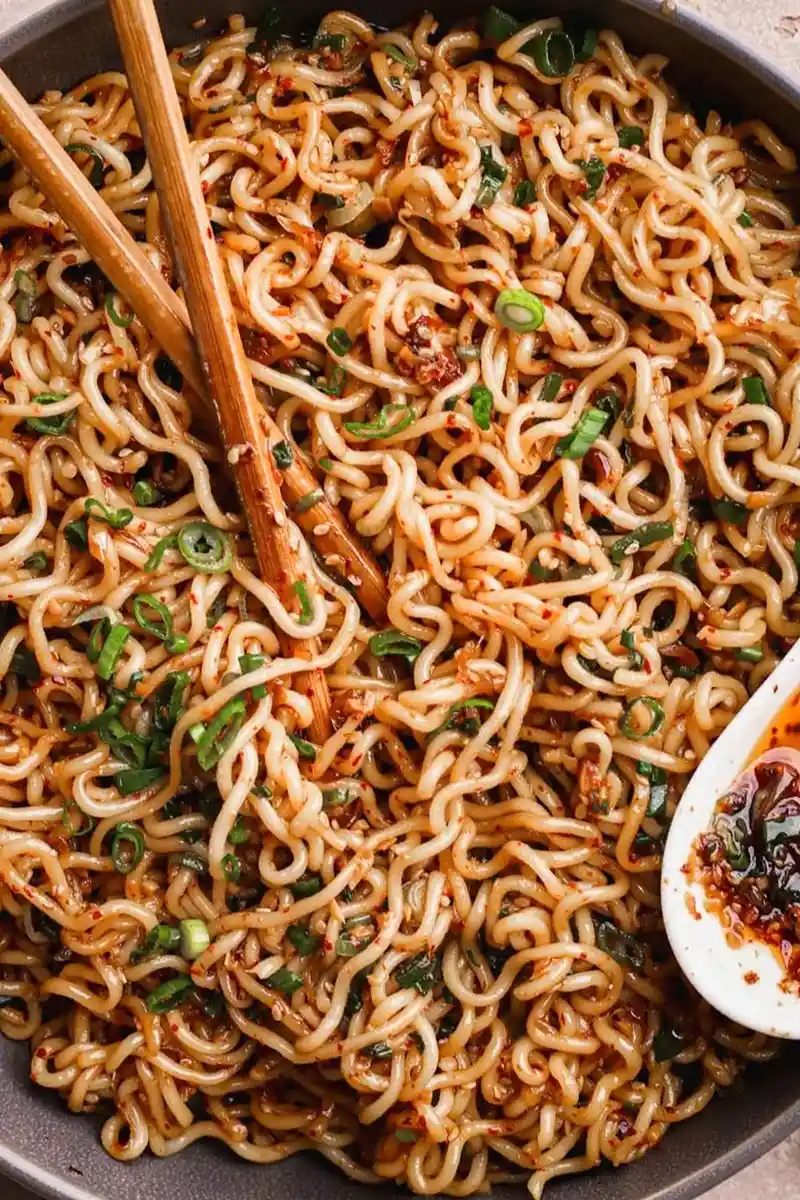
These aromatic noodles feature a bold blend of spicy chili oil, caramelized garlic, and savory soy sauce. They are an ideal choice for a quick weeknight dinner that requires minimal preparation and cooking time.
List of ingredients
- 1/2 cup canola or vegetable oil – used as the base for the chili infusion.
- 1/4 cup garlic, minced fine – provides a strong aromatic base.
- 1 shallot, sliced thin – adds a mild, sweet onion flavor.
- 1 tbsp sesame oil – provides a rich, nutty depth.
- 1 tbsp Korean chili flakes – offers a fruity, medium heat.
- 1 tbsp ginger, peeled and grated – adds a fresh, zesty kick.
- 2 tsp white granulated sugar – balances the spice and acidity.
- 1 tbsp sesame seeds, toasted – adds texture and nuttiness, plus extra for garnish.
- 2 tsp rice vinegar – provides necessary acidity to cut through the oil.
- 3 tbsp soy sauce, reduced sodium – delivers saltiness and umami.
- 1/4 cup green onions, sliced – used for mixing and as a fresh garnish.
- 8-9 oz dried ramen noodles – the primary starch for the dish.
step-by-step instructions
- Infuse the oil: Start with a medium saucepan cold. Add canola oil, minced garlic, and sliced shallots. Simmer over low heat, stirring occasionally, for about 5-6 minutes until the garlic is light golden brown and shallots are caramelized.
- Add aromatics: Stir in the grated ginger and cook until fragrant. Add the Korean chili flakes, toasted sesame seeds, sugar, and sesame oil. Cook for one additional minute.
- Finish the sauce: Stir in the rice vinegar and soy sauce. Bring the mixture to a gentle simmer, then remove the pan from the heat. Stir in the sliced green onions and pour the finished chili oil into a large serving bowl.
- Prepare the noodles: Bring a large pot of water to a boil. Cook the dried ramen noodles according to the package directions. Drain the water thoroughly once they are finished.
- Combine and serve: Add the hot, drained noodles directly into the bowl with the chili oil. Toss until every strand is evenly coated. Season with salt if desired, then garnish with extra sliced scallions and toasted sesame seeds.
Mastering the Chili Oil Infusion
The Importance of the Cold Pan Start
Starting the oil, garlic, and shallots in a cold pan ensures a gradual increase in temperature. This prevents the garlic from searing or burning instantly, allowing the flavors to infuse deeply into the oil.
Maintaining Low Heat for Caramelization
Keeping the heat low is critical to prevent the garlic from becoming bitter. Slow cooking allows the shallots to caramelize properly, which develops the natural sugars and adds a sweet contrast to the spice.
Timing the Addition of Ginger
Ginger is added after the garlic and shallots have softened to prevent it from scorching. Cooking it just until fragrant preserves its bright, zesty profile without letting it become overly pungent.
Noodle Selection and Texture Guide
Using Traditional Ramen Noodles
Ramen noodles are ideal because their alkaline structure allows them to hold onto the oily sauce. They provide a springy texture that complements the richness of the garlic oil.
Substituting with Soba or Udon
Soba noodles add an earthy buckwheat flavor, while udon provides a thick, chewy experience. When using these, ensure they are rinsed well after boiling to remove excess starch.
Achieving Al Dente Results
Cook the noodles for one minute less than the package instructions suggest. This ensures they remain firm and do not become mushy when tossed with the hot oil sauce.
Using Rice Noodles for Gluten-Free Options
Wide rice noodles work well as a substitute for a gluten-free version. Be cautious not to overcook them, as they can lose their structure quickly during the tossing process.
Customizing the Sauce Profile
Adjusting the Heat Level
To reduce the spice, decrease the Korean chili flakes by half or keep a portion of the sauce separate. This allows you to control the heat level for each individual serving.
Balancing Acidity with Rice Vinegar
Rice vinegar provides a mild tang that prevents the oil from feeling too heavy. For a sharper taste, you can use a small amount of apple cider vinegar as a substitute.
Using Coconut Aminos for Less Sodium
If you need a lower-sodium or soy-free alternative, replace the soy sauce with coconut aminos. This will add a slight sweetness while maintaining the savory umami flavor.
Enhancing the Nutty Aroma
Adding an extra teaspoon of toasted sesame oil at the very end of the cooking process intensifies the aroma. Ensure the oil is toasted to maximize the depth of flavor.
Adding Protein and Vegetables
Integrating Sliced Chicken Breast
Sauté thinly sliced chicken breast in a separate pan until golden brown. Toss the cooked chicken with the noodles for a complete, protein-rich meal.
Adding Crispy Tofu Cubes
Press extra-firm tofu to remove moisture, cube it, and pan-fry until the edges are crisp. Fold the tofu into the noodles just before serving to maintain the crunch.
Searing Lean Beef Strips
Quickly sear flank steak or sirloin strips over high heat. Adding beef provides a rich flavor that pairs perfectly with the spicy garlic oil.
Incorporating Sautéed Bok Choy
Sauté baby bok choy in a small amount of oil until the leaves wilt and the stems are tender-crisp. Place the greens on top of the noodles for added nutrition and color.
Adding Sliced Mushrooms
Shiitake or button mushrooms can be browned in the pan before the oil infusion. This adds an earthy depth and a meaty texture to the dish.
Using Fresh Spinach
Toss a handful of fresh baby spinach into the noodles while they are still piping hot. The residual heat will wilt the spinach without requiring additional cooking time.
Serving and Garnish Suggestions
Adding a Fried Egg Topper
A sunny-side-up egg with a runny yolk creates a creamy sauce when mixed with the chili oil. This adds richness and makes the dish feel more substantial.
Using Fresh Thai Basil or Cilantro
Fresh herbs provide a bright contrast to the heavy oil. Sprinkle chopped Thai basil or cilantro over the top just before serving for a professional finish.
Adding Toasted White and Black Sesame Seeds
Using a mix of both white and black sesame seeds improves the visual appeal. The contrast in colors makes the dish look more like a restaurant-style presentation.
Serving with Steamed Edamame
Serve the noodles alongside a bowl of lightly salted steamed edamame. This provides a fresh, protein-heavy side that balances the spice of the noodles.
Storage and Reheating Instructions
Storing Leftover Noodles
Place cooked noodles in an airtight container and refrigerate for up to four days. Keep the sauce well-mixed with the noodles to prevent them from sticking together.
Preserving Excess Chili Oil Sauce
If you make an extra batch of sauce, store it in a glass jar in the fridge for up to two weeks. Reheat the sauce slightly before tossing it with fresh noodles.
The Best Reheating Method
Reheat noodles in a sauté pan over medium heat with a splash of water or extra oil. This restores the texture better than a microwave, which can dry out the noodles.
Using a Microwave for Quick Reheating
Heat the noodles in short 30-second bursts, stirring in between. This ensures the oil is distributed evenly and prevents hot spots in the dish.
Serving at Room Temperature
These noodles are versatile and can be enjoyed cold or at room temperature. This makes them an excellent option for a cold noodle salad in a lunch box.
Troubleshooting Common Issues
Preventing Burnt Garlic
If the garlic begins to brown too quickly, remove the pan from the heat immediately. Stir in a tablespoon of water or additional oil to drop the temperature quickly.
Fixing Clumped Noodles
If the noodles stick together after draining, toss them with a teaspoon of oil before adding them to the sauce. This creates a barrier that prevents clumping.
Managing Excessive Oiliness
If the dish feels too oily, add an extra teaspoon of rice vinegar or a squeeze of fresh lime juice. The acid helps break down the perception of fat on the palate.
Correcting a Bland Taste
If the noodles lack flavor, add a small pinch of salt or an extra teaspoon of soy sauce. Ensure you toss the noodles thoroughly to coat every strand.
Frequently Asked Questions
Can I use spaghetti instead of ramen?
Yes, spaghetti is a great substitute if you do not have Asian noodles. Cook the spaghetti until al dente and toss it with the sauce as directed.
Can this recipe be made vegan?
This recipe is naturally vegan as long as you use a vegan-friendly soy sauce. Ensure the ramen noodles you choose do not contain egg.
How do I store the noodles to keep them from getting mushy?
Under-cook the noodles slightly if you plan to store them. This ensures they maintain a better texture after being reheated.
What is the best substitute for Korean chili flakes?
Crushed red pepper flakes can be used, but they are often spicier and less fruity. Reduce the quantity of red pepper flakes to avoid overwhelming the dish.
Can I make the sauce in advance?
Yes, the chili oil sauce can be prepared days ahead and stored in the refrigerator. Simply warm it up before tossing it with freshly cooked noodles.
Is it possible to freeze these noodles?
It is not recommended to freeze cooked noodles as they lose their texture. However, you can freeze the chili oil sauce in small portions for later use.
Print
Easy Garlic Chili Oil Noodles
- Total Time: 25 minutes
- Yield: 4 servings 1x
- Diet: General
Description
These garlic chili oil noodles are loaded with so much flavor and are insanely addicting. Ramen noodles tossed in a spicy, garlicky chili oil, with caramelized shallots, toasted sesame seeds and fresh scallions.
Ingredients
- 1/2 cup canola or vegetable oil
- 1/4 cup garlic, minced fine
- 1 shallot, sliced thin
- 1 tbsp sesame oil
- 1 tbsp Korean chili flakes
- 1 tbsp ginger, peeled and grated
- 2 tsp white granulated sugar
- 1 tbsp sesame seeds, toasted, plus more for garnish
- 2 tsp rice vinegar
- 3 tbsp reduced sodium soy sauce
- 1/4 cup green onions, sliced, plus more garnish
- 8–9 oz dried ramen noodles
Instructions
- Step 1: In a medium saucepan, start the pan cold with canola oil, garlic and shallots. Simmer over low heat to infuse the oil. Stir occasionally until the garlic turns a light golden brown color and the shallots begin to caramelize, about 5-6 minutes.
- Step 2: Next, add grated ginger. Stir until the ginger becomes fragrant. Then, add chili flakes, sesame seeds, sugar and sesame oil. Cook for 1 minute.
- Step 3: Stir in rice vinegar and soy sauce. Bring to a gentle simmer and remove from heat. Add sliced green onions. Then, pour chili oil into a large serving bowl.
- Step 4: In a large pot, bring water to a boil. Cook the noodles according to the package directions. Once the noodles are finished cooking, drain the water.
- Step 5: Add the hot noodles into the bowl with the chili oil. Toss until all the noodles are coated. Season with salt, if needed. Then, sprinkle with thinly sliced scallions and toasted sesame seeds.
Notes
Keep the heat low when infusing the oil to avoid burning the garlic and shallots. Cook noodles until al dente for the best texture.
- Prep Time: 15 minutes
- Cook Time: 10 minutes
- Category: Main Course
- Method: Stovetop
- Cuisine: Asian
Nutrition
- Serving Size: 1 serving
- Calories: 580 kcal
- Sugar: 4 g
- Sodium: 1945 mg
- Fat: 42 g
- Saturated Fat: 7 g
- Unsaturated Fat: 34 g
- Trans Fat: 0.1 g
- Carbohydrates: 45 g
- Fiber: 3 g
- Protein: 9 g
- Cholesterol: 0 mg