
This nutrient-dense Turkey Vegetable Soup is a filling meal packed with fresh produce and lean protein. It is an excellent choice for those seeking a low-calorie yet satisfying dinner that doesn’t sacrifice flavor. Prepare this batch to enjoy a healthy, comforting meal throughout the week.
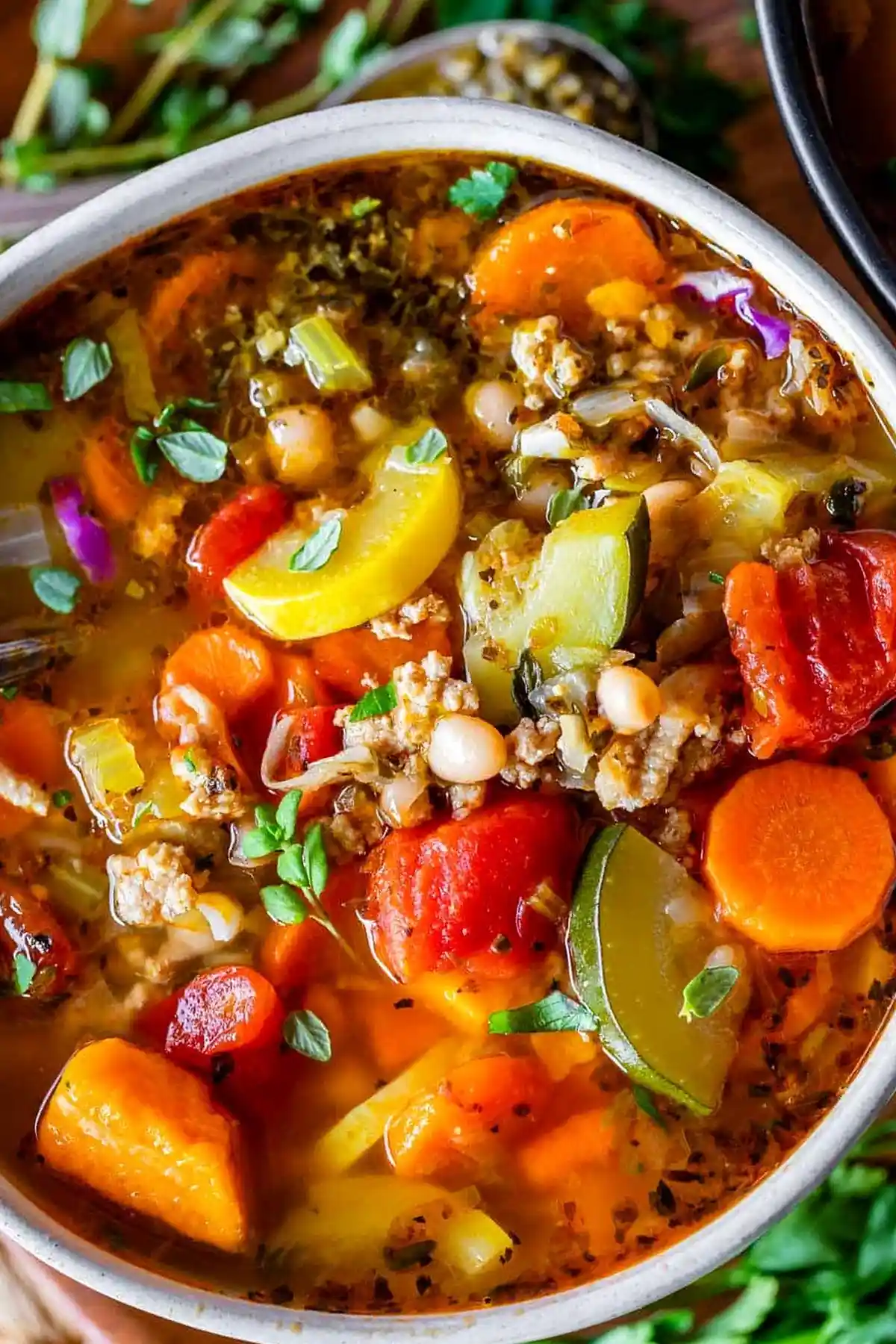
List of ingredients
- 2 pounds ground turkey – provides lean protein and heartiness.
- 1 large onion, chopped – adds a foundational savory base.
- 4 cloves garlic, smashed and minced (at least 1 tablespoon) – for aromatic depth.
- 2 & 1/2 teaspoons kosher salt – adjust slightly if using table salt.
- 1 teaspoon black pepper – adds a mild spicy kick.
- 1 tablespoon oregano – provides an earthy, herbal note.
- 1/2 teaspoon garlic powder – enhances the garlic flavor profile.
- 1/2 teaspoon smoked paprika – adds a subtle smoky depth.
- 1/4 to 1/2 teaspoon celery seed – complements the fresh celery.
- 1 teaspoon basil – brings a sweet, peppery aroma.
- 1/4 to 1/2 teaspoon crushed red pepper – for a hint of heat.
- 1/2 teaspoon dried thyme or 6 fresh thyme sprigs – adds woody fragrance.
- 10-12 cups chicken or turkey broth – the liquid base for the soup.
- 4-5 large carrots, chopped – for sweetness and color.
- 1 & 1/2 cups celery, chopped – adds crunch and traditional soup flavor.
- 1 sweet potato, peeled and chopped – provides creaminess and nutrients.
- 2 cups coleslaw cabbage – adds bulk and low-calorie volume.
- 1 (14-oz) can diced tomatoes (fire roasted preferred) – adds acidity and richness.
- 1 (14-oz) can white beans – for extra protein and fiber.
- 1 zucchini, chopped – a tender, low-calorie addition.
- 1 yellow squash, chopped – complements the zucchini’s texture.
- Chopped parsley – optional calorie-free garnish.
- Pesto – optional rich garnish for individual bowls.
- Parmesan cheese – optional salty finish for individual bowls.
step-by-step instructions
- Brown the Meat: In a very large soup pot (at least 6-quart capacity), add 2 pounds ground turkey and the chopped onion. Sauté over medium-high heat, crumbling the turkey with a spoon until cooked through.
- Drain Excess Fat: Turn off the heat and carefully drain the fat from the pot. To do this easily, tilt the pot and spoon the grease into a foil-lined bowl, then refrigerate and discard.
- Season the Base: Return the heat to medium. Stir in 4 cloves minced garlic along with the salt, black pepper, oregano, garlic powder, smoked paprika, celery seed, basil, crushed red pepper, and dried thyme (if using dried). Cook until the spices become fragrant.
- Add Liquid: Pour in 10-12 cups of broth. You can use straight chicken broth, turkey broth, or a combination of water and turkey base.
- Incorporate Hard Vegetables: Increase heat to high to bring the liquid to a boil. Gradually add the chopped carrots, celery, sweet potato, and 2 cups of coleslaw cabbage. If using fresh thyme sprigs, add them to the pot now.
- Stir in Pantry Items: Add the can of diced tomatoes including the juices. Drain the white beans thoroughly and stir them into the mixture.
- Simmer the Base: Once the soup reaches a boil, reduce the heat to a medium simmer. Let it bubble gently for about 20 minutes, or until the carrots and sweet potatoes are nearly fork-tender.
- Add Soft Vegetables: Stir in the chopped zucchini and yellow squash. Continue simmering for another 5-10 minutes until the squash is tender but not mushy.
- Final Cleanup: Skim any foam from the surface of the soup using a spoon. If you added fresh thyme sprigs, locate the stems and remove them from the pot.
- Garnish and Serve: Ladle the hot soup into bowls. Garnish with fresh parsley for a low-calorie option, or add a dollop of pesto and shredded parmesan for a richer flavor.
Customizing Your Vegetable Mix
Replacing Sweet Potatoes with Parsnips
If you prefer a less sweet flavor, substitute the sweet potato with chopped parsnips or turnips. These root vegetables maintain a similar structure during simmering and provide a savory, earthy taste. They are excellent alternatives for those monitoring their sugar intake.
Using Kale or Spinach for Extra Greens
You can swap the coleslaw cabbage for chopped kale or baby spinach to change the nutrient profile. If using kale, add it at the same time as the cabbage. If using spinach, stir it in during the final minute of cooking so it doesn’t overcook.
Adjusting the Protein Source
While ground turkey is lean and flavorful, you can use lean ground chicken for a milder taste. If you prefer a meatless version, replace the turkey with two cans of chickpeas or a mix of mushrooms and lentils. Ensure you sauté these alternatives well before adding the broth.
Varying the Heat Levels
The crushed red pepper provides a subtle warmth that can be adjusted to your preference. For a spicier soup, increase the amount to a full teaspoon. For a child-friendly version, omit the red pepper entirely and use a pinch of extra paprika for color.
Perfecting the Cooking Process
Maximizing Flavor Through Browning
Ensure the ground turkey is well-browned before adding the liquids. This process, known as the Maillard reaction, creates a depth of flavor that boiling alone cannot achieve. Use a wide pot to prevent the meat from steaming in its own juices.
Timing Vegetable Additions
It is critical to add vegetables based on their density. Root vegetables like carrots and sweet potatoes require more time, while zucchini and squash cook quickly. Adding the squash at the end prevents it from disintegrating into the broth.
Managing the Broth Consistency
If the soup is too thick after simmering, stir in an extra cup of water or broth to reach your desired consistency. Conversely, if it is too thin, let it simmer uncovered for an additional 15 minutes to reduce the liquid. This concentrates the flavors and thickens the base.
The Importance of Skimming Foam
As the soup boils, proteins from the meat can create a greyish foam on the surface. Skimming this off with a large spoon results in a clearer, more visually appealing broth. This simple step elevates the soup to a more professional presentation.
Storage and Long-Term Preservation
Refrigeration Guidelines
Allow the soup to cool completely before transferring it to airtight containers. This prevents condensation from forming, which can dilute the flavor. Store the soup in the refrigerator for up to 3-4 days.
Freezing for Future Meals
This soup freezes exceptionally well for up to 3 months. Use freezer-safe containers or heavy-duty freezer bags, leaving about an inch of headspace to allow for liquid expansion. Label each container with the date for easy tracking.
Safe Thawing Procedures
The best way to thaw frozen soup is to move it from the freezer to the refrigerator 24 hours before you plan to eat it. This slow thaw preserves the texture of the vegetables. Avoid thawing at room temperature to prevent bacterial growth.
Reheating Best Practices
Stovetop Reheating for Texture
Place the leftover soup in a pot over low to medium heat. Stir occasionally and add a splash of water or broth if the soup has thickened too much in the fridge. This method ensures the heat is distributed evenly throughout the pot.
Microwave Instructions for Individual Servings
Transfer a portion of soup to a microwave-safe bowl and cover it with a lid or paper towel. Heat in 1-minute intervals, stirring in between to avoid hot spots. This is the fastest method for a quick lunch during the work week.
Serving Ideas and Pairings
Low-Calorie Garnish Options
Freshly chopped parsley is a great way to add brightness and a pop of green without adding calories. A squeeze of fresh lemon juice right before serving can also brighten the flavors of the turkey and broth.
Hearty Side Dish Pairings
For a more substantial meal, serve the soup alongside a side of steamed brown rice or quinoa. You can also stir the grains directly into the bowl to create a thick, porridge-like stew that is incredibly filling.
Bread and Toast Accompaniments
Pair this soup with a slice of toasted sourdough or a small piece of garlic bread for a classic contrast. The crunch of the bread complements the tenderness of the simmered vegetables and the richness of the broth.
Adding Richer Toppings
If you are not counting calories, a teaspoon of basil pesto stirred in adds a concentrated burst of garlic and pine nut flavor. A sprinkle of aged parmesan cheese provides a salty finish that balances the sweetness of the carrots.
Troubleshooting Common Issues
Preventing Mushy Vegetables
If you find your vegetables are too soft, reduce the initial simmering time for the carrots and sweet potatoes. Ensure you only simmer the squash for the minimum recommended 5 minutes. Using larger chunks of vegetables also helps them maintain their shape.
Balancing Overly Salty Broth
If the soup tastes too salty, add more unsalted broth or a cup of water to dilute the concentration. You can also add a peeled, halved potato to the pot for 15 minutes; the potato will absorb some of the excess salt before you remove it.
Fixing a Bland Flavor Profile
If the soup lacks depth, check the acidity levels. Adding a tablespoon of apple cider vinegar or a teaspoon of lemon juice can wake up the other flavors. You can also add an extra pinch of smoked paprika for a more robust taste.
Frequently Asked Questions
Can I use frozen vegetables instead of fresh?
Yes, you can use frozen mixed vegetables. However, since they are often blanched, they cook faster than fresh ones. Add them toward the end of the cooking process to prevent them from becoming mushy.
How do I make this recipe vegetarian?
Replace the ground turkey with diced mushrooms or cooked lentils and use a high-quality vegetable broth. The seasonings remain the same, providing a hearty and savory plant-based alternative.
Which type of white beans are best?
Cannellini beans or Great Northern beans are the best choices for this recipe. They have a creamy texture and a mild flavor that blends seamlessly with the turkey and vegetable base.
Is this soup suitable for meal prep?
Absolutely. Because this recipe yields about 15 servings, it is ideal for batch cooking. Divide the soup into individual portions for an easy, healthy grab-and-go meal during the week.
Print
Hearty Turkey Vegetable Soup
- Total Time: 65 minutes
- Yield: 15 servings 1x
- Diet: Low Calorie
Description
A Weight Loss Soup recipe that is packed full of veggies! This homemade Turkey Vegetable soup is really low calorie because it’s basically a bunch of veggies, broth, and ground turkey.
Ingredients
- 2 pounds ground turkey
- 1 large onion, chopped
- 4 cloves garlic, smashed and minced
- 2 1/2 teaspoons kosher salt
- 1 teaspoon black pepper
- 1 tablespoon oregano
- 1/2 teaspoon garlic powder
- 1/2 teaspoon smoked paprika
- 1/4 to 1/2 teaspoon celery seed
- 1 teaspoon basil
- 1/4 to 1/2 teaspoon crushed red pepper
- 1/2 teaspoon dried thyme or 6 fresh thyme sprigs
- 10–12 cups chicken or turkey broth
- 4–5 large carrots, chopped
- 1 1/2 cups celery, chopped
- 1 sweet potato, peeled and chopped
- 2 cups coleslaw cabbage
- 1 (14-oz) can diced tomatoes
- 1 (14-oz) can white beans
- 1 zucchini, chopped
- 1 yellow squash, chopped
- chopped parsley, to garnish (optional)
- pesto, to garnish (optional)
- parmesan cheese, to garnish (optional)
Instructions
- Step: In a very large soup pot (at least a 6-quart capacity), add 2 pounds ground turkey and a chopped onion. Bring to a sauté over medium high heat, crumbling the turkey.
- Step: Turn off the heat and drain the fat.
- Step: Turn the heat back on to medium. Add 4 cloves minced garlic and all the spices: 2 and 1/2 teaspoons kosher salt, 1 teaspoon black pepper, 1 tablespoon oregano, 1/2 teaspoon garlic powder, 1/2 teaspoon smoked paprika, 1/4 to 1/2 teaspoon celery seed, 1 teaspoon basil, 1/4 to 1/2 teaspoon crushed red pepper, 1/2 teaspoon thyme if using dried thyme. Cook the mixture until the spices and garlic are fragrant.
- Step: Add 10-12 cups broth.
- Step: Turn the heat to high to bring to a boil. Add all the vegetables except the squash: carrots, celery, sweet potato, and 2 cups coleslaw cabbage. Add the thyme sprigs along with the broth if you are using fresh thyme.
- Step: Add the can of diced tomatoes, including the juice. Drain the can of beans and add to the pot.
- Step: Once the soup comes to a boil, lower the heat to a medium simmer. Simmer for about 20 minutes, until the carrots and sweet potato are almost fork tender.
- Step: Add the chopped zucchini and yellow squash. Continue simmering for another 5-10 minutes, until the squash is tender.
- Step: If any foam has gathered on top of your soup, you can skim it off with a spoon. If using fresh thyme, remove the stems and discard.
- Step: Serve the soup hot, optionally garnished with pesto, shredded parmesan, or parsley.
Notes
Slow Cooker Instructions: Follow instructions through step 3. Add mixture to a slow cooker, then add all the broth and veggies except the zucchini and yellow squash. Cook on low for 4-5 hours, or on high for 2-3 hours, until the carrots are tender. Add the zucchini and squash and continue to cook for another half hour or so.
- Prep Time: 20 minutes
- Cook Time: 45 minutes
- Category: Soup
- Method: Simmering
- Cuisine: American
Nutrition
- Serving Size: 1 cup
- Calories: 169 kcal
- Sugar: 4 g
- Sodium: 850 mg
- Fat: 2 g
- Saturated Fat: 1 g
- Unsaturated Fat: 2 g
- Trans Fat: 1 g
- Carbohydrates: 17 g
- Fiber: 4 g
- Protein: 21 g
- Cholesterol: 33 mg