
This recipe provides a detailed method for creating a nourishing chicken soup using a homemade broth base. It utilizes bone-in chicken thighs to ensure a rich flavor profile and tender meat. This version is naturally free of processed carbohydrates and focuses on fresh vegetable components.
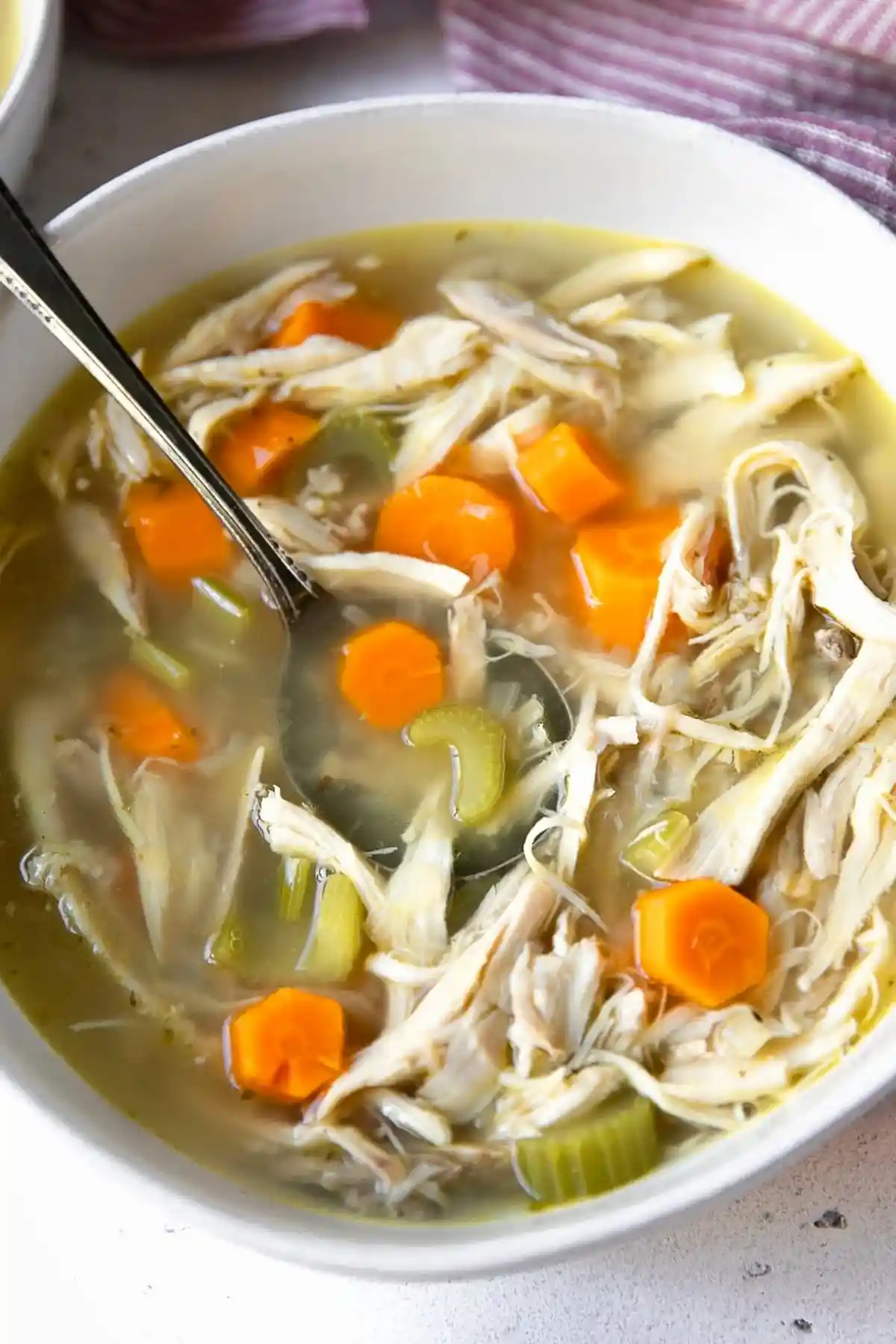
List of ingredients
- 10-12 bone-in skinless chicken thighs – provides the base for the broth and the main protein.
- 3 quarts cold water – used to simmer the chicken and create the liquid base.
- 1 tablespoon olive oil – used for sautéing the aromatic vegetables.
- 2 yellow onions, peeled and diced – a key part of the mirepoix for depth of flavor.
- 8 large carrots, peeled and chopped – adds sweetness and nutrients to the soup.
- 6 ribs celery, chopped – adds a savory, earthy note to the vegetable mix.
- 5 cloves garlic, minced – provides pungent aroma and flavor.
- 2 teaspoon salt – used for seasoning and flavor enhancement.
- 1 teaspoon pepper – adds a mild spicy kick to the broth.
- 1 lemon, juiced – adds acidity to balance the richness of the chicken.
- 2 bay leaves – adds a subtle herbal note during the simmering process.
- fresh chopped parsley, to garnish – provides a fresh finish to the served dish.
step-by-step instructions
- Make your broth: Place the chicken thighs in a large stockpot and add the cold water. Bring the mixture to a boil, then cover the pot and reduce the heat to low. Simmer for 30-45 minutes until the chicken is cooked through.
- Cook the vegetables: While the broth simmers, heat olive oil in a large pot or Dutch oven over medium heat. Sauté diced onions for 4-5 minutes until they become translucent. Add chopped carrots and celery, cooking for another 10-15 minutes while stirring frequently. In the final two minutes, stir in the minced garlic, salt, pepper, and bay leaves.
- Strain the broth: Remove the stockpot from the heat once the chicken is done. Use tongs to move the chicken to a cutting board to cool. Pour the broth through a fine-mesh strainer directly into the pot containing the sautéed vegetables.
- Shred the chicken: Once the chicken has cooled sufficiently to handle, use two forks or your hands to shred the meat into bite-sized pieces. Set the shredded chicken aside.
- Simmer the soup: Stir the lemon juice into the pot and bring the soup back to a boil. Lower the heat, cover, and simmer for 30 minutes until the vegetables are tender. Return the shredded chicken to the pot during the final 5-10 minutes of simmering.
- Serve: Adjust the final seasoning with additional salt and pepper as needed. Garnish each bowl with fresh chopped parsley before serving.
Technical Tips for a Superior Broth
Selecting the Right Chicken Cut
Using bone-in, skinless chicken thighs is recommended because dark meat contains more connective tissue and collagen than breast meat. When simmered, this collagen breaks down into gelatin, which gives the broth a richer mouthfeel and more depth. Breast meat is leaner and more prone to becoming dry and stringy during the poaching process.
Managing the Simmer Temperature
It is critical to maintain a low simmer rather than a rolling boil after the initial heat-up. A violent boil can emulsify the fats and proteins into the liquid, resulting in a cloudy and opaque broth. A gentle simmer keeps the impurities from mixing, allowing for a clearer, more professional-looking soup base.
Skimming Impurities for Clarity
During the first 15 minutes of simmering, you may notice gray or white foam rising to the surface of the water. These are denatured proteins and impurities being released from the meat. Use a wide spoon or a fine-mesh skimmer to remove this foam to ensure the final taste is clean and the appearance is transparent.
The Role of Bone-In Meat
The bones in the chicken thighs are essential for extracting minerals and flavor that cannot be found in boneless cuts. The marrow and cartilage contribute significantly to the overall savoriness of the liquid. If you use boneless meat, the resulting broth will be thinner and have a less complex flavor profile.
Ingredient Substitutions and Modifications
Using Different Chicken Cuts
If you prefer a leaner soup, you can use a combination of breasts and thighs, though you should add the breasts later in the process. To avoid overcooking, poach breast meat for a shorter duration or add it only during the final simmer stage. Rotisserie chicken can also be used as a shortcut by skipping the broth-making step and using store-bought stock.
Alternative Root Vegetable Options
While carrots are traditional, you can substitute them with parsnips or rutabaga for a slightly more peppery or earthy flavor. Turnips are another excellent alternative that provides a similar texture to carrots but with a different nutrient profile. Ensure all root vegetables are cut into uniform sizes to ensure they cook evenly.
Substituting Lemon Juice
If lemons are unavailable, a small amount of apple cider vinegar or white wine vinegar can provide the necessary acidity. The purpose of the acid is to cut through the richness of the chicken fat and brighten the overall flavor of the dish. Use approximately one tablespoon of vinegar for every tablespoon of lemon juice.
Using Leeks Instead of Onions
Leeks offer a milder, sweeter flavor than yellow onions and can be used as a direct replacement. Ensure you wash leeks thoroughly, as sand often collects between the layers. Sauté them in the same manner as the onions to build the aromatic base of the soup.
Creative Soup Variations
Incorporating Hearty Grains
To turn this soup into a more filling meal, you can add cooked brown rice, pearl barley, or quinoa. It is best to cook these grains separately and add them to the bowl just before serving. Cooking grains directly in the soup can cause them to absorb too much liquid and release starches that thicken the broth excessively.
Adding Leafy Greens
Fresh kale, spinach, or Swiss chard can be added during the final five minutes of cooking. These greens only require a short amount of heat to wilt and retain their vibrant color and nutrients. Stir them in right before the chicken is returned to the pot to prevent them from overcooking.
Using Anti-Inflammatory Spices
Adding a half-teaspoon of ground turmeric or a teaspoon of freshly grated ginger can enhance the health properties of the soup. Turmeric adds a golden hue and earthy flavor, while ginger provides a sharp, warming note. These are particularly useful when the soup is being prepared for someone recovering from a cold.
Adding Extra Aromatics
For a more complex flavor, you can add sliced leeks, fennel bulbs, or diced parsnips to the mirepoix. These vegetables add layers of sweetness and aromatic depth that complement the chicken. Ensure they are sautéed until softened before adding the broth.
Serving and Pairing Recommendations
Complementary Side Dishes
This soup pairs well with a crusty sourdough bread or a warm baguette, which can be used to soak up the broth. A side of steamed broccoli or a light garden salad with a vinaigrette provides a fresh contrast to the rich soup. Garlic toast is another popular option that complements the minced garlic in the recipe.
Fresh Garnish Options
While parsley is the primary garnish, fresh dill or chives can also be used to add a different herbal dimension. A sprinkle of cracked black pepper or a few drops of extra virgin olive oil on top can enhance the presentation. For those who prefer a bit of heat, a pinch of red pepper flakes can be added to the bowl.
Storage and Preservation
Refrigerator Storage Limits
Store the finished soup in airtight containers in the refrigerator for up to five days. Ensure the soup has cooled to room temperature before sealing the lid to prevent condensation and spoilage. Keep the containers in the coldest part of the fridge, away from the door.
Freezing and Thawing Process
This soup freezes well for up to six to eight months if stored in freezer-safe containers or heavy-duty zip-lock bags. When bagging, remove as much air as possible to prevent oxidation and freezer burn. Leave about an inch of headspace at the top of the container to allow the liquid to expand as it freezes.
Thawing for Best Quality
The safest way to thaw the soup is to move it from the freezer to the refrigerator 24 hours before you plan to eat it. This slow thaw preserves the texture of the vegetables and the integrity of the chicken meat. Avoid thawing at room temperature to prevent bacterial growth in the danger zone.
Reheating Guidelines
Stovetop Reheating Process
For the best results, reheat the soup in a pot over medium-low heat. Stir occasionally to ensure the heat is distributed evenly and the chicken doesn’t stick to the bottom. Bring the soup to a gentle simmer rather than a boil to avoid overcooking the vegetables.
Microwave Heating Tips
If using a microwave, heat the soup in a microwave-safe bowl in one-minute intervals. Stir between each interval to avoid hot spots and ensure the meat is heated through. Cover the bowl with a damp paper towel to retain moisture and prevent splashing.
Managing Liquid Evaporation
During reheating, some of the broth may have evaporated or been absorbed by the meat. Add a small amount of water or chicken stock to restore the original consistency. This ensures the soup remains fluid and the flavors stay balanced.
Make-Ahead Advice
Pre-cutting Vegetables
You can prepare the mirepoix (onions, carrots, and celery) up to two days in advance. Store them in a sealed container or bag in the refrigerator. This significantly reduces the active prep time on the day you decide to cook the soup.
Batch Cooking Broth
Consider making a large batch of the basic chicken broth and freezing it in portions. When you are ready for soup, you can simply thaw a portion of broth and follow the vegetable sautéing and simmering steps. This turns a long-process recipe into a quick weekday meal.
Common Troubleshooting
Reducing Excess Salt
If the soup becomes too salty, you can add a peeled, halved potato and simmer it for 15 minutes before removing it. The potato acts as a sponge and absorbs some of the excess sodium. Alternatively, adding a bit more water or an extra squeeze of lemon juice can help mask the saltiness.
Fixing Cloudy Broth
If your broth turns out cloudy, you can use a coffee filter or a piece of cheesecloth during the straining process. This takes longer than a mesh strainer but removes smaller particles and fat droplets. For future batches, ensure you do not let the pot reach a rolling boil.
Preventing Mushy Vegetables
To avoid overcooked vegetables, ensure you do not simmer the mirepoix for too long in the final stage. If you plan to freeze the soup, slightly undercook the carrots and celery. They will finish cooking during the reheating process, preventing them from becoming mushy.
Frequently Asked Questions
Can you put raw chicken in soup to cook?
Yes, raw chicken can be cooked directly in the soup broth. As long as the liquid reaches a safe internal temperature of 165°F (74°C) and is simmered for the appropriate amount of time, the chicken will be safe to eat.
How long does raw chicken take to poach?
Raw chicken thighs typically take between 30 and 45 minutes to poach in a simmering broth. The exact time depends on the size of the cuts and the temperature of the liquid. Always check the thickest part of the meat to ensure it is fully cooked.
Do you have to cook the stock separately?
While you can cook the vegetables and chicken together, cooking them separately allows for a clearer broth. Straining the stock before adding it to the vegetables removes the solids and foam, resulting in a cleaner taste and appearance.
Print
Homemade Scratch-Made Chicken Soup
- Total Time: 110 minutes
- Yield: 10 servings 1x
- Diet: General
Description
This Homemade Chicken Soup Recipe is my absolute favorite soup recipe and is so easy to make from scratch!
Ingredients
- 10–12 bone-in skinless chicken thighs
- 3 quarts cold water
- 1 tablespoon olive oil
- 2 yellow onions, peeled and diced
- 8 large carrots, peeled and chopped
- 6 ribs celery, chopped
- 5 cloves garlic, minced
- 2 teaspoon salt
- 1 teaspoon pepper
- 1 lemon, juiced
- 2 bay leaves
- fresh chopped parsley, to garnish
Instructions
- Make your broth: Add the chicken thighs to a large stockpot. Add the cold water to the pot and bring to a boil. Cover and reduce the heat to low. Simmer for approximately 30-45 minutes.
- Cook the vegetables (mirepoix): Heat one tablespoon olive oil in a large pot or Dutch oven over medium heat. Add the onion and cook, stirring often, for 4-5 minutes or until the onions turn translucent. Add the carrots and celery to the onions and mix well to combine. Continue to cook over medium heat for 10-15 minutes, stirring often. In the last two minutes stir in the minced garlic and sprinkle with salt and pepper. Mix well to combine and add the bay leaves.
- Strain the broth: After the broth has finished simmering and the chicken is cooked, remove the broth from heat. Use tongs to remove the chicken from the pot and transfer to a clean cutting board to cool. Carefully strain the broth through a fine-mesh strainer into the same pot as the vegetables.
- Shred the chicken: Once the chicken is cool enough to handle, use two forks (or your hands) to shred the chicken. Set aside.
- Simmer: Add the lemon juice to the pot and return the soup to a boil. Reduce heat to low, cover, and simmer for 30 minutes or until the vegetables are fully cooked. In the last 5-10 minutes, return the shredded chicken back to the pot.
- Serve: Season with additional salt and pepper, to taste and garnish with fresh chopped parsley if desired.
Notes
The best type of chicken for chicken soup includes dark meat (thighs, legs, wings) to keep the meat juicy. For a clearer broth, strain through a cheesecloth or fine mesh strainer. If in a hurry, store-bought chicken stock and rotisserie chicken can be used as substitutes.
- Prep Time: 20 minutes
- Cook Time: 90 minutes
- Category: Soup
- Method: Simmering
- Cuisine: American
Nutrition
- Serving Size: 1 serving
- Calories: 153 kcal
- Sugar: 2 g
- Sodium: 586 mg
- Fat: 6 g
- Saturated Fat: 1 g
- Unsaturated Fat: 5 g
- Trans Fat: 0 g
- Carbohydrates: 4 g
- Fiber: 1 g
- Protein: 20 g
- Cholesterol: 97 mg