
This plant-based pasta dish features deep, savory caramelized onions and a rich sauce. It uses pantry staples to create a filling meal suitable for weeknight dinners.
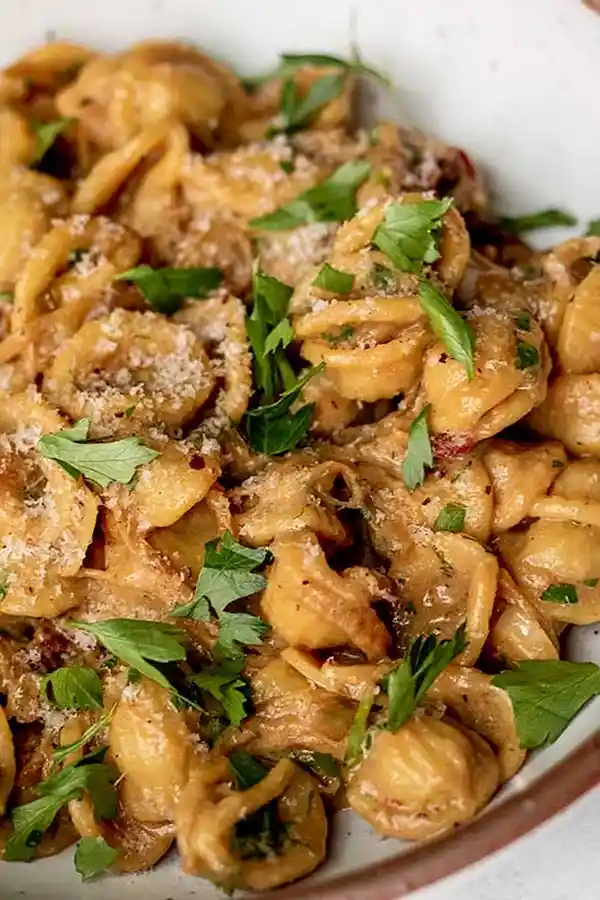
List of ingredients
- 1 tbsp olive oil – used for sautéing the onions.
- 2 yellow onions, thinly sliced – the primary base for the savory sauce.
- Water – used throughout the process for deglazing the pan.
- 5 cloves garlic, sliced – adds aromatic depth to the onion base.
- 2 tsp Italian seasoning – a blend of herbs for traditional pasta flavor.
- 1/2 tsp red pepper flakes, optional – adds a subtle heat to the dish.
- 1/4 cup julienned sun-dried tomatoes, jarred packed in oil – provides a concentrated umami punch.
- 2 tbsp balsamic glaze – adds a tangy sweetness to balance the savory notes.
- 1 tbsp soy sauce – enhances the saltiness and depth of flavor.
- 1/2 cup store bought or homemade vegan cream – creates the smooth, rich texture of the sauce.
- 2 cups dry Orecchiette pasta or 4 servings of favorite pasta – the main starch of the dish.
- 1 cup reserved pasta water – essential for adjusting the sauce consistency.
- 1/4 cup freshly minced parsley – used for a fresh finish and garnish.
- Salt and pepper to taste – used for seasoning throughout.
step-by-step instructions
- Prepare the pasta water: Fill one large pot with water and set it aside for later use.
- Sauté the onions: Heat a large skillet over medium heat and add the olive oil. Once warm, add the thinly sliced onions and a pinch of salt, stirring frequently for about 5 minutes until brown streaks appear on the pan.
- Caramelize the onions: Add 1-2 tablespoons of water to deglaze the pan. Continue cooking the onions for about 15 minutes, adding small splashes of water as needed to prevent sticking, until they reach a deep golden brown color.
- Add aromatics: Stir in the sliced garlic, Italian seasoning, and red pepper flakes. Sauté for 3-4 minutes until the garlic is cooked and the onions reach a jammy consistency, deglazing with water if necessary.
- Boil the pasta: While the onions are cooking, bring the pot of water to a boil. Add a generous amount of salt, add the pasta, and cook according to the package instructions. Remember to reserve 1 cup of the starchy pasta water before draining.
- Build the sauce: To the caramelized onion mixture, add the julienned sun-dried tomatoes, balsamic glaze, soy sauce, vegan cream, and 1/2 cup of the reserved pasta water. Stir well to combine all elements.
- Combine and finish: Fold the cooked pasta and minced parsley into the sauce. If the sauce is too thick, add more reserved pasta water until you reach your preferred level of creaminess.
- Serve: Plate the pasta immediately. You may serve it as is or add a side of roasted chickpeas or tofu for extra protein.
Customizing Your Pasta Base
Choosing the Right Pasta Shape
Orecchiette is recommended because its cup-like shape captures the jammy onions and creamy sauce effectively. However, fusilli or penne also work well due to their ridges and spirals which hold onto the sauce.
Gluten-Free Pasta Options
You can substitute traditional wheat pasta with gluten-free alternatives like brown rice or corn-based pasta. Ensure you follow the specific boiling times for gluten-free varieties to avoid a mushy texture.
High-Protein Pasta Alternatives
For added nutrition, use pasta made from chickpeas or lentils. These options increase the protein content of the meal while maintaining the same structural role in the recipe.
Ingredient Alternatives and Swaps
Replacing Balsamic Glaze
If you do not have balsamic glaze, you can create a substitute by mixing 1 tablespoon of balsamic vinegar with 1 tablespoon of maple syrup. Simmer this mixture in a small pan until it reduces slightly into a syrup.
Soy Sauce Substitutes
For a gluten-free version of the sauce, replace soy sauce with tamari or coconut aminos. These provide the same salty, umami profile without the wheat content found in standard soy sauce.
Alternative Onion Varieties
While yellow onions are standard for caramelization due to their sugar content, you can use a mix of yellow onions and shallots. Shallots add a milder, slightly garlic-like sweetness to the final dish.
Vegan Cream Variations
If you prefer a lighter sauce, you can use unsweetened soy cream or cashew cream. Avoid using coconut milk unless you want a distinct coconut flavor in your savory pasta.
Advanced Caramelization Techniques
The Importance of Frequent Deglazing
Deglazing involves adding a small amount of liquid to the pan to loosen the browned bits, known as fond. These bits contain concentrated sugars and flavors that thicken and enrich the final sauce.
Temperature Control for Onions
Keep the heat at a steady medium. If the heat is too high, the onions will burn and become bitter; if it is too low, they will steam rather than brown, extending the cooking time significantly.
Achieving a Jammy Consistency
The onions are ready when they transition from translucent to a deep gold and feel soft and thick. This jammy texture is what provides the body of the sauce before the cream is added.
Making Homemade Vegan Cream
Cashew-Based Cream Method
Soak 1/2 cup of raw cashews in boiling water for 10 minutes, then drain them. Blend the cashews with 1/4 cup of fresh water in a high-speed blender until the mixture is completely smooth and creamy.
Nut-Free Sunflower Seed Cream
For those with nut allergies, replace cashews with raw sunflower seeds. Follow the same soaking and blending process to achieve a similar consistency and neutral flavor.
Blending Tips for Smoothness
Always use a high-speed blender to ensure there are no gritty particles in the cream. If the mixture is too thick to blend, add water one tablespoon at a time until it reaches a pourable consistency.
Protein and Vegetable Pairings
Adding Roasted Chickpeas
Toss canned chickpeas with olive oil, salt, and paprika, then roast at 400°F (200°C) for 20 minutes. Add these to the top of the pasta for a crunchy contrast to the creamy sauce.
Incorporating Tofu
Use extra-firm tofu that has been pressed and cubed. Pan-fry the tofu until golden brown on all sides and fold it into the pasta during the final step.
Adding Leafy Greens
Stir in two cups of fresh spinach or chopped kale just before serving. The residual heat from the pasta will wilt the greens without overcooking them, adding color and nutrients.
Storage and Reheating Instructions
Refrigeration and Shelf Life
Store leftover pasta in an airtight container in the refrigerator. This dish will remain fresh and safe to eat for up to 4 days.
Best Practices for Reheating
Pasta tends to absorb sauce as it sits in the fridge. When reheating on the stovetop or in the microwave, add a splash of water or a tablespoon of vegan cream to loosen the sauce.
Freezing Recommendations
It is not recommended to freeze this pasta, as the vegan cream may separate upon thawing. For the best quality, consume the dish within the refrigeration window.
Troubleshooting Common Issues
Fixing a Sauce That Is Too Thick
If the sauce becomes too dense or clumpy, stir in additional reserved pasta water one tablespoon at a time. The starch in the water helps emulsify the sauce and creates a glossy finish.
Managing Overly Sweet Onions
If the caramelized onions taste too sweet, add a small squeeze of lemon juice or an extra teaspoon of soy sauce. The acidity and salt will balance the natural sugars of the onions.
Preventing Garlic from Burning
Always add the garlic after the onions have mostly caramelized. Garlic burns much faster than onions; if it turns dark brown, it will taste bitter and may ruin the sauce.
Frequently Asked Questions
Can I use red onions instead of yellow?
Yes, you can use red onions, though the color of the final sauce will be different and the flavor will be slightly more pungent before caramelization.
How long does the onion process actually take?
Depending on the heat of your stove, caramelization usually takes between 15 and 25 minutes. Do not rush this step, as the deep flavor depends on the slow breakdown of sugars.
Can I make the onion base in advance?
Yes, you can caramelize the onions, garlic, and seasonings ahead of time. Store them in the fridge and simply reheat the mixture in a pan before adding the cream and pasta.
Is this recipe suitable for an oil-free diet?
You can replace the olive oil with a small amount of water or vegetable broth for sautéing. You will need to deglaze more frequently to prevent the onions from sticking to the pan.
Which pasta water should I use?
Use the water from the final minute of boiling the pasta. This water is the most concentrated with starch, which is what helps the sauce cling to the pasta noodles.
Print
Vegan Caramelized Onion Pasta
- Total Time: 40 minutes
- Yield: 4 servings 1x
- Diet: Vegan
Description
This Caramelized Onion Pasta is a great pantry-friendly meal that also happens to be perfect for an easy weeknight dinner. Dairy-free, creamy and delicious.
Ingredients
- 1 tbsp olive oil
- 2 yellow onions, thinly sliced
- Water, for deglazing the pan
- 5 cloves garlic, sliced
- 2 tsp Italian seasoning
- 1/2 tsp red pepper flakes, optional
- 1/4 cup julienned sun-dried tomatoes, jarred packed in oil
- 2 tbsp balsamic glaze
- 1 tbsp soy sauce
- 1/2 cup store bought or homemade vegan cream
- 2 cups dry Orecchiette pasta or 4 servings of favorite pasta (plus 1 cup reserved pasta water)
- 1/4 cup freshly minced parsley
- Salt and pepper to taste
Instructions
- Step: Fill one large pot with water for the pasta and set aside. Heat a large skillet over medium heat, then add the oil to warm through. Once warm, add the onions along with a pinch of salt. Sauté the onions, stirring frequently for about 5 minutes or until you start noticing some brown streaks on the surface of the pan. Add 1-2 tablespoons of water and stir into the onions to deglaze the pan. Continue cooking the onions, adding a splash of water as needed to prevent the onions from sticking or burning until they become a deep golden brown color (this will take about 15 minutes).
- Step: Add in the garlic, Italian seasoning and red pepper flakes and sauté with the onions until the garlic is cooked through and the onions are jammy, about 3-4 minutes. Continue deglazing the pan as needed.
- Step: While the onions are cooking, begin boiling the water for the pasta. Salt the water generously and once boiling add in the pasta and cook according to package. Make sure to reserve 1 cup of the pasta water.
- Step: To the onions add the sun-dried tomatoes, balsamic glaze, soy sauce, cream and 1/2 cup of the pasta water. Stir well to combine then fold in the pasta and parsley. If needed add more pasta water until the pasta is at the level of creaminess you like.
- Step: Serve the pasta as is or pair with your favorite protein like roasted chickpeas or tofu.
Notes
Deglaze the pan frequently to incorporate the natural sugars from the onions. Generously salt the pasta water for better flavor. Reserve extra pasta water to adjust the creaminess of the sauce. For homemade vegan cream, blend 1/2 cup soaked raw cashews or sunflower seeds with 1/4 cup water until smooth.
- Prep Time: 10 minutes
- Cook Time: 30 minutes
- Category: Main Dish
- Method: Stove Top
- Cuisine: American
Nutrition
- Serving Size: 1 serving
- Calories: 520 kcal
- Sugar: 12 g
- Sodium: 780 mg
- Fat: 18 g
- Saturated Fat: 4 g
- Unsaturated Fat: 14 g
- Trans Fat: 0 g
- Carbohydrates: 68 g
- Fiber: 7 g
- Protein: 14 g
- Cholesterol: 0 mg